


Overview
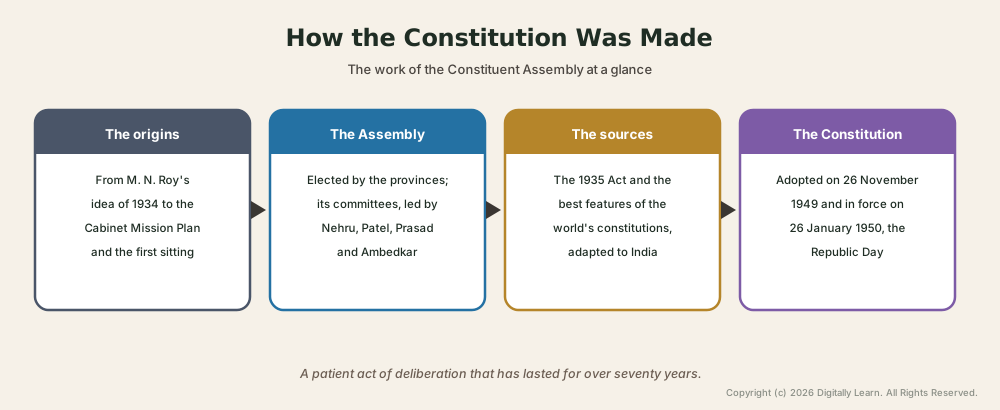
The making of the Constitution was the work of the Constituent Assembly, which framed the Constitution of India between 1946 and 1949. Set up under the Cabinet Mission Plan and led in its committees by Nehru, Patel, Rajendra Prasad and the chairman of the Drafting Committee, B. R. Ambedkar, the Assembly drew on the Government of India Act 1935 and the best features of the world's constitutions. After the Objectives Resolution set out its aims, the Constitution was adopted on 26 November 1949 and came into force on 26 January 1950, giving nation-building its lasting legal and democratic foundation.
Introduction: The Assembly That Wrote the Republic
Why the Making of the Constitution Is the Heart of Nation-Building
Why this matters: a nation needs a frame of rules, and India's was written by the Constituent Assembly in under three years. The Constitution it produced gave the new republic its institutions, its rights and its democratic method, and it remains the foundation on which all the later work of nation-building has rested.
What is the significance of the Assembly: it turned the long demand for an Indian-made constitution into a living document. Drawing on the experience of the Government of India Act 1935 and the best of world constitutions, the framers built a charter that has endured, as the origins and the work below set out.
Origins of the Demand: From M. N. Roy to the Cabinet Mission Plan
How the Idea of a Constituent Assembly Became Reality
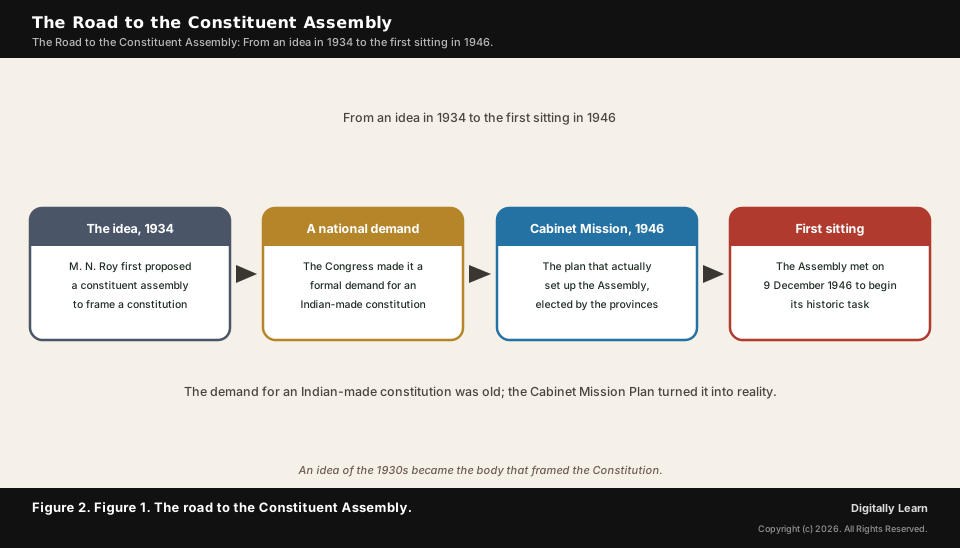
What is the significance of the origins: the idea was older than independence. M. N. Roy first proposed a constituent assembly in 1934, the Congress took it up as a formal demand, and the principle that Indians should frame their own constitution became central to the freedom movement.
Distinguishing the actual basis: the Assembly was finally set up not under the Cripps offer but under the Cabinet Mission Plan of 1946, which provided for an Assembly elected indirectly by the provincial legislatures. It first met on 9 December 1946, with Sachchidananda Sinha as its provisional president, as the road below shows.
Composition and the Objectives Resolution
Who Sat in the Assembly and What It Set Out to Do
What is the significance of the composition: the Assembly was broadly representative though indirectly elected. It began with about 389 members, a number that fell to around 299 after the Partition and the withdrawal of the Muslim League, and Rajendra Prasad was elected its permanent President.
Distinguishing the Objectives Resolution: on 13 December 1946 Jawaharlal Nehru moved the Objectives Resolution, which declared India a sovereign republic committed to justice, liberty and equality. It became the soul of the Constitution and the basis of the Preamble, framing everything that followed.
The Committee System and the Drafting Committee
The Major Committees, Ambedkar and the Role of B. N. Rau
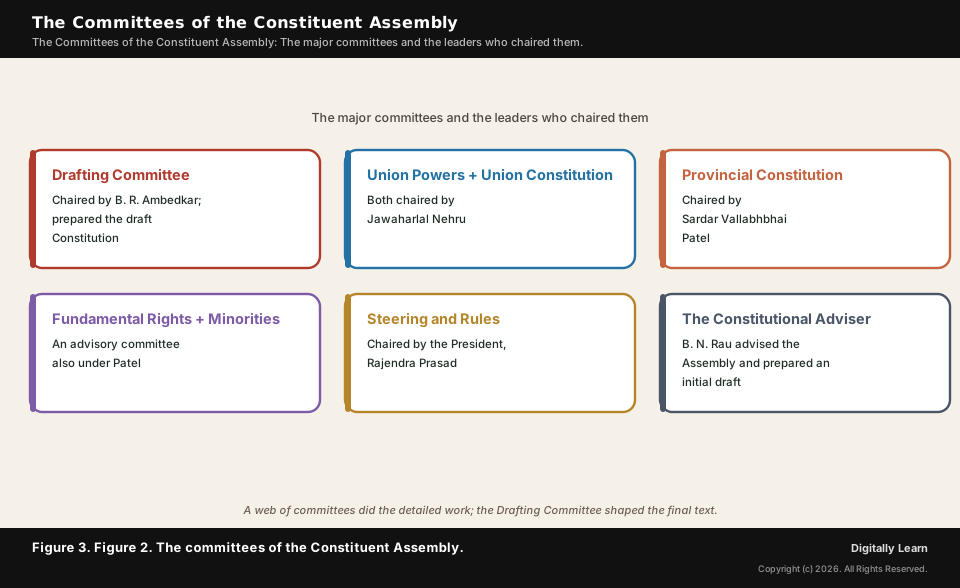
What is the significance of the committees: the detailed work was done by a web of committees. Nehru chaired the Union Powers and Union Constitution committees, Patel the Provincial Constitution and the advisory committee on fundamental rights, and Rajendra Prasad the steering and rules committees, as the diagram sets out.
Distinguishing the Drafting Committee: the most important was the Drafting Committee, formed on 29 August 1947 under B. R. Ambedkar, which shaped the final text. It is worth being precise that B. N. Rau served as the Constitutional Adviser and prepared an initial draft, but was not a member of the Drafting Committee.
Previous Year UPSC-CSE Questions
Previous Year UPSC-CSE Questions By the end you will be able to draft model answers for the following UPSC questions. Each question carries a collapsible framework showing how to approach it in the exam.
- UPSC Mains 2015 GS-IIt would have been difficult for the Constituent Assembly to complete its historic task of drafting the Constitution for Independent India in just three years but for the experience gained with the Government of India Act, 1935. Discuss.
How to structure the answer in the exam
Introduction: Open with the Assembly completing the Constitution in under three years, a remarkable speed.
Body (sub-themes to develop):
- The Government of India Act 1935 as the largest single source, giving a ready federal and administrative frame.
- The borrowing from the world's constitutions, adapted rather than invented.
- The experience of the framers with the working of the 1935 Act.
- The committee system and B. N. Rau's draft as accelerators of the work.
Conclusion: Conclude that the Assembly built on a known frame rather than starting from nothing, which is why it finished so fast.
- UPSC Prelims 2024 GS Paper IWho was the Provisional President of the Constituent Assembly before Dr. Rajendra Prasad took over?
How to approach this Prelims question
Approach: Recall who presided at the first sitting before the permanent President.
Trap to watch: The provisional president was Sachchidananda Sinha; Rajendra Prasad was the permanent President, and Ambedkar chaired the Drafting Committee.
Key facts to recall:
- The Assembly first met on 9 December 1946
- Sachchidananda Sinha was the provisional president
- Rajendra Prasad became the permanent President
Answer signal: Sachchidananda Sinha, so option (d).
Sources of the Constitution: Borrowed Features and the 1935 Act
The Government of India Act 1935 and the World's Constitutions
What is the significance of the sources: the framers borrowed widely and adapted wisely. The single largest source was the Government of India Act 1935, whose structure and many provisions the Assembly knew at first hand, which is why the Constitution could be completed in so short a time.
Distinguishing the borrowed features: to this base the Assembly added the best of the world's constitutions, the parliamentary system from Britain, fundamental rights and judicial review from the United States, the directive principles from Ireland and a strong centre from Canada, as the table sets out.
| Origin | What was borrowed | Significance |
|---|---|---|
| Government of India Act 1935 | Federal structure, office of governor, much of the administrative detail | The largest single source; gave the Assembly a ready frame to work from |
| Britain | Parliamentary government, the rule of law, single citizenship | The familiar Westminster model of responsible government |
| United States | Fundamental rights, judicial review, an independent judiciary | Limits on the state and a guardian of the Constitution |
| Ireland | The Directive Principles of State Policy | Goals of social and economic justice for the state to pursue |
| Canada | A federation with a strong centre | A union able to hold together after Partition |
Adoption and Enforcement: From 26 November 1949 to the Republic
Completing the Constitution in Under Three Years
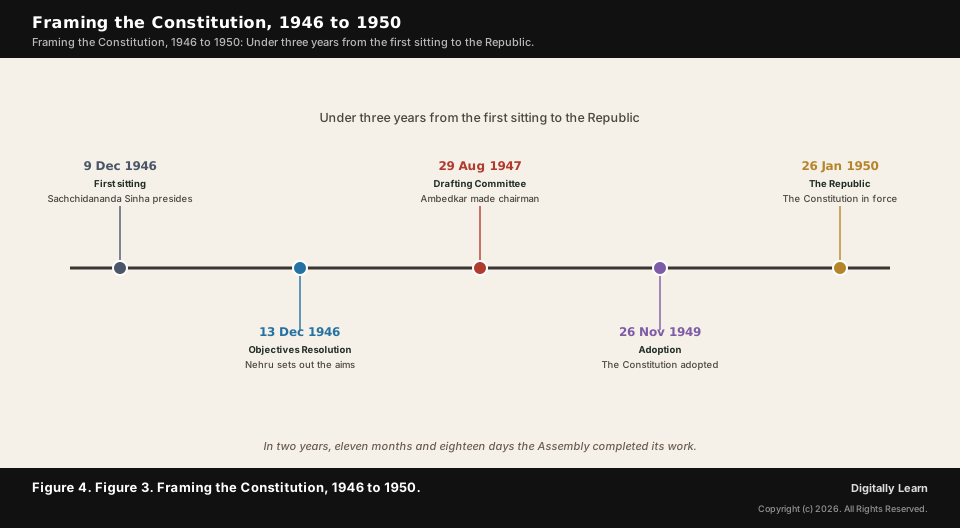
Observable outcomes can be read in the calendar. After a series of readings and debates, the Constitution was adopted by the Assembly on 26 November 1949, now marked as Constitution Day, and it came into force on 26 January 1950, the date chosen to honour the Purna Swaraj pledge of 1930.
Distinguishing the achievement: the whole work took just two years, eleven months and eighteen days. That speed was possible because the framers built on the 1935 Act and the world's constitutions rather than starting from nothing, as the timeline below records.
The Great Debates and the Spirit of the Assembly
The Questions the Framers Settled
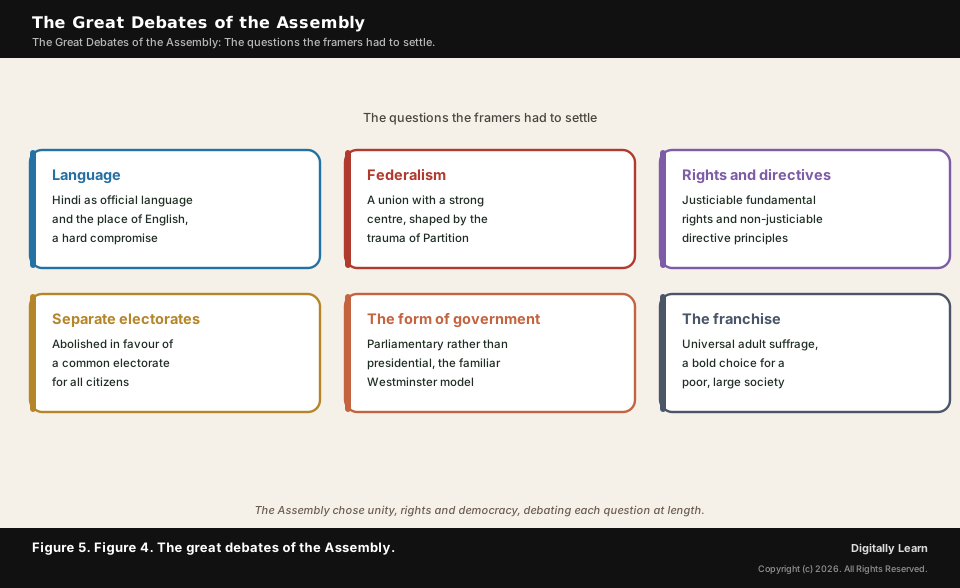
What is the significance of the debates: the Constitution was argued into being. The Assembly debated the language question and reached the compromise of Hindi as the official language with English continued, settled on a federation with a strong centre, and abolished separate electorates in favour of a common roll.
Distinguishing the great choices: it chose justiciable fundamental rights alongside non-justiciable directive principles, a parliamentary rather than a presidential government, and universal adult suffrage for a poor and largely illiterate society, a bold democratic wager, as the debates below set out.
Significance: Why the Constitution Anchors the Republic
A Foundation That Has Endured
Contemporary linkages run from the Assembly to the present day. The Constitution it framed shaped the salient features that the next part takes up, the working of parliamentary democracy, the federal balance and the long evolution of amendments and judicial review that later parts trace.
The larger significance is that the making of the Constitution gave nation-building its firmest foundation. A diverse and divided land bound itself by consent to the rule of law, fundamental rights and democratic government. The points below gather the threads, and the next part turns to the salient features of the Constitution.
- M. N. Roy first proposed a constituent assembly in 1934; the Cabinet Mission set it up in 1946.
- The Assembly, led by Nehru, Patel, Prasad and Ambedkar, framed the Constitution in under three years.
- B. N. Rau was the Constitutional Adviser, not a member of the Drafting Committee.
- The Government of India Act 1935 was the largest single source, with the best of world constitutions added.
- The Constitution was adopted on 26 November 1949 and came into force on 26 January 1950.
Sources and Further Reading
- NCERT, Indian Constitution at Work (Class 11), The Making of the Constitution
- Wikipedia: Constituent Assembly of India
- Wikipedia: Constitution of India
- Wikipedia: B. R. Ambedkar
- National Portal of India
- Press Information Bureau, Government of India
- National Archives of India
- Azadi Ka Amrit Mahotsav, Ministry of Culture
Editorial Disclaimer
This article is prepared for UPSC examination preparation. Verify key facts and interpretations against standard reference histories before relying on them.