


Overview
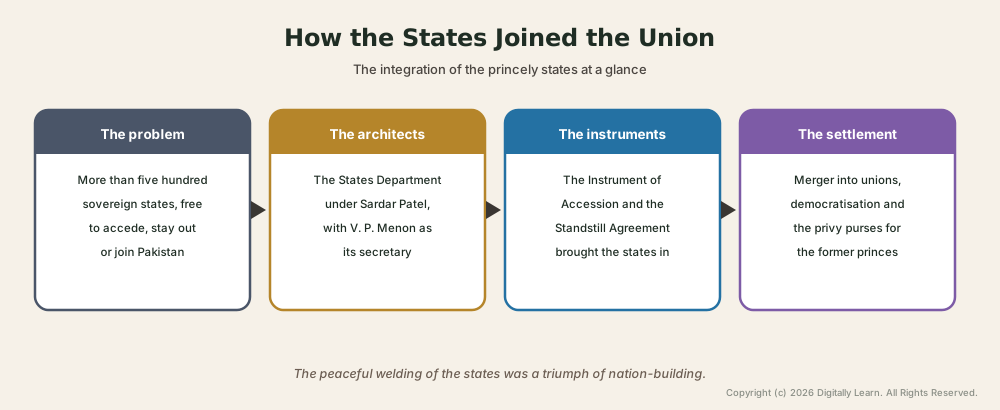
The integration of the princely states was the process by which more than five hundred states, left sovereign by the lapse of British paramountcy in 1947, were woven into the Indian Union. Led by Sardar Patel as head of the States Department and his secretary V. P. Menon, the states were brought in through the Instrument of Accession and the Standstill Agreement, then merged into provinces and new unions and democratised. The peaceful welding of this patchwork into one Union, with only a few hard cases, secured the territorial unity on which the new republic was built.
Introduction: A Patchwork of States to Be Made One
Why Integrating the States Was a Task as Great as Independence
Why this matters: when the British left, more than five hundred princely states covered nearly half the land of the subcontinent, and each was, in law, free to choose its future. Welding this patchwork into a single Union was a task many thought as great as the winning of freedom itself.
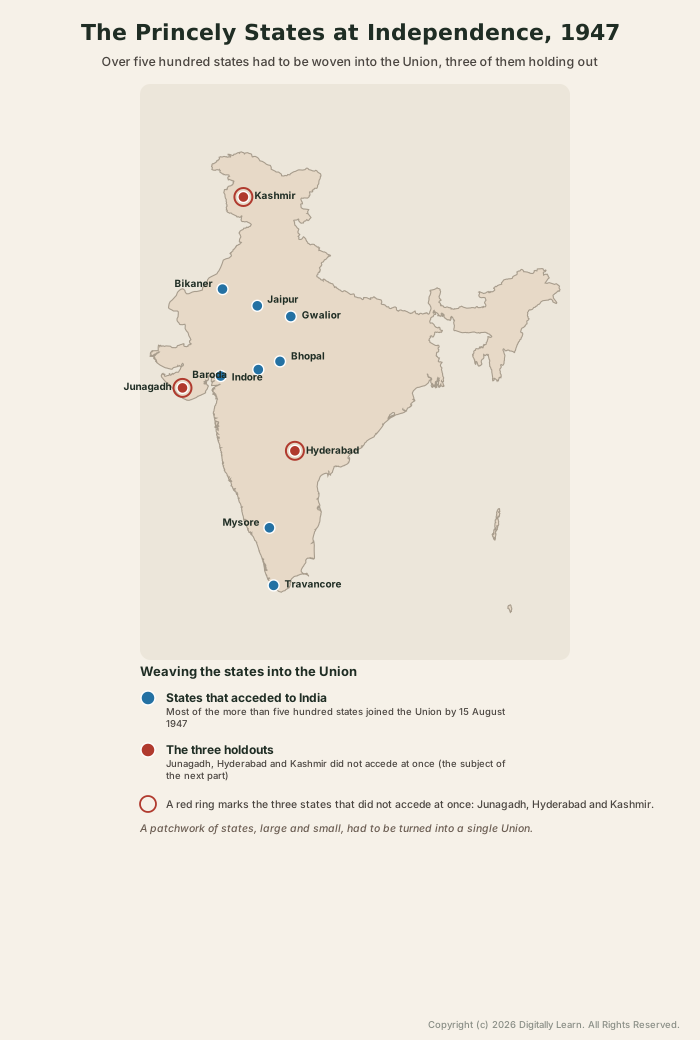
What is the significance of integration: it secured the territorial unity of the new nation. Had the states gone their own ways, India would have been a fractured map of enclaves; instead, through persuasion and statecraft, almost all were brought in peacefully, as the map and the sections below set out.
The Princely States in 1947: Sovereignty, Diversity and Fragmentation
Sovereign in Law, Fragmented in Fact
What is the significance of their status: the states were not part of British India but were tied to the Crown by paramountcy. They ranged from large states such as Hyderabad and Kashmir to tiny estates of a few villages, and they varied enormously in size, revenue and the character of their rule.
Distinguishing the danger: this fragmentation was the threat. A few large rulers dreamed of independence, and a scatter of sovereign states across the country would have made a stable, unified nation impossible, which is why their integration became so urgent in 1947.
Lapse of Paramountcy and the Three Choices Before the States
The Legal Vacuum Left by the Independence Act
What is the significance of the lapse of paramountcy: it created the legal opening. The Indian Independence Act ended British paramountcy over the states, and in theory left each one free to accede to India, to accede to Pakistan, or to remain independent, three choices that had to be narrowed to one.
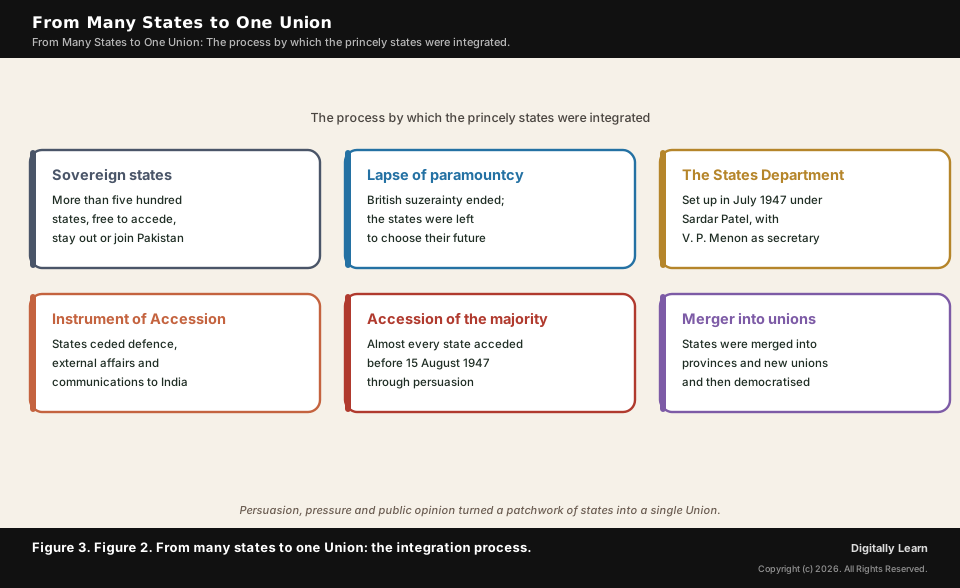
Distinguishing the reality: in practice the choice was shaped by geography, by the wishes of the people and by firm persuasion. Most states lay within India and had populations that wished to join it, so the States Department set out to secure their accession quickly, before the transfer of power, as the process below shows.
The States Department and the Patel and Menon Partnership
Sardar Patel, V. P. Menon and the Instruments of Integration
What is the significance of the States Department: it was the engine of integration. Set up in July 1947 under Sardar Patel, with V. P. Menon as its secretary, it combined Patel's firmness with Menon's negotiating skill, and Menon's own account, The Story of the Integration of the Indian States, remains the classic record of the work.
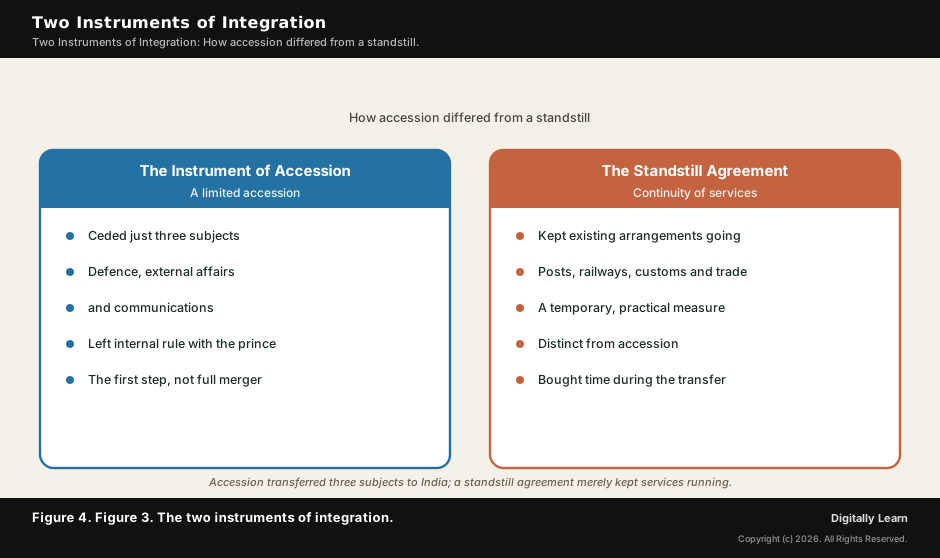
Distinguishing the two instruments: the states were brought in by two documents. The Instrument of Accession transferred only three subjects, defence, external affairs and communications, to the Union; the Standstill Agreement merely kept existing services running. The contrast below sets them apart.
The Accession of the Majority and the Merger into New Unions
From the Accession of Almost Every State to Their Merger
Observable outcomes followed quickly. Through persuasion, the appeal to public opinion and an appeal to the rulers' patriotism, almost every state signed the Instrument of Accession before 15 August 1947, leaving only a few holdouts that the next part takes up. Accession, however, was only the first step.
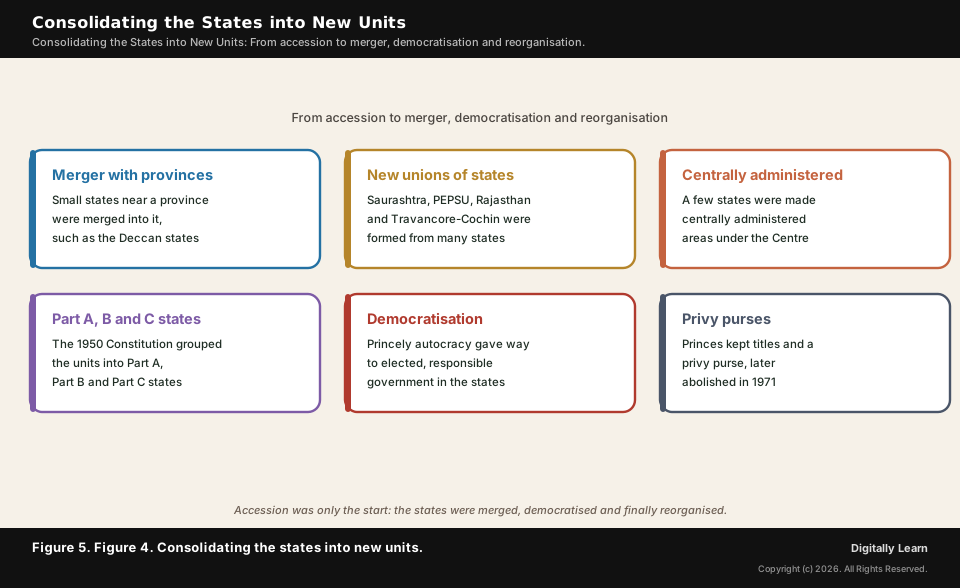
Distinguishing accession from merger: a state that had ceded three subjects was still internally autonomous, so the second stage was merger. Small states were absorbed into neighbouring provinces, and others were grouped into new unions such as Saurashtra, PEPSU and Rajasthan, then democratised, as the consolidation below shows.
Privy Purses, the Administrative Problems and the Final Settlement
The Administrative and Social Problems of Welding the States
What is the significance of the settlement: it shows that integration brought hard problems as well as a triumph. Administratively, dozens of separate systems of revenue, law, currency and service had to be merged into viable units and brought up to the standard of the provinces, a vast task of reorganisation.
Distinguishing the social and political problems: socially and culturally, the autocratic rule of the princes had to give way to responsible government, the people's movements within the states had to be accommodated, and the rulers were reconciled with titles and a privy purse, a settlement later abolished in 1971. The settlement table sets out the units that resulted.
| Stage | What it involved | The outcome |
|---|---|---|
| Accession | States cede defence, external affairs and communications | Almost all states join the Union by 1947 |
| Merger | Small states merged into provinces or grouped into unions | Saurashtra, PEPSU, Rajasthan, Travancore-Cochin |
| Classification | Units grouped under the 1950 Constitution | Part A, Part B and Part C states |
| Settlement | Rulers reconciled with titles and a privy purse | Privy purses, abolished in 1971 |
Significance: Why the Integration Secured the Unity of India
A Triumph of Statecraft and Its Lasting Importance
Contemporary linkages run from 1947 to the shape of India today. The integration fixed the broad territorial frame of the Union and fed directly into the reorganisation of states that a later part takes up, while the few hard cases left a longer trail, above all in Kashmir.
The larger significance is that the peaceful welding of the states ranks among the great achievements of nation-building, comparable to the winning of freedom itself. The points below gather the threads, and the next part turns to the hard cases that did not accede at once.
- More than five hundred sovereign states had to be integrated after the lapse of paramountcy.
- The States Department under Patel and Menon secured accession through persuasion.
- The Instrument of Accession ceded only defence, external affairs and communications.
- Accession was followed by merger into unions, democratisation and the 1950 classification.
- The peaceful integration secured the territorial unity on which the republic was built.
Previous Year UPSC-CSE Questions
Previous Year UPSC-CSE Questions By the end you will be able to draft model answers for the following UPSC questions. Each question carries a collapsible framework showing how to approach it in the exam.
- UPSC Mains 2021 GS-IAssess the main administrative issues and socio- cultural problems in the integration process of Indian Princely States.
How to structure the answer in the exam
Introduction: Open with integration as a task as great as independence, with problems of both administration and society.
Body (sub-themes to develop):
- Administrative: merging diverse systems of revenue, law, currency and service into viable units.
- Administrative: the reorganisation of small states into provinces and new unions.
- Socio-cultural: replacing princely autocracy with responsible, democratic government.
- Socio-cultural: accommodating people's movements and reconciling the rulers through privy purses.
Conclusion: Conclude that integration was a triumph achieved despite deep administrative and social difficulties.
- UPSC Prelims 2007 GS Paper IWho wrote the book "The Story of the Integration of Indian States"?
How to approach this Prelims question
Approach: Recall the author of the classic account of integration.
Trap to watch: The author was V. P. Menon, the secretary of the States Department, not Krishna Menon (the diplomat) or B. N. Rau.
Key facts to recall:
- V. P. Menon was secretary of the States Department
- He wrote The Story of the Integration of the Indian States
- He worked with Sardar Patel on integration
Answer signal: V. P. Menon, so option (d).
Sources and Further Reading
- NCERT, Politics in India Since Independence (Class 12), Chapter 1: Challenges of Nation Building
- Wikipedia: Political integration of India
- Wikipedia: Vallabhbhai Patel
- Wikipedia: V. P. Menon
- National Portal of India
- Press Information Bureau, Government of India
- National Archives of India
- Azadi Ka Amrit Mahotsav, Ministry of Culture
Editorial Disclaimer
This article is prepared for UPSC examination preparation. Verify key facts and interpretations against standard reference histories before relying on them.