


Overview
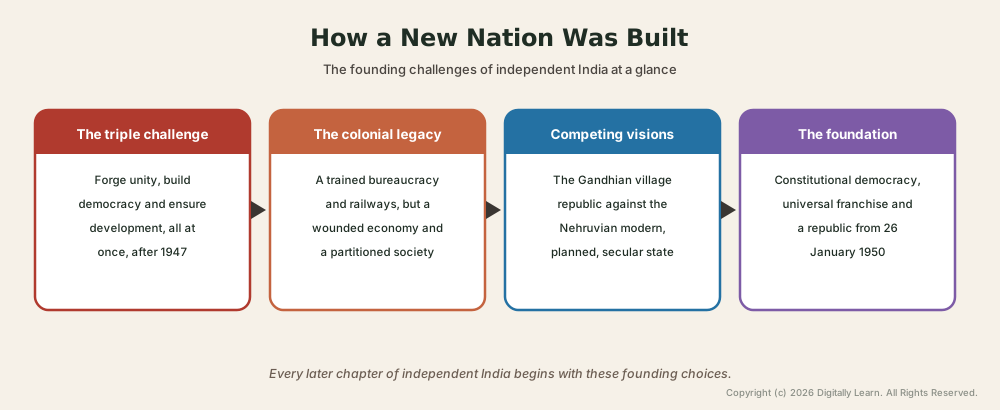
The challenges of nation-building in India after 1947 were the tasks by which the new republic forged a single, stable and democratic nation from the diverse and partitioned land it inherited at independence. The new state faced a triple challenge: to forge unity from deep diversity and to integrate the princely states, to establish a working democracy on universal adult franchise, and to ensure development for a poor and wounded economy. The way India met these founding challenges, guided by the Nehruvian vision of a secular, democratic and planned modern state and grounded in constitutional democracy, set the course for everything that followed.
Introduction: The Meaning and Scope of Post-Independence Nation-Building
Where the Story of Independent India Begins
Why this matters: the story of modern India does not end with the winning of freedom on 15 August 1947; in a real sense it begins there. The far harder task was to take a vast, diverse and freshly partitioned land and build from it a single, stable and democratic nation, a process historians call nation-building.
What is the significance of this period: it is the master theme from which every later chapter flows. The integration of the states, the making of the Constitution, the reorganisation of the map, planned development and the working of democracy are all answers to the founding question of 1947, namely how a new nation could hold together and govern itself well.
The Triple Challenge of 1947: Unity, Democracy and Development
Three Tasks the New Nation Took Up Together
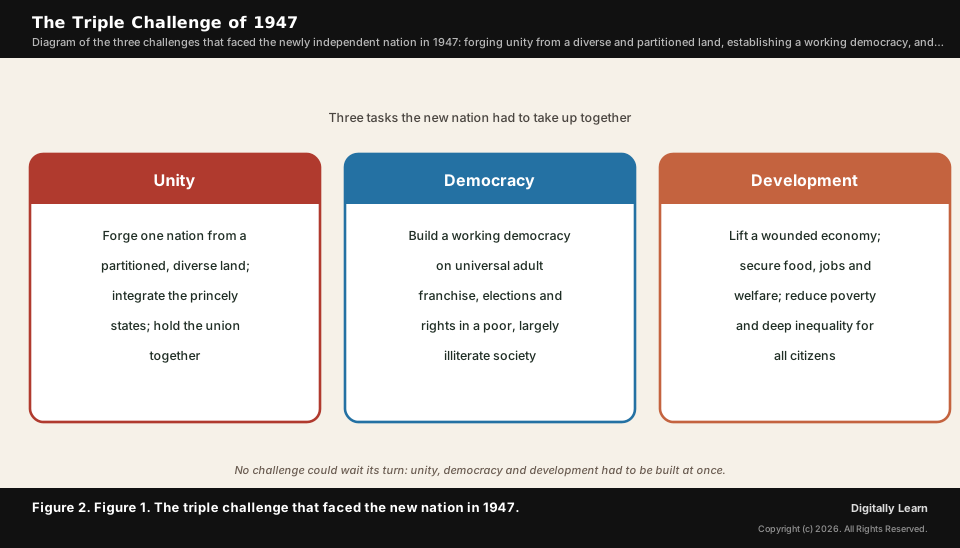
What is the significance of the triple challenge: it frames the whole of post-independence history. The first task was unity, to forge one nation from a land of many languages, faiths and regions and to absorb the princely states. The second was to establish a working democracy; the third was to ensure development and the welfare of all, as the diagram sets out.
Distinguishing the difficulty: each task was hard on its own, and India chose to attempt all three at once. Many new nations of the time gave up democracy for the sake of unity or development, yet India held to universal adult franchise and elections even while it was poor, largely illiterate and freshly wounded by Partition, which made the wager all the bolder.
The Colonial Inheritance: Administrative, Economic and Social Legacies
What Independent India Received, for Good and for Ill
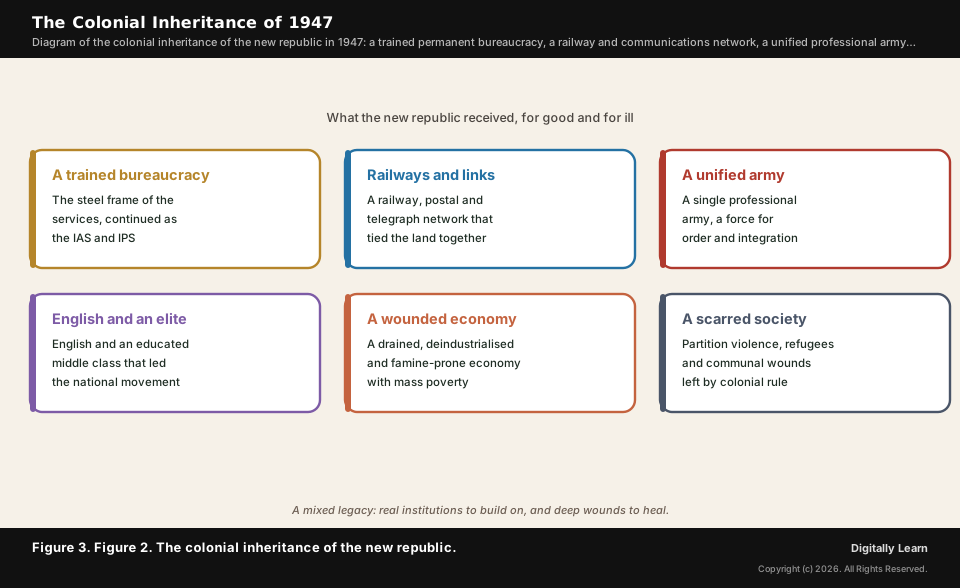
What is the significance of the colonial legacy: it shaped both the strengths and the burdens of the new state. From British rule India inherited a trained permanent bureaucracy, the so-called steel frame continued as the IAS and IPS, a railway, postal and telegraph network, a unified professional army, and English and an educated middle class that had led the freedom movement.
Distinguishing the darker side: the same rule left a drained and undeveloped economy, marked by deindustrialisation, recurring famine and mass poverty, and a society scarred by the violence and refugees of Partition. Nation-building therefore meant both building on real institutions and healing deep wounds, as the inheritance below makes plain.
Unity Amid Diversity: Forging One Nation from Plurality
The Cultural Elements of Indian Diversity and National Identity
What is the significance of diversity for nation-building: India is among the most diverse societies on earth, and its founders chose to treat that diversity as a source of strength rather than a threat. Four cultural elements stand out, language, religion, region and community, each of which had to be woven into a shared national identity.
Distinguishing the elements: linguistic diversity, with many major languages and hundreds of mother tongues, was the most politically charged; religious plurality made secularism essential; regional and tribal identities demanded a federal accommodation; and the layered diversity of caste and community shaped the call for social justice. The table rates how each fed into a common national identity.
| Cultural element | Nature of the diversity | Significance for national identity |
|---|---|---|
| Language | Many major languages and hundreds of mother tongues | Highest: it drove the linguistic reorganisation of states and the three-language formula |
| Religion | A plural society of many faiths | High: it made secularism a core value and a test of unity |
| Region | Distinct regions and former princely states | High: it shaped a federal union with a strong centre |
| Community | Layered identities of caste and tribe | High: it shaped social justice, reservation and group rights |
The Nehruvian Vision and Competing Ideas of the Nation
Secularism, Planning and the Modern State
What is the significance of the Nehruvian vision: it gave the early republic its dominant direction. As first Prime Minister, Jawaharlal Nehru championed a secular state that kept an equal distance from all faiths, a planned economy that built heavy industry and public institutions, a scientific outlook, and a strong centre held together by parliamentary democracy.
Distinguishing his actual roles: Nehru led the interim government of 1946 and the first government of free India and gave the famous Tryst with Destiny address, but his exact offices are often confused. He did not preside over the Constituent Assembly, which was chaired by Rajendra Prasad, and he was not the Congress president in 1947.
Distinguishing a further confusion: Nehru did not form the first Congress ministry in the United Provinces after the 1937 elections, which was led by Govind Ballabh Pant as Premier. His authority rested on the prime ministership and his moral standing, not on the party or provincial offices sometimes attributed to him.
Gandhian Decentralism Versus Nehruvian Modernism
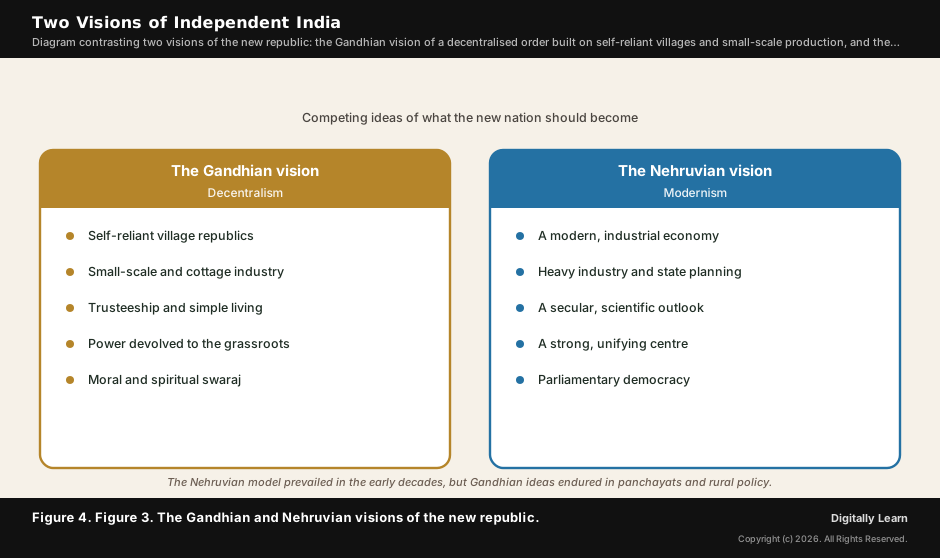
Observable outcomes of the debate can be seen in policy. The Gandhian vision looked to self-reliant village republics, small-scale and cottage industry, trusteeship and a moral swaraj, with power devolved to the grassroots. The Nehruvian vision looked instead to a modern, industrial and planned economy led from a strong centre, as the contrast sets out.
Distinguishing the resolution: in the early decades the Nehruvian model largely prevailed in industry, planning and the shape of the state, yet Gandhian ideas did not vanish. They endured in the stress on panchayats, cottage industry and rural development, and they would return with force in later movements, so the two visions are best read as a lasting tension rather than a settled contest.
Constitutional Democracy as the Foundation of the Republic
From the Tryst with Destiny to the Republic
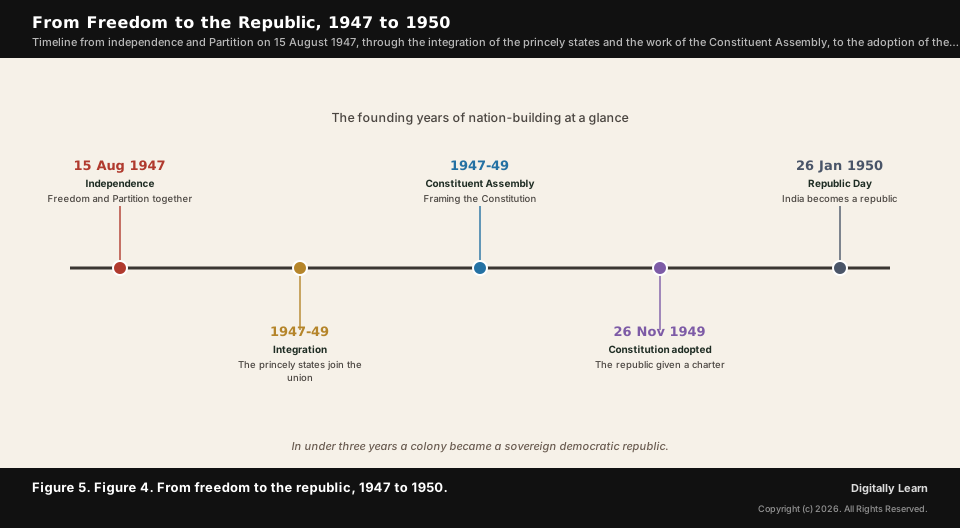
What is the significance of the constitutional foundation: it gave nation-building a firm and lasting frame. The Constituent Assembly adopted the Constitution on 26 November 1949, and it came into force on 26 January 1950, the date chosen to honour the Purna Swaraj pledge of 1930, on which day India became a sovereign democratic republic.
Distinguishing the choice: by founding the republic on a written Constitution, fundamental rights, an independent judiciary and universal adult franchise, India placed the rule of law and the consent of the governed at the centre of nation-building. The timeline below traces the swift passage from freedom and Partition to a settled constitutional order in under three years.
Significance: Why Nation-Building Frames Everything That Follows
The Thread That Runs Through the Whole Story
Contemporary linkages run from these founding choices straight into the present. The way India answered the unity challenge shaped the integration of the states and the reorganisation of the map; the democratic wager shaped its elections and federalism; and the development challenge shaped planning, the Green Revolution and, in time, the reforms of 1991.
The larger significance is that nation-building is the lens through which the rest of this series is best read. Each later part, on integration, the Constitution, the states, the economy, foreign policy and social change, is one more answer to the question of 1947, namely how a poor, diverse and divided land could become a united democratic nation. The points below gather the threads.
- Independent India faced a triple challenge of unity, democracy and development, taken up together.
- It built on a real colonial inheritance of services, railways and an army, while healing deep wounds.
- Diversity of language, religion, region and community was woven into a shared national identity.
- The Nehruvian vision of a secular, planned, democratic state shaped the early republic.
- Constitutional democracy, from 26 January 1950, became the lasting foundation of nation-building.
Previous Year UPSC-CSE Questions
Previous Year UPSC-CSE Questions By the end you will be able to draft model answers for the following UPSC questions. Each question carries a collapsible framework showing how to approach it in the exam.
- UPSC Mains 2015 GS-IDescribe any four cultural elements of diversity in India and rate their relative significance in building a national identity.
How to structure the answer in the exam
Introduction: Open with India as one of the most diverse societies on earth and the choice to treat diversity as a strength.
Body (sub-themes to develop):
- Linguistic diversity and its political weight (reorganisation of states, three-language formula).
- Religious plurality and the role of secularism in unity.
- Regional and tribal identity and the federal accommodation.
- Caste and community diversity and the demand for social justice.
Conclusion: Conclude that diversity, accommodated rather than suppressed, became the basis of a composite national identity.
- UPSC Prelims 1996 GS Paper IConsider the following statements about Jawaharlal Nehru:
- He was the President of the Congress Party in 1947.
- He presided over the Constituent Assembly.
- He formed the first Congress Ministry in United Province before India's independence.
Of these statements
How to approach this Prelims question
Approach: Test each statement about Nehru's offices against the record.
Trap to watch: Nehru did not preside over the Constituent Assembly (Rajendra Prasad did) and was not the 1947 Congress president, so all three statements are false.
Key facts to recall:
- Nehru was the first Prime Minister of India
- Rajendra Prasad presided over the Constituent Assembly
- The Constituent Assembly President was not Nehru
Answer signal: All three statements are incorrect, so option (d).
Sources and Further Reading
- NCERT, Politics in India Since Independence (Class 12), Chapter 1: Challenges of Nation Building
- Wikipedia: History of the Republic of India
- Wikipedia: Jawaharlal Nehru
- Wikipedia: Constitution of India
- National Portal of India
- Press Information Bureau, Government of India
- National Archives of India
- Azadi Ka Amrit Mahotsav, Ministry of Culture
Editorial Disclaimer
This article is prepared for UPSC examination preparation. Verify key facts and interpretations against standard reference histories before relying on them.