


Overview
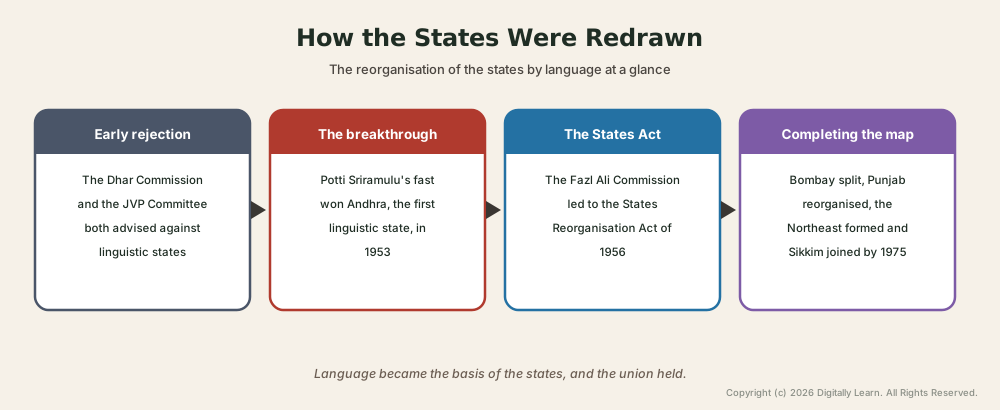
The linguistic reorganisation of states was the redrawing of the internal map of the Union on the basis of language. Although the Dhar Commission of 1948 and the JVP Committee opposed it, the fast-unto-death of Potti Sriramulu won the first linguistic state, Andhra, in 1953. The Fazl Ali Commission followed, and the States Reorganisation Act of 1956 redrew the states across the country. Later formations, the split of Bombay, the reorganisation of Punjab, the new states of the Northeast and the merger of Sikkim, completed the map, and the change, far from breaking the country apart, strengthened its unity.
Introduction: Why the States Were Reorganised on Linguistic Lines
Why Reorganising the States Was a Test of Unity
Why this matters: the states India inherited in 1947 were a patchwork of old provinces and former princely territories that took no account of language. Whether to redraw them on linguistic lines was one of the first great tests of the new nation, and many feared that to do so would tear the country apart.
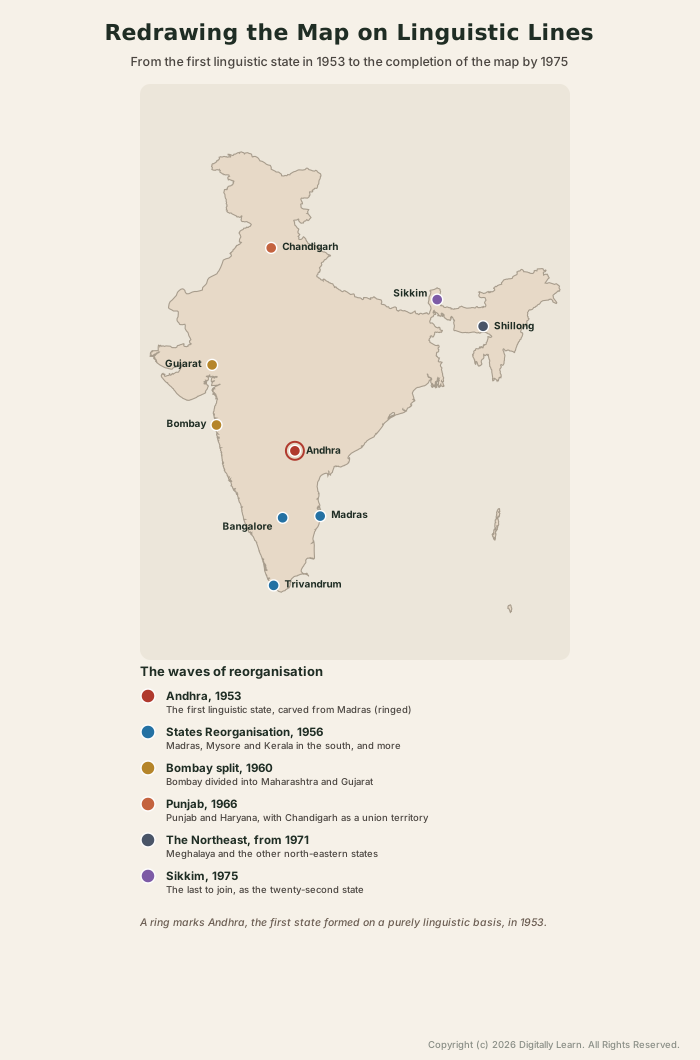
What is the significance of the reorganisation: it settled how a diverse union would manage its diversity. By accommodating the demand for states in which people shared a language, the Union turned a potential source of division into a settled basis for federalism, as the map and the sections below set out.
The Demand and the Caution of the Dhar and JVP Committees
Why the Leaders First Opposed Linguistic States
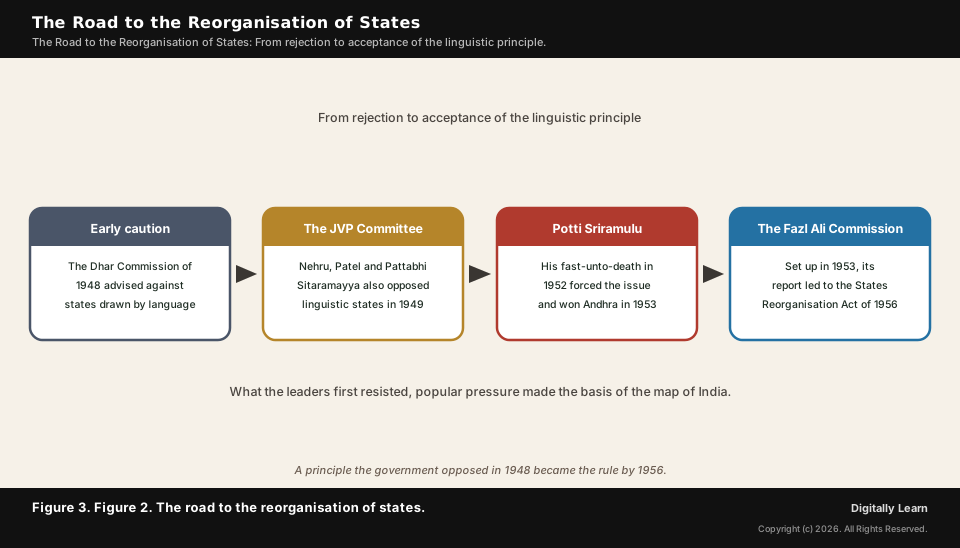
What is the significance of the early caution: the leadership was wary. So soon after Partition, it feared that states based on language would feed regionalism and break the union. The Dhar Commission of 1948 advised against drawing states purely by language, recommending administrative convenience instead.
Distinguishing the JVP Committee: a committee of Nehru, Patel and Pattabhi Sitaramayya, known by their initials as the JVP Committee, reached the same conclusion in 1949. National unity, they held, had to come before linguistic sentiment, so the demand was set aside, for a time.
Potti Sriramulu and the First Linguistic State of 1953
How a Fast Won the First Linguistic State
Observable outcomes followed a single act of sacrifice. Potti Sriramulu went on a fast-unto-death for a separate Telugu-speaking state and died in 1952, after which the agitation became impossible to resist. In 1953 the government conceded the first linguistic state, Andhra State, carved out of the Madras Presidency with its capital at Kurnool.
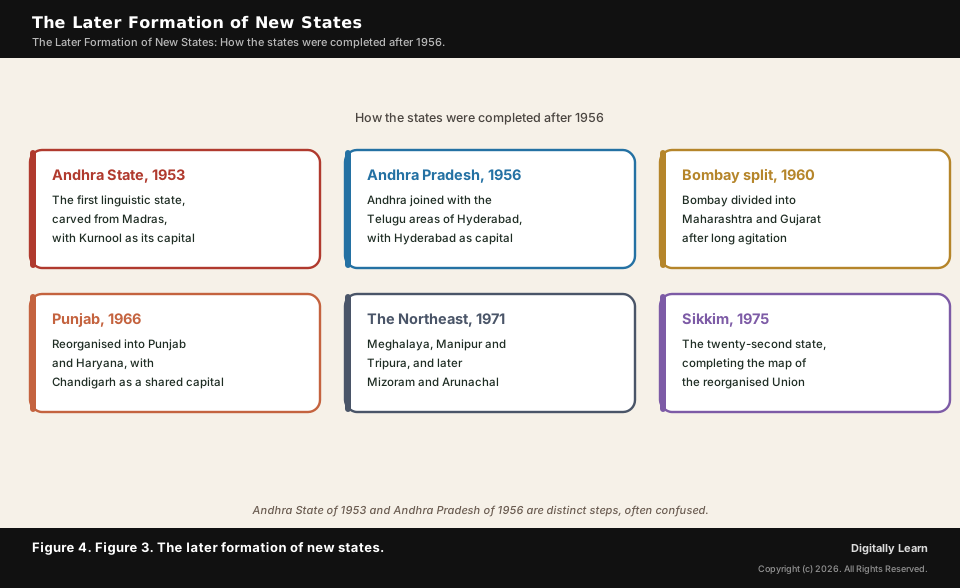
Distinguishing two Andhras: it is important not to confuse two steps. Andhra State of 1953 was the first, with Kurnool as its capital; Andhra Pradesh came later, in 1956, when Andhra was joined with the Telugu-speaking areas of Hyderabad and the capital moved to Hyderabad. The breakthrough of 1953 opened the door to a general reorganisation.
The Fazl Ali Commission and the States Reorganisation Act 1956
The Commission That Redrew the Map
What is the significance of the Fazl Ali Commission: it gave the reorganisation a national plan. Set up in 1953 under Fazl Ali, the States Reorganisation Commission accepted language as a major basis for drawing states, while keeping national unity and administrative needs in view, and reported in 1955.
Distinguishing the Act: its recommendations were carried out by the States Reorganisation Act of 1956, which redrew the country into states and union territories largely along linguistic lines. The Act was the single greatest redrawing of the internal map, and the later formations below completed the work.
Later Formations: Bombay, Punjab, the Northeast and Sikkim
How the Map Was Completed After 1956
Observable outcomes continued for two decades. The bilingual state of Bombay was split into Maharashtra and Gujarat in 1960 after long agitation, and in 1966 Punjab was reorganised into Punjab and Haryana, with Chandigarh as a shared union territory capital.
Distinguishing the later waves: the Northeast was reorganised from 1971, creating Meghalaya and the other hill states, and in 1975 Sikkim joined as the twenty-second state, completing the map of the reorganised Union, as the formations below set out.
| Wave | When | What changed |
|---|---|---|
| The first linguistic state | 1953 | Andhra State carved from Madras, capital Kurnool |
| The general reorganisation | 1956 | The States Reorganisation Act redrew the map on language |
| The split of Bombay | 1960 | Bombay divided into Maharashtra and Gujarat |
| The reorganisation of Punjab | 1966 | Punjab and Haryana, with Chandigarh as a union territory |
| The Northeast and Sikkim | 1971 to 1975 | New north-eastern states and the merger of Sikkim |
Did the Reorganisation Strengthen or Weaken Indian Unity
Why Linguistic States Strengthened Rather Than Broke the Union
Distinguishing the fear from the result: the great fear was that linguistic states would feed separatism and break the country. In the event the opposite happened. By giving each major language community a state of its own within the Union, the reorganisation removed a grievance and bound people more firmly to the nation.
What is the significance for unity: language ceased to be a reason to leave the Union and became a settled part of life within it. The reorganisation showed that diversity, accommodated rather than suppressed, could be a source of strength, and the demand for separation on linguistic grounds largely faded.
Significance: A Settled Federal Map
How the Reorganisation Shaped the Federal Union
Contemporary linkages run from 1956 to the federal map of today. The linguistic states became the settled units of Indian federalism, and the principle has continued to shape later state formations, down to the recent creation of new states. The next part takes up the federal balance between these states and the centre.
The larger significance is that the peaceful redrawing of the internal map was a quiet triumph of nation-building. A diverse union managed one of its deepest divisions by accommodation rather than force, and the result has held. The points below gather the threads, and the next part turns to federalism and centre-state relations.
- The Dhar Commission and the JVP Committee first opposed forming states on the basis of language.
- Potti Sriramulu’s fast won Andhra State, the first linguistic state, in 1953, with Kurnool as its capital.
- The Fazl Ali Commission led to the States Reorganisation Act of 1956, which redrew the map.
- Later formations split Bombay, reorganised Punjab, formed the Northeast and merged Sikkim by 1975.
- Linguistic reorganisation accommodated diversity and strengthened, rather than weakened, Indian unity.
Previous Year UPSC-CSE Questions
Previous Year UPSC-CSE Questions By the end you will be able to draft model answers for the following UPSC questions. Each question carries a collapsible framework showing how to approach it in the exam.
- UPSC Mains 2016 GS-IHas the formation of linguistic States strengthened the cause of Indian Unity?
How to structure the answer in the exam
Introduction: Open with the fear that linguistic states would feed separatism, and the contrary result.
Body (sub-themes to develop):
- The early caution of the Dhar and JVP committees against linguistic states.
- The concession of Andhra in 1953 and the general reorganisation of 1956.
- How a state for each language community removed a grievance and accommodated diversity.
- The fading of separatist demands and the settled federal map that resulted.
Conclusion: Conclude that linguistic reorganisation, by accommodating diversity, strengthened rather than weakened Indian unity.
- UPSC Prelims 2008 GS Paper IWhich was the Capital of Andhra State when it was made a separate State in the year 1953?
How to approach this Prelims question
Approach: Recall the capital of the 1953 Andhra State, distinct from the 1956 Andhra Pradesh.
Trap to watch: The capital of Andhra State in 1953 was Kurnool; Hyderabad became the capital only when Andhra Pradesh was formed in 1956.
Key facts to recall:
- Andhra State was the first linguistic state, formed in 1953
- Its capital was Kurnool
- Andhra Pradesh, with Hyderabad as capital, came in 1956
Answer signal: Kurnool, so option (b).
Sources and Further Reading
- NCERT, Politics in India Since Independence (Class 12), Chapter 1: Challenges of Nation Building
- Wikipedia: States Reorganisation Act, 1956
- Wikipedia: States Reorganisation Commission
- Wikipedia: Potti Sreeramulu
- National Portal of India
- Press Information Bureau, Government of India
- National Archives of India
- Azadi Ka Amrit Mahotsav, Ministry of Culture
Editorial Disclaimer
This article is prepared for UPSC examination preparation. Verify key facts and interpretations against standard reference histories before relying on them.