


Overview
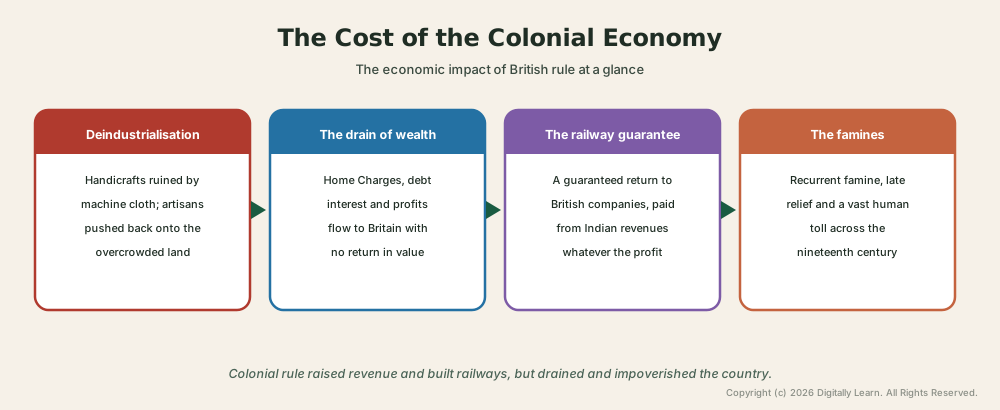
The economic impact of British rule went far beyond the land tax. Through deindustrialisation, the decline of India's handicrafts before machine-made imports, the country was turned from the workshop of the world into a supplier of raw materials. Through the drain of wealth, a transfer of resources to Britain by way of the Home Charges, the interest on the public debt and the railway guarantee, a part of India's income left every year without return. And through recurrent famine, the human cost of this economy was laid bare. Together these became the foundation of the nationalist critique of colonial rule.
Introduction: The Economic Impact of Colonial Rule
Counting the Cost of Empire
Why this matters: the deepest charge against colonial rule was economic. Beyond the land revenue, British policy reshaped India's industry, its trade and its very capacity to feed itself, and the consequences were felt by millions.
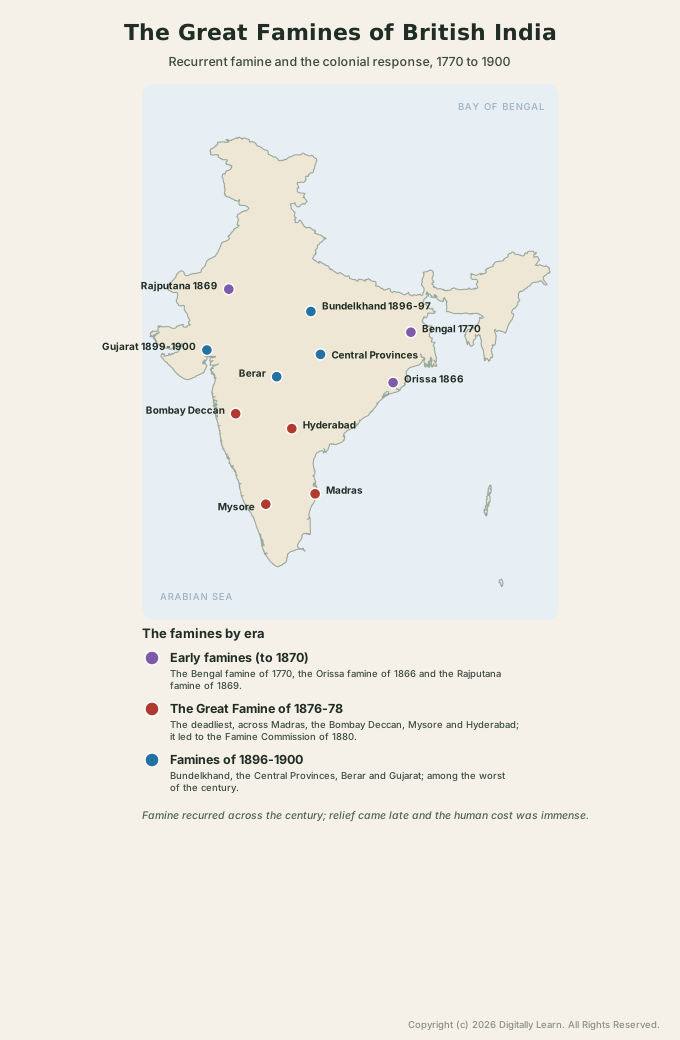
What is the significance of this theme: three threads run through the colonial economy, deindustrialisation, the drain of wealth and famine, and they fed the economic nationalism that would arm the freedom movement. The map below shows how famine recurred across the country.
The Decline of Handicrafts and the Deindustrialisation Debate
The Ruin of the Workshop of the World
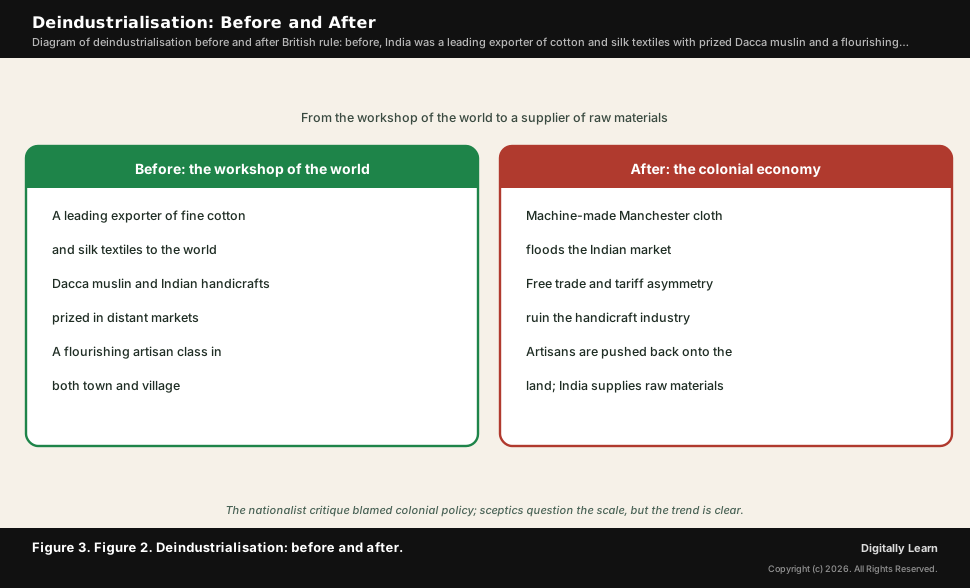
What is the significance of deindustrialisation: India had been a leading exporter of fine cotton and silk textiles, and the handicrafts of Dacca, Murshidabad and Surat were prized across the world. Under colonial rule, machine-made cloth from Manchester, carried by free trade and a tariff system tilted against Indian goods, flooded the market and ruined the artisan.
Distinguishing the consequence: as the handicrafts declined, the artisans were pushed back onto the land, overcrowding agriculture and deepening rural poverty. This is the process the Mains question calls the crippling of the rural economy. The nationalists, R. C. Dutt and Ranade, blamed colonial policy; sceptics such as Morris questioned the scale, but the trend is not in doubt. The contrast is set out below.
The Drain of Wealth: Mechanisms and the Home Charges
Naoroji, Dutt and the Drain Theory
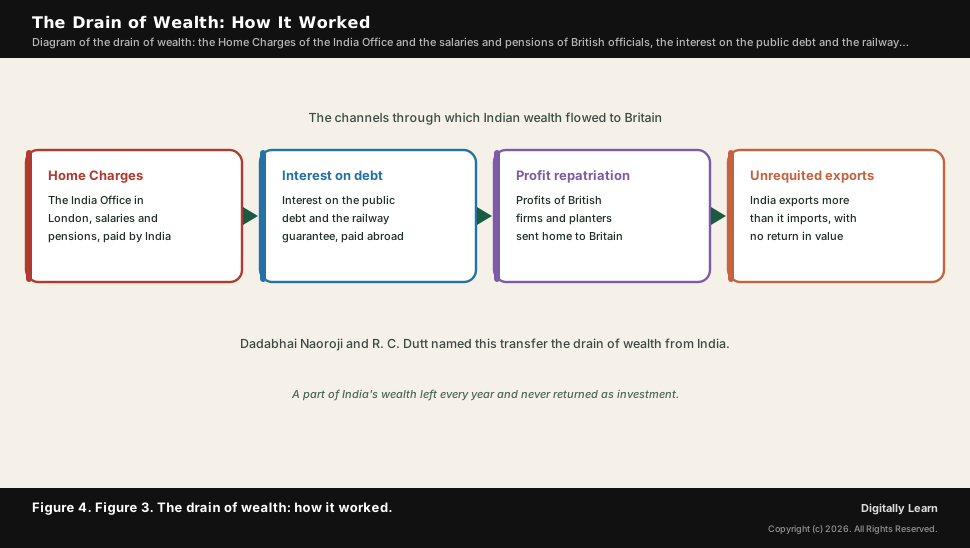
What is the significance of the drain theory: Dadabhai Naoroji, in his work Poverty and Un-British Rule in India, and R. C. Dutt argued that a large part of India's wealth was transferred to Britain every year with no economic return. Naoroji estimated the per capita income at a mere twenty rupees and called the loss the drain of wealth.
Distinguishing the mechanisms: the drain worked through the Home Charges, the cost of the India Office in London and the salaries and pensions of British officials, through the interest on the public debt and the railway guarantee, and through the repatriation of the profits of British firms. India exported more than it imported, but received no value in return. The channels are set out below.
The Railway Guarantee System as an Instrument of Extraction
Railways Built for Britain, Paid by India
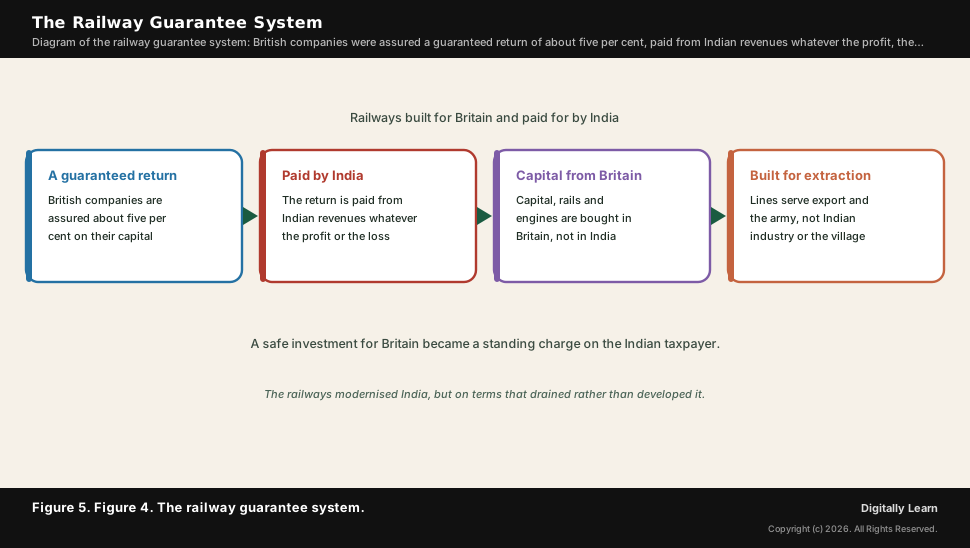
What is the significance of the railway guarantee: the railways were a genuine modernisation, but the terms were extractive. British companies were assured a guaranteed return of about five per cent on their capital, paid from Indian revenues whatever the profit or loss, so the risk fell on the Indian taxpayer and the reward went to the British investor.
Distinguishing the design: the capital, the rails and the engines were bought in Britain, and the lines were laid to carry raw materials to the ports and troops to the frontier, not to serve Indian industry or the village. The railway thus modernised the country while it drained it. The mechanism is set out below.
The Famines under British Rule and the Famine Commission of 1880
A Century of Famine
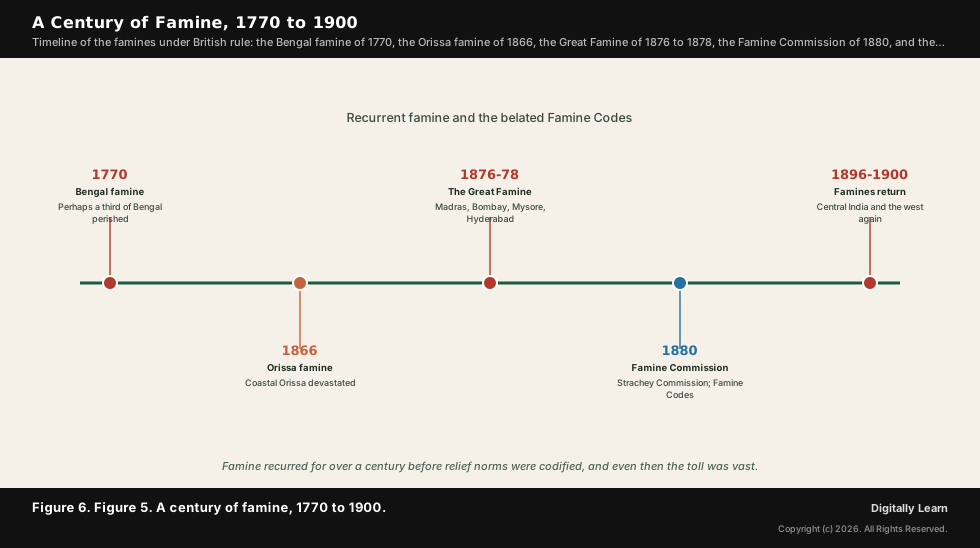
What is the significance of the famines: famine recurred again and again under colonial rule, from the great Bengal famine of 1770 through the Orissa famine of 1866 to the Great Famine of 1876 to 1878 and the famines of 1896 to 1900. The toll ran into many millions of lives.
Distinguishing the colonial response: relief was often late and grudging, held back by a doctrine of the free market that even let grain be exported during scarcity. Only after the Great Famine did the government appoint the Famine Commission of 1880, under Richard Strachey, whose recommendations led to the Famine Codes that at last laid down relief norms. The sequence is set out below.
Significance: The Human Cost of the Colonial Economy
An Economy Drained and a People Impoverished
What is the significance of these processes together: deindustrialisation, the drain of wealth, the extractive railway and recurrent famine were not separate misfortunes but parts of one colonial economy that raised revenue and exported raw materials while it impoverished the producer.
Distinguishing the human result: the artisan lost his craft, the peasant his surplus and, too often, the poor their lives. The wealth that might have been invested in India left it instead, so that growth in railways and trade went hand in hand with deepening poverty.
The Economic Critique and Its Legacy
Contemporary linkages run from this economy straight into the national movement. The economic critique of Dadabhai Naoroji, R. C. Dutt, M. G. Ranade and the editor G. Subramania Iyer gave the early Congress its most powerful argument, and the demand to stop the drain became a rallying cry, a theme taken up in the part on the road to the Congress.
The larger significance is that colonial rule left India commercialised but underdeveloped, its old industry destroyed and no new industry put in its place. The table and points below gather the threads, and the next part turns from the economy to the great socio-religious reform movements that reshaped Indian society.
| Process | Mechanism | Result |
|---|---|---|
| Deindustrialisation | Machine cloth and tariff asymmetry | Handicrafts ruined; artisans to the land |
| Drain of wealth | Home Charges, debt interest, profits | Wealth transferred to Britain |
| Railway guarantee | Guaranteed five per cent from revenues | Extraction, not industrialisation |
| Famine | Late relief; free-market dogma | Millions of deaths; the Famine Codes |
- Deindustrialisation ruined Indian handicrafts and pushed artisans back onto the overcrowded land.
- The drain of wealth, through the Home Charges and the railway guarantee, transferred India’s wealth to Britain.
- Dadabhai Naoroji and R. C. Dutt built the economic critique of colonialism (the drain theory).
- Recurrent famine led to the Famine Commission of 1880 (Strachey) and the Famine Codes.
- Together these processes impoverished India and gave the national movement its economic argument.
Previous Year UPSC-CSE Questions
Previous Year UPSC-CSE Questions By the end you will be able to draft model answers for the following UPSC questions. Each question carries a collapsible framework showing how to approach it in the exam.
- UPSC Mains 2017 GS-IExamine how the decline of traditional artisanal industry in colonial India crippled the rural economy.
How to structure the answer in the exam
Introduction: Open with India as the workshop of the world before colonial deindustrialisation.
Body (sub-themes to develop):
- The decline: machine cloth, free trade and tariff asymmetry ruin the handicrafts.
- The ruralisation: artisans pushed back onto the land, overcrowding agriculture.
- The rural effect: falling incomes, indebtedness, no alternative employment.
- The debate: the nationalist position (Dutt, Ranade) and the sceptical caveat (Morris).
Conclusion: Conclude that deindustrialisation without re-industrialisation crippled the rural economy.
- UPSC Prelims 2011 GS Paper IWith reference to the period of colonial rule in India, "Home Charges" formed an important part of drain of wealth from India. Which of the following funds constituted "Home Charges"?
- Funds used to support the India Office in London.
- Funds used to pay salaries and pensions of British personnel engaged in India.
- Funds used for waging wars outside India by the British.
Select the correct answer using the codes given below.
How to approach this Prelims question
Approach: Test each item against the actual content of the Home Charges.
Trap to watch: The Home Charges covered the India Office and British salaries and pensions and debt interest, but NOT the cost of wars waged outside India. So 1 and 2 only.
Key facts to recall:
- Home Charges: India Office costs in London
- Home Charges: salaries and pensions of British officials
- NOT wars outside India
Answer signal: Statements 1 and 2 only, so option (b).
- UPSC Prelims 2015 GS Paper IWho of the following was/were economic critic/critics of colonialism in India?
- Dadabhai Naoroji
- G. Subramania Iyer
- R.C. Dutt
Select the correct answer using the code given below.
How to approach this Prelims question
Approach: Recall the economic nationalists who built the critique of colonial economics.
Trap to watch: All three, Naoroji, Subramania Iyer and R. C. Dutt, were economic critics of colonialism. The answer is 1, 2 and 3.
Key facts to recall:
- Dadabhai Naoroji: the drain theory
- R. C. Dutt: the Economic History of India
- G. Subramania Iyer: economic nationalist and editor
Answer signal: All three, so option (d).
Sources and Further Reading
- Wikipedia: Deindustrialization (India, economic history)
- Wikipedia: Drain of wealth (Dadabhai Naoroji)
- Wikipedia: Great Famine of 1876-1878
- Wikipedia: Famine in India
- NCERT, Themes in Indian History (Modern India)
- Indian Culture Portal, Ministry of Culture
- National Portal of India
- Press Information Bureau, Government of India
- National Archives of India
Editorial Disclaimer
This article is prepared for UPSC examination preparation. Verify key facts and interpretations against standard reference histories before relying on them.