


Overview
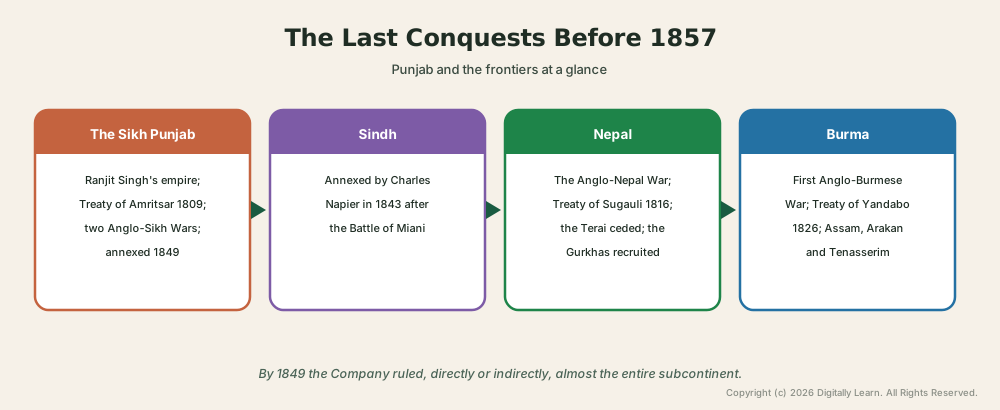
The conquest of the frontiers was the final phase of British expansion before 1857, carrying the Company to the natural limits of the subcontinent. The two Anglo-Sikh Wars ended Maharaja Ranjit Singh's kingdom and led to the annexation of Punjab in 1849; the Anglo-Nepal War ended with the Treaty of Sugauli in 1816; the First Anglo-Burmese War ended with the Treaty of Yandabo in 1826; and Sindh was annexed by Charles Napier in 1843. By 1849 the Company ruled, directly or through alliance, almost the whole of India.
Introduction: Reaching the Natural Frontiers
The Final Phase of Conquest
Why this matters: with the Marathas and Mysore subdued, the Company turned to the edges of the subcontinent, the north-west, the Himalayan foothills and the eastern coast, to reach what the British called the natural frontiers of India.
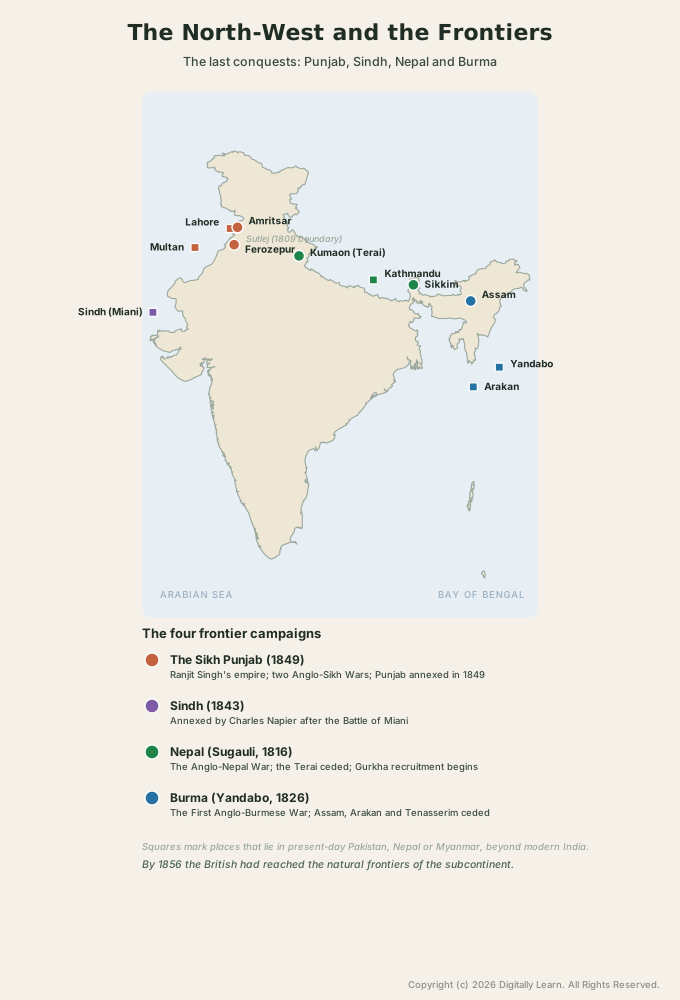
What is the significance of this theme: it completes the conquest. The fall of the Sikh kingdom of Punjab, the wars with Nepal and Burma, and the seizure of Sindh brought almost the entire subcontinent under British control by the eve of 1857, as the map below sets out.
Maharaja Ranjit Singh and the Sikh Empire
The Lion of Punjab and the Treaty of Amritsar
What is the significance of Ranjit Singh: he built the last great independent Indian kingdom. From the 1790s Ranjit Singh united the Sikh misls into a powerful state centred on Lahore, with a modern, European-trained army that the Company respected and would not lightly challenge.
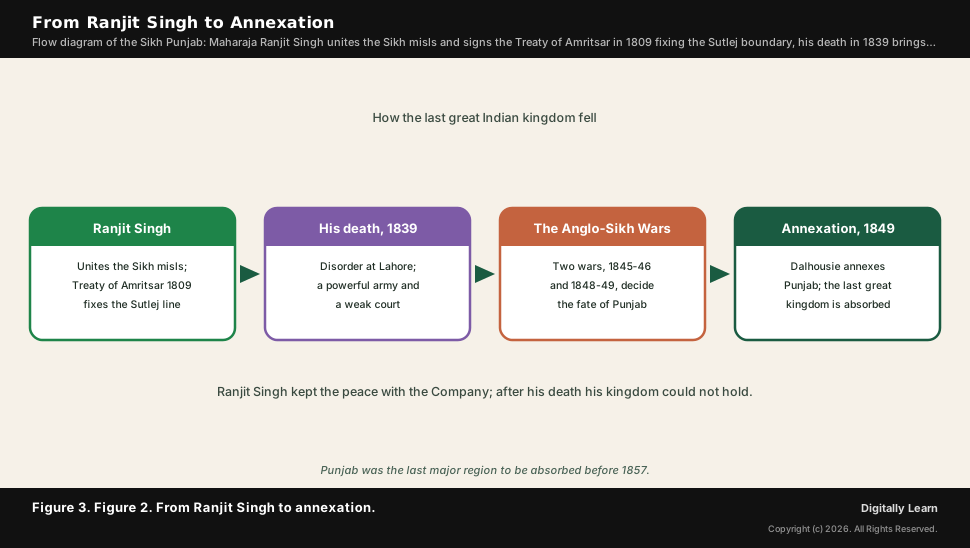
Distinguishing his policy: by the Treaty of Amritsar in 1809 he accepted the river Sutlej as the boundary with the Company, turning his expansion north and west to Multan, Kashmir and Peshawar instead. While he lived, the peace held; the fall of the Sikh kingdom waited on his death in 1839, as the flow below shows.
The Two Anglo-Sikh Wars and the Annexation of Punjab 1849
The Fall of the Last Great Kingdom
What is the significance of the Anglo-Sikh Wars: they removed the last power capable of fielding an army to match the Company's. After Ranjit Singh's death, disorder at Lahore and tension over the frontier led to the First Anglo-Sikh War of 1845 to 1846, which the Sikhs lost despite hard fighting.
Distinguishing the outcome: a second rising brought the Second Anglo-Sikh War of 1848 to 1849, after which Lord Dalhousie annexed the whole of Punjab in 1849. The Sikh kingdom was absorbed, the young Maharaja Duleep Singh pensioned off, and the Koh-i-Noor diamond taken to Britain.
The Anglo-Nepal War and the Treaty of Sugauli 1816
The Himalayan Frontier and the Gurkhas
What is the significance of the Anglo-Nepal War: it fixed the northern, Himalayan frontier. Friction over the Terai lowlands led to war from 1814, in which the Company found the Gurkhas formidable opponents before prevailing.
Distinguishing the settlement: by the Treaty of Sugauli in 1816, Nepal ceded the Terai, Kumaon, Garhwal and its claims over Sikkim, and accepted a British Resident at Kathmandu. From this contact began the long tradition of recruiting Gurkha soldiers into the British and later the Indian army.
The First Anglo-Burmese War and the Annexation of Sindh
Burma and the Treaty of Yandabo 1826
What is the significance of the First Anglo-Burmese War: it carried British power to the eastern frontier. Burmese expansion towards Assam and the Company's border led to a long and costly war from 1824, ended by the Treaty of Yandabo in 1826.
Distinguishing the gains: Burma ceded Assam, Arakan and Tenasserim and gave up its claims on the north-eastern frontier. Two further Burmese wars, in 1852 and 1885, would complete the conquest of Burma, the last falling after the period of this article.
Charles Napier and the Battle of Miani
What is the significance of the annexation of Sindh: it is often cited as the most cynical of the conquests. In 1843, on a thin pretext and against the spirit of existing treaties, Charles Napier defeated the Amirs of Sindh at the Battle of Miani and annexed the province under Governor-General Ellenborough.
Distinguishing the judgement: the annexation was widely criticised even at the time as unjust, and Napier is said, perhaps apocryphally, to have signalled it with the Latin pun peccavi, meaning I have sinned. The acquisitions are gathered in the table later in this article.
Significance: The Territorial Map Nearly Complete by 1857
An Almost Finished Conquest
Contemporary linkages run straight to the great revolt. By 1849 the Company had reached the natural frontiers of the subcontinent. The swift and sometimes high-handed annexations, of Sindh, of Punjab and soon of states such as Awadh under the Doctrine of Lapse, bred a deep resentment that would feed the uprising of 1857.
The larger significance is that within a single century the Company had grown from a trader in Bengal into the ruler of almost all of India. The points below gather the threads, and the next part turns from conquest to the machinery of the colonial state that governed what had been won.
| Region | War or means | Treaty or year |
|---|---|---|
| Nepal (the Terai) | Anglo-Nepal War | Treaty of Sugauli, 1816 |
| Burma (Assam, Arakan) | First Anglo-Burmese War | Treaty of Yandabo, 1826 |
| Sindh | Conquest under Napier | Annexed 1843 (Battle of Miani) |
| Punjab | Two Anglo-Sikh Wars | Annexed 1849 |
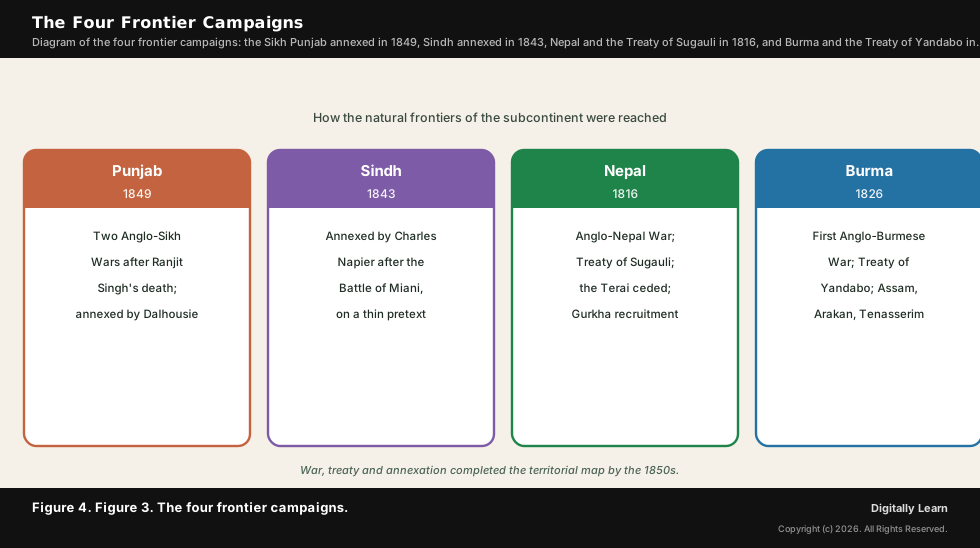
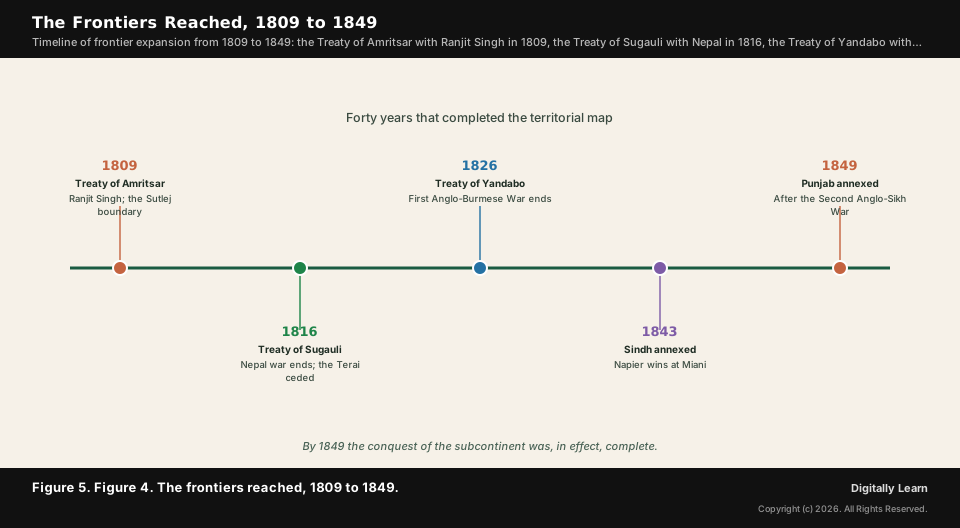
- Ranjit Singh’s Treaty of Amritsar (1809) fixed the Sutlej boundary; his death in 1839 opened the way to war.
- Two Anglo-Sikh Wars led to the annexation of Punjab in 1849.
- The Treaty of Sugauli (1816) ceded the Terai and began Gurkha recruitment.
- The Treaty of Yandabo (1826) ceded Assam and Arakan.
- Sindh was annexed by Napier in 1843; the conquest of India was nearly complete by 1857.
Previous Year UPSC-CSE Questions
Previous Year UPSC-CSE Questions By the end you will be able to draft model answers for the following UPSC questions. Each question carries a collapsible framework showing how to approach it in the exam.
- UPSC Prelims 2004 GS Paper IWhich of the following pairs are correctly matched? List I (Period) : List II (Wars)
- AD 1767-69 : First Anglo-Maratha War
- AD 1790-92 : Third Mysore War
- AD 1824-26 : First Anglo-Burmese War
- AD 1845-46 : Second Sikh War
Select the correct answer using the codes given below:
How to approach this Prelims question
Approach: Check each war against its correct dates.
Trap to watch: 1845-46 was the FIRST Anglo-Sikh War (the Second was 1848-49); the First Anglo-Maratha War was 1775-82, not 1767-69 (that was the First Anglo-Mysore War).
Key facts to recall:
- First Anglo-Burmese War 1824-26 (pair 3, correct)
- First Anglo-Sikh War 1845-46 (so pair 4 'Second Sikh War' is wrong)
- Third Mysore War 1790-92 (pair 2, correct; from Part 5)
Answer signal: Pairs 2 and 3, so option (d).
Sources and Further Reading
- Wikipedia: Anglo-Sikh Wars
- Wikipedia: Ranjit Singh
- Wikipedia: Treaty of Sugauli
- Wikipedia: Treaty of Yandabo
- Wikipedia: Conquest of Sindh
- NCERT, Themes in Indian History and Our Pasts (Modern India)
- Indian Culture Portal, Ministry of Culture
- National Portal of India
- Press Information Bureau, Government of India
- National Archives of India
Editorial Disclaimer
This article is prepared for UPSC examination preparation. Verify key facts and interpretations against standard reference histories before relying on them.