


Overview
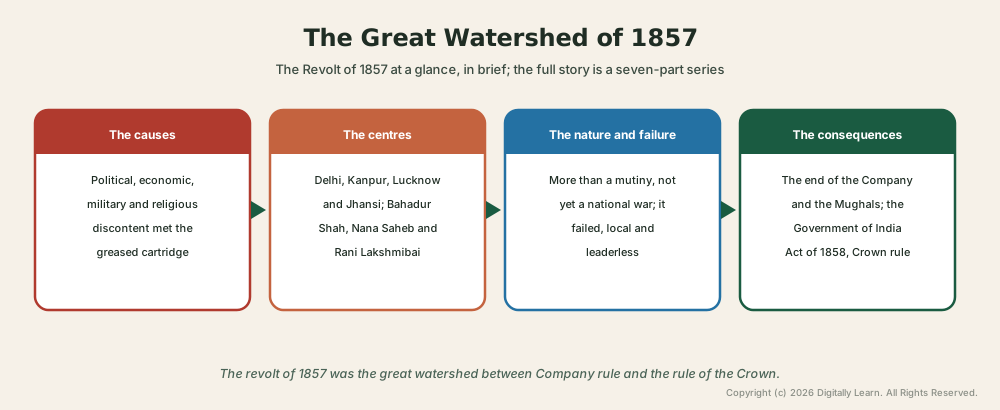
The Revolt of 1857 was the great watershed of modern Indian history. Beginning as a mutiny of the sepoys at Meerut on 10 May 1857, it spread into a vast civil rebellion across the north-central plains, with its storm centres at Delhi, Kanpur, Lucknow and Jhansi. Sprung from deep political, economic, military and religious discontent and the spark of the greased cartridge, it was crushed within a year, but it ended the rule of the East India Company and the Mughal dynasty and brought India under the direct rule of the Crown by the Government of India Act of 1858. This part gives the watershed in brief; the full story is told in a dedicated seven-part series.
Introduction: The Great Watershed
The Turning Point of the Nineteenth Century
Why this matters: the Revolt of 1857 was the single greatest upheaval of nineteenth-century India and the watershed between the rule of the East India Company and the rule of the Crown. It began as a mutiny of the sepoys and grew into a wide civil rebellion across the north.
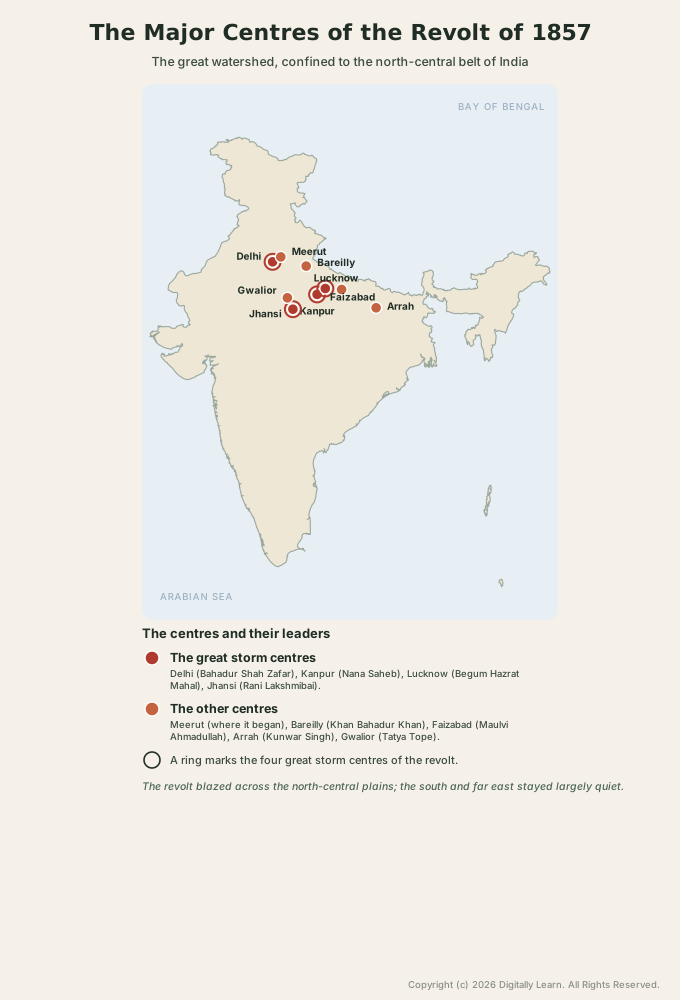
What is the significance of this theme: the revolt was the violent culmination of a century of discontent and the prelude to a new colonial order. The map below shows the major centres of the rising across the north-central plains.
The Causes of the Revolt: Political, Economic, Military, Social and Religious
Deep Discontents and the Immediate Spark
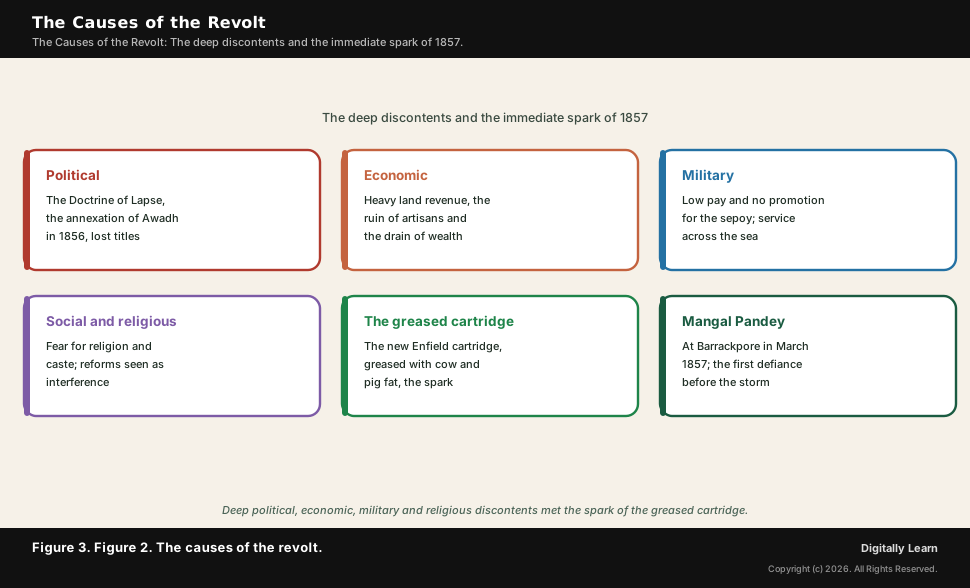
What is the significance of the causes: the revolt sprang from many discontents at once. Politically, the Doctrine of Lapse and the annexation of Awadh in 1856 angered rulers and people; economically, the heavy land revenue, the ruin of artisans and the drain of wealth bred misery; and the sepoy resented his low pay, his lack of promotion and service across the sea.
Distinguishing the immediate spark: above all there was fear for religion and caste, sharpened by the new greased cartridge of the Enfield rifle, greased with the fat of the cow and the pig, which the sepoy had to bite. Mangal Pandey defied his officers at Barrackpore in March 1857, and the storm broke at Meerut on 10 May 1857. The causes are set out below.
The Major Centres and the Leaders
Delhi, Kanpur, Lucknow, Jhansi and Bihar
What is the significance of the centres: the revolt blazed across the north-central plains, as the map above shows. At Delhi the rebels proclaimed the old emperor Bahadur Shah Zafar their leader; at Kanpur Nana Saheb and Tatya Tope rose; at Lucknow the Begum Hazrat Mahal led the people of Awadh.
Distinguishing the heroes: at Jhansi the young Rani Lakshmibai became the most famous figure of the revolt, and in Bihar the aged Kunwar Singh of Jagdishpur took up arms. Beyond this belt, the south, most of Bengal, Punjab and the Rajputana states around Chittor stayed largely quiet, a fact that would tell in the end.
The Nature of the Revolt: Sepoy Mutiny or First War of Independence
The Great Debate over the Character of 1857
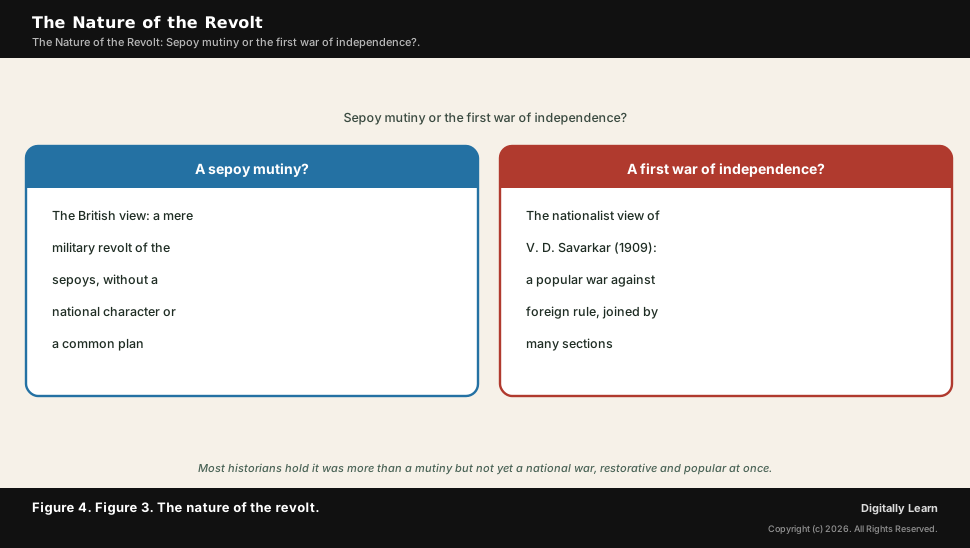
What is the significance of the debate: historians have long argued over the character of 1857. To many British writers it was no more than a sepoy mutiny, a military revolt without a national plan; to V. D. Savarkar, writing in 1909, it was the first war of independence, a popular struggle against foreign rule.
Distinguishing the balanced view: most modern historians hold that it was more than a mutiny but not yet a national war. It drew in peasants, artisans, dispossessed rulers and religious leaders, yet it looked back to a restoring of the old order rather than forward to a nation. The two views are contrasted below.
Why the Revolt Failed
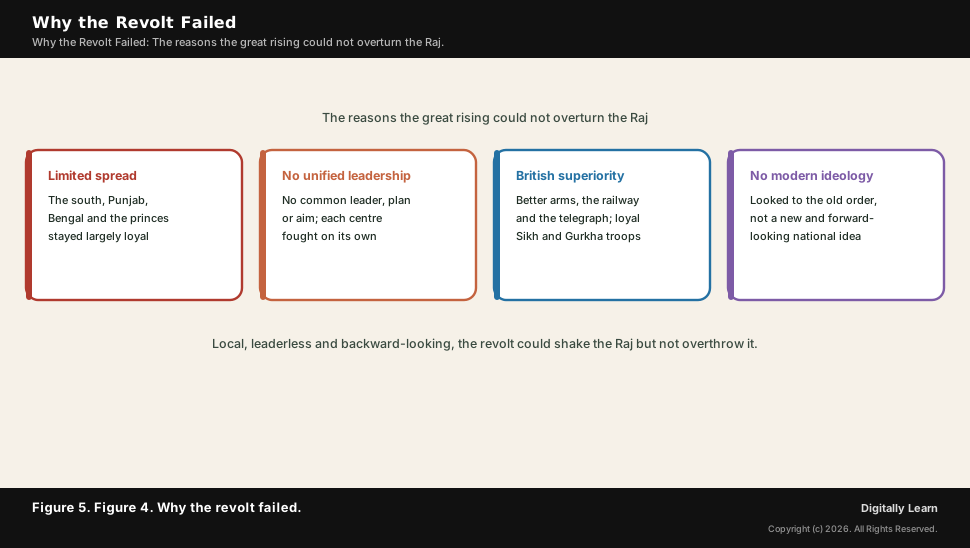
Local, Leaderless and Backward-Looking
What is the significance of the failure: the revolt was crushed within a year for reasons that revealed its weakness. It was confined to the north-central belt, while the south, Punjab, most of Bengal and the loyal princely states gave the British a secure base and fresh troops.
Distinguishing the deeper reasons: the rebels had no common leadership, plan or aim, and no modern, forward-looking ideology; each centre fought on its own and looked to the old order. Against them the British had better arms, the railway and the telegraph, and the loyalty of the Sikh and Gurkha soldiers. The reasons are set out below.
The Consequences: From Company Rule to the Crown
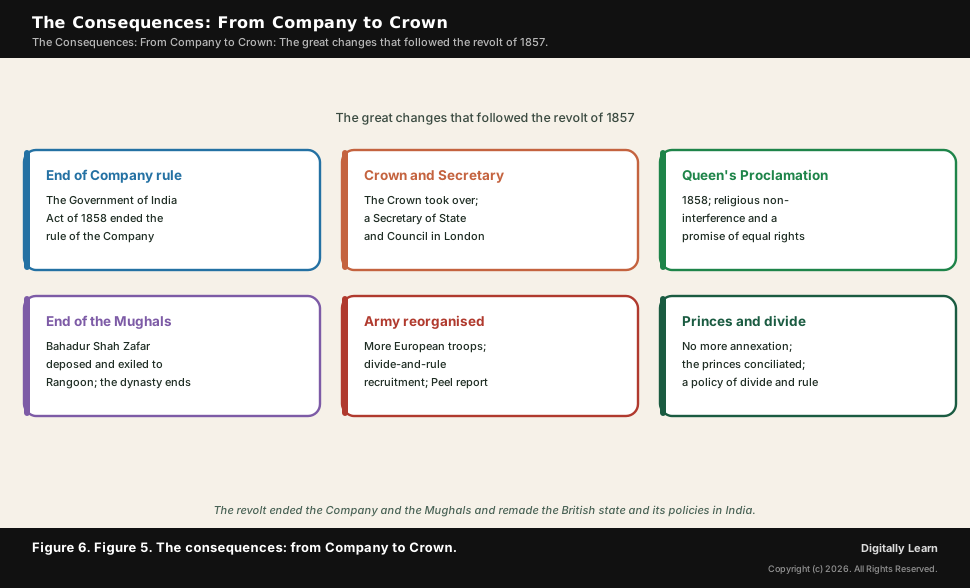
The Government of India Act of 1858 and After
What is the significance of the consequences: the revolt remade the British state in India. The Government of India Act of 1858 ended the rule of the East India Company and transferred power to the Crown, with a Secretary of State and a Council in London, while the Governor-General, Lord Canning, became the first Viceroy.
Distinguishing the wider changes: the Queen's Proclamation of 1858 promised religious non-interference and equal rights; the old Mughal dynasty was ended with the exile of Bahadur Shah Zafar to Rangoon; the army was reorganised with more European troops and a policy of divide and rule; and the British conciliated the princes and abandoned annexation. The consequences are set out below.
Significance and the Full Story
The Watershed of Modern Indian History
What is the significance of the revolt: it was the great watershed between the two halves of British rule. Before it stood the Company, the Mughals and the policy of annexation; after it came the Crown, the Viceroy and a wary, conciliatory rule that nonetheless deepened racial distrust and the practice of divide and rule.
Distinguishing its legacy: though it failed, the revolt left a powerful memory of resistance that the later national movement would draw upon, and its heroes became the legends of the freedom struggle. It is the hinge on which the whole story of modern India turns.
Read the Full Story: The Revolt of 1857 in Seven Parts
Contemporary linkages: this part gives the watershed in brief. For the full treatment, the causes, the course at each centre, the suppression and reconquest, the participation and the historiography, see the dedicated seven-part series, beginning with the Revolt of 1857: meaning, nature and forerunners, which carries the complete story.
The larger significance: the Revolt of 1857 closes the long story of conquest and consolidation and opens the age of the organised national movement. The table and points below gather the threads, and the final part of this series steps back to assess colonial rule as a whole.
| Centre | Leader | Region |
|---|---|---|
| Delhi | Bahadur Shah Zafar | The Mughal capital |
| Kanpur | Nana Saheb, Tatya Tope | The Doab |
| Lucknow | Begum Hazrat Mahal | Awadh |
| Jhansi | Rani Lakshmibai | Bundelkhand |
| Jagdishpur (Arrah) | Kunwar Singh | Bihar |
- The revolt began at Meerut on 10 May 1857 and spread across the north-central plains (Delhi, Kanpur, Lucknow, Jhansi, Bihar).
- Its causes were political, economic, military and religious; the greased cartridge was the immediate spark.
- Historians debate whether it was a sepoy mutiny or the first war of independence; most see it as more than a mutiny, not yet a national war.
- It failed because it was local, leaderless and backward-looking, against a British base secured by the loyal regions.
- The Government of India Act of 1858 ended Company rule and the Mughal dynasty and brought direct rule by the Crown. The full story is told in the seven-part series on the Revolt of 1857.
Previous Year UPSC-CSE Questions
Previous Year UPSC-CSE Questions By the end you will be able to draft model answers for the following UPSC questions. Each question carries a collapsible framework showing how to approach it in the exam.
- UPSC Mains 2016 GS-IExplain how the uprising of 1857 constitutes an important watershed in the evolution of British policies towards colonial India.
How to structure the answer in the exam
Introduction: Open with 1857 as the hinge between Company rule and the rule of the Crown.
Body (sub-themes to develop):
- Constitutional: the Government of India Act 1858, Crown rule, Secretary of State, the Viceroy.
- Conciliation: the Queen's Proclamation 1858, the end of annexation, the princes won over.
- The army: more European troops, divide-and-rule recruitment, the Peel Commission.
- The spirit: racial distrust, divide and rule, a wary and defensive rule.
Conclusion: Conclude that 1857 turned British policy from expansion to cautious, conciliatory consolidation.
- UPSC Prelims 2006 GS Paper IWho was the Governor-General of India during the Sepoy Mutiny?
How to approach this Prelims question
Approach: Recall who held the office in 1857-58.
Trap to watch: Dalhousie left in 1856 (his annexations helped cause the revolt); Canning was Governor-General during the revolt and became the first Viceroy.
Key facts to recall:
- Lord Canning: Governor-General during the revolt (1857-58)
- He became the first Viceroy under the Act of 1858
- Dalhousie (annexations) had left in 1856
Answer signal: Lord Canning, so option (a).
- UPSC Prelims 2005 GS Paper IWhich one of the following territories was not affected by the Revolt of 1857?
How to approach this Prelims question
Approach: Recall which places were storm centres and which lay outside the revolt.
Trap to watch: Jhansi, Jagdishpur and Lucknow were all centres of the revolt; Chittor in Rajputana lay outside the north-central belt that rose.
Key facts to recall:
- Centres: Jhansi (Lakshmibai), Jagdishpur (Kunwar Singh), Lucknow (Hazrat Mahal)
- The revolt was confined to the north-central plains
- Chittor (Rajputana) was not affected
Answer signal: Chittor, so option (b).
Sources and Further Reading
- Wikipedia: Indian Rebellion of 1857
- Wikipedia: Government of India Act 1858
- Wikipedia: Rani of Jhansi (Lakshmibai)
- Wikipedia: Bahadur Shah II (Zafar)
- NCERT, Themes in Indian History (Modern India)
- Indian Culture Portal, Ministry of Culture
- National Portal of India
- Press Information Bureau, Government of India
- National Archives of India
Editorial Disclaimer
This article is prepared for UPSC examination preparation. Verify key facts and interpretations against standard reference histories before relying on them.