


Overview
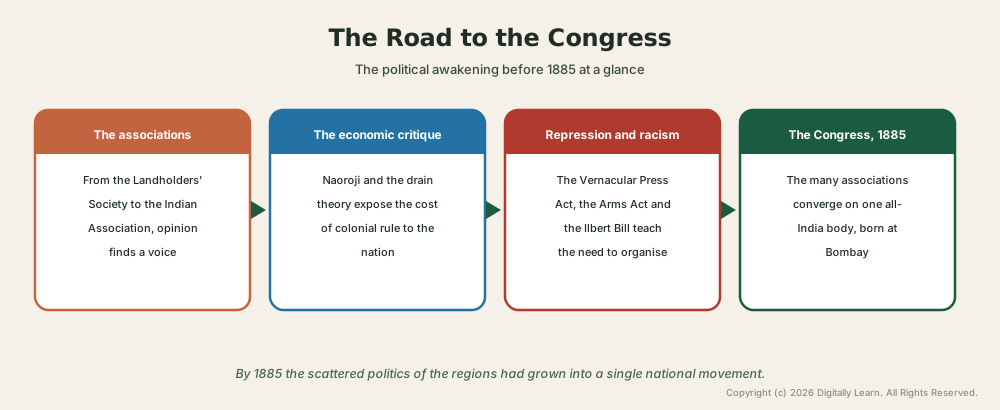
By the 1880s the new educated class, the press and the economic critique of colonialism had bred a national consciousness, and Indians began to organise. The early political associations, from the Landholders' Society to the Indian Association of Surendranath Banerjee, gave opinion a voice; the drain theory of Dadabhai Naoroji gave it an argument; and the repression of Lytton and the Ilbert Bill controversy of 1883 taught the lesson of organisation. These streams converged in the founding of the Indian National Congress at Bombay in 1885, the beginning of the organised national movement.
Introduction: The Political Awakening
The Birth of a National Consciousness
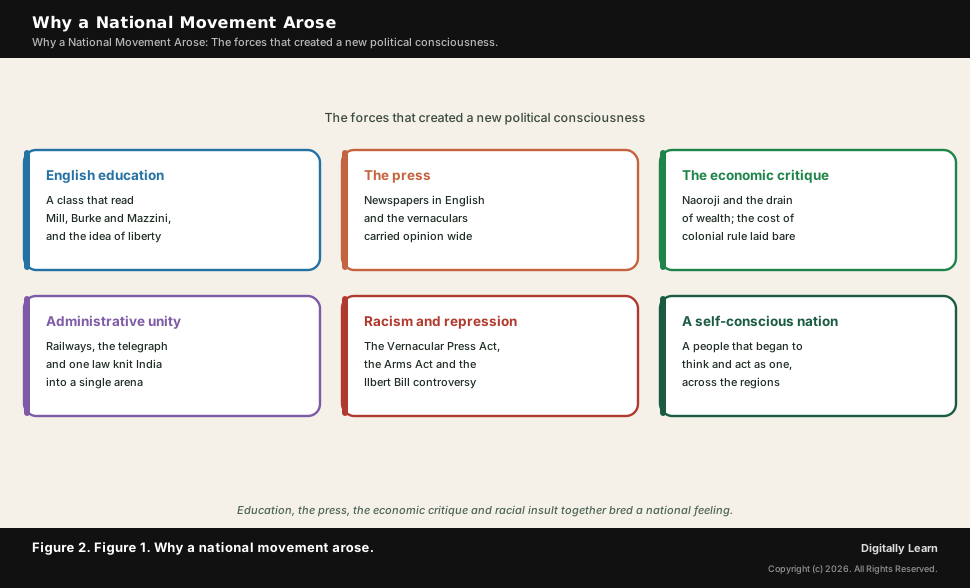
Why this matters: by the 1880s a new political consciousness had been born in India. The graduates of the new colleges, the readers of the new press and the men who had absorbed the economic critique of colonial rule began to see themselves as a nation with rights and a voice.
What is the significance of this theme: this awakening did not appear from nowhere. It grew from a generation of associations, argument and agitation that taught Indians to organise. The forces behind it are set out below.
The Early Political Associations
From the Landholders' Society to the Indian Association
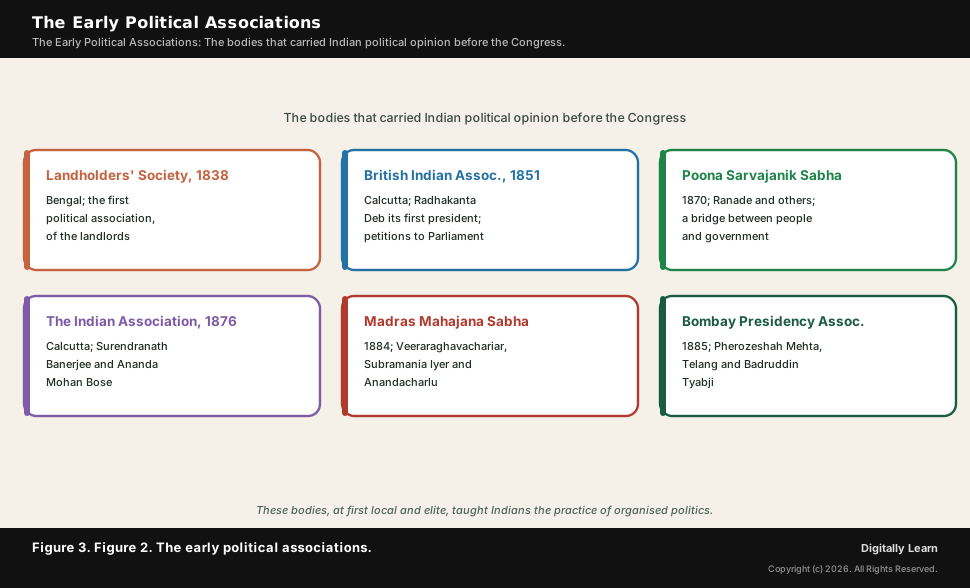
What is the significance of the early associations: they were the first schools of organised politics in India. The Landholders' Society of 1838 in Bengal was the earliest; the British Indian Association of 1851, with Radhakanta Deb as its first president, petitioned Parliament; and the Poona Sarvajanik Sabha of 1870, with Ranade, formed a bridge between people and government.
Distinguishing the wider growth: the most important was the Indian Association of 1876, founded at Calcutta by Surendranath Banerjee and Ananda Mohan Bose, the first body with a truly national aim. It was joined by the Madras Mahajana Sabha of 1884, whose founders included Veeraraghavachariar, Subramania Iyer and Anandacharlu, and the Bombay Presidency Association of 1885. The associations are set out below.
The Economic Critique of Colonialism
Naoroji, the Drain Theory and the East India Association
What is the significance of the economic critique: it gave the awakening its most powerful argument. Dadabhai Naoroji, in his work Poverty and Un-British Rule in India, set out the drain of wealth from India to Britain, and founded the East India Association in London in 1866 to put India's case before the British public.
Distinguishing the early economists: Naoroji, R. C. Dutt and the other early economic nationalists, whose work was discussed in the part on the drain of wealth, showed that colonial rule impoverished India. Their critique became the rallying argument of the early Congress, the demand to stop the drain.
Lytton's Repression and Ripon's Liberalism
The Two Faces of the Raj
What is the significance of these two viceroys: between them they sharpened Indian feeling. Lord Lytton, viceroy from 1876, held the grand Delhi Durbar of 1877 in the midst of famine, passed the Vernacular Press Act and the Arms Act of 1878, and reduced the age for the civil service examination, a string of measures Indians felt as insult and repression.
Distinguishing Ripon's liberalism: Lord Ripon, viceroy from 1880, took the opposite course. He repealed the Vernacular Press Act in 1882, passed the first Factory Act of 1881, and through the Local Self-Government Resolution of 1882 earned the name of the father of local self-government in India. His liberalism raised Indian hopes, which the Ilbert Bill would then test.
The Ilbert Bill Controversy of 1883: The Hinge to Organised Nationalism
The White Mutiny and the Lesson of Organisation
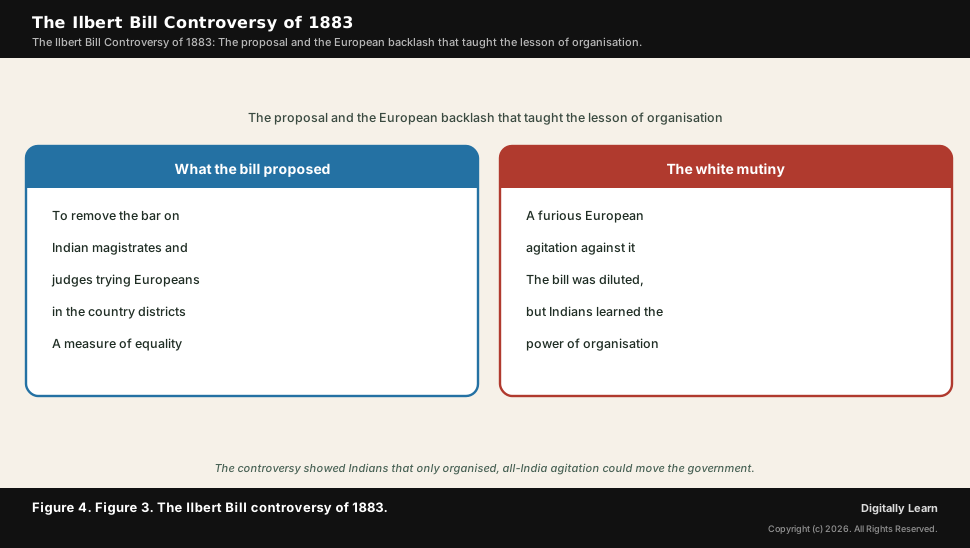
What is the significance of the Ilbert Bill: it was the hinge to organised nationalism. The bill of 1883 proposed to remove the bar that prevented Indian magistrates and judges from trying Europeans in the country districts, a simple measure of equality before the law.
Distinguishing the white mutiny: the European community erupted in a furious agitation, the so-called white mutiny, and forced the government to dilute the bill. The lesson was not lost on Indians: they saw that a small, organised community could bend the government, and that only an organised, all-India agitation could win their own demands. The controversy is set out below.
The Founding of the Indian National Congress, 1885
From Many Associations to One National Body
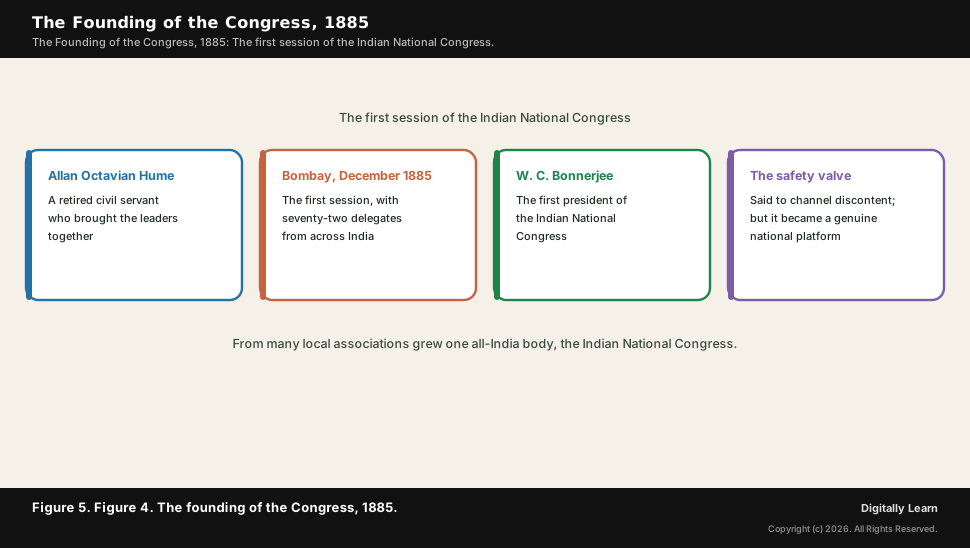
What is the significance of the founding of the Congress: it brought the scattered associations together into one all-India body. With the help of Allan Octavian Hume, a retired civil servant, the first session of the Indian National Congress met at Bombay in December 1885, with seventy-two delegates and W. C. Bonnerjee as its first president.
Distinguishing the safety-valve debate: it was once held that Hume meant the Congress as a safety valve to drain off discontent. Whatever his intent, the Congress at once became a genuine national platform that voiced Indian grievances and demands, and within a generation it would lead the freedom struggle. The founding is set out below.
Significance: The Stage Set for 1885
The Convergence of the Streams
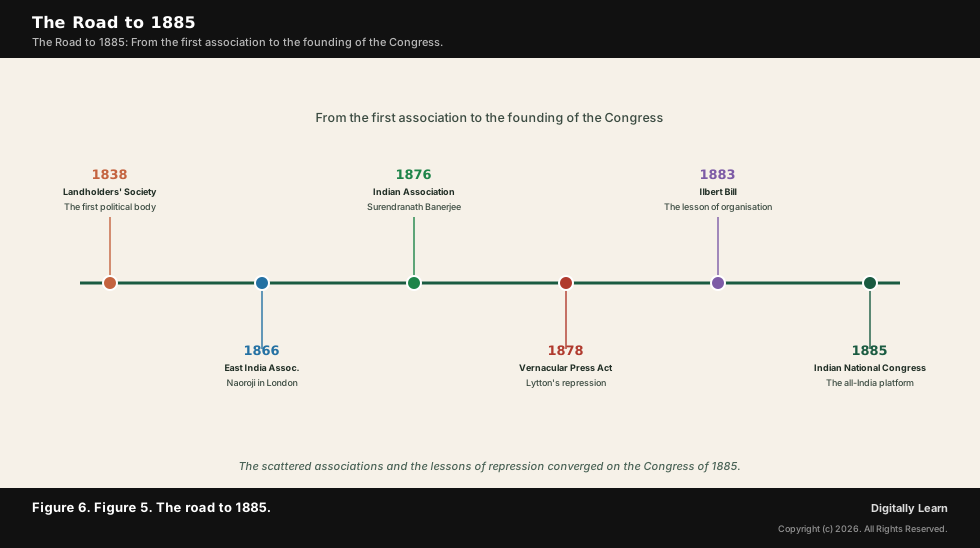
What is the significance of the road to 1885: it was the convergence of many streams, the associations, the economic critique, the new education and press, and the lessons of repression, into a single national movement. Each had taught Indians a part of the art of politics; the Congress gathered them into one.
Distinguishing the character of the new movement: it was led at first by the educated middle class and worked by petition and persuasion, the method of the early or moderate phase. Its base was still narrow, but for the first time India had an all-India political organisation. The road to 1885 is set out below.
The Bridge to the National Movement
Contemporary linkages run from 1885 straight into the great age of the national movement. The Congress founded in this year would pass through the Moderate and Extremist phases, the Swadeshi movement and the era of Gandhi, a story carried forward in the series on the national movement from 1885.
The larger significance is that the founding of the Congress in 1885 was the culmination of the whole story of modern India before 1885, the point at which the social, economic and intellectual awakening became an organised demand for a share in government. The table and points below gather the threads, and the next part turns back to the great watershed of the Revolt of 1857.
| Association | Place | Year | Founder or leader |
|---|---|---|---|
| Landholders' Society | Bengal | 1838 | The landlords of Bengal |
| British Indian Association | Calcutta | 1851 | Radhakanta Deb |
| East India Association | London | 1866 | Dadabhai Naoroji |
| The Indian Association | Calcutta | 1876 | Surendranath Banerjee |
| Indian National Congress | Bombay | 1885 | A. O. Hume; W. C. Bonnerjee |
- The early associations, from the Landholders’ Society (1838) to the Indian Association (1876, Surendranath Banerjee), taught organised politics.
- The economic critique of Naoroji and the drain theory gave the movement its rallying argument.
- Lytton’s repression (Vernacular Press Act, Arms Act 1878) and the Ilbert Bill controversy of 1883 taught the need to organise.
- The Indian National Congress was founded at Bombay in December 1885, with A. O. Hume’s help and W. C. Bonnerjee as president.
- The safety-valve theory of its origin is contested; the Congress at once became a genuine national platform.
Previous Year UPSC-CSE Questions
Previous Year UPSC-CSE Questions By the end you will be able to draft model answers for the following UPSC questions. Each question carries a collapsible framework showing how to approach it in the exam.
- UPSC Prelims 2017 GS Paper IConsider the following pairs (person and the body they are associated with):
- Radhakanta Deb was the first President of the British Indian Association.
- Gazulu Lakshminarasu Chetty was the founder of the Madras Mahajana Sabha.
- Surendranath Banerjee was a founder of the Indian Association.
Which of the above pairs is/are correctly matched?
How to approach this Prelims question
Approach: Match each person to the body he actually led or founded.
Trap to watch: The Madras Mahajana Sabha was founded by Veeraraghavachariar and others, NOT by Gazulu Lakshminarasu Chetty (who founded the Madras Native Association). So 1 and 3 only.
Key facts to recall:
- Radhakanta Deb: first president, British Indian Association
- Surendranath Banerjee: founder, Indian Association (1876)
- Madras Mahajana Sabha (1884): Veeraraghavachariar and others, not Chetty
Answer signal: Pairs 1 and 3 only, so option (b).
- UPSC Prelims 2013 GS Paper IThe Ilbert Bill controversy was related to the
How to approach this Prelims question
Approach: Recall what the Ilbert Bill actually proposed.
Trap to watch: The Arms Act (option a) and the Vernacular Press Act (option b) were Lytton's measures of 1878; the Ilbert Bill (1883) was about Indian magistrates trying Europeans.
Key facts to recall:
- Ilbert Bill 1883: Indian magistrates to try Europeans
- European white mutiny against it
- Ripon's viceroyalty; the bill was diluted
Answer signal: Trial of Europeans by Indian magistrates, so option (c).
- UPSC Prelims 2008 GS Paper IWhere was the First Session of the Indian National Congress held in December 1885?
How to approach this Prelims question
Approach: Recall the place of the first Congress session.
Trap to watch: The first session (1885) was at Bombay; the second (1886) was at Calcutta under Dadabhai Naoroji. The question asks about the first.
Key facts to recall:
- First INC session: Bombay, December 1885
- W. C. Bonnerjee, first president
- A. O. Hume's role in convening it
Answer signal: Bombay, so option (b).
Sources and Further Reading
- Wikipedia: Indian National Congress
- Wikipedia: Indian Association
- Wikipedia: Ilbert Bill
- Wikipedia: British Indian Association
- NCERT, Themes in Indian History (Modern India)
- Indian Culture Portal, Ministry of Culture
- National Portal of India
- Press Information Bureau, Government of India
- National Archives of India
Editorial Disclaimer
This article is prepared for UPSC examination preparation. Verify key facts and interpretations against standard reference histories before relying on them.