


Overview
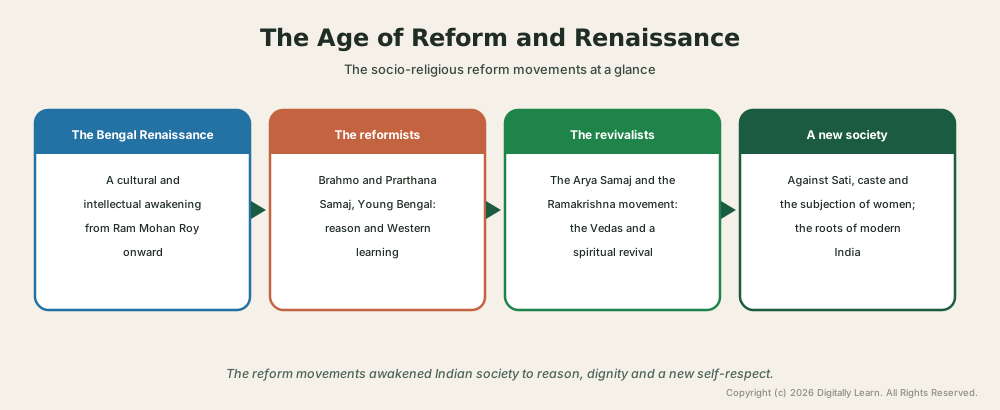
The socio-religious reform movements of the nineteenth century were an attempt to renew Indian religion and society in the light of reason, conscience and the best of the Indian past. Beginning with the Bengal Renaissance and Raja Ram Mohan Roy, the founder of the Brahmo Samaj, they ran through the Young Bengal movement, the Prarthana Samaj of western India, the Arya Samaj of Dayananda Saraswati and the Ramakrishna movement. Some looked forward to reason and reform, others back to a revived Vedic past, but together they attacked Sati, caste and the subjection of women and awakened the modern Indian mind.
Introduction: The Age of Socio-Religious Reform
Two Impulses: Reform and Revival
Why this matters: the nineteenth century saw a great awakening of Indian religion and society, the age of socio-religious reform. Stirred by Western education, the new printing press and the challenge of Christian missionaries, Indians began to question their own customs and to reform them from within.
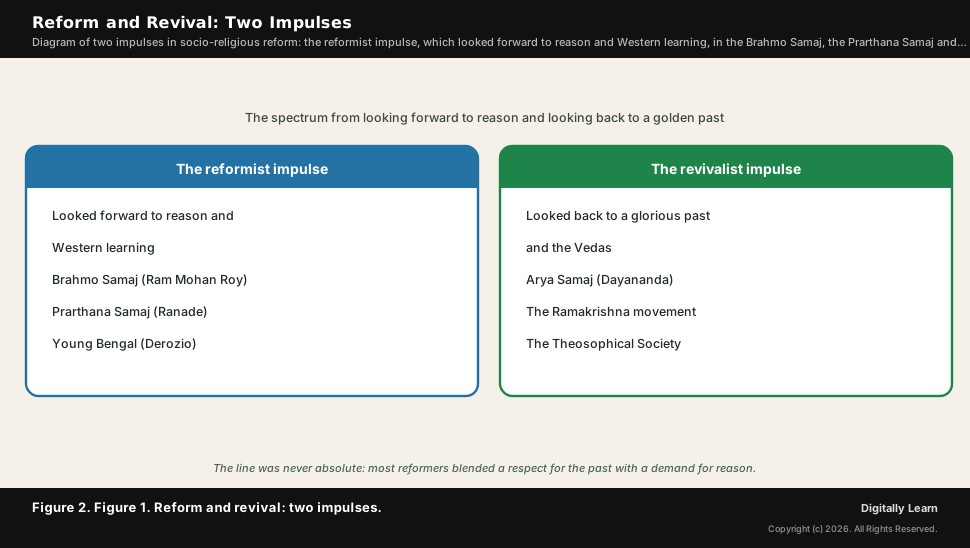
What is the significance of this theme: the movements drew on two impulses, a reformist one that looked forward to reason and a revivalist one that looked back to a glorious past, though most blended both. The spectrum below sets them out.
The Bengal Renaissance and the Reform-versus-Revival Impulse
The Awakening of the Bengali Mind
What is the significance of the Bengal Renaissance: it was the cultural and intellectual awakening of nineteenth-century Bengal, the first region to feel the full force of Western education. From Raja Ram Mohan Roy onward, a line of thinkers reexamined religion, society and language and laid the foundations of a modern Indian consciousness.
Distinguishing the leading figures: alongside Ram Mohan Roy stood Ishwar Chandra Vidyasagar, the great champion of widow remarriage and of female education, whose campaign led to the Widow Remarriage Act, a theme taken up in the next part. The Renaissance set the pattern of reform from within that the other regions would follow.
Raja Ram Mohan Roy and the Brahmo Samaj
The Father of the Indian Renaissance
What is the significance of Raja Ram Mohan Roy: often called the father of the Indian Renaissance, he combined a deep respect for the philosophical traditions of the East with a demand that his countrymen accept reason, science and the dignity and equality of all. In 1828 he founded the Brahmo Samaj, a reformed worship of one God.
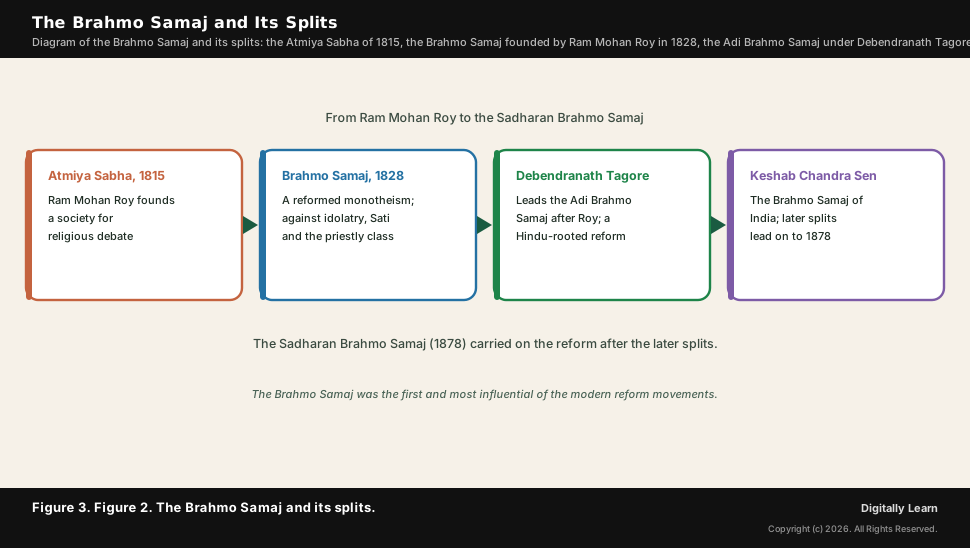
Distinguishing the creed of the Brahmo Samaj: it opposed idolatry and denied the need for a priestly class to interpret the scriptures, but it did not hold the Vedas to be infallible, a doctrine that belonged later to the Arya Samaj. Roy also led the campaign that ended Sati in 1829. After him the Samaj split under Debendranath Tagore and Keshab Chandra Sen, as the panel below shows.
The Young Bengal Movement and Henry Vivian Derozio
The Radical Rationalists of Hindu College
What is the significance of Young Bengal: it was the most radical current of the Renaissance. Henry Vivian Derozio, a young teacher at Hindu College in Calcutta, inspired a band of students, the Young Bengal, to question every custom and authority in the name of reason and free thought.
Distinguishing its place: the Derozians attacked superstition and orthodoxy more fiercely than any other group, but they were ahead of their time and lacked a mass base, so the movement faded after Derozio's early death. Even so, it planted the seed of rationalism and intellectual courage in Bengal.
The Prarthana Samaj and the Western India Reformers
Reform in the Bombay Presidency
What is the significance of the Prarthana Samaj: founded in 1867 at Bombay by Atmaram Pandurang, and drawing on the earlier Paramahansa Mandali and the Veda Samaj of the south, it carried the reform movement to western India. Its greatest figures were Mahadev Govind Ranade and R. G. Bhandarkar.
Distinguishing its character: rather than break with Hinduism, the Prarthana Samaj worked for gradual social reform from within, against caste restrictions and child marriage and for widow remarriage and the education of women. It was closely tied to a wider movement of social conferences in the Bombay Presidency.
The Arya Samaj: Dayananda Saraswati, Vedic Revivalism and Shuddhi
Back to the Vedas
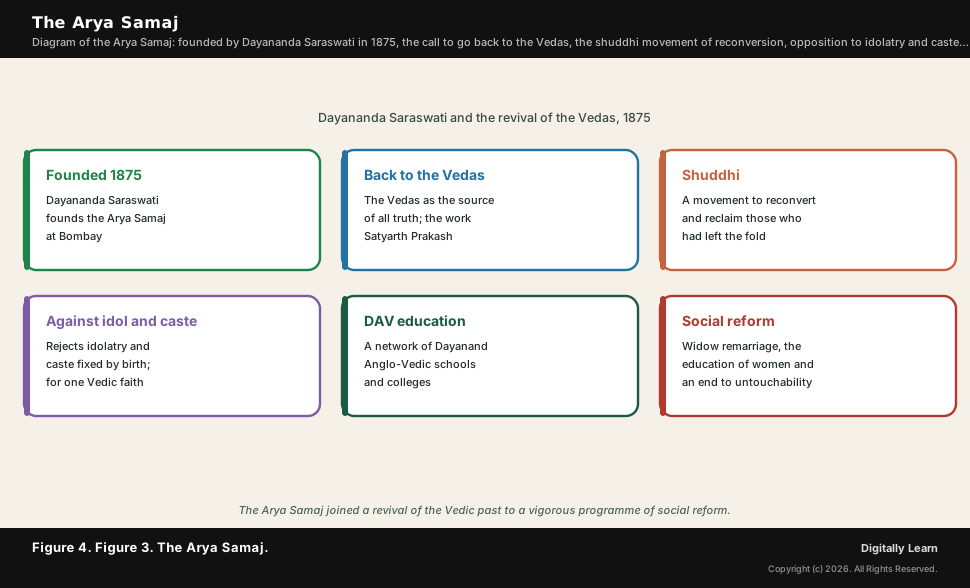
What is the significance of the Arya Samaj: founded by Dayananda Saraswati in 1875, it was the great revivalist movement of the north. Dayananda gave the cry of back to the Vedas, which he held to be the source of all true knowledge, and set out his teaching in the Satyarth Prakash.
Distinguishing its programme: the Arya Samaj rejected idolatry, priestcraft and caste fixed by birth, and launched the shuddhi movement to reclaim those who had left the fold. It built the network of Dayanand Anglo-Vedic schools and worked for widow remarriage and the education of women, as the cards below show.
The Ramakrishna Movement and the Theosophical Society
Spiritual Revival and the Service of Humanity
What is the significance of the Ramakrishna movement: it joined a deep spiritual revival to the service of humanity. Ramakrishna Paramahansa taught the harmony of all religions, and his disciple Swami Vivekananda carried the message of Vedanta to the world and founded the Ramakrishna Mission in 1897 for social service and education.
Distinguishing the Theosophical Society: founded by Madame Blavatsky and Colonel Olcott, it set up its Indian headquarters at Adyar in 1882 and, later under Annie Besant, looked to the ancient wisdom of the East. The timeline below gathers the movements of the century.
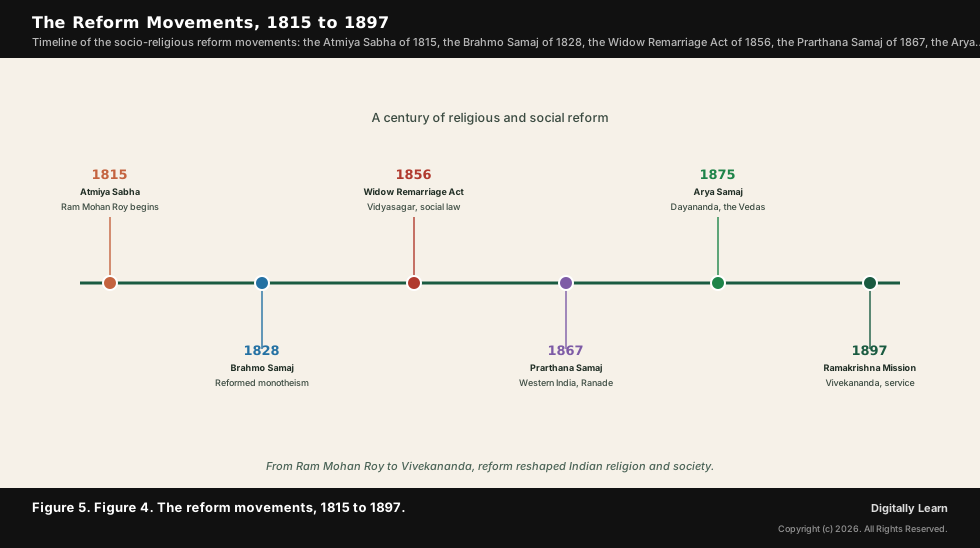
Significance: Reform, Revival and the Making of Modern India
What the Reform Movements Achieved
What is the significance of the reform movements together: they remade Indian religion and society. They attacked Sati, child marriage, caste restrictions and the subjection of women, defended reason and conscience against blind custom, and gave Indians a new pride and self-respect.
Distinguishing the limits: the reach of the movements was uneven, often confined to the educated middle class and to particular regions, and they sometimes carried the seeds of a sharper religious identity. Yet they were the indispensable awakening on which the national movement would build. The movements are compared below.
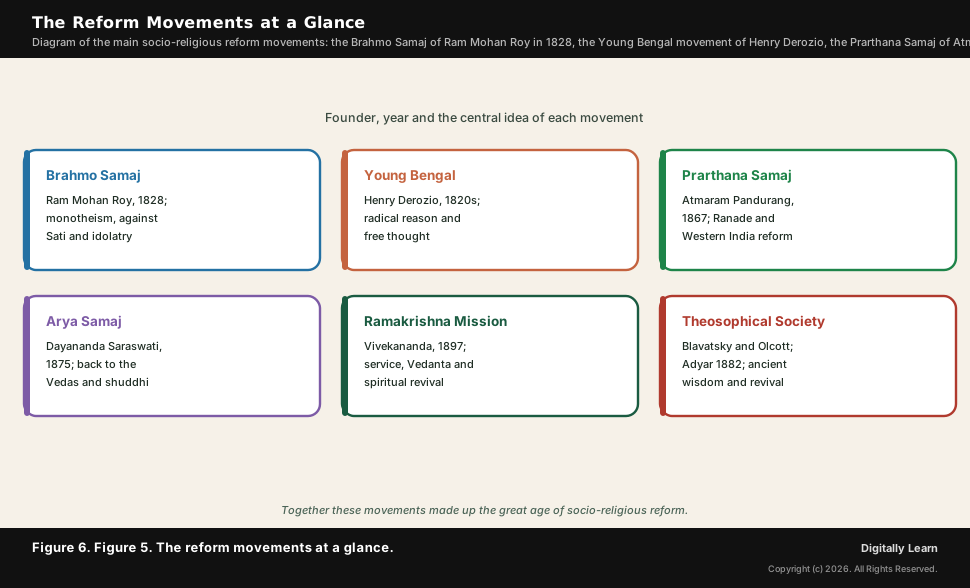
The Renaissance and the National Awakening
Contemporary linkages run straight from the Renaissance to the national movement. The same generation that learned self-respect and rational argument in the reform societies would soon demand a voice in its own government, a theme taken up in the part on the road to the Congress.
The larger significance is that the reform movements were the cultural foundation of modern India, the awakening of a people to reason, dignity and nationhood. The table and points below gather the threads, and the next part turns to the Muslim, Sikh and anti-caste reform movements and the woman question.
| Movement | Founder | Year | Central idea |
|---|---|---|---|
| Brahmo Samaj | Raja Ram Mohan Roy | 1828 | Monotheism; against Sati and idolatry |
| Young Bengal | Henry Vivian Derozio | 1820s | Radical reason and free thought |
| Prarthana Samaj | Atmaram Pandurang | 1867 | Social reform in western India |
| Arya Samaj | Dayananda Saraswati | 1875 | Back to the Vedas; shuddhi |
| Ramakrishna Mission | Swami Vivekananda | 1897 | Vedanta and the service of humanity |
- The Bengal Renaissance, from Ram Mohan Roy onward, was the first awakening of the modern Indian mind.
- The Brahmo Samaj (1828) opposed idolatry and the priestly class but did not hold the Vedas infallible.
- Young Bengal under Derozio carried the most radical rationalism; the Prarthana Samaj led reform in western India.
- The Arya Samaj (Dayananda, 1875) revived the Vedas and launched the shuddhi movement.
- The Ramakrishna Mission (Vivekananda, 1897) and the Theosophists joined spiritual revival to social service.
Previous Year UPSC-CSE Questions
Previous Year UPSC-CSE Questions By the end you will be able to draft model answers for the following UPSC questions. Each question carries a collapsible framework showing how to approach it in the exam.
- UPSC Mains 2021 GS-ITrace the rise and growth of socio-religious reform movements with special reference to Young Bengal and Brahmo Samaj.
How to structure the answer in the exam
Introduction: Open with the awakening of the nineteenth century under Western education and the reform impulse.
Body (sub-themes to develop):
- The Brahmo Samaj: Ram Mohan Roy 1828, monotheism, against Sati and idolatry, the later splits.
- Young Bengal: Derozio and the radical rationalists of Hindu College.
- The wider movement: the Prarthana Samaj and the Arya Samaj.
- The significance: reform from within and the awakening of the national mind.
Conclusion: Conclude that these movements were the cultural foundation of the national awakening.
- UPSC Prelims 2012 GS Paper IWhich of the following statements is/are correct regarding Brahmo Samaj?
- It opposed idolatry.
- It denied the need for a priestly class for interpreting the religious texts.
- It popularized the doctrine that the Vedas are infallible.
Select the correct answer using the codes given below.
How to approach this Prelims question
Approach: Test each statement against the actual creed of the Brahmo Samaj.
Trap to watch: The infallibility of the Vedas was the doctrine of the Arya Samaj, NOT the Brahmo Samaj. So statements 1 and 2 only.
Key facts to recall:
- Brahmo Samaj: opposed idolatry
- Brahmo Samaj: denied the priestly class
- Vedic infallibility was the Arya Samaj, not the Brahmo Samaj
Answer signal: Statements 1 and 2 only, so option (b).
- UPSC Prelims 2025 GS Paper IConsider the following statements about Raja Ram Mohan Roy:
- He possessed great love and respect for the traditional philosophical systems of the East.
- He desired his countrymen to accept the rational and scientific approach and the principle of human dignity and social equality of all men and women.
Which of the statements given above is/are correct?
How to approach this Prelims question
Approach: Recall Roy as a bridge between the Eastern tradition and modern reason.
Trap to watch: Roy was not a wholesale Westerniser; he respected the Eastern philosophical systems AND demanded reason and equality. Both statements are correct.
Key facts to recall:
- Roy respected the Eastern philosophical traditions
- Roy demanded reason, science and human dignity
- Roy stood for the equality of all men and women
Answer signal: Both statements correct, so option (c).
Sources and Further Reading
Editorial Disclaimer
This article is prepared for UPSC examination preparation. Verify key facts and interpretations against standard reference histories before relying on them.