


Overview
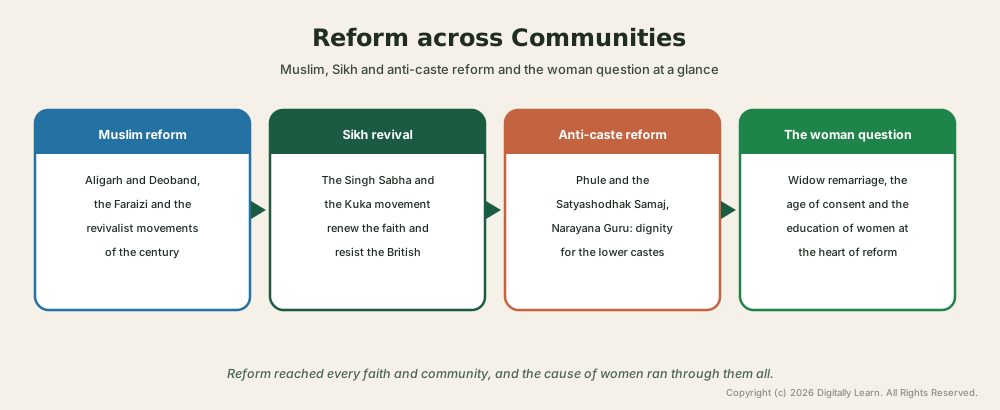
The reform of the nineteenth century was not confined to Hindu Bengal. Social reform movements arose in every community: among Muslims, the modern education of Sir Syed Ahmad Khan at Aligarh and the orthodox revival of Deoband; among Sikhs, the Singh Sabha and the Kuka movement; and against caste, the Satyashodhak Samaj of Jyotirao Phule and the work of Sri Narayana Guru in the south. Running through them all was the woman question, the long struggle, from the abolition of Sati to the Age of Consent Act, to remake the lives of Indian women.
Introduction: Reform across the Communities
Reform in Every Faith and Community
Why this matters: the awakening of the nineteenth century touched every community, not the Hindu reformers of Bengal alone. Muslims, Sikhs and the lower castes each produced their own movements, blending a revival of the faith with a demand for social change.
What is the significance of this theme: across all of them ran the woman question, the effort to end Sati, child marriage and the subjection of women. The panel below sets out the chief community reform movements.
The Aligarh and Deoband Movements
Modern Education and Orthodox Revival
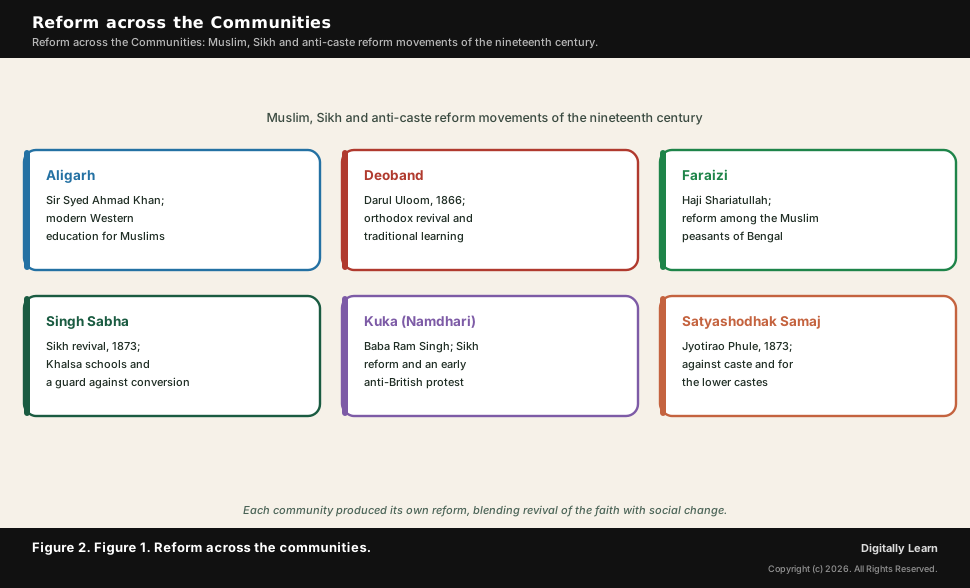
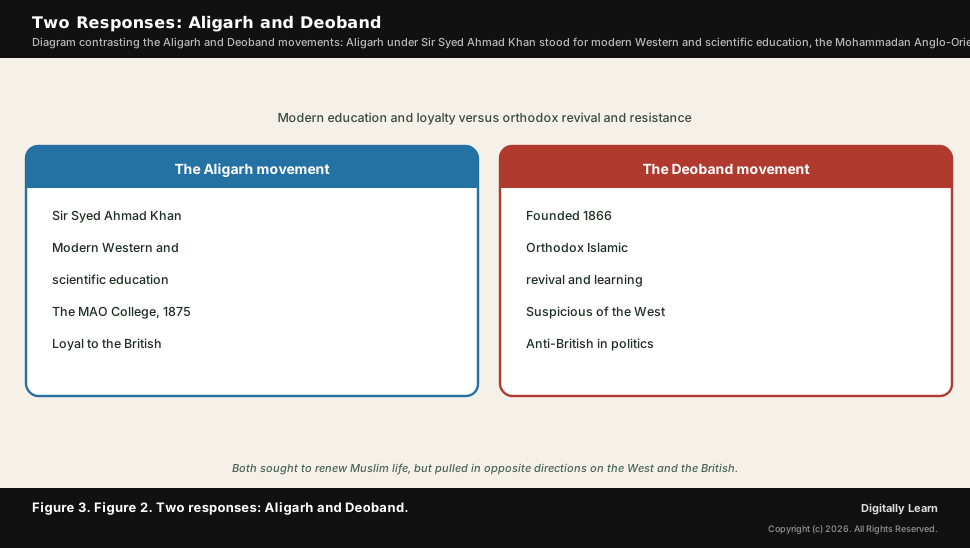
What is the significance of the Aligarh movement: led by Sir Syed Ahmad Khan, it sought to reconcile the Muslim community with modern Western and scientific learning. He founded the Mohammadan Anglo-Oriental College at Aligarh in 1875, the seed of the later Aligarh Muslim University, and urged loyalty to the British as the path to advancement.
Distinguishing the Deoband response: the Darul Uloom at Deoband, founded in 1866, took the opposite road. It stood for an orthodox revival of Islam and traditional learning, was suspicious of Western culture, and was anti-British in its politics. The two responses are contrasted below.
The Tariqah-i-Muhammadiyah and the Faraizi Movement
Revival and Reform among the Muslim Peasantry
What is the significance of these movements: they were revivalist currents among ordinary Muslims, often wrongly labelled Wahabi by the British. The Tariqah-i-Muhammadiyah of Sayyid Ahmad of Rae Bareli called for a return to a purified Islam and, in the north-west, took the form of armed struggle.
Distinguishing the Faraizi movement: founded by Haji Shariatullah in East Bengal and led after him by his son Dudu Miyan, it combined religious reform with the grievances of the Muslim peasantry against oppressive zamindars and indigo planters, so joining faith to a social and agrarian cause.
The Singh Sabha, the Kuka Movement and Sikh Revival
The Renewal of the Sikh Faith
What is the significance of the Singh Sabha: founded in 1873, it led the revival of the Sikh faith. It worked to purify Sikh practice, to defend it against conversion to Christianity and to other faiths, and to spread modern education through the Khalsa schools and colleges.
Distinguishing the Kuka movement: the Kuka, or Namdhari, movement, led by Baba Ram Singh, began as a movement of religious and social reform among the Sikhs and grew into one of the earliest forms of anti-British protest in Punjab, with its boycott of British goods and institutions.
The Anti-Caste and Non-Brahmin Movements
Phule, Narayana Guru and the Dignity of the Lower Castes
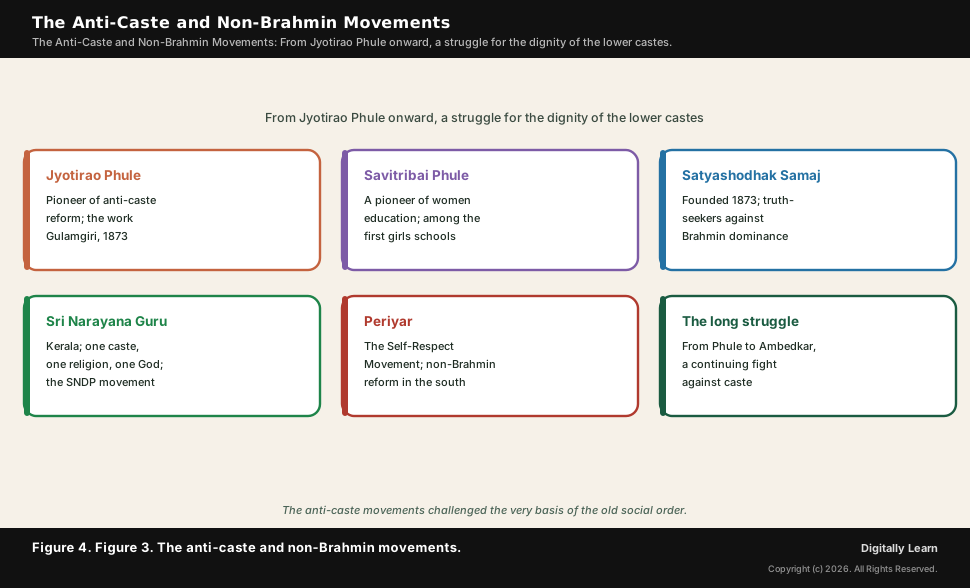
What is the significance of the anti-caste movements: they challenged the very basis of the old social order. Jyotirao Phule, with his wife Savitribai, attacked Brahminical dominance and the oppression of the lower castes, founded the Satyashodhak Samaj in 1873, and opened among the first schools for girls and for the so-called untouchables; his work Gulamgiri set out the case.
Distinguishing the wider movement: in the south, Sri Narayana Guru preached one caste, one religion and one God and inspired the SNDP movement among the Ezhavas of Kerala, while later the Self-Respect Movement of Periyar E. V. Ramaswamy Naicker carried the non-Brahmin cause forward, a struggle that ran on from Phule to Ambedkar. The reformers are set out below.
The Woman Question and Social Legislation
The Major Issues and Debates concerning Women
What is the significance of the woman question: it arose as the very heart of the nineteenth-century reform movement. The great issues were Sati, abolished in 1829, the remarriage of widows, won in the Hindu Widows Remarriage Act of 1856 through the campaign of Ishwar Chandra Vidyasagar, female infanticide, child marriage and the education of women.
Distinguishing the great debates: the sharpest was over the age of consent. The Rakhmabai case of 1884 turned on the restitution of conjugal rights and the age of consent, and the Age of Consent Act of 1891, pressed by B. M. Malabari, raised the age of marriage and provoked a fierce debate, with Tilak opposing it as interference in custom. Pandita Ramabai and Tarabai Shinde gave the cause a powerful Indian voice. The timeline below sets out the laws.
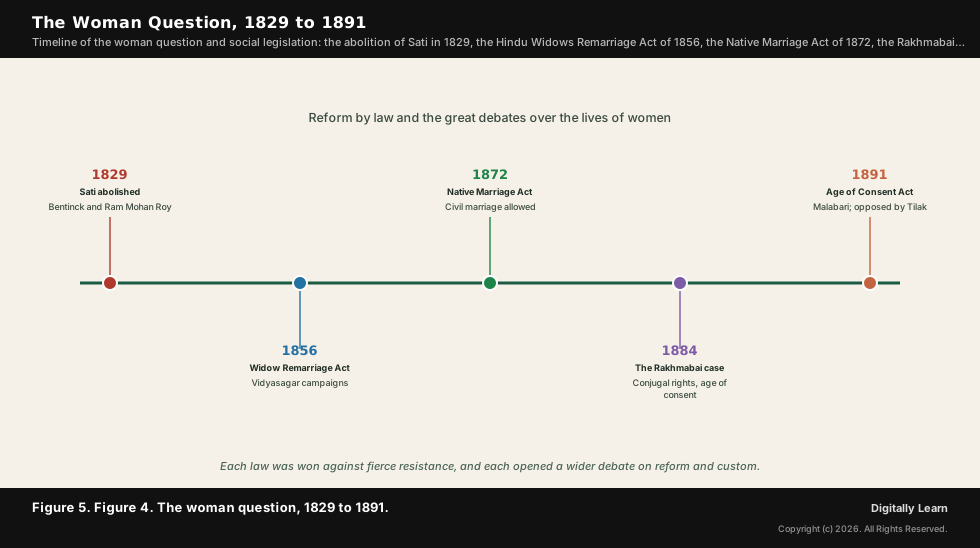
Significance: The Reach and Limits of Social Reform
What the Community and Women's Reform Achieved
What is the significance of these reforms together: they carried the awakening into every community and to the most vulnerable. They renewed the Muslim and Sikh faiths, challenged the caste order at its root, and won real protection for women in law, from widow remarriage to the age of consent.
Distinguishing the limits: yet reform was often uneven and contested. The new laws ran ahead of social custom and were widely evaded; reform within one community sometimes sharpened the line against another; and the lives of most women and most lower-caste Indians changed only slowly. The reformers and debates are set out below.
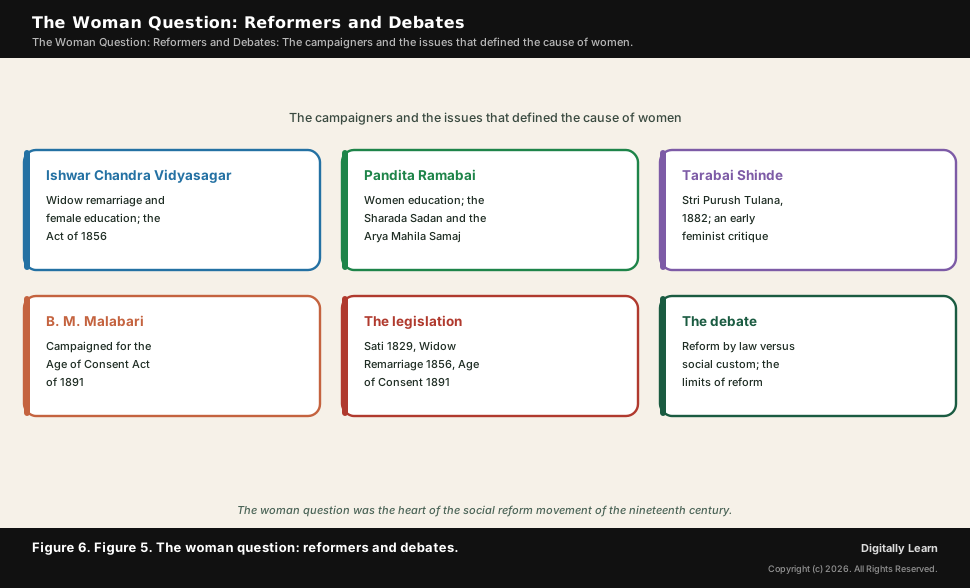
The Legacy of the Reform Era
Contemporary linkages run from this reform straight into the national and social movements of the next century. The anti-caste struggle of Phule would lead on to Ambedkar, the woman question to the women's movement, and the renewal of every community to a sharper sense of identity, for good and for ill.
The larger significance is that the reform movements, together with the Bengal Renaissance, were the social foundation of modern India. The table and points below gather the threads, and the next part turns to education and the press, the instruments through which the new ideas spread.
| Sphere | Movement or law | Leader |
|---|---|---|
| Muslim education | The Aligarh movement, MAO College 1875 | Sir Syed Ahmad Khan |
| Muslim orthodoxy | Darul Uloom, Deoband, 1866 | Deoband ulema |
| Sikh revival | The Singh Sabha, 1873 | Singh Sabha leaders |
| Anti-caste reform | The Satyashodhak Samaj, 1873 | Jyotirao Phule |
| The woman question | Widow Remarriage 1856; Age of Consent 1891 | Vidyasagar; Malabari |
- Sir Syed Ahmad Khan led modern Muslim education at Aligarh; Deoband (1866) led the orthodox revival.
- The Faraizi movement joined religious reform to the grievances of the Bengal Muslim peasantry.
- The Singh Sabha (1873) led the Sikh revival; the Kuka movement turned reform into anti-British protest.
- Jyotirao and Savitribai Phule and the Satyashodhak Samaj (1873) led the anti-caste movement; Narayana Guru in the south.
- The woman question, from the Widow Remarriage Act 1856 to the Age of Consent Act 1891, was central to reform.
Previous Year UPSC-CSE Questions
Previous Year UPSC-CSE Questions By the end you will be able to draft model answers for the following UPSC questions. Each question carries a collapsible framework showing how to approach it in the exam.
- UPSC Mains 2017 GS-IThe women’s questions arose in modern India as a part of the 19th century social reform movement. What were the major issues and debates concerning women in that period?
How to structure the answer in the exam
Introduction: Open with the woman question as the heart of the nineteenth-century social reform movement.
Body (sub-themes to develop):
- The issues: Sati, widow remarriage, female infanticide, child marriage, education.
- The legislation: Sati 1829, Widow Remarriage Act 1856, Age of Consent Act 1891.
- The debates: reform by law versus custom; the Rakhmabai case and the age of consent.
- The reformers and the limits: Vidyasagar, Ramabai, Tarabai Shinde, Malabari; uneven reach.
Conclusion: Conclude that the woman question reshaped reform but its gains in custom were slow.
- UPSC Prelims 2020 GS Paper IIn the context of Indian history, the Rakhmabai case of 1884 revolved around
- women’s right to gain education
- age of consent
- restitution of conjugal rights
Select the correct answer using the code given below:
How to approach this Prelims question
Approach: Recall what the Rakhmabai case actually concerned.
Trap to watch: The Rakhmabai case was about restitution of conjugal rights and the age of consent, NOT the right to education. So 2 and 3 only.
Key facts to recall:
- Rakhmabai case 1884: restitution of conjugal rights
- It fed the age of consent debate
- Not about the right to education
Answer signal: Statements 2 and 3 only, so option (b).
- UPSC Prelims 2025 GS Paper IWho among the following was the founder of the ‘Self-Respect Movement’?
How to approach this Prelims question
Approach: Recall the leader of the non-Brahmin Self-Respect Movement in the south.
Trap to watch: The Self-Respect Movement was founded by Periyar E. V. Ramaswamy Naicker, not by Ambedkar (who led the Mahad and Depressed Classes movements).
Key facts to recall:
- Self-Respect Movement: Periyar E. V. Ramaswamy Naicker
- Non-Brahmin reform in the south
- Part of the anti-caste tradition from Phule
Answer signal: Periyar, so option (a).
Sources and Further Reading
- Wikipedia: Aligarh Movement
- Wikipedia: Satyashodhak Samaj
- Wikipedia: Age of Consent Act, 1891
- Wikipedia: Singh Sabha Movement
- NCERT, Themes in Indian History (Modern India)
- Indian Culture Portal, Ministry of Culture
- National Portal of India
- Press Information Bureau, Government of India
- National Archives of India
Editorial Disclaimer
This article is prepared for UPSC examination preparation. Verify key facts and interpretations against standard reference histories before relying on them.