


Overview
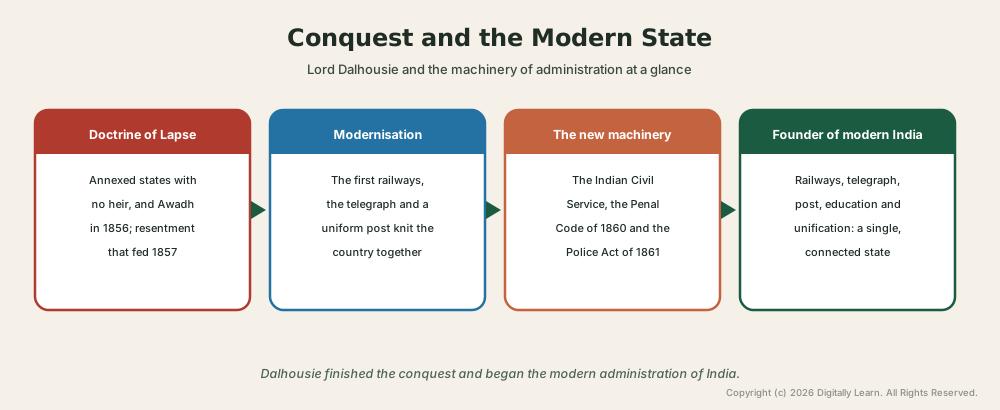
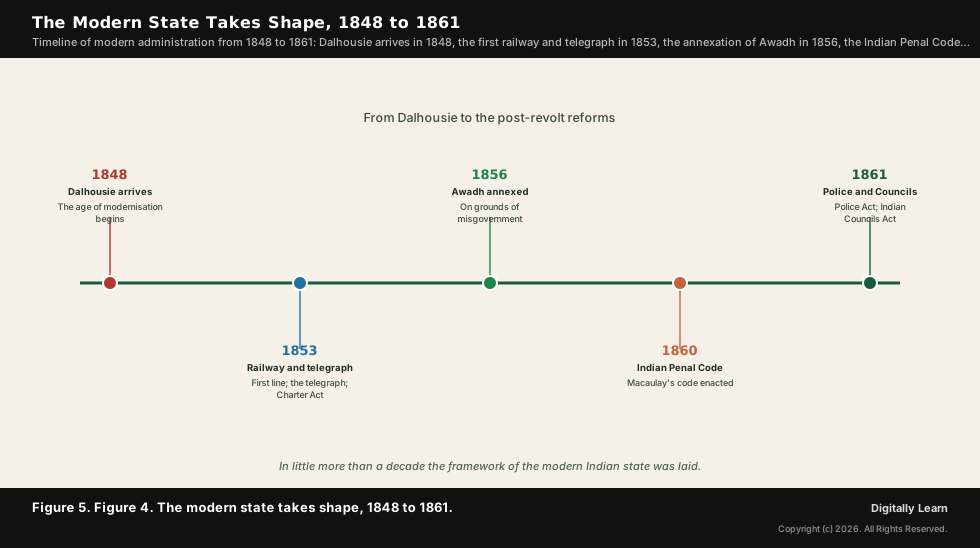
Lord Dalhousie, Governor-General from 1848 to 1856, was at once the last great expansionist and the first great moderniser of British India. Through the Doctrine of Lapse he annexed states such as Satara, Jhansi and Nagpur, and in 1856 annexed Awadh on grounds of misgovernment. At the same time he began India's railways and telegraph, reformed the post, and set in motion the institutions, the modern civil service, the Indian Penal Code and the Police Act, that gave colonial India its lasting administrative shape, work for which he is called the founder of modern India.
Introduction: Conquest and the Modern State
The Last Expansionist and the First Moderniser
Why this matters: Lord Dalhousie stands at a hinge of Indian history. In his eight years he both finished the territorial conquest of India and began its transformation into a modern, connected state, two legacies that pulled in opposite directions.
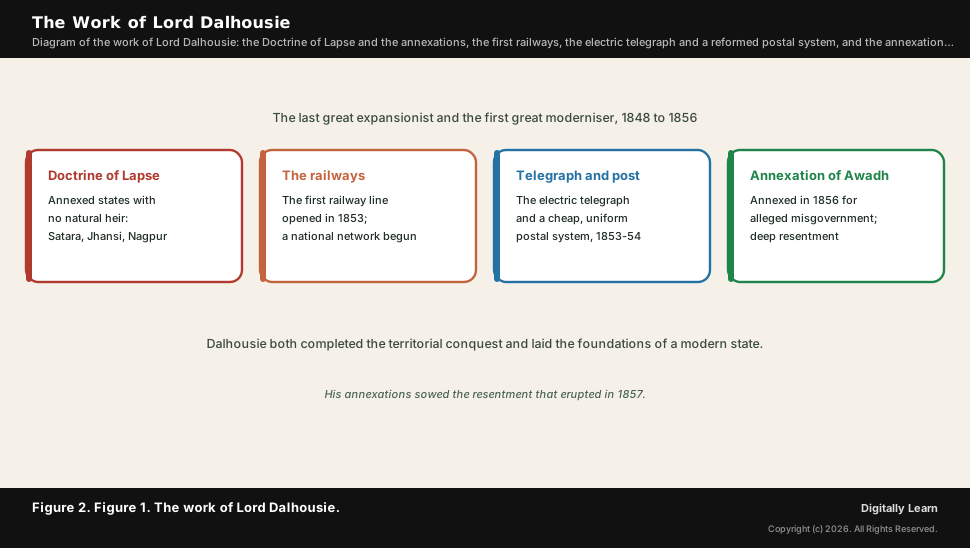
What is the significance of this theme: his annexations bred the resentment that erupted in the revolt of 1857, while his railways, telegraph and reformed administration outlasted both him and the Company. The panel below sets out his work.
The Doctrine of Lapse and the Annexations
Annexation by a New Rule
What is the significance of the Doctrine of Lapse: it was Dalhousie's instrument for absorbing Indian states. By this rule, a dependent state whose ruler died without a natural heir would lapse to the Company, denying the old Indian right to adopt an heir to the throne.
Distinguishing the annexations: by the Doctrine of Lapse Dalhousie annexed Satara, Jhansi, Nagpur and other states; and in 1856, on the different ground of alleged misgovernment, he annexed the rich kingdom of Awadh. These swift and high-handed annexations spread deep alarm among rulers and people alike.
Railways, the Telegraph, the Postal System and Public Works
The Engines of a Connected India
What is the significance of these works: they bound India together as never before. Dalhousie opened the first railway line in 1853 and laid down a plan for a national network, strung thousands of miles of electric telegraph, and reformed the post with cheap, uniform postage and the first stamps.
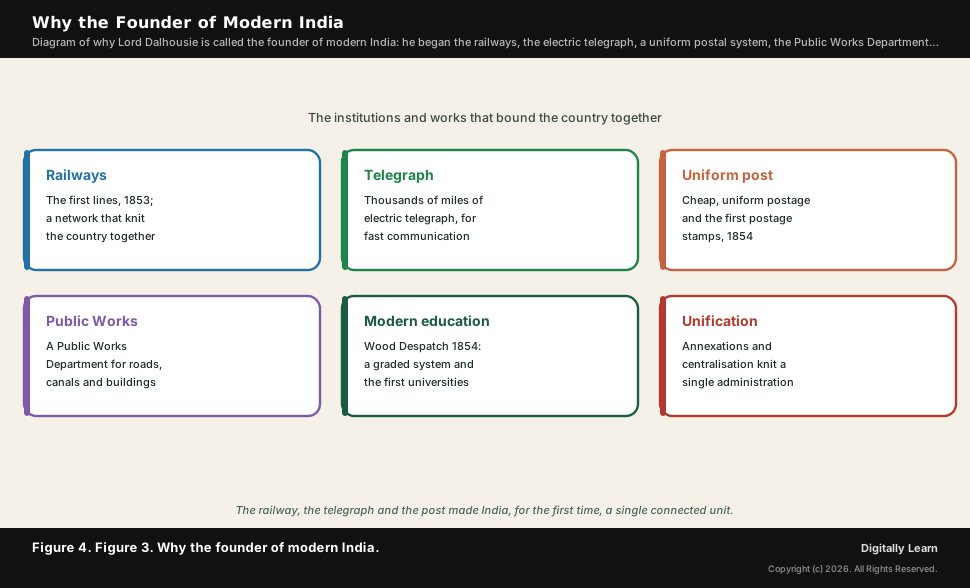
Distinguishing the design: he also created a Public Works Department for roads, canals and buildings. Though built to serve British trade and control, the railway, the telegraph and the post made India, for the first time, a single connected unit, the deepest of his modernising legacies.
The Indian Civil Service: From Patronage to Open Competition
The Making of the Steel Frame
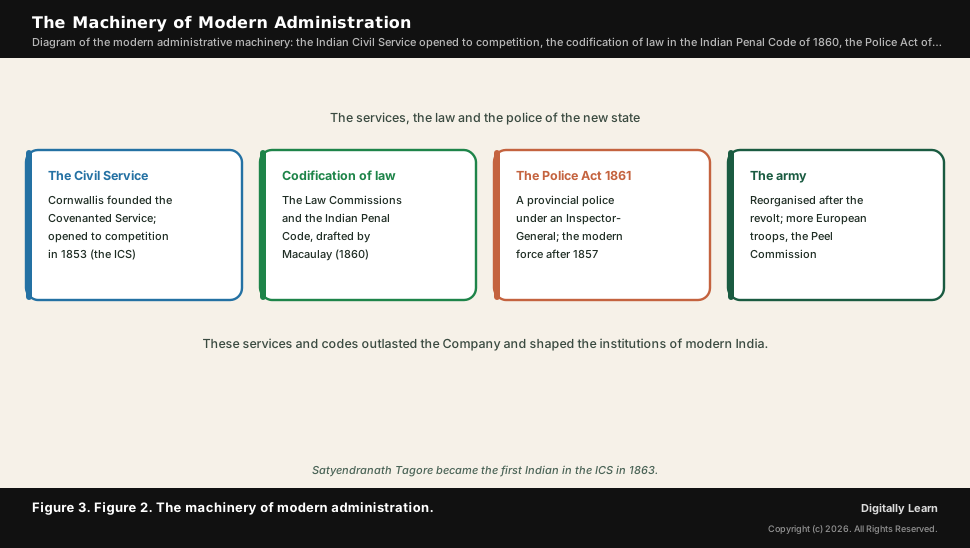
What is the significance of the civil service: it became the steel frame of British rule. Cornwallis had founded the Covenanted Civil Service, which would come to be known as the Indian Civil Service; the Charter Act of 1853 then opened it to open competition rather than the patronage of the directors.
Distinguishing the bar against Indians: the examination, recommended by Macaulay's report of 1854, was held in England, in English, which kept Indians all but excluded. Satyendranath Tagore became the first Indian to enter the ICS only in 1863, a single exception that proved the rule.
Codification of Law, the Police Act 1861 and the Army
The Penal Code, the Police and the Army
What is the significance of codification: it gave India a uniform body of law. The Law Commissions, beginning under the Charter Act of 1833 with Macaulay, produced the Indian Penal Code, enacted in 1860, followed by the codes of criminal and civil procedure and the Evidence Act.
Distinguishing the police and the army: after the revolt of 1857, the Police Act of 1861 created a provincial police under an Inspector-General, the basis of the modern force, while the army was reorganised on the advice of the Peel Commission, raising the proportion of European troops. The machinery is set out below.
Significance: Why Dalhousie Is Called the Founder of Modern India
The Institutions That Made a Single State
What is the significance of Dalhousie's modernisation: it is why historians call him the founder of modern India. The railways, the telegraph and the uniform post knit the subcontinent into a single connected unit; a Public Works Department, modern education through Wood's Despatch of 1854 and the new universities, and a centralised administration completed the design.
Distinguishing the verdict: the same drive that built these institutions also drove the annexations that provoked 1857, so Dalhousie is both founder and, in part, author of the great revolt. The cards below set out the works for which he earned the title.
The Close of the Company's Century
Contemporary linkages run from these institutions straight into independent India. The railways, the Indian Penal Code, the all-India services and the police structure that Dalhousie and his successors created are, in altered form, still with us.
The larger significance is that by the 1850s the colonial state was both territorially complete and institutionally modern, and the next year, 1857, would test it to its foundations. The timeline, table and points below gather the threads, and the next part turns from the administration to the economy it governed.
| State | Year | Ground |
|---|---|---|
| Satara | 1848 | Doctrine of Lapse (no natural heir) |
| Jhansi | 1853 | Doctrine of Lapse (adopted heir refused) |
| Nagpur | 1854 | Doctrine of Lapse (no natural heir) |
| Awadh | 1856 | Alleged misgovernment |
- The Doctrine of Lapse annexed Satara, Jhansi and Nagpur; Awadh was annexed in 1856.
- The first railway and telegraph (1853) and a uniform post made India a single connected unit.
- The Charter Act 1853 opened the civil service to competition; Satyendranath Tagore was the first Indian in the ICS (1863).
- The Indian Penal Code (1860) and the Police Act (1861) built the modern legal and policing machinery.
- Dalhousie is called the founder of modern India, but his annexations helped provoke the revolt of 1857.
Previous Year UPSC-CSE Questions
Previous Year UPSC-CSE Questions By the end you will be able to draft model answers for the following UPSC questions. Each question carries a collapsible framework showing how to approach it in the exam.
- UPSC Mains 2013 GS-I“In many ways, Lord Dalhousie was the founder of modern India.” Elaborate.
How to structure the answer in the exam
Introduction: Open with Dalhousie as both the last expansionist and the first great moderniser.
Body (sub-themes to develop):
- Communications: the first railways, the telegraph and a uniform post that unified the country.
- Public works and education: the PWD and Wood's Despatch of 1854.
- Administration: the open-competition civil service, codification and centralisation.
- The cost: the Doctrine of Lapse and the annexations that helped provoke 1857.
Conclusion: Conclude that Dalhousie laid the framework of the modern state, at a price paid in 1857.
- UPSC Prelims 2010 GS Paper IWho among the following Governor Generals created the Covenanted Civil Service of India which later came to be known as the Indian Civil Service?
How to approach this Prelims question
Approach: Recall who founded the Covenanted Civil Service.
Trap to watch: The Covenanted Civil Service was created by Cornwallis; it was later opened to competition (1853) and Indianised, but its founder was Cornwallis.
Key facts to recall:
- Cornwallis created the Covenanted Civil Service
- Charter Act 1853 opened it to competition
- It became the Indian Civil Service (ICS)
Answer signal: Cornwallis, so option (c).
Sources and Further Reading
- Wikipedia: James Broun-Ramsay, 1st Marquess of Dalhousie
- Wikipedia: Doctrine of Lapse
- Wikipedia: Indian Penal Code
- Wikipedia: Indian Civil Service
- Wikipedia: Rail transport in India (history)
- NCERT, Themes in Indian History and Our Pasts (Modern India)
- Indian Culture Portal, Ministry of Culture
- National Portal of India
- Press Information Bureau, Government of India
- National Archives of India
Editorial Disclaimer
This article is prepared for UPSC examination preparation. Verify key facts and interpretations against standard reference histories before relying on them.