


Overview
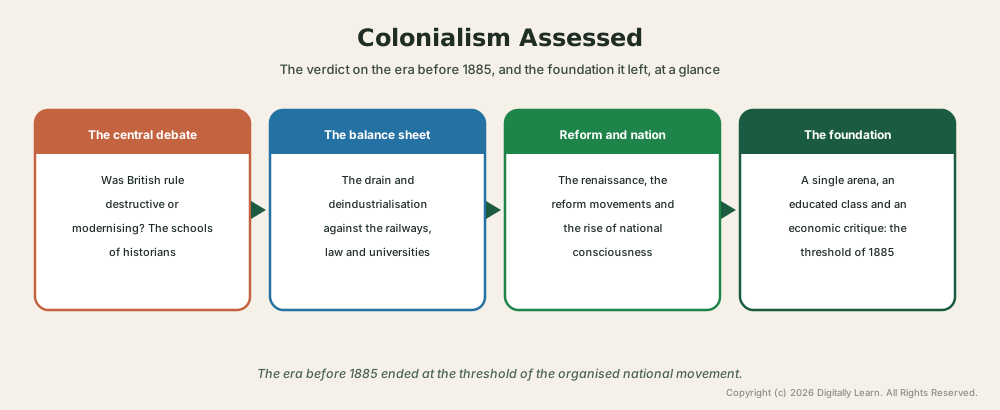
This final part steps back to assess colonial rule in India before 1885 as a whole. It weighs the central debate, whether British rule was destructive or modernising, attributing the views of the nationalist, imperialist, Marxist and subaltern schools fairly; it draws up the economic balance sheet of the drain and deindustrialisation against the railways, the law and the universities; and it traces how the socio-religious reform movements and the economic critique created the educated class and the national consciousness that led to the Indian National Congress of 1885. It closes with a ready-reckoner of the whole era.
Introduction: Assessing the Era before 1885
The Long View, 1707 to 1885
Why this matters: this part is the capstone of the series. Having traced the story from the decline of the Mughals to the founding of the Congress, it steps back to assess colonial rule as a whole, to weigh its costs and its works, and to gather the threads of the whole era.
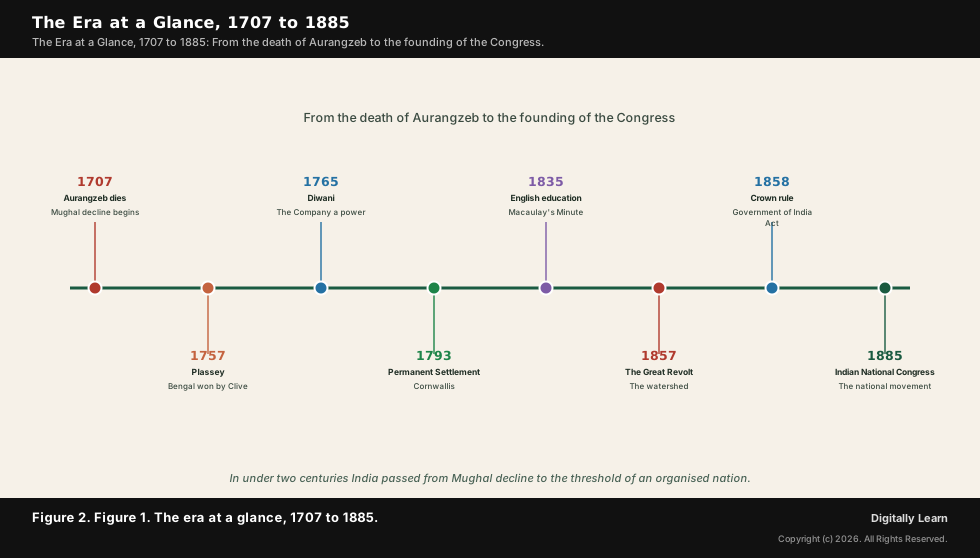
What is the significance of this theme: in under two centuries India passed from the death of Aurangzeb in 1707 to the threshold of an organised nation in 1885, through conquest, a new economy, reform, revolt and a political awakening. The timeline below sets the era at a glance.
Was British Rule Destructive or Modernising? The Central Debate
The Schools of History and the Balance
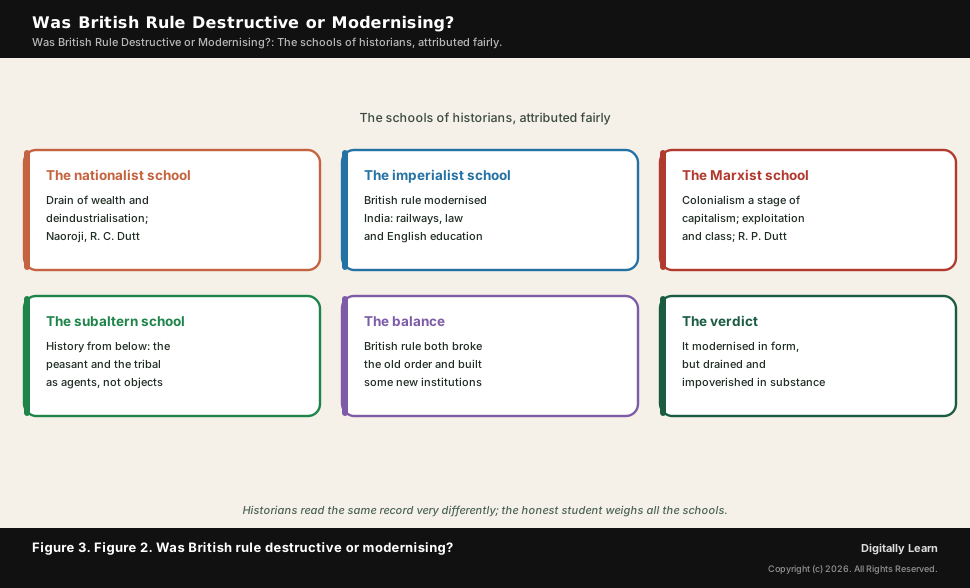
What is the significance of the central debate: historians read the same record very differently. The nationalist school, of Dadabhai Naoroji and R. C. Dutt, stressed the drain of wealth and deindustrialisation; the imperialist school claimed that British rule modernised India with railways, a uniform law and English education.
Distinguishing the later schools: the Marxist historians, such as R. P. Dutt, read colonialism as a stage of capitalism marked by exploitation and class, while the subaltern school wrote history from below, with the peasant and the tribal as agents in their own right. The honest verdict weighs all the schools, as the cards below set out.
The Economic Impact of Colonialism: The Balance Sheet
What Colonial Rule Took and What It Built
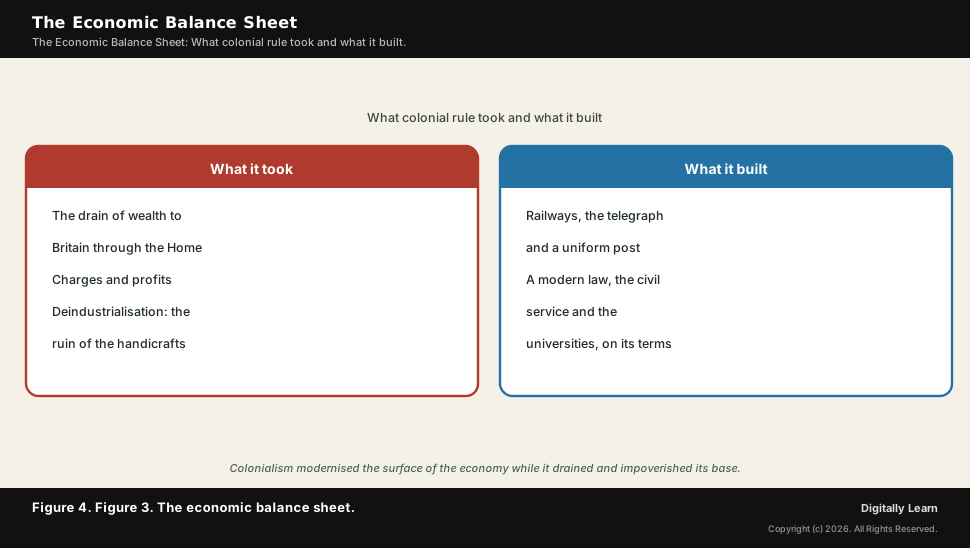
What is the significance of the balance sheet: economically, the chief result of British rule was the commercialisation of agriculture and the ruin of the old handicrafts, not any growth of Indian industry or a rapid rise of the towns. In the first half of the nineteenth century the textile machines and the railways had not yet come to India, so the early impact of the Industrial Revolution was simply the ruin of the handicrafts, the process of deindustrialisation.
Distinguishing the other side: against this, colonial rule built the railways from the 1850s, the telegraph and a uniform post, a modern law, a civil service and the universities. But these were built to serve British trade and control, so that the economy was modernised on the surface while it was drained and impoverished at its base. The balance is set out below.
Reform, the Renaissance and the Rise of National Consciousness
From the Renaissance to a National Identity
What is the significance of the reform movements: they reshaped Indian society and mind. From the Brahmo Samaj to the Arya Samaj, from the Aligarh movement to the Satyashodhak Samaj, they attacked Sati, caste and the subjection of women and awakened a new self-respect, the awakening often called the Indian renaissance.
Distinguishing the link to nationalism: there is a direct linkage between this renaissance and the emergence of a national identity. The same educated class that learned reason and dignity in the reform societies, and that absorbed the economic critique of the drain, formed the early associations and founded the Congress in 1885, the theme of the part on the road to the Congress.
A Ready-Reckoner of the Era
The Governor-Generals and the Major Acts
What is the significance of the ready-reckoner: the era is best fixed in memory through its milestones. The tables here gather the rulers, the laws, the wars, the reforms and the revolts of modern India before 1885, drawn together from across the series as a study aid.
Distinguishing the framework of rule: the Governor-Generals, from Warren Hastings to Canning, and the great constitutional Acts, from the Regulating Act of 1773 to the Government of India Act of 1858, are set out in the two tables below.
| Governor-General | Tenure | Best remembered for |
|---|---|---|
| Warren Hastings | 1773-85 | First Governor-General of Bengal |
| Lord Cornwallis | 1786-93 | Permanent Settlement; the civil service |
| Lord Wellesley | 1798-1805 | The Subsidiary Alliance |
| Lord Bentinck | 1828-35 | Abolition of Sati; English education |
| Lord Dalhousie | 1848-56 | Doctrine of Lapse; railways |
| Lord Canning | 1856-62 | The Revolt of 1857; first Viceroy |
| Act | Year | Chief provision |
|---|---|---|
| Regulating Act | 1773 | Governor-General of Bengal; Supreme Court |
| Pitt's India Act | 1784 | The Board of Control; dual government |
| Charter Act | 1833 | Governor-General of India; Law Commission |
| Charter Act | 1853 | Open competition for the civil service |
| Government of India Act | 1858 | Crown rule; Secretary of State |
The Wars, the Reforms and the Revolts
What is the significance of these tables: they fix the great events of the era. The wars and treaties built the territorial empire; the reform movements remade society; and the revolts were the resistance from below. The three tables below gather them.
Distinguishing the threads: read together, they show the whole shape of modern India before 1885, conquest and consolidation, economic change and social reform, and resistance that ran from the tribal hills to the great revolt of 1857.
| War or treaty | Year | Outcome |
|---|---|---|
| Battle of Plassey | 1757 | Bengal won by the Company |
| Battle of Buxar | 1764 | The Diwani; the Company a power |
| Fall of Seringapatam | 1799 | The end of Mysore under Tipu |
| Treaty of Bassein | 1802 | Maratha submission begins |
| Annexation of Punjab | 1849 | The last great conquest |
| Reform movement | Year | Founder |
|---|---|---|
| Brahmo Samaj | 1828 | Raja Ram Mohan Roy |
| Prarthana Samaj | 1867 | Atmaram Pandurang |
| Satyashodhak Samaj | 1873 | Jyotirao Phule |
| Arya Samaj | 1875 | Dayananda Saraswati |
| Revolt | Year | Region |
|---|---|---|
| Santhal Hul | 1855 | Rajmahal hills |
| The Great Revolt | 1857 | The north-central plains |
| Indigo Revolt | 1859-60 | Bengal |
| Deccan Riots | 1875 | Maharashtra |
Significance: The Foundation for the Organised National Movement
The Verdict on the Era
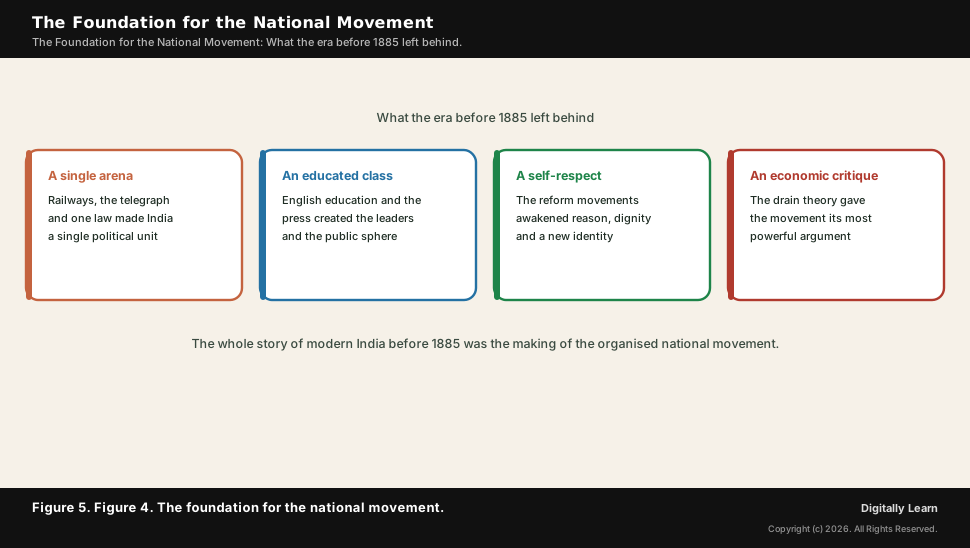
What is the significance of the whole era: modern India before 1885 was the making of the conditions for the national movement. Colonial rule, whatever its intent, knit India into a single political arena, created an English-educated class, and provoked an economic critique that armed the awakening.
Distinguishing the verdict: the fairest verdict is that British rule modernised in form but drained in substance, building railways and universities while it impoverished the producer and broke the old economy. Out of that contradiction grew the demand for self-rule. The foundation is set out below.
The Bridge to the Freedom Struggle
Contemporary linkages run from 1885 straight into the freedom struggle. The Indian National Congress founded in that year would lead the nation through the Moderate and Extremist phases, the Swadeshi movement and the era of Gandhi, the story told in the series on the national movement from 1885 to 1947.
The larger significance is that this series has traced the whole story of modern India from the decline of the Mughals to the threshold of organised nationalism. The table and points below gather the verdict, and the next chapter of Indian history begins with the Congress and the long road to freedom.
| What the era left | How it fed the national movement |
|---|---|
| A single political arena | One country to organise and to address |
| An English-educated class | The leaders and the public sphere of the Congress |
| The economic critique | The drain theory, the rallying argument |
| A new self-respect | The confidence to demand a share in government |
- Historians debate whether British rule was destructive (drain, deindustrialisation) or modernising (railways, law, education); the schools must be weighed fairly.
- The economic balance sheet shows commercialisation and ruin of handicrafts, not a growth of Indian industry; modernised in form, drained in substance.
- The socio-religious reform movements and the renaissance awakened a new self-respect and a national identity.
- The educated class, the press and the economic critique created the national consciousness that founded the Congress in 1885.
- Modern India before 1885 was the foundation on which the organised national movement of 1885 to 1947 was built.
Previous Year UPSC-CSE Questions
Previous Year UPSC-CSE Questions By the end you will be able to draft model answers for the following UPSC questions. Each question carries a collapsible framework showing how to approach it in the exam.
- UPSC Mains 2019 GS-IExamine the linkages between 19th centuries ‘Indian renaissance’ and emergence of national identity.
How to structure the answer in the exam
Introduction: Open with the nineteenth-century renaissance as the cultural awakening of modern India.
Body (sub-themes to develop):
- The renaissance: the reform movements, reason, self-respect, a critical spirit.
- The intellectual link: English education, the press and the economic critique.
- The political link: the early associations and the founding of the Congress, 1885.
- The limits: the renaissance was uneven and largely middle-class.
Conclusion: Conclude that the renaissance was the cultural foundation of the national identity.
- UPSC Prelims 2018 GS Paper IEconomically, one of the results of the British rule in India in the 19th century was the
How to approach this Prelims question
Approach: Recall the chief economic effect of colonial rule in the 19th century.
Trap to watch: Handicraft exports FELL (deindustrialisation), Indian-owned factories did not grow much, and the towns did not rise rapidly; the result was the commercialisation of agriculture.
Key facts to recall:
- Commercialisation of agriculture (cash crops)
- Deindustrialisation: handicrafts ruined, not increased
- No rapid growth of Indian industry or towns
Answer signal: Commercialisation of agriculture, so option (c).
- UPSC Prelims 2020 GS Paper IWhich of the following statements correctly explains the impact of Industrial Revolution on India during the first half of the nineteenth century?
How to approach this Prelims question
Approach: Recall the impact of the British Industrial Revolution on India before 1850.
Trap to watch: Machines and railways came to India only later (from the 1850s), and no protective duties were imposed; the early impact was the ruin of the handicrafts.
Key facts to recall:
- Industrial Revolution ruined Indian handicrafts (deindustrialisation)
- Machines and railways came later (from the 1850s)
- No protective duties on British imports
Answer signal: Indian handicrafts were ruined, so option (a).
Sources and Further Reading
- Wikipedia: Economic history of India
- Wikipedia: Bengal Renaissance
- Wikipedia: Drain of wealth (Dadabhai Naoroji)
- Wikipedia: Company rule in India
- NCERT, Themes in Indian History (Modern India)
- Indian Culture Portal, Ministry of Culture
- National Portal of India
- Press Information Bureau, Government of India
- National Archives of India
Editorial Disclaimer
This article is prepared for UPSC examination preparation. Verify key facts and interpretations against standard reference histories before relying on them.