


Overview
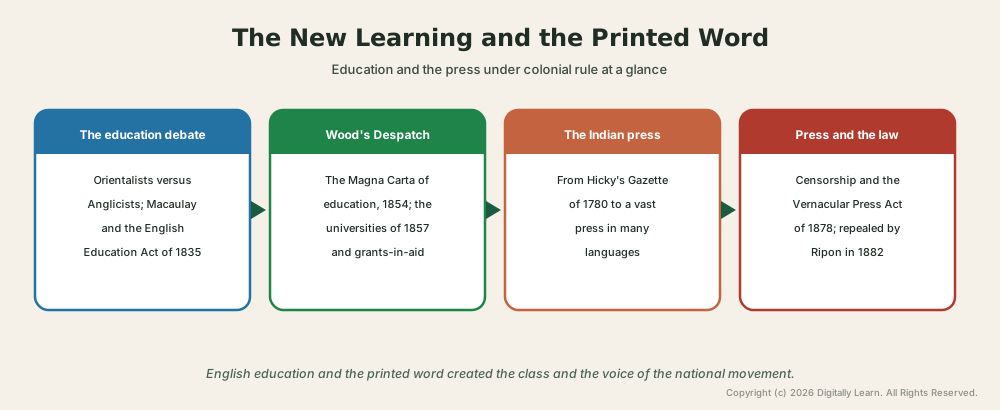
Two great instruments shaped the modern Indian mind under colonial rule: education and the press. Colonial education policy, from the Orientalist-Anglicist debate and Macaulay's Minute of 1835 to Wood's Despatch of 1854 and the universities of 1857, created a new class of English-educated Indians. The Indian press, from Hicky's Bengal Gazette of 1780 to the vernacular boom, gave that class a voice and carried opinion across the country, even under the censorship of the Vernacular Press Act. Together they laid the intellectual ground for the national movement.
Introduction: Education, the Press and the Modern Mind
The Two Instruments of the New Awakening
Why this matters: the colonial period gave India two powerful new instruments, modern education and the printed press. Neither was designed to free India, yet both created the educated class and the public opinion that would in time turn against colonial rule.
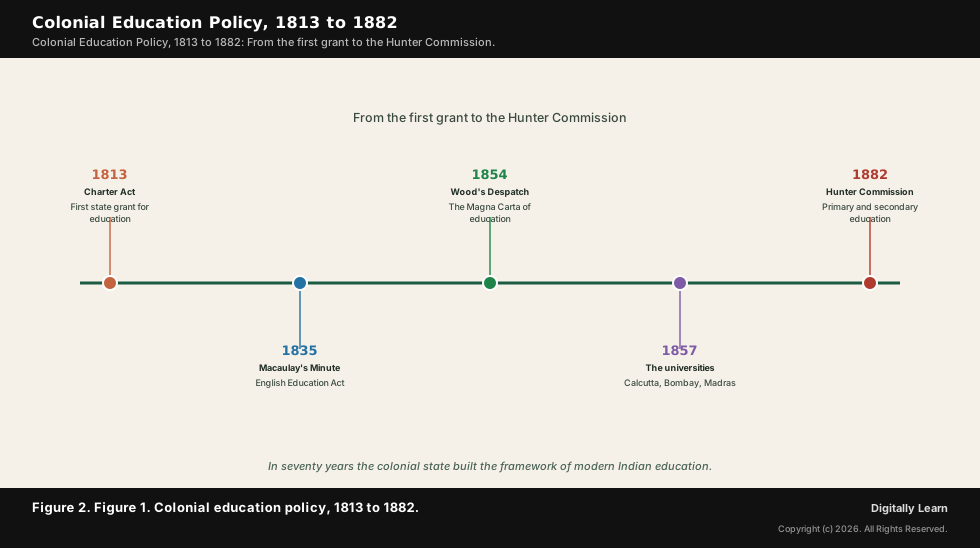
What is the significance of this theme: education built schools, colleges and universities, while the press carried news and argument to a growing readership. The timeline below sets out the milestones of colonial education policy.
The Orientalist-Anglicist Debate and Macaulay's Minute of 1835
English or the Classics: Macaulay Settles the Question
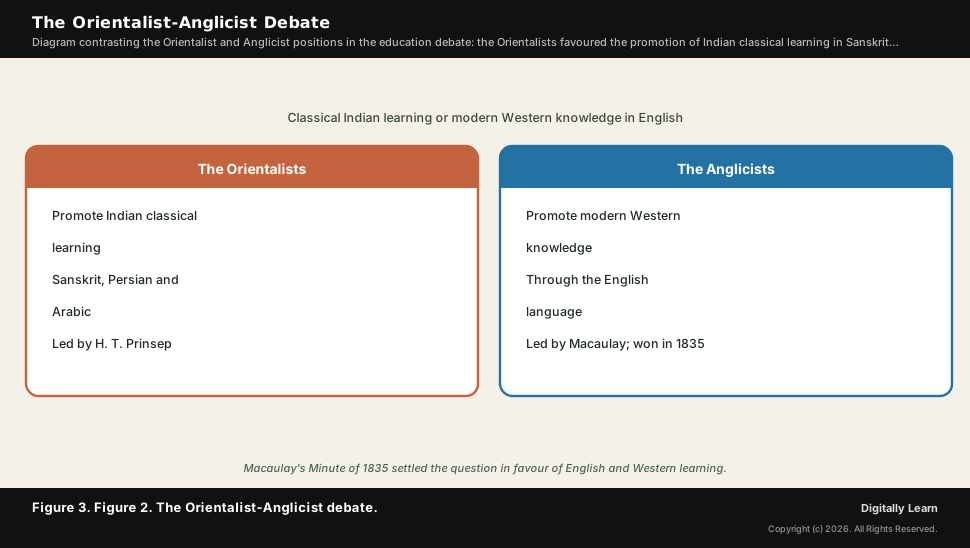
What is the significance of the debate: the Charter Act of 1813 first made education a state duty and the General Committee of Public Instruction of 1823 took it up, but a fierce controversy followed. The Orientalists wished to promote Indian classical learning in Sanskrit, Persian and Arabic; the Anglicists wished to spread modern Western knowledge through English.
Distinguishing Macaulay's Minute: in 1835 Thomas Babington Macaulay wrote his famous Minute in favour of English, and Bentinck's English Education Act of the same year settled the question that way. The hope was a downward filtration of knowledge from an English-educated elite to the masses. The two positions are contrasted below.
Wood's Despatch of 1854: The Magna Carta of Indian Education
The Framework of Modern Education
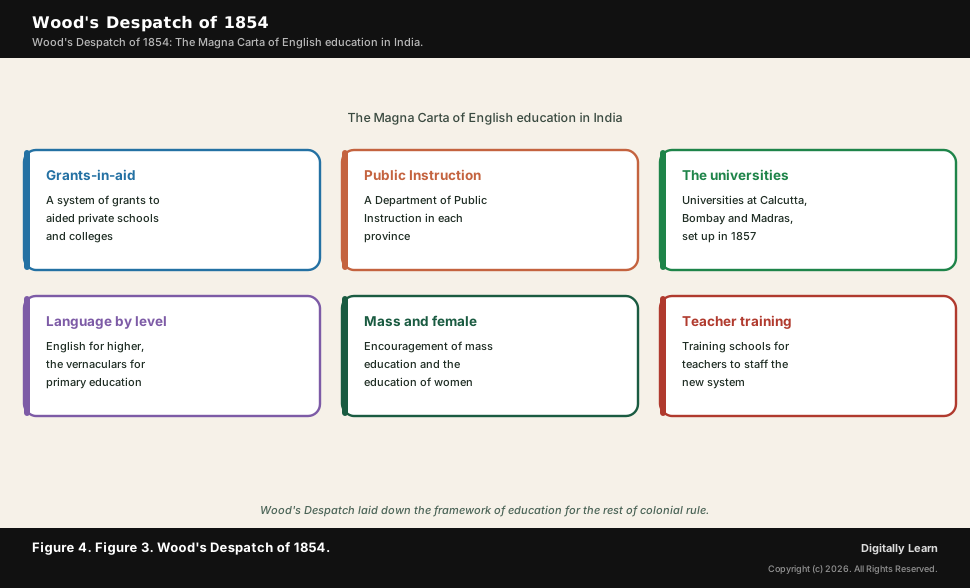
What is the significance of Wood's Despatch: issued in 1854 under Sir Charles Wood, it is called the Magna Carta of English education in India. It set up Departments of Public Instruction in the provinces, introduced a system of grants-in-aid to private schools, and recommended the universities that were founded at Calcutta, Bombay and Madras in 1857.
Distinguishing its design: the Despatch laid down a graded system, with the vernaculars at the primary level and English at the higher, and not English at every level, and it encouraged teacher training, female education and mass education. Its framework governed Indian education for the rest of colonial rule. The features are set out below.
The Hunter Commission of 1882 and Primary Education
Reviewing the Spread of Education
What is the significance of the Hunter Commission: appointed in 1882 under William Wilson Hunter, it reviewed the progress of education since Wood's Despatch. It drew attention above all to the neglect of primary and secondary education, which it urged the state and the local bodies to extend, and to the place of private effort.
Distinguishing the wider record: the colonial system produced a thin but influential layer of graduates while leaving the mass of Indians illiterate, and later commissions would return again and again to the same gap. Education had created an elite, but not yet a literate people.
The Rise of the Indian Press: From Hicky's Gazette to the Vernacular Boom
The Founders, the Titles and the Languages
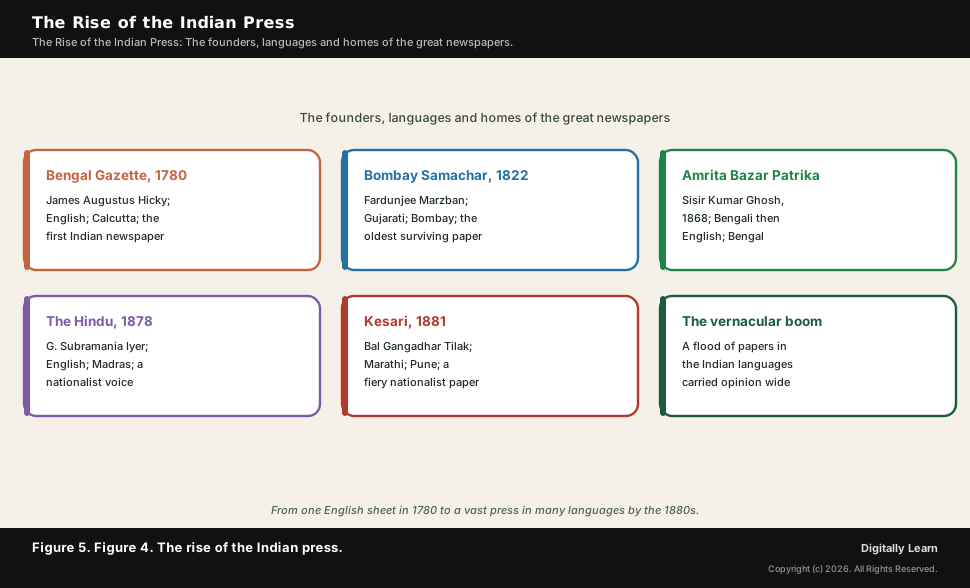
What is the significance of the Indian press: it gave the new educated class a voice and a means of forming opinion. It began with Hicky's Bengal Gazette of 1780, the first newspaper in India, and grew through the nineteenth century into a great press in English and in the Indian languages.
Distinguishing the great titles: the Amrita Bazar Patrika of Sisir Kumar Ghosh, The Hindu of Madras, the Kesari of Bal Gangadhar Tilak and the old Bombay Samachar carried news, criticism and a growing nationalism to readers across the country. The leading papers are set out below.
Press Regulation and the Vernacular Press Act of 1878
Liberty and Repression: A Swinging Pendulum
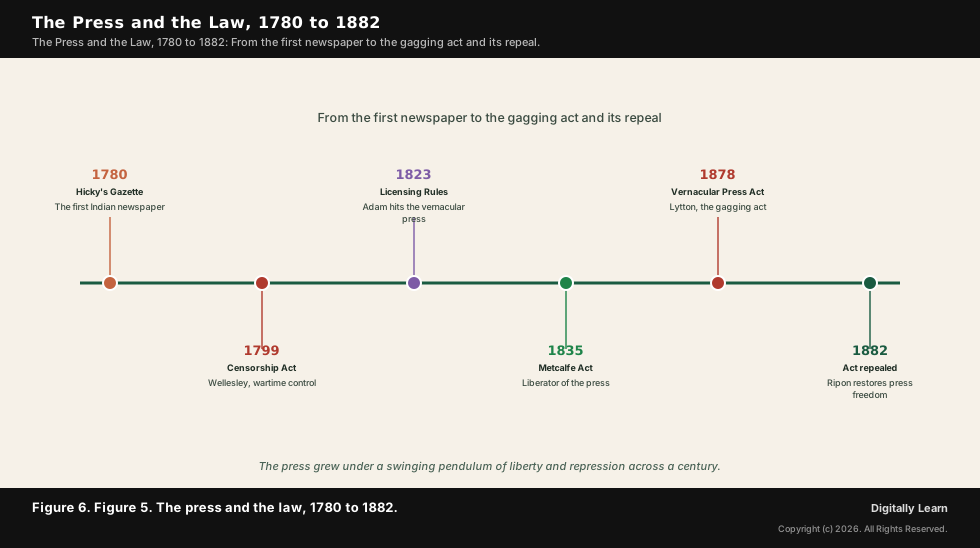
What is the significance of press regulation: the freedom of the press swung between liberty and repression. The Censorship Act of 1799 under Wellesley and the Licensing Regulations of 1823, which hit the vernacular press, gave way in 1835 to the liberal Press Act of Charles Metcalfe, who is remembered as the liberator of the Indian press.
Distinguishing the Vernacular Press Act: in 1878 Lord Lytton passed the Vernacular Press Act, the gagging act, which singled out the Indian-language press for censorship and allowed no appeal. The protest was loud, and the act was repealed in 1882 by Lord Ripon, restoring the freedom of the press. The sequence is set out below.
Significance: Education, the Press and the National Awakening
The New Class and the Public Sphere
What is the significance of education and the press together: they created the educated middle class and the public sphere of modern India. The graduates of the new colleges and the readers of the new papers shared ideas, news and grievances and began to think of themselves as a nation.
Distinguishing the irony: the colonial state built these instruments for its own ends, to train clerks and to spread its view, yet they turned into the very means of opposition. The English-educated lawyer and the nationalist editor would soon lead the demand for a share in government.
The Ground of the National Movement
Contemporary linkages run from the lecture hall and the printing press straight to the Indian National Congress. The men who founded and led the early Congress were graduates of the new universities and editors of the new papers, and the press would remain the chief weapon of the movement to the end.
The larger significance is that education and the press were the nervous system of the national awakening, carrying ideas of liberty, self-respect and nationhood across the country. The table and points below gather the threads, and the next part turns to the tribal and peasant uprisings against colonial rule.
| Newspaper | Founder | Language | Year |
|---|---|---|---|
| Bengal Gazette | James Augustus Hicky | English | 1780 |
| Bombay Samachar | Fardunjee Marzban | Gujarati | 1822 |
| Amrita Bazar Patrika | Sisir Kumar Ghosh | Bengali, then English | 1868 |
| The Hindu | G. Subramania Iyer and others | English | 1878 |
| Kesari | Bal Gangadhar Tilak | Marathi | 1881 |
- The Charter Act 1813 first made education a state duty; the General Committee of Public Instruction took it up in 1823.
- Macaulay’s Minute and the English Education Act (1835) chose English and Western learning.
- Wood’s Despatch (1854), the Magna Carta of education, brought grants-in-aid, the universities of 1857 and graded schooling.
- The Hunter Commission (1882) urged attention to neglected primary and secondary education.
- The press grew from Hicky’s Gazette (1780); the Vernacular Press Act (1878, Lytton) was repealed by Ripon in 1882.
Previous Year UPSC-CSE Questions
Previous Year UPSC-CSE Questions By the end you will be able to draft model answers for the following UPSC questions. Each question carries a collapsible framework showing how to approach it in the exam.
- UPSC Prelims 2018 GS Paper IRegarding Wood's Dispatch, which of the following statements are true?
- Grants-in-Aid system was introduced.
- Establishment of universities was recommended.
- English as a medium of instruction at all levels of education was recommended.
Select the correct answer using the code given below.
How to approach this Prelims question
Approach: Test each statement against the actual recommendations of Wood's Despatch.
Trap to watch: Wood's Despatch set the vernaculars at the primary level and English at the higher, NOT English at all levels. So statements 1 and 2 only.
Key facts to recall:
- Wood's Despatch introduced grants-in-aid
- It recommended the universities (1857)
- Vernaculars for primary, English for higher, NOT English at all levels
Answer signal: Statements 1 and 2 only, so option (a).
- UPSC Prelims 2018 GS Paper IWhich of the following led to the introduction of English Education in India?
- Charter Act of 1813
- General Committee of Public Instruction, 1823
- Orientalist and Anglicist Controversy
Select the correct answer using the code given below.
How to approach this Prelims question
Approach: Trace the steps that brought in English education.
Trap to watch: All three were stages in the same story: the 1813 grant, the 1823 committee, and the controversy that the Anglicists won in 1835. So 1, 2 and 3.
Key facts to recall:
- Charter Act 1813: education a state duty
- General Committee of Public Instruction 1823
- Orientalist-Anglicist controversy, won by the Anglicists 1835
Answer signal: All three, so option (d).
- UPSC Prelims 2005 GS Paper IWho among the following repealed the Vernacular Press Act?
How to approach this Prelims question
Approach: Recall who passed the Vernacular Press Act and who repealed it.
Trap to watch: Lytton passed the Vernacular Press Act in 1878; Ripon repealed it in 1882. The question asks who repealed it, so Ripon.
Key facts to recall:
- Vernacular Press Act 1878: Lord Lytton
- Repealed 1882: Lord Ripon
- Ripon also linked to local self-government and the Ilbert Bill
Answer signal: Ripon, so option (b).
Sources and Further Reading
- Wikipedia: Wood's despatch
- Wikipedia: English Education Act 1835
- Wikipedia: Vernacular Press Act
- Wikipedia: Hicky's Bengal Gazette
- NCERT, Themes in Indian History (Modern India)
- Indian Culture Portal, Ministry of Culture
- National Portal of India
- Press Information Bureau, Government of India
- National Archives of India
Editorial Disclaimer
This article is prepared for UPSC examination preparation. Verify key facts and interpretations against standard reference histories before relying on them.