


Overview
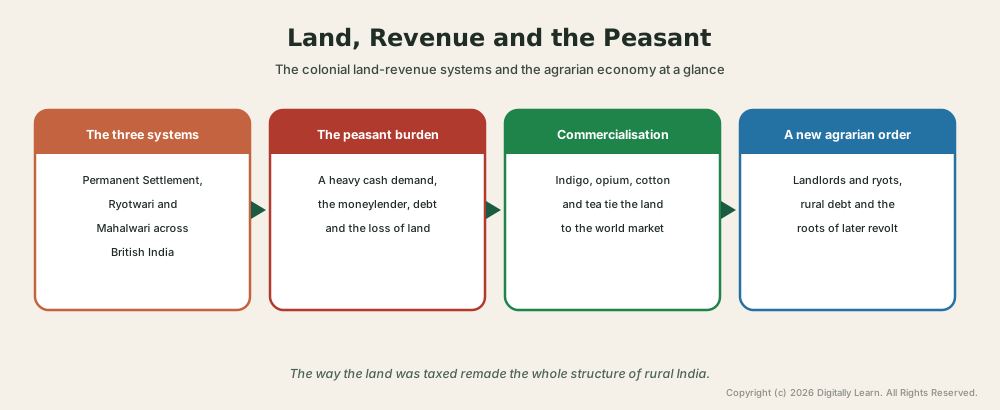
The land-revenue systems were the methods by which the colonial state assessed and collected the tax on land, which was the chief source of its income. Across British India three great systems took shape: the Permanent Settlement of 1793, which settled with the zamindar in Bengal, Bihar and Orissa; the Ryotwari system, which settled directly with the ryot in the Madras and Bombay presidencies; and the Mahalwari system, which settled with the village in the North-Western Provinces and Punjab. The way the land was taxed reshaped the whole of rural India, creating landlords and indebted peasants and tying agriculture to a distant world market.
Introduction: Land, Revenue and the Colonial State
Why Land Revenue Was the Heart of the Raj
Why this matters: for the colonial state, the land revenue was the single largest source of income, and the form in which it was collected was therefore a decision of the first importance. How the tax was assessed, and with whom the state settled, shaped the lives of millions of cultivators.
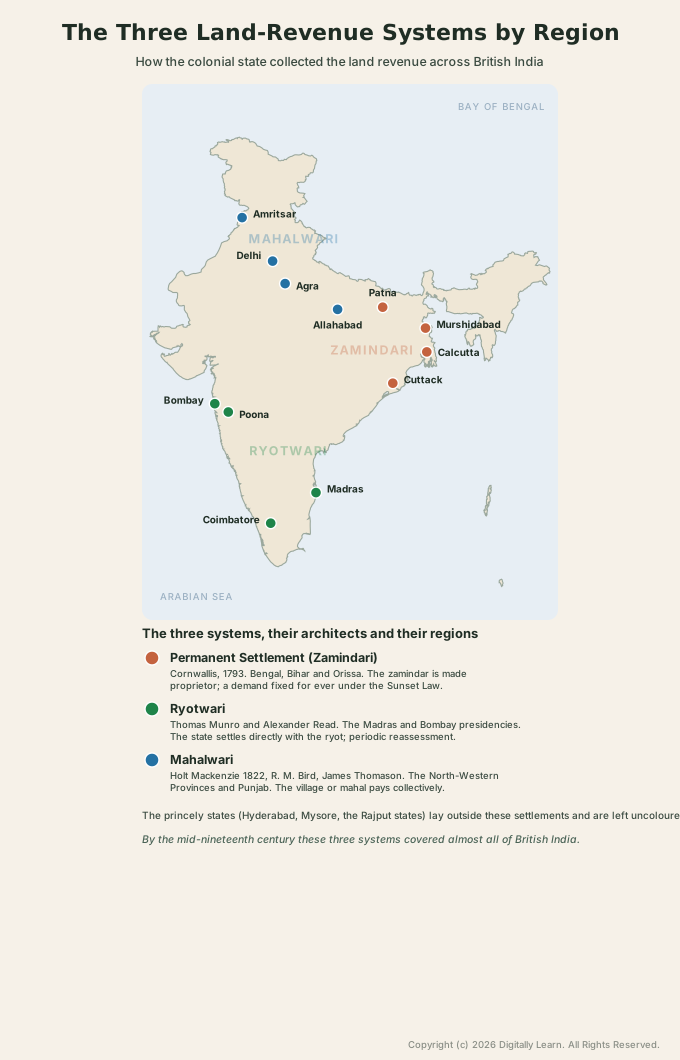
What is the significance of this theme: the British did not impose one system but three, each suited to the region and the moment of conquest. The map below shows the broad spread of the Permanent Settlement, the Ryotwari and the Mahalwari systems across British India.
The Permanent Settlement of 1793: Zamindars, the Sunset Clause and the Peasant
Cornwallis and the Bengal Settlement
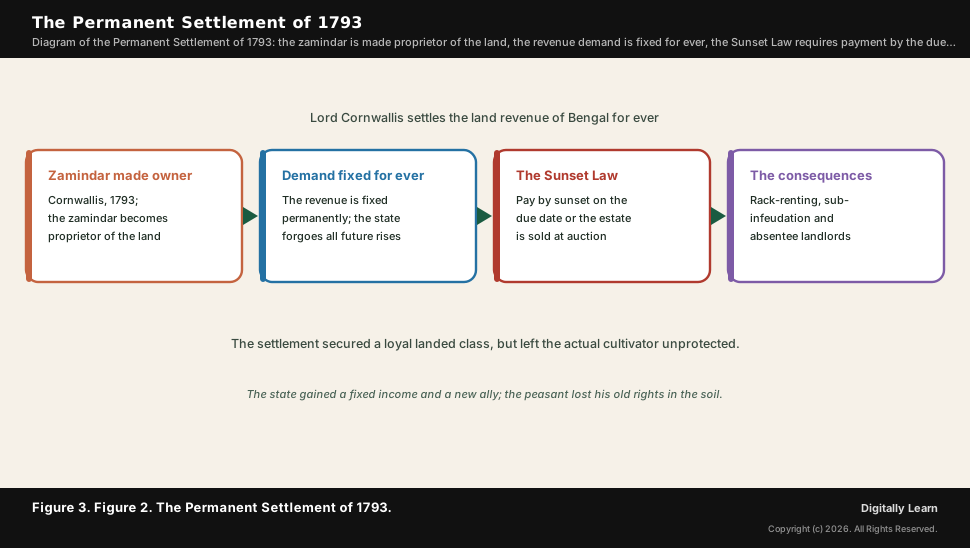
What is the significance of the Permanent Settlement: introduced by Lord Cornwallis in 1793 for Bengal, Bihar and Orissa, it recognised the zamindar as the owner of the land and fixed the revenue demand on him for ever. The state gained a settled income and a loyal landed class, but gave up any share in the rising value of the land.
Distinguishing the Sunset Law: the demand was rigid. If a zamindar failed to pay by sunset on the appointed day, his estate was sold at auction. The burden fell on the actual cultivator, who lost his old occupancy rights and faced rack-renting, sub-infeudation and a class of absentee landlords. The mechanism is set out below.
The Ryotwari System: Thomas Munro in Madras and Bombay
Settling Directly with the Cultivator
What is the significance of the Ryotwari system: developed by Thomas Munro and Alexander Read for the Madras and Bombay presidencies, it dispensed with the zamindar intermediary and settled directly with each ryot, or cultivator, who held a patta and paid the revenue straight to the state. In principle the cultivator was recognised as the owner of his field.
Distinguishing the practice from the theory: in practice the assessment was often over-pitched, the survey rough and the demand revised upward every twenty or thirty years. The ryot enjoyed no permanent settlement of his dues, and a bad season could still ruin him, so the system pressed hard despite its protective intent.
The Mahalwari System: Holt Mackenzie, Bird and Thomason
The Village or Mahal as the Unit
What is the significance of the Mahalwari system: framed by Holt Mackenzie in 1822 and developed by R. M. Bird and James Thomason, it was applied to the North-Western Provinces, the Ganga valley, Punjab and the Central Provinces. Here the unit of assessment was the mahal, the village or estate, which was held collectively responsible for the revenue.
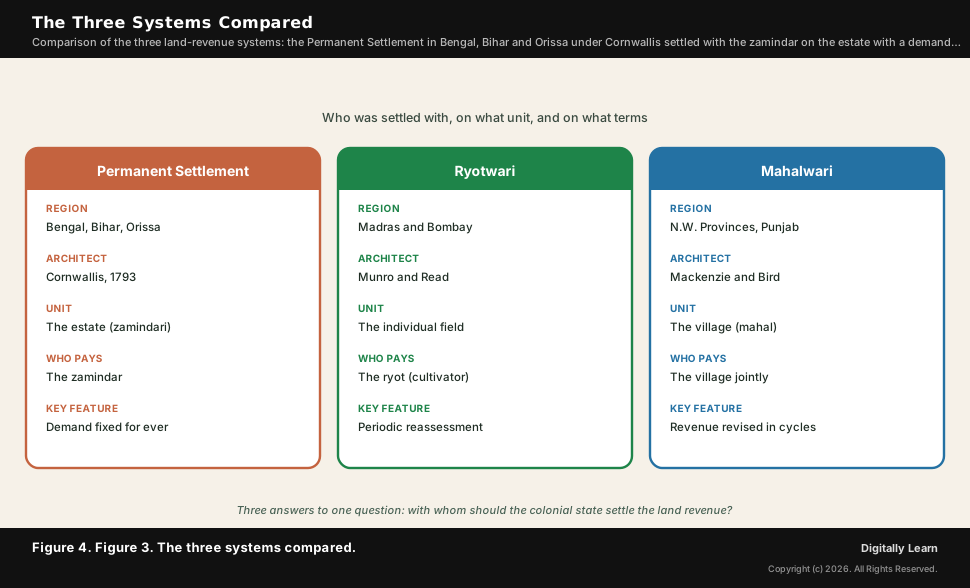
Distinguishing the three systems: the village headman, the lambardar, collected the dues, and the demand was revised periodically rather than fixed for ever. The Mahalwari thus stood between the other two: neither a single great proprietor nor the individual cultivator, but the village community as the paying unit. The three systems are compared below.
The Impact on the Peasantry: Indebtedness, Land Alienation and the Moneylender
The Peasant, the Moneylender and the Loss of Land
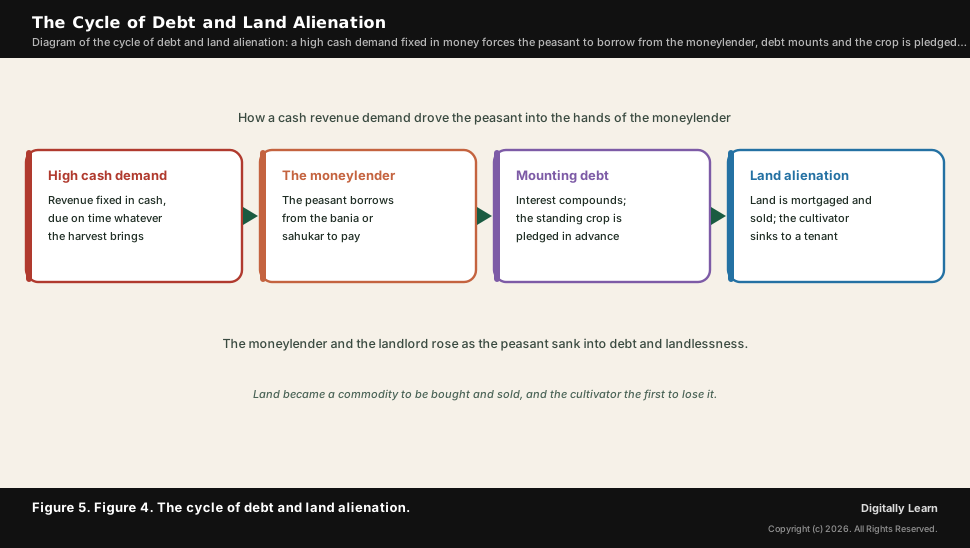
What is the significance of the new burden: under all three systems the demand was high, fixed in cash and due on time whatever the harvest. To meet it the peasant turned to the village moneylender, the bania or sahukar, and so began a cycle of debt from which there was little escape.
Distinguishing the consequence: as debt mounted, the standing crop was pledged in advance and the land itself was mortgaged and then sold. Land had become a saleable commodity, and the cultivator was often the first to lose it, sinking from owner to tenant while the moneylender rose. The cycle is set out below.
The Commercialisation of Agriculture and the Cash Crops
Cash Crops, Forced Cropping and the World Market
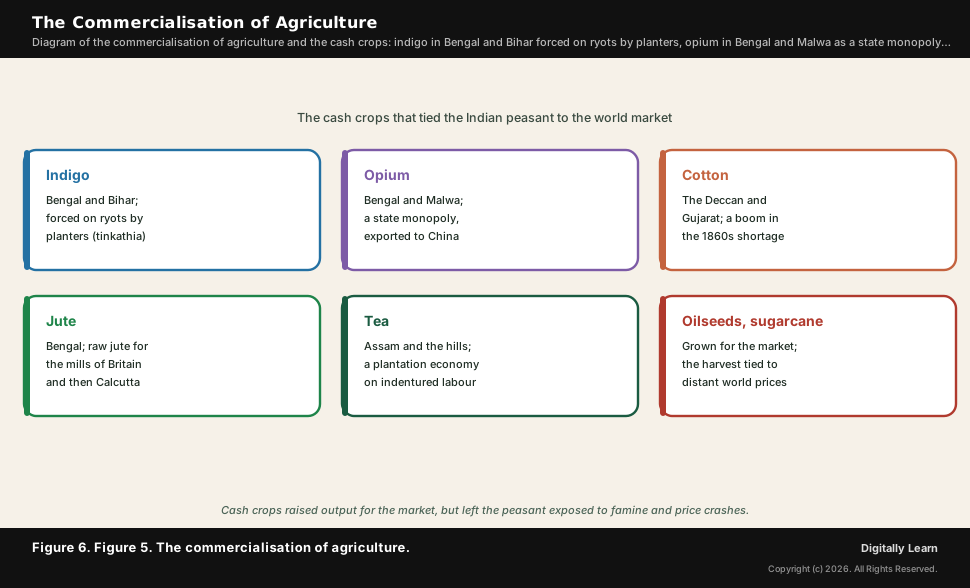
What is the significance of commercialisation: the cash demand and the new railways pushed the peasant from growing food for the family to growing cash crops for the market, such as indigo, opium, cotton, jute, tea and oilseeds. Agriculture was drawn into a wider commercial economy.
Distinguishing the coercion and the cost: much of this cropping was forced, as with the indigo planters of Bengal and Bihar who bound ryots under the tinkathia system, while opium was a state monopoly grown for export to China. The peasant now depended on distant prices, and a crash or a failed crop could mean famine. The crops are set out below.
Significance: A New Agrarian Order
The Transformation of Rural India
What is the significance of the land-revenue systems together: they remade the structure of rural India. The Permanent Settlement created a powerful class of landlords in the east; the Ryotwari and Mahalwari spread state assessment over the cultivator and the village across the rest of the country.
Distinguishing the human result: everywhere the common thread was a heavy, rigid demand that bred indebtedness, land alienation and the rise of the moneylender, while commercialisation tied the peasant to a volatile world market. The gains in revenue were real, but they were not matched by any investment in the cultivator.
The Agrarian Legacy
Contemporary linkages run from this agrarian order straight into the national movement and beyond. The grievances of the indebted peasant fed the agrarian and tribal revolts of the nineteenth century and the later peasant movements, while the abolition of zamindari and the land reforms of independent India were a direct answer to the system Cornwallis began.
The larger significance is that colonial land policy raised revenue without raising the cultivator, leaving Indian agriculture commercialised but impoverished. The table and points below gather the threads, and the next part turns to the wider economic impact of colonial rule, deindustrialisation, the drain of wealth and the famines.
| System | Region | Settled with | Architect |
|---|---|---|---|
| Permanent Settlement | Bengal, Bihar, Orissa | The zamindar (estate) | Cornwallis, 1793 |
| Ryotwari | Madras and Bombay | The ryot (field) | Munro and Read |
| Mahalwari | N.W. Provinces, Punjab | The village (mahal) | Mackenzie, Bird, Thomason |
- The Permanent Settlement (1793, Cornwallis) made the zamindar the proprietor with a demand fixed for ever; the Sunset Law auctioned defaulting estates.
- The Ryotwari system (Munro, Read) settled directly with the ryot in Madras and Bombay, with periodic over-assessment.
- The Mahalwari system (Holt Mackenzie 1822, Bird, Thomason) settled with the village or mahal in the North-Western Provinces and Punjab.
- A high cash demand bred peasant indebtedness, land alienation and the rise of the moneylender.
- Commercialisation through cash crops tied Indian agriculture to the world market and deepened its vulnerability to famine.
Previous Year UPSC-CSE Questions
Previous Year UPSC-CSE Questions By the end you will be able to draft model answers for the following UPSC questions. Each question carries a collapsible framework showing how to approach it in the exam.
- UPSC Prelims 2024 GS Paper IWith reference to revenue collection by Cornwallis, consider the following statements:
- Under the Ryotwari Settlement of revenue collection, the peasants were exempted from revenue payment in case of bad harvests or natural calamities.
- Under the Permanent Settlement in Bengal, if the Zamindar failed to pay his revenues to the state, on or before the fixed date, he would be removed from his Zamindari.
Which of the statements given above is/are correct?
How to approach this Prelims question
Approach: Test each statement against the actual terms of the two systems.
Trap to watch: The Ryotwari system was NOT generous; it gave no automatic remission for bad harvests, and it was the work of Munro and Read, not Cornwallis. Only the Permanent Settlement Sunset Law (statement 2) is correct.
Key facts to recall:
- Permanent Settlement: default by the date meant the estate was sold (Sunset Law)
- Ryotwari: rigid assessment, no automatic remission
- Ryotwari was Munro and Read, not Cornwallis
Answer signal: UPSC dropped this question from scoring in its official answer key, so it has no official answer. On the facts, the Permanent Settlement rule in statement 2 is accurate and the Ryotwari claim in statement 1 is not.
- UPSC Prelims 2017 GS Paper IWho among the following was/were associated with the introduction of Ryotwari Settlement in India during the British rule? Select the correct answer using the code given below.
- Lord Cornwallis
- Alexander Read
- Thomas Munro
Select the correct answer using the code given below.
How to approach this Prelims question
Approach: Match each name to the system he is associated with.
Trap to watch: Cornwallis is the Permanent Settlement, not the Ryotwari. The Ryotwari is Munro and Read, so the correct combination is 2 and 3 only.
Key facts to recall:
- Ryotwari Settlement: Thomas Munro and Alexander Read
- Permanent Settlement: Lord Cornwallis
- Munro worked chiefly in Madras
Answer signal: Read and Munro only, so option (c).
Sources and Further Reading
- Wikipedia: Permanent Settlement
- Wikipedia: Ryotwari
- Wikipedia: Mahalwari
- Wikipedia: Indigo revolt (commercial agriculture)
- NCERT, Themes in Indian History (Modern India)
- Indian Culture Portal, Ministry of Culture
- National Portal of India
- Press Information Bureau, Government of India
- National Archives of India
Editorial Disclaimer
This article is prepared for UPSC examination preparation. Verify key facts and interpretations against standard reference histories before relying on them.