


Overview
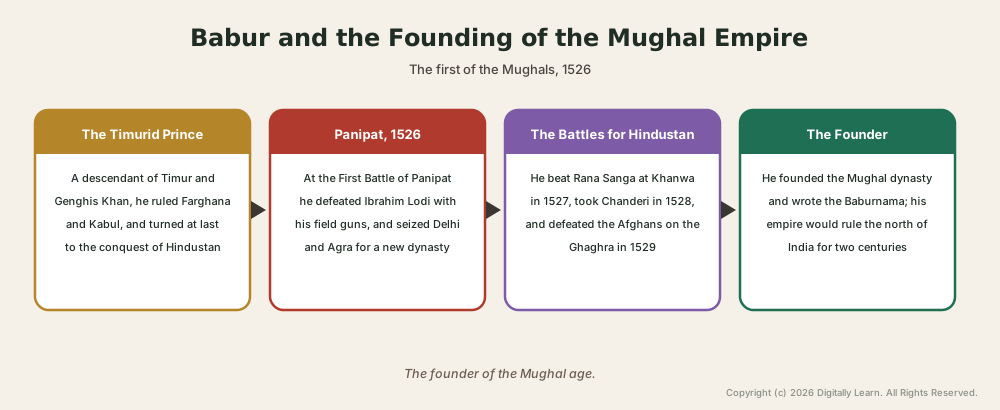
Babur (1483-1530) was the founder of the Mughal Empire, the greatest of the empires of medieval India. A Timurid prince of Central Asia, descended from Timur on his father's side and from Genghis Khan on his mother's, he ruled Farghana and then Kabul before he turned to the conquest of Hindustan. At the First Battle of Panipat in 1526 he defeated Ibrahim Lodi, the last Sultan of Delhi, by the skilful use of field artillery and the flanking tactic of the steppe, and seized Delhi and Agra. He went on to defeat Rana Sanga of Mewar at Khanwa, the Rajput Medini Rai at Chanderi, and the Afghans on the Ghaghra. He left a vivid memoir, the Baburnama. This part covers his background and conquest, his battles, his legacy, and the exam focus.
Babur, the Timurid Prince
From Farghana and Kabul to the First Battle of Panipat
What is the significance of Babur: he founded the Mughal Empire, the dynasty that would rule the north of India for more than two centuries and make its golden age.
Babur was a prince of Central Asia. He was descended from the great conqueror Timur on his father's side and from Genghis Khan on his mother's, and ruled first the small kingdom of Farghana and then, from 1504, the city of Kabul. Driven from his homeland in the north, he turned his eyes to the rich plains of Hindustan, then ruled by the Lodi Sultans of Delhi.
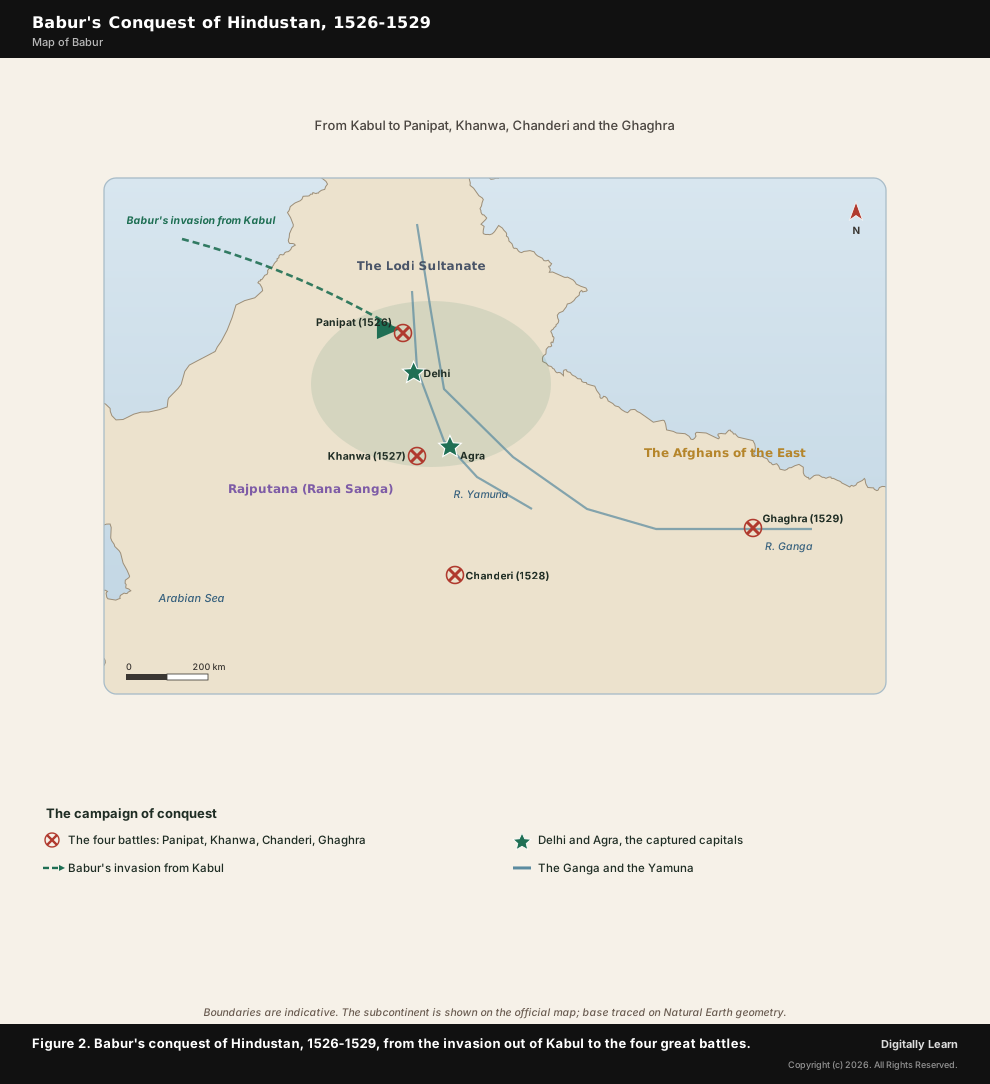
The First Battle of Panipat founded the empire. In 1526 Babur met Ibrahim Lodi, the last Sultan of Delhi, on the field of Panipat. Though his army was far smaller, he won by the skilful use of his field artillery and the tulughma, the flanking tactic of the steppe, by which he wheeled around the enemy and broke them. He took Delhi and Agra, and a new dynasty was born. The map below sets out his conquest.
The Battles for Hindustan
Khanwa, Chanderi and the Ghaghra
What is the significance of the battles: the victory at Panipat won Delhi, but it took three more great battles to secure the new empire against its rivals.
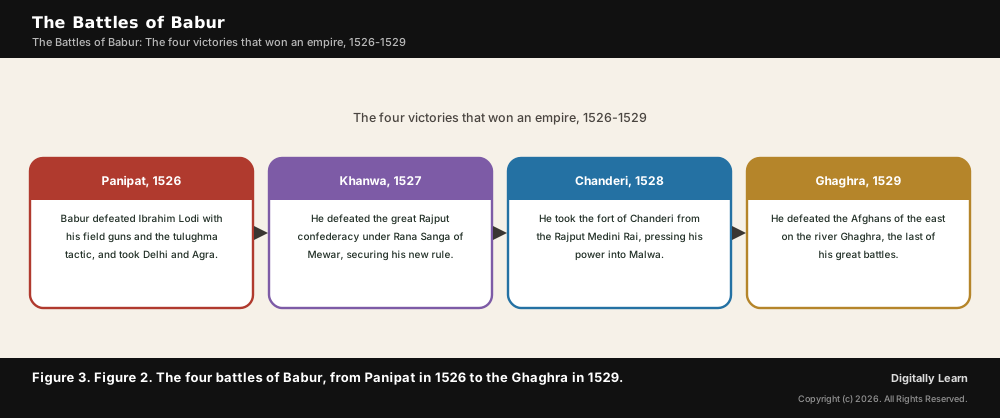
Khanwa broke the Rajput power. The most formidable of Babur's foes was Rana Sanga of Mewar, who led a great confederacy of the Rajputs. At the Battle of Khanwa in 1527 Babur defeated him, again by his guns and his tactics, and so secured his rule against the strongest power of northern India. He then took the fort of Chanderi from the Rajput Medini Rai in 1528.
The Ghaghra finished the work. The last of his great battles was fought in 1529 on the river Ghaghra, against the Afghans of the east, who had held Bihar and Bengal. With their defeat the rule of the new dynasty was secure from the Indus to the borders of Bengal. The table below sets out his four great battles.
| Battle | Year | Defeated | Outcome |
|---|---|---|---|
| First Panipat | 1526 | Ibrahim Lodi, Sultan of Delhi | Won Delhi and Agra; founded the empire. |
| Khanwa | 1527 | Rana Sanga of Mewar | Broke the Rajput confederacy. |
| Chanderi | 1528 | Medini Rai | Took the fort of Chanderi in Malwa. |
| Ghaghra | 1529 | The Afghans of the east | Secured the east to the borders of Bengal. |
The Man and the Legacy
Babur the Soldier, the Writer and the Founder
What is the significance of Babur's legacy: he was not only the founder of an empire but a soldier and a writer of the first rank, whose own memoirs are a chief source for his age.
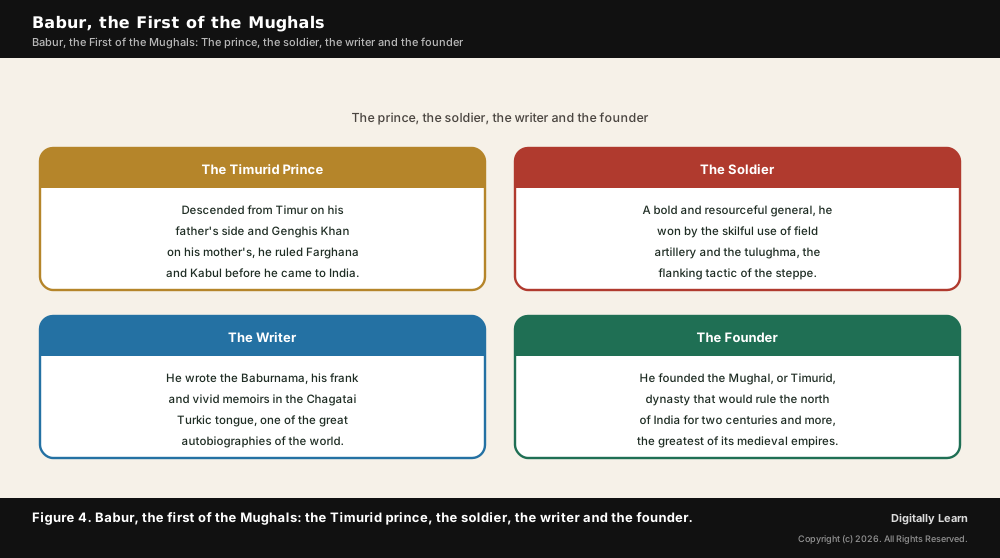
He was a great writer as well as a soldier. Babur wrote the Baburnama, also called the Tuzuk-i-Baburi, his frank and vivid memoirs, in the Chagatai Turkic tongue of his fathers; it is one of the great autobiographies of the world, full of his observations on the lands, peoples, plants and animals of India. It was rendered into Persian only later, in the reign of his grandson Akbar.
He founded a lasting dynasty. What Babur brought to India was not gunpowder, which the Sultans of Delhi had used before him, nor the arch and the dome, which were already old in the land, but the Timurid, or Mughal, dynasty itself, the line that would rule the north of India for two centuries.
He died after only four years in India. Babur died in 1530, and was buried at Agra; his remains were carried later, as he had wished, to a garden at Kabul. The figure below sets out the man and his legacy.
UPSC Relevance and Exam Focus
Where Babur Fits in the UPSC-CSE Syllabus
This topic belongs to General Studies Paper I: medieval Indian history, and Babur, with his battles and his memoirs, is the starting point of the much-examined history of the Mughal Empire.
The questions most often test the First Battle of Panipat of 1526, the Battle of Khanwa against Rana Sanga, and the nature of what Babur brought to India, the Timurid dynasty rather than gunpowder or the arch.
Several linked points recur and are worth holding in working memory:
- The First Battle of Panipat: 1526, against Ibrahim Lodi; founded the Mughal Empire.
- The method: field artillery and the tulughma flanking tactic, not the introduction of gunpowder, which was already known.
- Khanwa: 1527, against Rana Sanga of Mewar, the most formidable of Babur’s foes.
- The Baburnama: his memoirs, written in Chagatai Turkic, translated into Persian under Akbar.
- The dynasty: Babur founded the Mughal, or Timurid, dynasty in India.
A 2015 question asked what the arrival of Babur led to, and the answer was that it established the Timurid dynasty alone; it did not introduce gunpowder, which the Delhi Sultans had already used, nor the arch and dome, which were already old in Indian building.
A 2001 question set the claim that Khanwa was more decisive than the First Battle of Panipat; the assertion is false, for it was Panipat that founded the empire and was the more significant, though it is true that Rana Sanga was a more formidable adversary than Ibrahim Lodi.
Previous Year UPSC-CSE Questions
Previous Year UPSC-CSE Questions By the end you will be able to draft model answers for the following UPSC questions. Each question carries a collapsible framework showing how to approach it in the exam.
- UPSC Prelims 2015 GS-IConsider the following. The arrival of Babur into India led to the:
- Introduction of gunpowder in the subcontinent.
- Introduction of the arch and dome in the region's architecture.
- Establishment of Timurid dynasty in the region.
Which of the above statements is/are correct?
How to approach this Prelims question
Approach: Test each: gunpowder (1) was already in India under the Delhi Sultans, so wrong; the arch and dome (2) came with the Delhi Sultanate, so wrong; the Timurid dynasty (3) was established by Babur, so correct.
Trap to watch: Do not credit Babur with introducing gunpowder or the arch and dome; both were already in India. He established the Timurid dynasty.
Key facts to recall:
- Babur established the Timurid (Mughal) dynasty.
- Gunpowder was already used by the Delhi Sultans before Babur.
- The arch and dome came to India with the Delhi Sultanate.
Answer signal: 3 only.
- UPSC Prelims 2001 GS-IConsider the following statements:
- Assertion (A): The Battle of Khanua was certainly more decisive and significant than the First Battle of Panipat.
- Reason (R): Rana Sanga, the Rajput hero, was certainly a more formidable adversary than Ibrahim Lodi.
Which one of the following is correct in respect of the above statements?
How to approach this Prelims question
Approach: Judge the assertion (Panipat, not Khanwa, was the decisive founding battle, so A is false) and the reason (Rana Sanga was a more formidable foe than Ibrahim Lodi, so R is true) separately.
Trap to watch: The First Battle of Panipat is the decisive founding battle (A false); but the reason about Rana Sanga is independently true (R true).
Key facts to recall:
- The First Battle of Panipat (1526) founded the Mughal Empire.
- Khanwa (1527) secured the empire against the Rajputs.
- Rana Sanga was a more formidable adversary than Ibrahim Lodi.
Answer signal: A is false, but R is true.
Sources and Further Reading
Editorial Disclaimer
This article is for UPSC preparation. The history of Babur rests on his own memoirs, the Persian chronicles and the standard scholarship on the Mughal Empire.