


Overview
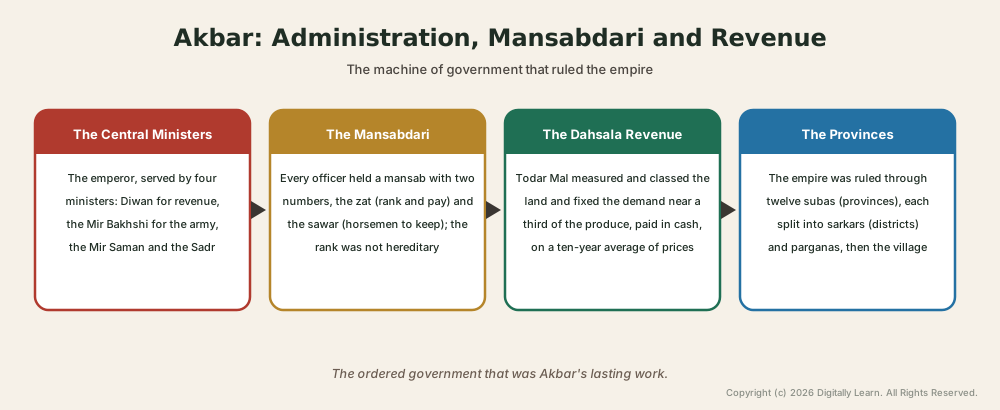
The administration of Akbar was the most lasting of all his works, the system of government that held the vast Mughal empire together and outlived him by a century and more. At the centre stood the emperor, served by four great ministers, the Diwan for revenue, the Mir Bakhshi for the army, the Mir Saman for the household and the Sadr for religion and justice. The nobility was ordered by the mansabdari system, under which every officer held a rank, or mansab, fixed by two numbers, the zat and the sawar. The land revenue, the chief income of the state, was settled by Todar Mal under the dahsala or zabti system, and the empire was ruled through a chain of provinces, districts and villages. This part covers the central government, the mansabdari, the revenue system, the provincial administration, and the exam focus.
The Central Government
The Emperor and the Four Ministers
What is the significance of the central government: it placed all power in the hands of the emperor, served by a few great ministers each over one branch of the state, so that the whole empire was governed from a single ordered centre.
The emperor stood at the apex. Akbar was the head of the state, the army and the law, and all authority flowed from him. He was served by four great ministers, each in charge of one department of the central government, and through them he ruled the empire.
The four ministers divided the work of the state. The Diwan, or wazir, was the head of revenue and finance, who kept the accounts of the empire. The Mir Bakhshi was the head of the military department, who kept the rolls of the mansabdars and saw to their pay, and who was also the chief of intelligence.
The Mir Saman ran the imperial household and the karkhanas, the royal workshops. The Sadr-us-Sudur was in charge of religious grants and charity, and the chief Qazi was the head of justice. The figure below sets out the central government.
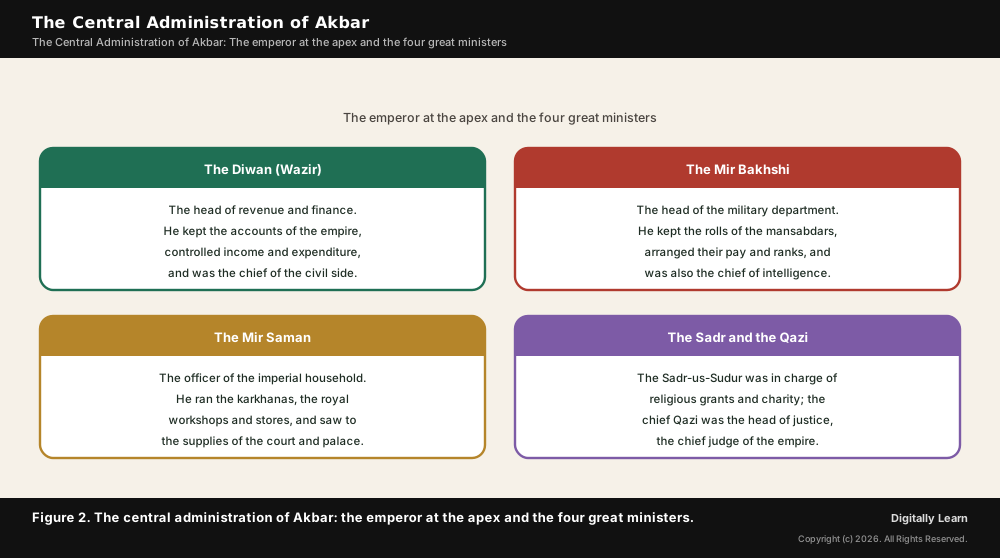
A point worth holding for the examination is that the Mir Bakhshi, not the Diwan, was the head of the military department; the Diwan was the head of revenue. The two are often confused, and the distinction has been asked directly.
The Mansabdari System
The Mansab, the Zat and the Sawar
What is the significance of the mansabdari: it was the steel frame of the empire, the system by which every officer was given a rank, a pay and a military duty, and held in the ordered service of the throne.
Akbar set up the mansabdari in the 1570s. Under it every officer of the state, civil or military, was given a mansab, a rank or grade fixed by the emperor. The mansab carried two numbers, the zat and the sawar.
The zat fixed the holder's personal rank, his status and his pay; the sawar fixed the number of horsemen he was bound to keep ready for the service of the empire. A noble of high zat and high sawar was a great man; the ranks ran from small grades up to several thousand, with the highest reserved for the princes of the blood.
The mansab was not hereditary. It was granted, raised or taken back at the emperor's will, and did not pass of right from father to son, so that the nobility remained a body of servants and never hardened into a class of lords who could defy the throne. This was a chief source of the empire's strength.
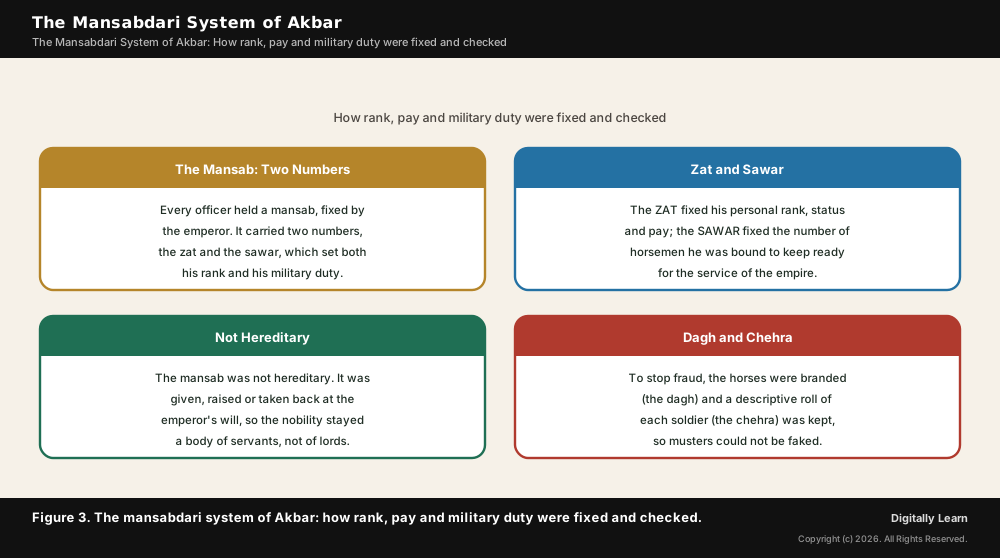
To stop fraud, Akbar enforced the dagh and the chehra. The horses of each mansabdar were branded with a state mark, the dagh, and a descriptive roll of each soldier, the chehra, was kept, so that a noble could not show borrowed men and horses at the muster and draw pay for soldiers he did not keep. By these checks the mansab numbers were made real.
The Jagir, the Khalisa and the Zamindar
What is the significance of the jagir: it was the way the mansabdars were paid, and the difference between the jagirdar and the zamindar is one of the most-tested points of Mughal administration.
The mansabdars were paid by jagir or in cash. Most often the noble was assigned a jagir, the revenue of a tract of land, in place of a salary; he drew the revenue, kept his troops from it, and lived on the rest.
The jagir was not his property; it was transferable and not hereditary, and was often moved from one tract to another, so that no noble could strike roots in any one place. The land kept apart for the emperor's own treasury, not assigned in jagir, was the khalisa.
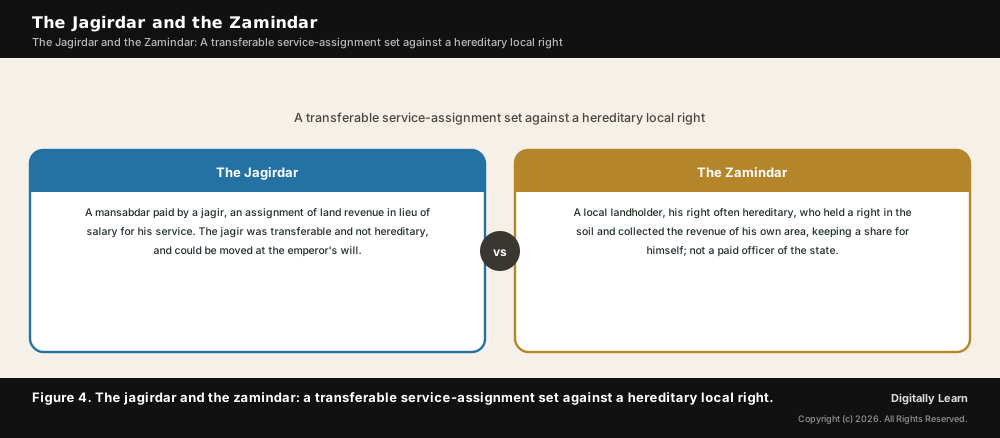
The zamindar was a different person altogether. The zamindar was not a paid officer of the state but a local landholder, often hereditary, who held a right in the land and collected the revenue of his area, keeping a share for himself.
The jagirdar held a temporary assignment of revenue for his service and could be moved at will; the zamindar held a hereditary right in the soil of his own country. This difference, between a transferable service-assignment and a hereditary local right, is the heart of the matter.
The Land Revenue System
Todar Mal and the Dahsala Settlement
What is the significance of the revenue system: the land revenue was the chief income of the empire, and the settlement Todar Mal made for Akbar was so sound that it became the model for the land systems of India for centuries.
Todar Mal settled the land revenue. The revenue minister Raja Todar Mal carried through, about 1580, the settlement known as the dahsala, or ten-year settlement, also called the zabti system. Under it the cultivated land was first measured with a standard measuring rod, the jarib, in units of the bigha, so that the area of each field was known and could not be hidden.
The land was then classified and assessed. The land was sorted by use into classes, from polaj, cropped every year, through parauti and chachar, left fallow for a time, to banjar, the waste left long uncultivated.
The average yield of each class, and the average of ten years' prices, were taken, and the state's demand was fixed at about one-third of the produce, to be paid for the most part in cash. The figure below sets out the steps of the settlement.
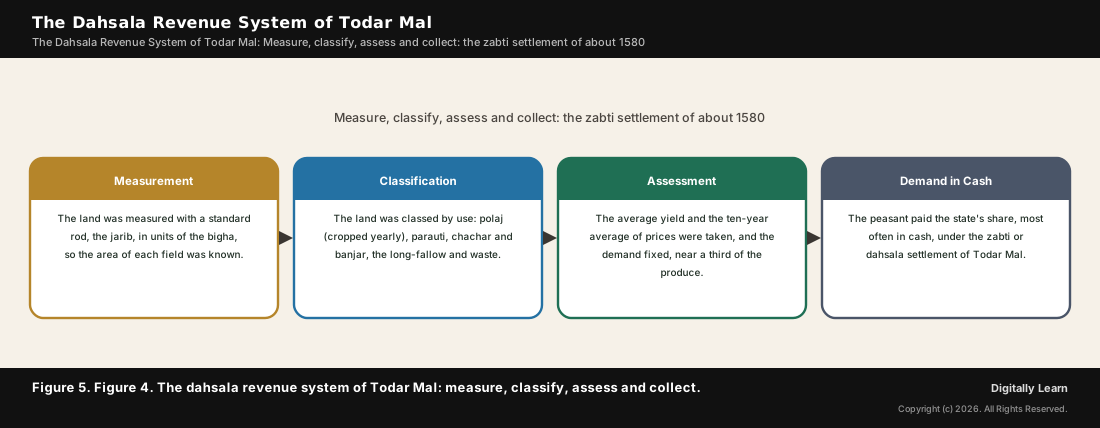
The system was a great advance. Because the demand rested on the measured area, the class of the land and a settled average of prices, the peasant knew in advance what he owed, and the state knew what it would receive. This certainty, and the use of cash, made Todar Mal's settlement the foundation of Mughal finance.
The Provincial Administration
The Suba, the Sarkar, the Pargana and the Village
What is the significance of the provincial system: it carried the rule of the centre down to every village, through an ordered chain of provinces, districts and groups of villages, each with its own officers.
Akbar divided the empire into subas. The empire was first divided into provinces, the subas, of which there were twelve in Akbar's day. Each suba was governed by a subahdar, or governor, with a provincial Diwan beside him for the revenue, so that the civil and the financial powers were kept in separate hands as a check upon each other.
Below the suba came the sarkar and the pargana. Each suba was divided into districts, the sarkars, under a faujdar for order and an amalguzar for revenue; each sarkar into parganas, groups of villages, under a shiqdar and an amil, with a qanungo to keep the local revenue records.
At the foot of all stood the village, with its headman, the muqaddam, and its accountant, the patwari. The figure below sets out the chain, from the province at the top down to the single village.
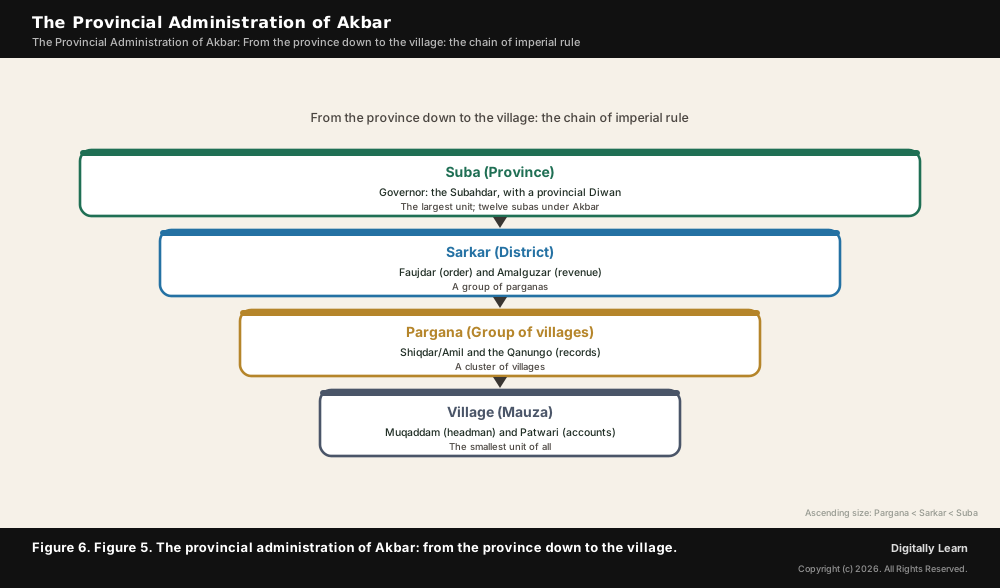
For the examination it is worth fixing the order of size in the mind. In ascending order, from the smallest to the largest, the units ran: the pargana, then the sarkar, then the suba. This exact sequence has been asked.
UPSC Relevance and Exam Focus
Where Akbar's Administration Fits in the UPSC-CSE Syllabus
This topic belongs to General Studies Paper I: medieval Indian history, and Akbar's administration is among the most heavily examined of all medieval subjects, in Prelims above all.
The questions most often test the central ministers (especially the Mir Bakhshi), the mansabdari (the zat and the sawar), the revenue system of Todar Mal, and the order of the provincial units.
Several linked points recur and are worth holding in working memory:
- The Mir Bakhshi: head of the military department; the Diwan was head of revenue.
- The mansab: two numbers, the zat (rank and pay) and the sawar (horsemen); not hereditary.
- The dahsala: Todar Mal’s revenue settlement, about 1580; demand near a third of the produce, in cash.
- The provincial order: in ascending size, pargana, then sarkar, then suba; twelve subas under Akbar.
- Jagir versus zamindar: the jagir was a transferable, non-hereditary assignment for service; the zamindari was a hereditary local right.
| Office or unit | What it was |
|---|---|
| Diwan (Wazir) | Head of revenue and finance at the centre. |
| Mir Bakhshi | Head of the military department and of intelligence. |
| Mansab (zat, sawar) | The rank of an officer: zat for status and pay, sawar for horsemen. |
| Jagir | A transferable, non-hereditary revenue assignment paid for service. |
| Dahsala | Todar Mal's ten-year revenue settlement, about 1580. |
| Suba / Sarkar / Pargana | Province / district / group of villages, in descending size. |
A 2021 question asked the correct sequence in ascending order of size, and the answer was the pargana, the sarkar and the suba: the pargana, a group of villages, is the smallest, the sarkar, a district, larger, and the suba, a province, the largest of the three.
A 1997 question asked who was the head of the military department under Akbar, and the answer was the Mir Bakhshi, not the Diwan; while a 2019 question on the difference between the jagirdar and the zamindar turned on the fact that the jagir was an assignment for service and not hereditary, whereas the zamindari was a hereditary local right.
Previous Year UPSC-CSE Questions
Previous Year UPSC-CSE Questions By the end you will be able to draft model answers for the following UPSC questions. Each question carries a collapsible framework showing how to approach it in the exam.
- UPSC Prelims 2021 GS-IWith reference to medieval India, which one of the following is the correct sequence in ascending order in terms of size?
How to approach this Prelims question
Approach: Recall the provincial chain from smallest to largest: village, pargana (group of villages), sarkar (district), suba (province). In ascending order the three asked-for units are pargana, sarkar, suba.
Trap to watch: Do not reverse the order; the suba (province) is the largest, the pargana (group of villages) the smallest.
Key facts to recall:
- Pargana = a group of villages (smallest of the three).
- Sarkar = a district (a group of parganas).
- Suba = a province (the largest; twelve under Akbar).
Answer signal: Pargana – Sarkar – Suba (ascending size).
- UPSC Prelims 1997 GS-IThe head of the military department under the reorganised central machinery of administration during Akbar's reign was
How to approach this Prelims question
Approach: Match the department to the minister: military = Mir Bakhshi; revenue/finance = Diwan; household/karkhanas = Mir Saman; religious grants/justice = Sadr/Qazi.
Trap to watch: The Diwan is the revenue head, NOT the military head; the military department was under the Mir Bakhshi.
Key facts to recall:
- Mir Bakhshi = head of the military department, intelligence and mansab rolls.
- Diwan (Wazir) = revenue and finance.
- Mir Saman = imperial household and karkhanas.
Answer signal: Mir Bakhshi (the military head).
- UPSC Prelims 2019 GS-IWith reference to Mughal India, what is/are the difference/differences between Jagirdar and Zamindar?
- Jagirdars were holders of land assignments in lieu of judicial and police duties, whereas Zamindars were holders of revenue rights without obligation to perform any duty other than revenue collection.
- Land assignments to Jagirdars were hereditary and revenue rights of Zamindars were not hereditary.
Select the correct answer using the code given below:
How to approach this Prelims question
Approach: Test each statement: (1) jagir was in lieu of SALARY for service, not for judicial/police duty, so 1 is wrong; (2) jagirs were NON-hereditary and transferable while zamindari was hereditary, so 2 reverses the truth and is wrong. Both wrong, so neither.
Trap to watch: Statement 2 inverts the reality: it was the zamindari, not the jagir, that was hereditary; the jagir was transferable.
Key facts to recall:
- Jagir = transferable, non-hereditary revenue assignment for service.
- Zamindari = a generally hereditary local right in the land.
- Both given statements are incorrect.
Answer signal: Neither 1 nor 2.
Sources and Further Reading
Editorial Disclaimer
This article is for UPSC preparation. The account of Akbar's administration rests on the Ain-i-Akbari of Abul Fazl and the standard scholarship on the Mughal Empire.