


Overview
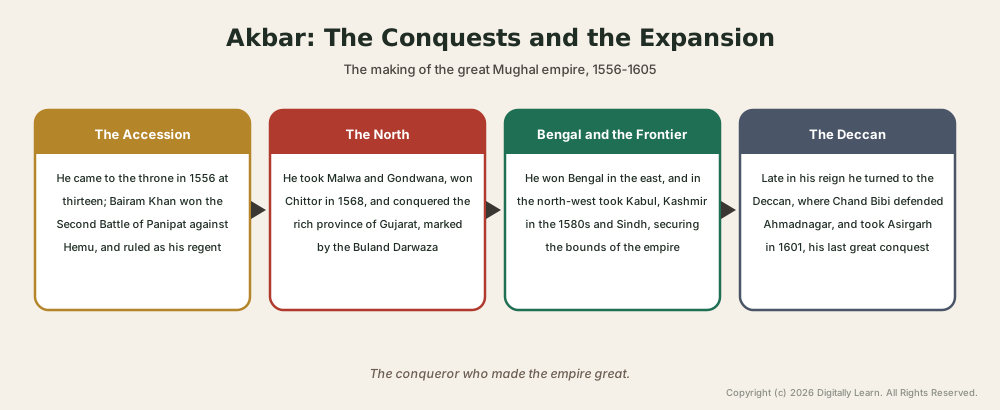
Akbar (reigned 1556 to 1605), the grandson of Babur and the greatest of the Mughal emperors, made the empire by conquest the master of the whole of northern India. He came to the throne at thirteen, and in his name his regent Bairam Khan won the Second Battle of Panipat in 1556 against Hemu, the Hindu general who had seized Delhi. Through a long reign Akbar conquered Malwa, Gondwana, the great Rajput fort of Chittor, the rich province of Gujarat, Bengal in the east, and Kabul, Kashmir and Sindh in the north-west, and late in his life pushed south into the Deccan. By his death the empire ran from Kabul to Bengal and into the northern Deccan. This part covers his accession and his conquests, the empire he made, and the exam focus.
The Accession and the Second Battle of Panipat
The Boy King, Bairam Khan and Hemu
What is the significance of Akbar's conquests: they made the Mughal empire the master of the whole north of India, and turned a precarious conquest into a lasting state.
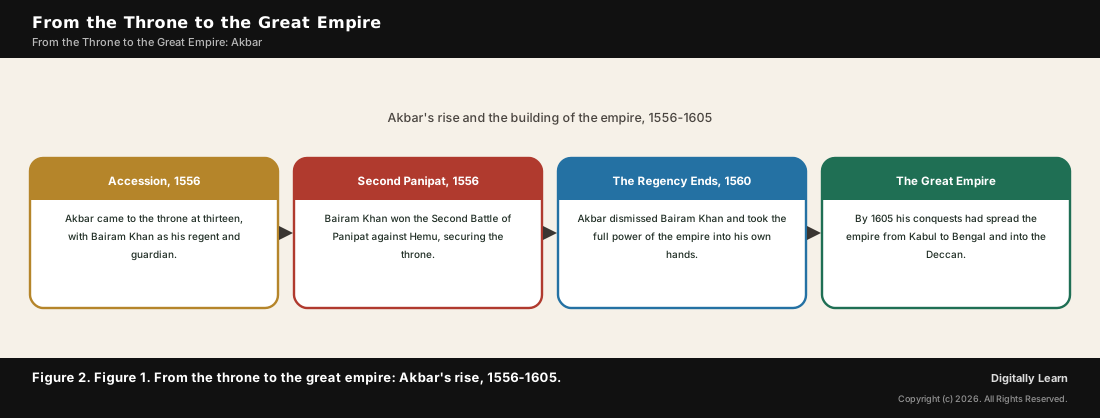
Akbar came young to the throne. On the death of Humayun in 1556 the throne passed to his son Akbar, a boy of thirteen, and the power was held for him by his able regent and guardian, Bairam Khan. The Mughal hold on India was still weak, and a Hindu general, Hemu, the chief minister of the Sur Afghans, had seized Delhi.
The Second Battle of Panipat won the throne. In 1556, on the old field of Panipat, Bairam Khan led the Mughal army against Hemu and won the Second Battle of Panipat, breaking the Afghan power and securing the throne for the young Akbar. Four years later, in 1560, Akbar dismissed Bairam Khan and took the full power of the empire into his own hands. The figure below sets out his rise.
The Conquests
The North, Gujarat, Bengal and the Frontier
What is the significance of the conquests: by a steady war of forty years Akbar brought the whole of northern India under one rule.
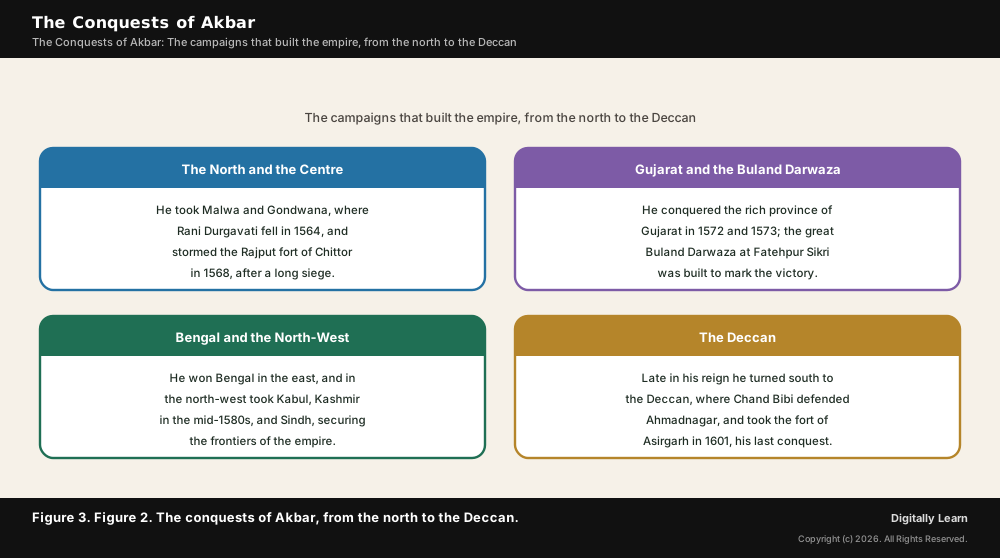
He conquered the north and the centre. Akbar took Malwa and Gondwana, where the brave Rani Durgavati fell in 1564, and in 1568 he stormed the great Rajput fort of Chittor after a long siege. He conquered the rich and wealthy province of Gujarat in 1572 and 1573, and the great gateway, the Buland Darwaza at Fatehpur Sikri, was raised to mark that victory.
He secured the east and the frontier. In the east Akbar won Bengal, and in the north-west he took Kabul, conquered Kashmir in the mid-1580s, and won Sindh, fixing the frontiers of the empire on every side. The table below sets out his chief conquests, and the figure that follows sets them out by region.
| Conquest | About |
|---|---|
| Second Panipat | 1556, against Hemu; the throne secured under Bairam Khan. |
| Chittor | 1568, the great Rajput fort taken after a long siege. |
| Gujarat | 1572-73; the Buland Darwaza commemorates the victory. |
| Bengal | Won in the east, in the 1570s. |
| Kashmir | Conquered in the mid-1580s; Kabul and Sindh also taken. |
The Deccan and the Empire at its Height
Distinguishing the southern campaigns: late in his reign Akbar turned to the Deccan, the first of the Mughals to carry the war into the south.
He pushed into the Deccan. In the last years of his reign Akbar sent his armies south against the sultanates of the Deccan, where the brave Chand Bibi defended Ahmadnagar against him, and in 1601 he took the strong fort of Asirgarh, his last conquest.
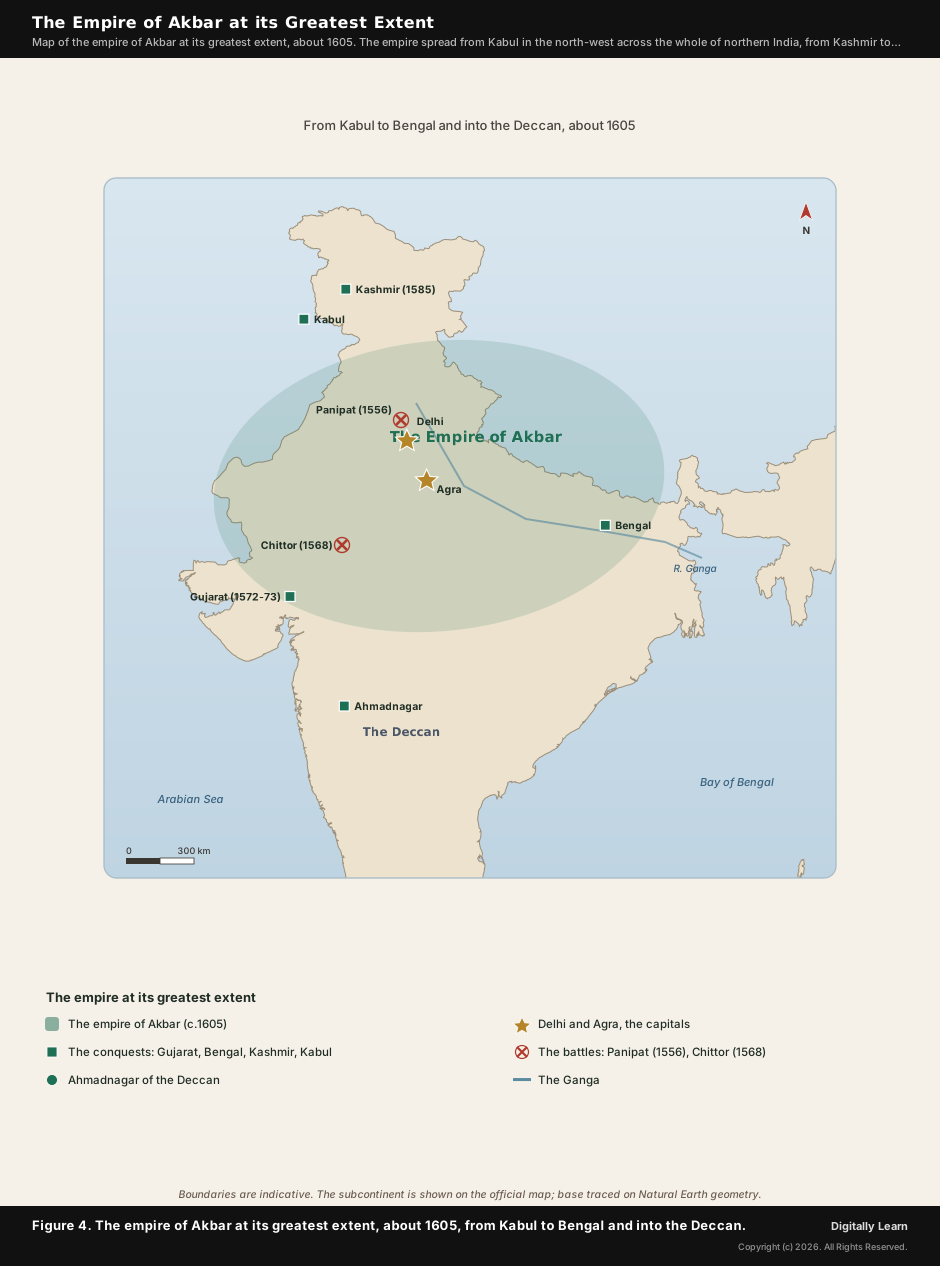
The empire reached from Kabul to Bengal. By his death in 1605 the empire of Akbar ran from Kabul in the north-west to Bengal in the east, and reached south into the northern Deccan. The map below sets out the empire at its greatest extent.
UPSC Relevance and Exam Focus
Where Akbar's Conquests Fit in the UPSC-CSE Syllabus
This topic belongs to General Studies Paper I: medieval Indian history, and Akbar's conquests, with their dates and their battles, are a regular ground for questions on the building of the Mughal empire.
The questions most often test the Second Battle of Panipat against Hemu, the conquest of Gujarat and the Buland Darwaza, the siege of Chittor, and the reach of the empire at Akbar's death.
Several linked points recur and are worth holding in working memory:
- The Second Battle of Panipat: 1556, won by Bairam Khan against Hemu, for the young Akbar.
- Chittor: The great Rajput fort, stormed in 1568.
- Gujarat: Conquered in 1572-73; the Buland Darwaza at Fatehpur Sikri marks the victory.
- Kashmir: Conquered in the mid-1580s, with Kabul and Sindh.
- The extent: At his death in 1605 the empire ran from Kabul to Bengal and into the Deccan.
A 2003 question stated that Akbar marched towards Afghanistan in 1581 with a huge army, and gave the reason that he was on his way to reclaim his ancestral country of Ferghana. The assertion is true, but the reason is false: Akbar marched not to win back Ferghana, but to deal with the threat of his rebellious half-brother Mirza Hakim, who ruled at Kabul.
A reader who knows that Akbar's 1581 march to the north-west was against his half-brother at Kabul, and not a bid to recover the old Timurid homeland, can judge the assertion true and the reason false.
Previous Year UPSC-CSE Questions
Previous Year UPSC-CSE Questions By the end you will be able to draft model answers for the following UPSC questions. Each question carries a collapsible framework showing how to approach it in the exam.
- UPSC Prelims 2003 GS-IConsider the following statements:
- Assertion (A): Emperor Akbar marched towards Afghanistan in 1581 with a huge army.
- Reason (R): He was on his way to reclaim his ancestral country of Ferghana in Central Asia.
Which one of the following is correct in respect of the above statements?
How to approach this Prelims question
Approach: Confirm the assertion (Akbar did march towards Afghanistan in 1581, true), then test the reason (he went to deal with his half-brother Mirza Hakim at Kabul, not to reclaim Ferghana, so the reason is false).
Trap to watch: The march was real (A true), but the motive was the threat of Mirza Hakim at Kabul, not the recovery of Ferghana (R false).
Key facts to recall:
- Akbar marched towards Afghanistan in 1581.
- The march was against his rebellious half-brother Mirza Hakim at Kabul.
- It was not a campaign to reclaim Ferghana.
Answer signal: A is true but R is false.
Sources and Further Reading
Editorial Disclaimer
This article is for UPSC preparation. The history of Akbar's conquests rests on the Akbarnama, the Persian chronicles and the standard scholarship on the Mughal Empire.