


Overview
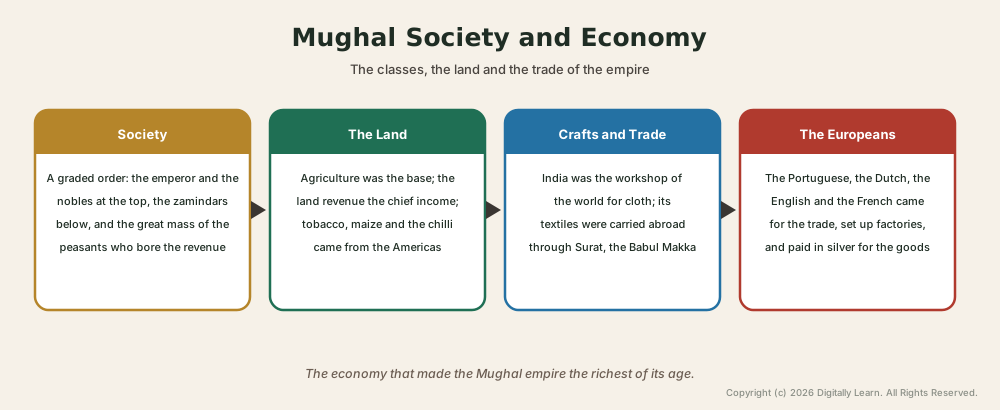
The society and economy of the Mughals were the foundation on which the splendour of the empire rested. Society was a graded order: the emperor and the nobility at the top, the zamindars below, and beneath all the great mass of the peasants who bore the land revenue. The economy was built on agriculture, the chief income of the state, to which the Mughal age added the new crops of the Americas. India was the workshop of the world for cotton and silk textiles, and a great trade flowed through its ports, above all Surat, the Babul Makka. For these goods came the European companies, the Portuguese, the Dutch, the English and the French, paying in silver. This part covers society, the agrarian economy, crafts and trade, and the exam focus.
Mughal Society
The Graded Order, from the Noble to the Peasant
What is the significance of Mughal society: it was a graded order in which a small class at the top held the wealth and the power, while the great mass below, the peasants, bore the burden that kept the whole empire standing.
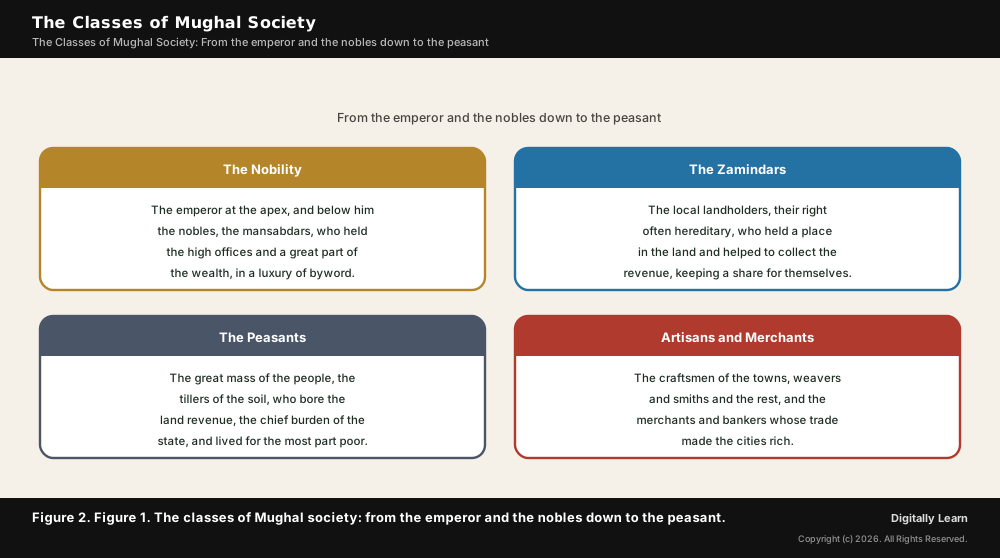
At the top stood the emperor and the nobility. Below the emperor came the nobles, the mansabdars, who held the high offices of the state and a great part of its wealth, and lived in a luxury that became a byword among travellers. They were a mixed body of Turanis, Iranis, Afghans, Rajputs and Indian Muslims, bound to the throne by the mansab.
Below them came the zamindars and the peasants. The zamindars were the local landholders, often hereditary, who held a place in the land and helped to gather the revenue, keeping a share. Beneath all stood the peasants, the great mass of the people, the tillers of the soil, who bore the land revenue, the chief burden of the state. The townsmen, the artisans and the merchants, made up the rest. The figure below sets out the classes.
The Agrarian Economy
Agriculture, the Crops and the New-World Plants
What is the significance of the agrarian economy: agriculture was the foundation of the whole Mughal economy, the source of the land revenue that was the chief income of the state, and the base on which the wealth of the empire was raised.
Agriculture was the base of the economy. The land revenue drawn from the peasant was the great income of the state and the nobles. The peasants grew wheat, rice and pulses for food, and cotton, sugarcane and indigo for the market, and the fields of India were among the most productive in the world.
New crops came from the Americas. In the Mughal age, through the Portuguese, came a host of new plants from the New World: tobacco, maize, the chilli, the potato, the tomato and the pineapple, which had not been known in India before. The figure below sets out the agrarian economy.
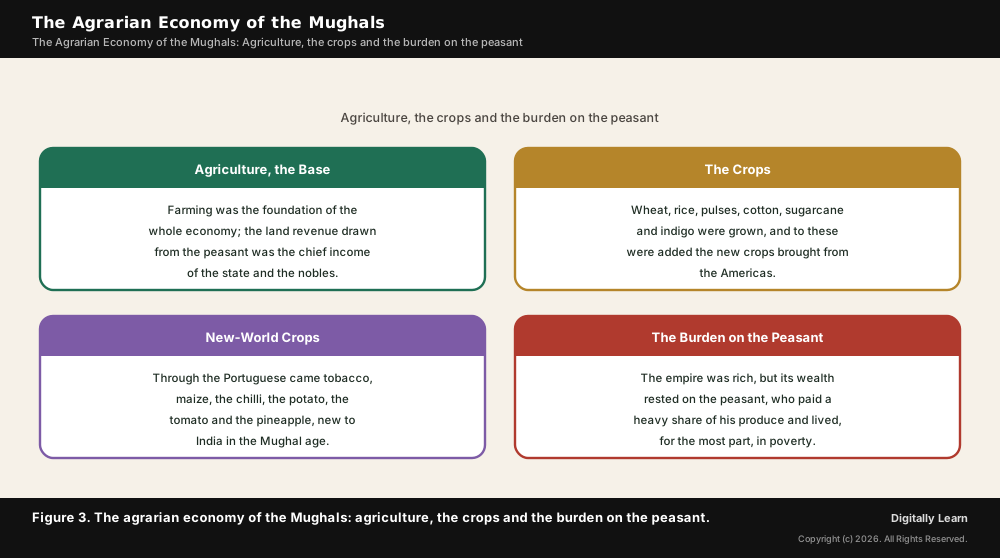
Yet the empire's wealth rested on the peasant, who paid a heavy share of his produce as revenue and lived, for the most part, in poverty. The contrast between the riches of the court and the want of the village is a chief theme of the social history of the age.
Crafts, Trade and the Europeans
The Textile Industry, the Ports and the European Companies
What is the significance of the crafts and trade: the crafts of India, and above all its textiles, made it the workshop of the world, and drew to its ports the trade of Asia and Europe alike.
India was the workshop of the world for cloth. Its cotton and silk textiles were famed in every land, the chief of its many exports, with indigo, saltpetre and spices besides. Much of the fine cloth, the arms and the luxuries of the court were made in the karkhanas, the royal workshops kept by the state and the nobles.
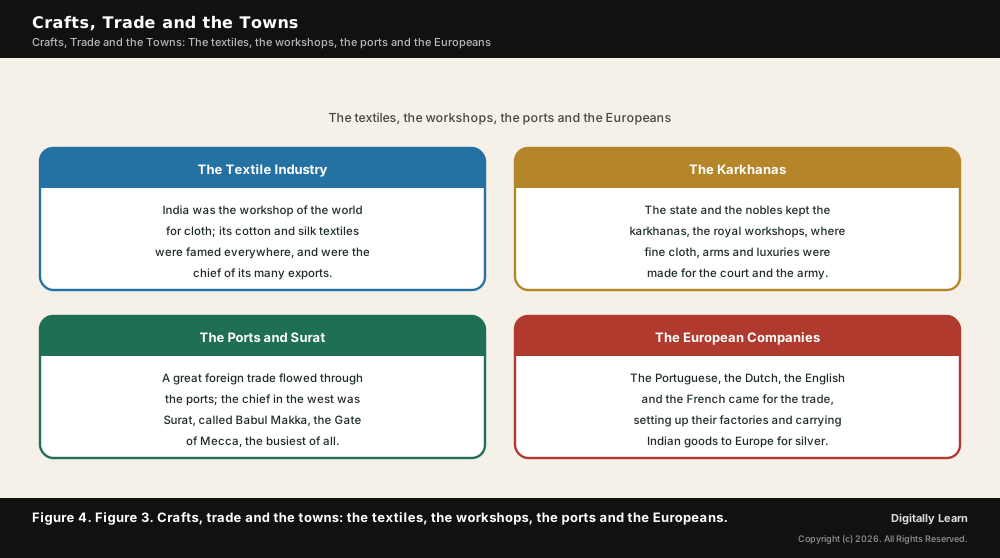
A great foreign trade flowed through the ports. The chief port in the west was Surat, so busy with the trade and the pilgrim traffic to Arabia that it was called Babul Makka, the Gate of Mecca. For the goods of India came the European trading companies, the Portuguese first and then the Dutch, the English and the French, who set up their factories and paid in silver for what they carried home. The table below sets out the companies.
| European company | In India |
|---|---|
| The Portuguese | The first to come, after Vasco da Gama reached India in 1498; based at Goa. |
| The Dutch | The East India Company of the Dutch; their earliest factory was at Pulicat. |
| The English | The English East India Company; their first factory at Surat in 1613. |
| The French | The French East India Company, founded in 1664; based later at Pondicherry. |
So the wealth of India, its cloth and its crops, was carried across the seas, and the silver of Europe and the New World flowed in to pay for it, making the Mughal empire one of the richest powers of the age.
UPSC Relevance and Exam Focus
Where Mughal Society and Economy Fit in the UPSC-CSE Syllabus
This topic belongs to General Studies Paper I: medieval Indian history and economy, and the society, the trade and the European companies of the Mughal age are a regular ground for questions.
The questions most often test the ports and the trade (Surat, the Babul Makka), the European companies and their factories, and the classes of society and the agrarian economy.
Several linked points recur and are worth holding in working memory:
- Surat: the chief western port, called Babul Makka, the Gate of Mecca.
- The Dutch: their earliest factory in India was at Pulicat.
- The textiles: India was the workshop of the world for cotton and silk cloth.
- New-World crops: tobacco, maize, the chilli and the potato came through the Portuguese.
- The classes: the noble at the top, the zamindar, and the peasant who bore the revenue.
A 2001 question asked which port was called Babul Makka, the Gate of Mecca, during the Mughal period, and the answer was Surat, the great western port through which the trade and the Mecca pilgrims passed.
A 2003 question asked where the Dutch established their earliest factory in India, and the answer was Pulicat, on the eastern coast, the first of the Dutch trading posts in the country.
Previous Year UPSC-CSE Questions
Previous Year UPSC-CSE Questions By the end you will be able to draft model answers for the following UPSC questions. Each question carries a collapsible framework showing how to approach it in the exam.
- UPSC Prelims 2001 GS-IWhich among the following ports was called Babul Makka (Gate of Makka) during the Mughal Period?
How to approach this Prelims question
Approach: Recall that Surat was the chief western port of the Mughal empire, called Babul Makka (the Gate of Mecca) for its trade and pilgrim traffic to Arabia.
Trap to watch: Calicut, Broach and Cambay were ports too, but the name Babul Makka belonged to Surat.
Key facts to recall:
- Surat = the chief western port of the Mughals.
- It was called Babul Makka, the Gate of Mecca.
- Pilgrims to Mecca and the foreign trade passed through it.
Answer signal: Surat.
- UPSC Prelims 2003 GS-IIn India, among the following locations, the Dutch established their earliest factory at
How to approach this Prelims question
Approach: Recall that among the given places, the Dutch set up their earliest factory at Pulicat on the eastern coast.
Trap to watch: Surat was the chief English factory; among the options the earliest Dutch one is Pulicat.
Key facts to recall:
- The Dutch came for the trade in the early seventeenth century.
- Among the options their earliest factory was at Pulicat.
- Surat was the chief English, not Dutch, factory.
Answer signal: Pullicat.
Sources and Further Reading
Editorial Disclaimer
This article is for UPSC preparation. The account of Mughal society and economy rests on the Ain-i-Akbari, the records of European travellers and companies, and the standard scholarship on the Mughal Empire.