


Overview
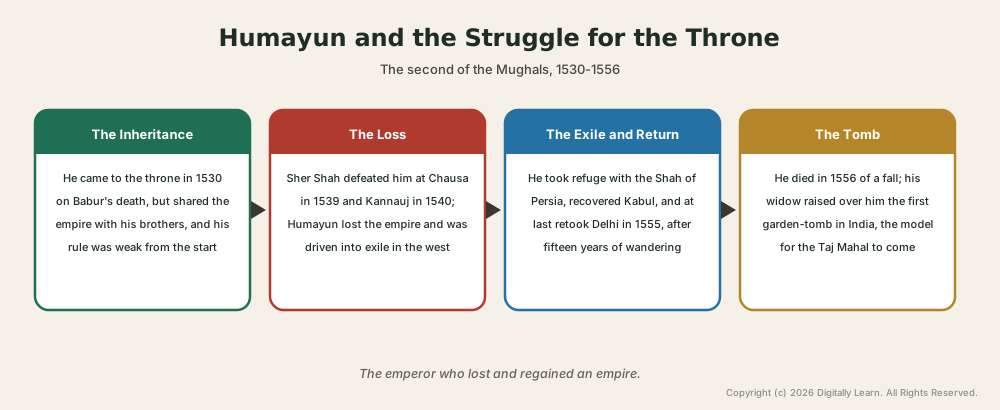
Humayun (reigned 1530 to 1540 and again 1555 to 1556) was the second Mughal emperor, the son of Babur, whose reign was a long struggle to keep the throne his father had won. He came to a divided inheritance, sharing the empire with his brothers, and was twice defeated by the Afghan Sher Shah Suri, at Chausa in 1539 and Kannauj in 1540, losing the empire altogether. After years of exile in Safavid Persia he recovered his throne, retaking Delhi in 1555, only to die within months of a fall down the stairs of his library. His widow raised over him Humayun's Tomb, the first garden-tomb in India and the model for the Taj Mahal. This part covers his inheritance and defeats, his exile and return, his death and tomb, and the exam focus.
The Inheritance and the Loss
The Divided Throne and the Defeats by Sher Shah
What is the significance of Humayun's reign: it shows how nearly the empire that Babur founded was lost, and how it was won back, in the troubled life of his son.
Humayun came to a divided inheritance. On Babur's death in 1530 the throne passed to Humayun, but by the custom of his house he had to share the empire with his brothers, Kamran, Askari and Hindal, who held Kabul, Kandahar and other lands. The new empire was thus weak and divided from the start, and Humayun, an able but easy-going man, could not master his own family.
Sher Shah took the empire from him. The greatest danger came from the Afghan chief Sher Shah Suri, who had built a power in the east. At the Battle of Chausa in 1539, near Buxar on the Ganga, and again at the Battle of Kannauj in 1540, Sher Shah defeated Humayun and drove him from Hindustan. The empire of Babur was lost, and Humayun became a wanderer. The figure below sets out his turbulent reign.
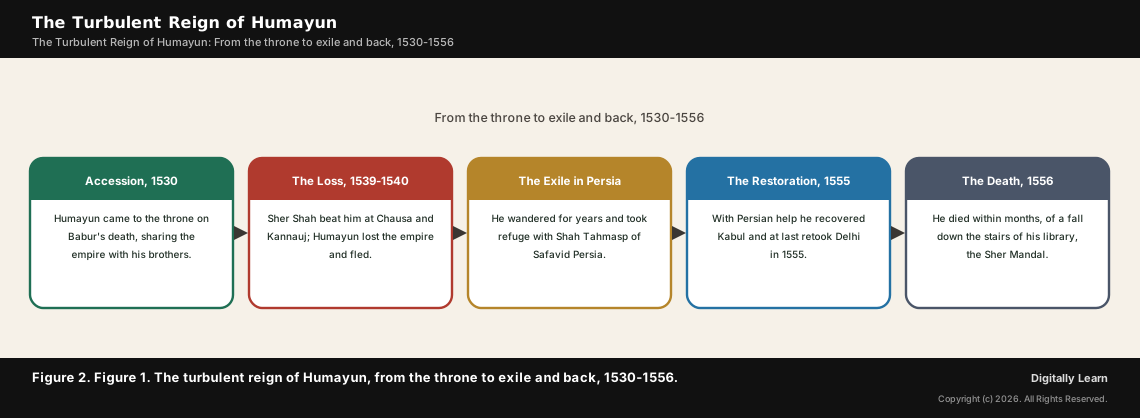
The table below sets out the chief events of his reign in their order of time, the markers a student is most often asked to fix.
| Event | Year |
|---|---|
| Accession to the throne, on Babur's death | 1530 |
| Defeat at the Battle of Chausa | 1539 |
| Defeat at Kannauj; the loss of the empire | 1540 |
| The recovery of Delhi | 1555 |
| Death, of a fall at the Sher Mandal | 1556 |
| Humayun's Tomb built at Delhi | 1565-1572 |
The Exile and the Restoration
The Years in Persia and the Return to Delhi
What is the significance of the exile: the long years of wandering and the help of Persia were the strange road by which Humayun came back to his throne.
He took refuge in Persia. Driven from India, Humayun wandered for years through Sind and the west, and at last found refuge at the court of Shah Tahmasp of Safavid Persia, who gave him an army. It was in these years of exile, at Amarkot in Sind, that his son the future emperor Akbar was born in 1542.
He recovered the throne in 1555. With his Persian troops Humayun first took back Kabul and Kandahar from his brother Kamran, and then, as the Sur kingdom fell into disorder after Sher Shah's death, he marched into India and retook Delhi in 1555, fifteen years after he had lost it. The empire of Babur was restored.
The Death and the Tomb
The Fall, the Death and the First Garden-Tomb
What is the significance of his death and tomb: he died almost as soon as he had regained his throne, but the tomb raised over him opened a great age of Mughal building.
He died of a fall, in 1556. Humayun enjoyed his restored empire for only a few months. In January 1556, descending the steep stone stairs of his library, the Sher Mandal in the old fort at Delhi, with his arms full of books, he heard the call to prayer, and in turning he fell and was mortally hurt; he died a few days later. His young son Akbar came to the throne.
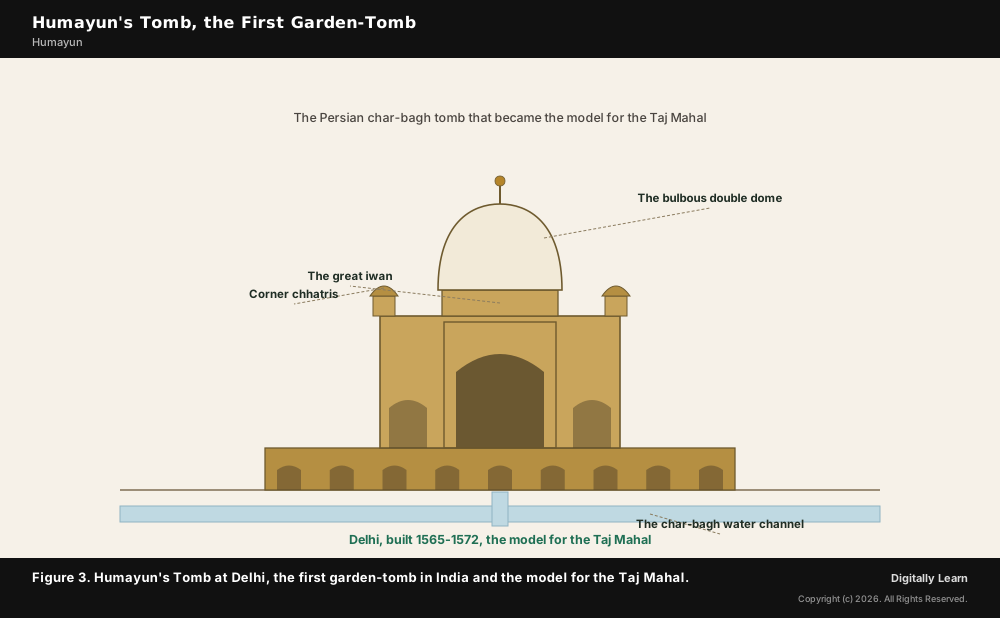
His tomb was the first of its kind. Over Humayun his widow, the empress Bega Begum, raised a great mausoleum at Delhi, Humayun's Tomb, built between 1565 and 1572. It was the first garden-tomb in India, set in a char-bagh, the quartered Persian garden, and it became the model for the later Mughal tombs, above all the Taj Mahal. The figure below sets out its form.
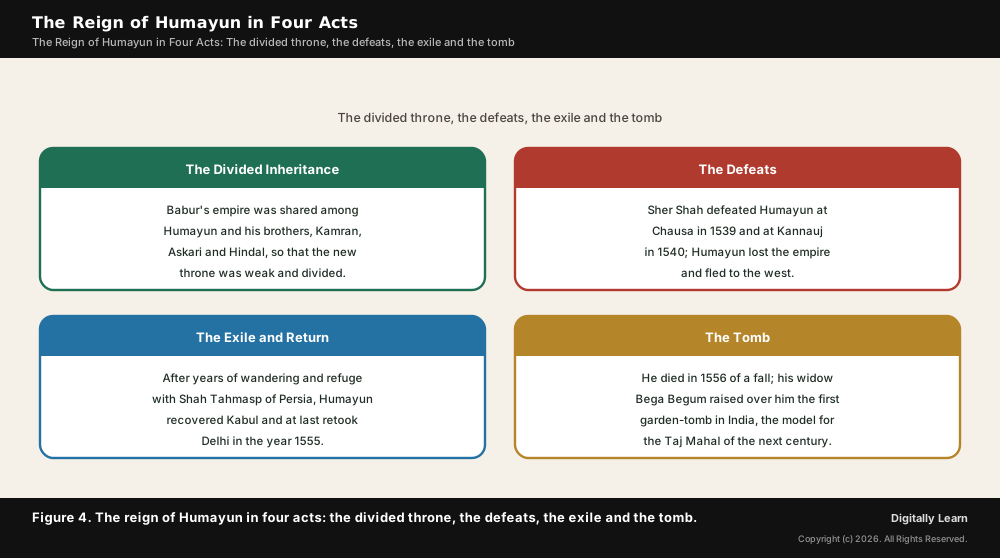
His reign falls into four acts, the divided inheritance, the defeats by Sher Shah, the exile and return, and the tomb that outlived him. The figure below sets them out together.
UPSC Relevance and Exam Focus
Where Humayun Fits in the UPSC-CSE Syllabus
This topic belongs to General Studies Paper I: medieval Indian history, and Humayun, with his defeats by Sher Shah and his famous tomb, is a regular ground for questions on the early Mughals.
The questions most often test the battles of Chausa and Kannauj, the exile in Persia and the recovery of 1555, and Humayun's Tomb as the first garden-tomb of India.
Several linked points recur and are worth holding in working memory:
- Chausa, 1539: Sher Shah’s first great defeat of Humayun, near Buxar on the Ganga.
- Kannauj, 1540: Sher Shah’s second victory, after which Humayun lost the empire.
- The exile: Humayun took refuge with Shah Tahmasp of Safavid Persia; Akbar was born at Amarkot in 1542.
- The restoration: Humayun retook Delhi in 1555, after the decline of the Sur kingdom.
- Humayun’s Tomb: The first garden-tomb in India, built by Bega Begum, the model for the Taj Mahal.
A 2022 question asked under which emperor the Yoga-Vasistha was translated into Persian; the answer was Akbar, Humayun's son, in whose reign, not Humayun's troubled one, the great work of translation was carried on.
A reader should hold apart the two emperors: Humayun, whose reign was spent in war and exile, and his son Akbar, under whom the empire was firmly built and the arts and letters flourished, as the later parts of this series describe.
Previous Year UPSC-CSE Questions
Previous Year UPSC-CSE Questions By the end you will be able to draft model answers for the following UPSC questions. Each question carries a collapsible framework showing how to approach it in the exam.
- UPSC Prelims 2022 GS-I“Yogavāsistha” was translated into Persian by Nizamuddin Panipati during the reign of:
How to approach this Prelims question
Approach: Recall that the Persian translations of the Sanskrit classics belonged to Akbar's reign; Humayun, Shah Jahan and Aurangzeb did not carry on this particular work.
Trap to watch: Humayun is the distractor here; the translation belonged to his son Akbar's reign, not to Humayun's troubled one.
Key facts to recall:
- The Yoga-Vasistha was translated into Persian under Akbar.
- Akbar was Humayun's son and successor.
- Humayun's reign was spent in war and exile.
Answer signal: Akbar.
Sources and Further Reading
Editorial Disclaimer
This article is for UPSC preparation. The history of Humayun rests on the Persian chronicles and the standard scholarship on the Mughal Empire.