


Overview
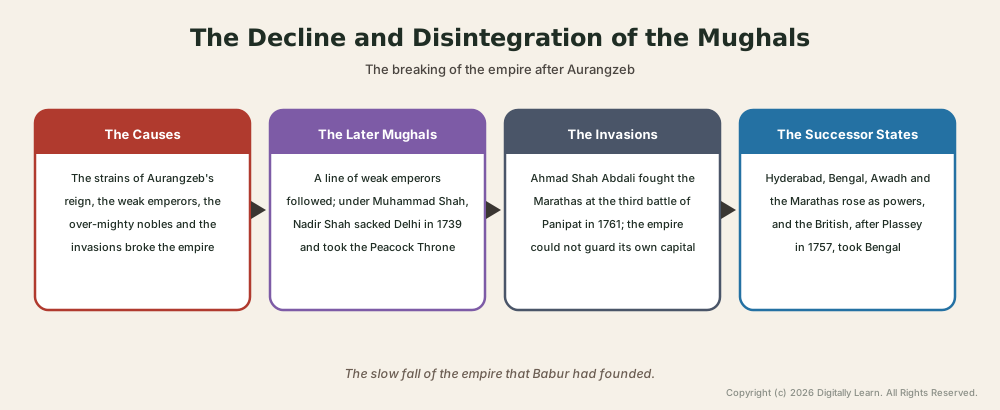
The decline and disintegration of the Mughal empire filled the century and a half after Aurangzeb's death in 1707. Weakened by his long Deccan wars and his quarrels with the Rajputs, Sikhs and Marathas, the empire passed to a line of weak later emperors, while the great nobles made themselves all but independent. The invasions of Nadir Shah in 1739, who sacked Delhi and carried off the Peacock Throne, and of Ahmad Shah Abdali, who fought the Marathas at the third battle of Panipat in 1761, tore at the dying empire. From its ruins rose the successor states, Hyderabad, Bengal, Awadh and the Marathas, and at last the British. This part covers the causes, the later Mughals, the invasions and successor states, and the exam focus.
The Causes of the Decline
Why the Empire Fell Apart after Aurangzeb
What is the significance of the decline: it is the great turning of Indian history, the breaking of the strongest empire of the medieval age, which opened the way first for the regional powers and then for the British.
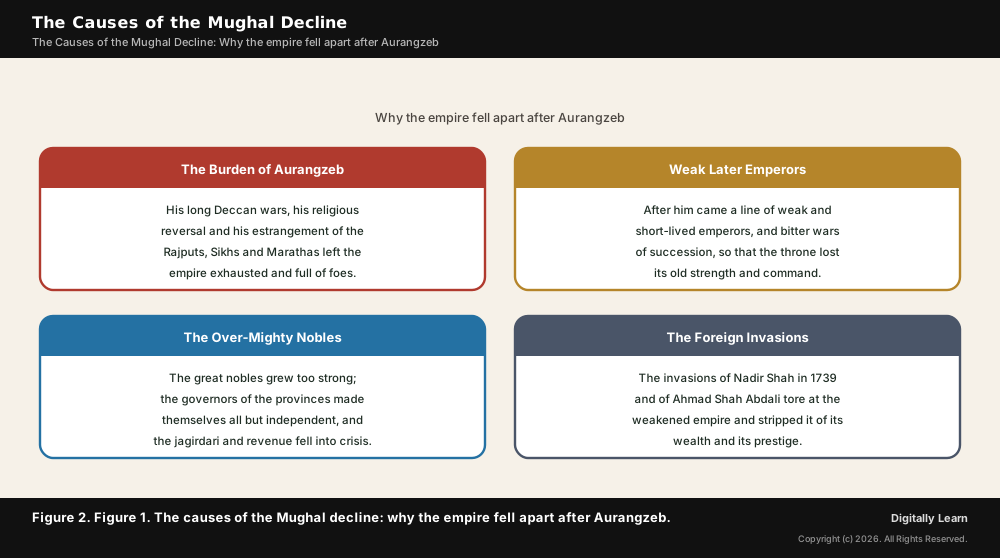
Aurangzeb left the empire exhausted. His long and costly wars in the Deccan, his reversal of the toleration of Akbar, and his quarrels with the Rajputs, the Sikhs and the Marathas left the empire worn out in body and full of enemies. The strains he bequeathed were the deepest cause of the fall.
Weak emperors and strong nobles followed. After him came a line of weak and short-lived emperors, and bitter wars of succession, so that the throne lost its old command. The great nobles grew too strong, the governors of the provinces made themselves all but independent, and the jagirdari and the revenue fell into crisis. Upon this weakened empire fell the foreign invasions. The figure below sets out the causes.
The Later Mughals
The Later Emperors and the Invasion of Nadir Shah
What is the significance of the later Mughals: they show the throne sinking, reign by reign, from real power to an empty name, until the emperor was a puppet in other hands.
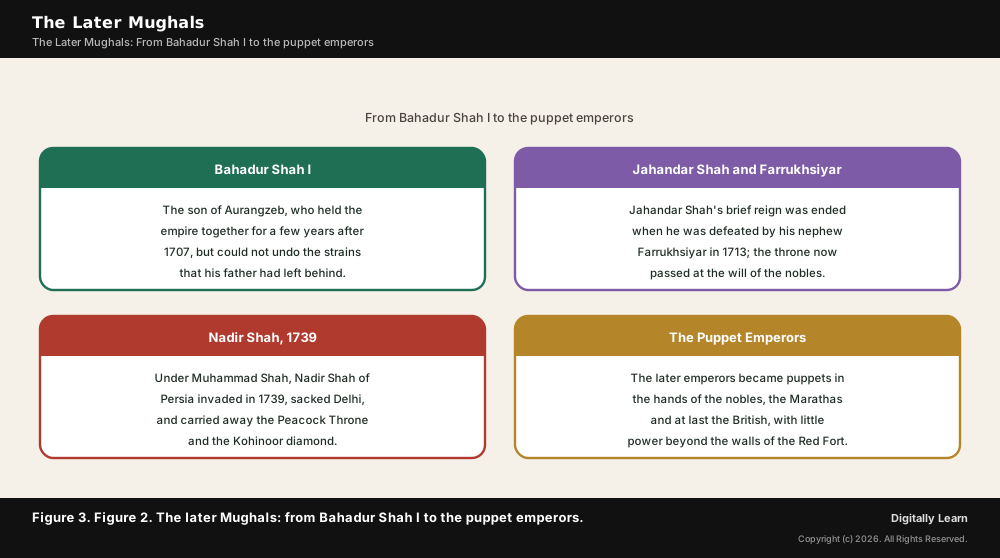
The throne passed to weak hands. After Bahadur Shah I, who held the empire together for a few years, came a string of weak rulers. Jahandar Shah's brief reign was ended when he was defeated by his nephew Farrukhsiyar in 1713, and the throne was now made and unmade at the will of the nobles.
Nadir Shah sacked Delhi in 1739. Under the long and idle reign of Muhammad Shah, Nadir Shah of Persia swept into India in 1739, broke the Mughal army, sacked Delhi with great slaughter, and carried away its treasures, among them the jewelled Peacock Throne and the Kohinoor diamond. The blow shattered what was left of the empire's prestige. The figure below sets out the later Mughals.
The Invasions and the Successor States
The Third Battle of Panipat and the Rise of the Successor States
What is the significance of the successor states: as the centre fell, the provinces broke away into independent states, and the map of India was redrawn into the regional powers from which the British would later build their rule.
Abdali came, and Panipat was fought. After Nadir Shah came Ahmad Shah Abdali of Afghanistan, who invaded again and again. In 1761, at the third battle of Panipat, he met not the Mughals, who were now too weak, but the Marathas, the strongest of the native powers, and defeated them in a great and bloody battle. The empire could no longer guard even its own capital. The map below shows the broken empire and its successor states.
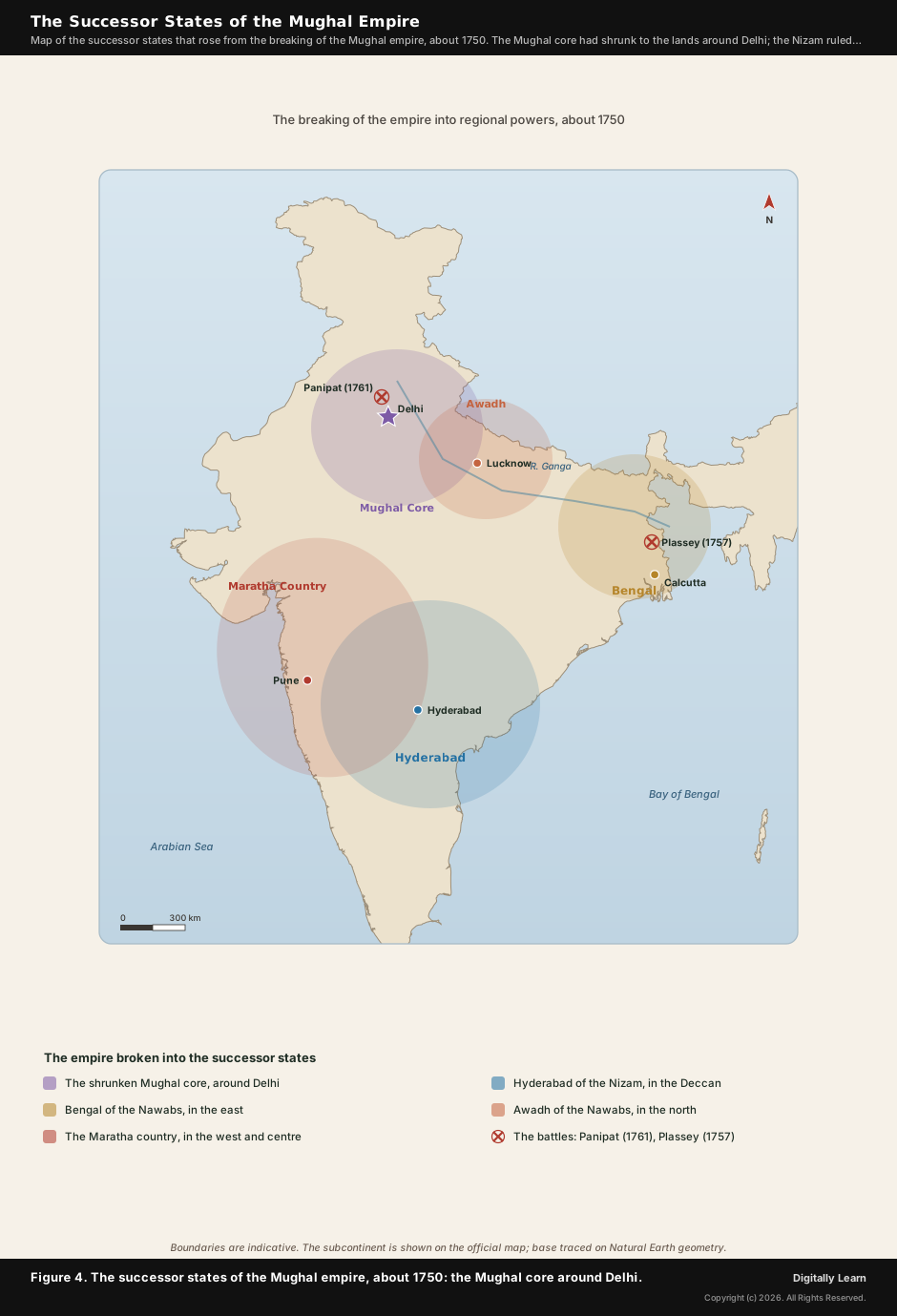
The provinces became independent states. The Nizam-ul-Mulk made himself the master of Hyderabad in the Deccan about 1724; Murshid Quli Khan made Bengal his own; and Saadat Khan founded the line of the Nawabs of Awadh. The Marathas spread their power over much of India. The figure below sets out these states.
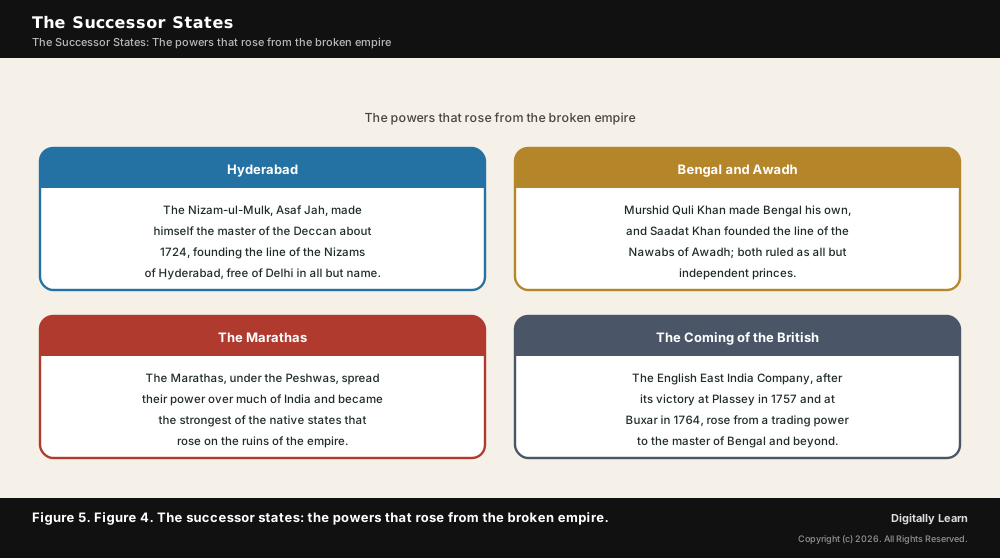
And then came the British. The English East India Company, after its victory at Plassey in 1757, where the treachery of Mir Jafar undid the Nawab Siraj-ud-daula, and at Buxar in 1764, rose from a trading power into the master of Bengal, and so began the rise that would in time make it the ruler of India.
The End of the Empire
The Pensioner Emperors and the Last Mughal
What is the significance of the end: the empire that Babur had founded in 1526 lingered on for a century as a shadow, until the last of its emperors was swept away, and with him the long line of the Mughals came to its close.
The emperors became pensioners. The later Mughals held the throne in name alone, first under the shadow of the Marathas and then of the British, with little power beyond the walls of the Red Fort, kept as a useful symbol while others ruled in their name.
The last Mughal was Bahadur Shah II. The line came to its end with Bahadur Shah II, called Zafar, a poet rather than a king, who was made the figurehead of the great revolt of 1857. When the revolt was crushed, the British deposed him, ending the empire of the Mughals, three hundred and thirty years after Babur had won it at Panipat.
UPSC Relevance and Exam Focus
Where the Mughal Decline Fits in the UPSC-CSE Syllabus
This topic belongs to General Studies Paper I: medieval and early-modern Indian history, and the decline of the Mughals, the invasions and the successor states are a regular ground for questions, and the bridge to the coming of the British.
The questions most often test the later Mughals, the invasions of Nadir Shah and Abdali (the third battle of Panipat), and the rise of the successor states and the British.
Several linked points recur and are worth holding in working memory:
- Nadir Shah: invaded in 1739, sacked Delhi, took the Peacock Throne and the Kohinoor.
- The third battle of Panipat: 1761; Ahmad Shah Abdali defeated the Marathas (not the Mughals).
- The successor states: Hyderabad (the Nizam), Bengal, Awadh, and the Marathas.
- Plassey: 1757; the treachery of Mir Jafar undid Nawab Siraj-ud-daula; the British rose.
- The last Mughal: Bahadur Shah II (Zafar), deposed by the British after the revolt of 1857.
| Successor state | Founder and region |
|---|---|
| Hyderabad | The Nizam-ul-Mulk (Asaf Jah), in the Deccan, about 1724. |
| Bengal | Murshid Quli Khan, in the east. |
| Awadh | Saadat Khan, in the north. |
| The Marathas | Under the Peshwas, in the west and centre; the strongest power. |
A 2003 question asked how the reign of the emperor Jahandar Shah came to an early end, and the answer was that he was defeated by his nephew in a battle, by Farrukhsiyar in 1713, a sign of how the throne had fallen into the hands of contending princes and nobles.
A 2004 question turned on three statements; the only true one was that Mir Jafar conspired with the English for the defeat of Siraj-ud-daula at Plassey. The third battle of Panipat was fought by Abdali against the Marathas, not against Ibrahim Lodi (that was the first Panipat, of Babur), and Tipu Sultan was killed in the fourth, not the third, Anglo-Mysore War.
Previous Year UPSC-CSE Questions
Previous Year UPSC-CSE Questions By the end you will be able to draft model answers for the following UPSC questions. Each question carries a collapsible framework showing how to approach it in the exam.
- UPSC Prelims 2003 GS-IHow did the Mughal Emperor Jahandar Shah's reign come to an early end?
How to approach this Prelims question
Approach: Recall that Jahandar Shah was defeated and overthrown by his nephew Farrukhsiyar in 1713, in the wars of succession of the decline.
Trap to watch: He was not deposed by his wazir nor did he die by a slip or by drink; he was defeated in battle by his nephew Farrukhsiyar.
Key facts to recall:
- Jahandar Shah was a later Mughal emperor.
- He was defeated by his nephew Farrukhsiyar in 1713.
- The Sayyid brothers backed Farrukhsiyar.
Answer signal: He was defeated by his nephew in a battle.
- UPSC Prelims 2004 GS-IConsider the following statements:
- In the Third Battle of Panipat, Ahmed Shah Abdali defeated Ibrahim Lodi.
- Tipu Sultan was killed in the Third Anglo-Mysore War.
- Mir Jafar entered in a conspiracy with the English for the defeat of Nawab Siraj-ud-daulah in the Battle of Plassey.
Which of these statements given above is/are correct?
How to approach this Prelims question
Approach: Test each statement: (1) Third Panipat (1761) was Abdali vs the MARATHAS, not Ibrahim Lodi, so false; (2) Tipu died in the FOURTH Anglo-Mysore War (1799), so false; (3) Mir Jafar's Plassey conspiracy (1757) is true. Only 3 is correct.
Trap to watch: Ibrahim Lodi belongs to the FIRST Panipat (Babur, 1526), not the third; Tipu died in the fourth, not the third, Anglo-Mysore War.
Key facts to recall:
- Third Panipat (1761) = Abdali vs the Marathas.
- First Panipat (1526) = Babur vs Ibrahim Lodi.
- Plassey (1757) = Mir Jafar's conspiracy vs Siraj-ud-daula.
Answer signal: 3 only.
Sources and Further Reading
Editorial Disclaimer
This article is for UPSC preparation. The account of the Mughal decline rests on the Persian chronicles of the eighteenth century and the standard scholarship on the fall of the Mughal Empire and the rise of the regional powers.