


Overview
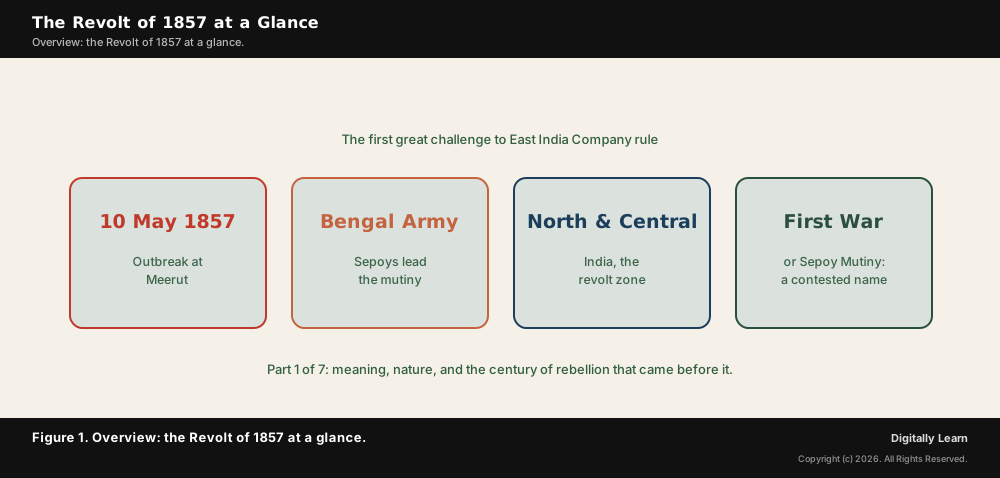
The Revolt of 1857 was the first major armed uprising of Indians against the rule of the English East India Company. It broke out at Meerut on 10 May 1857, when sepoys of the Bengal Army mutinied, and within weeks spread across Delhi, Awadh, the North-Western Provinces, Bihar and Central India, drawing in dispossessed princes, talukdars, peasants and townspeople. Known to the British as the Sepoy Mutiny and to later nationalists as the First War of Independence, it was the gravest challenge the Company ever faced, and it ended a hundred-year arc of conquest that had itself been punctuated by many smaller rebellions.
What Was the Revolt of 1857? Meaning and Definition
The Great Uprising Against Company Rule
The Revolt of 1857 was the largest and most serious challenge to British power in India in the nineteenth century. It began as a mutiny of Indian soldiers, the sepoys, in the army of the East India Company, but it quickly grew beyond the barracks to involve rulers, landholders, peasants and ordinary townsfolk across a wide belt of northern and central India.
At its heart the revolt was an attempt to overthrow the rule of a trading company that had, over the previous hundred years, turned itself into the paramount political power of the subcontinent. The rebels had no single shared plan, but they were united by a common enemy and, in many places, by the desire to restore an older order swept away by Company expansion.
Because the revolt was so many things at once, a mutiny, a rebellion of princes, a peasant rising and a war of religion and restoration, its meaning has been argued over ever since, and so have its consequences. What is not in doubt is its scale and its consequences: it shook the Company to its foundations and changed the course of British rule in India.
Sepoy Mutiny or First War of Independence: A Contested Name
Why the Events of 1857 Have So Many Names
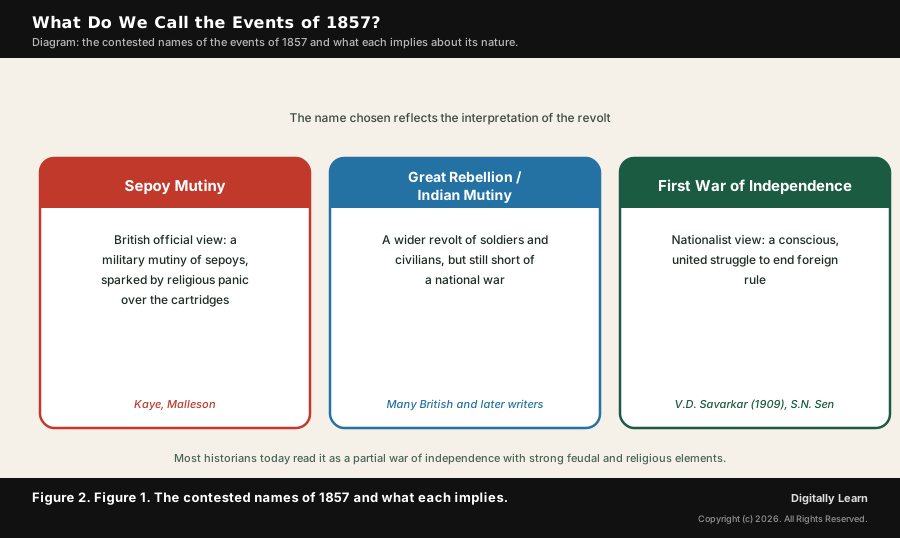
Few events in Indian history carry as many names as the upheaval of 1857, and each name carries an argument about what really happened. British writers at the time called it the Sepoy Mutiny or the Indian Mutiny, presenting it as a military revolt by soldiers panicked by a rumour about their cartridges, with no deeper political meaning.
Indian nationalists rejected that reading. In his 1909 book, V.D. Savarkar called it the First War of Indian Independence, portraying it as a conscious and united struggle to end foreign rule. Other writers settled on the Great Rebellion or the Revolt of 1857, terms that recognise the wide popular involvement without claiming a fully national character.
The Nature and Character of the Revolt: An Overview
A Mutiny That Became Something Larger
The character of the revolt changed as it spread. It began unmistakably as a military mutiny, soldiers turning on their officers, but in regions such as Awadh it became a genuine popular uprising as talukdars, peasants and disbanded soldiers joined in to recover what Company rule had taken from them.
Yet the revolt also had clear limits. There was no common political programme beyond the restoration of old rulers, no single command, and no shared vision of the future. Its leaders fought to bring back a vanished past, the Mughal emperor, the Peshwa, the dispossessed princes, rather than to build something new, which is why many historians describe its character as backward-looking as much as revolutionary.
This mixed character, part mutiny, part princely rebellion, part peasant war, part religious revolt, is the key to understanding both why it spread so fast and why it ultimately failed. The deeper analysis of that nature and the historians' debate over it is taken up in the later parts of this series.
Forerunners of 1857: A Century of Rebellions Against the Company
The Uprising Was Not the First Act of Resistance
The Revolt of 1857 is often imagined as a sudden explosion, but it was in fact the culmination of a long series of revolts against the Company that had broken out across India for almost a hundred years. From the moment the Company became a territorial power after Plassey, its rule was resisted by soldiers, tribal communities, peasants and religious reformers.
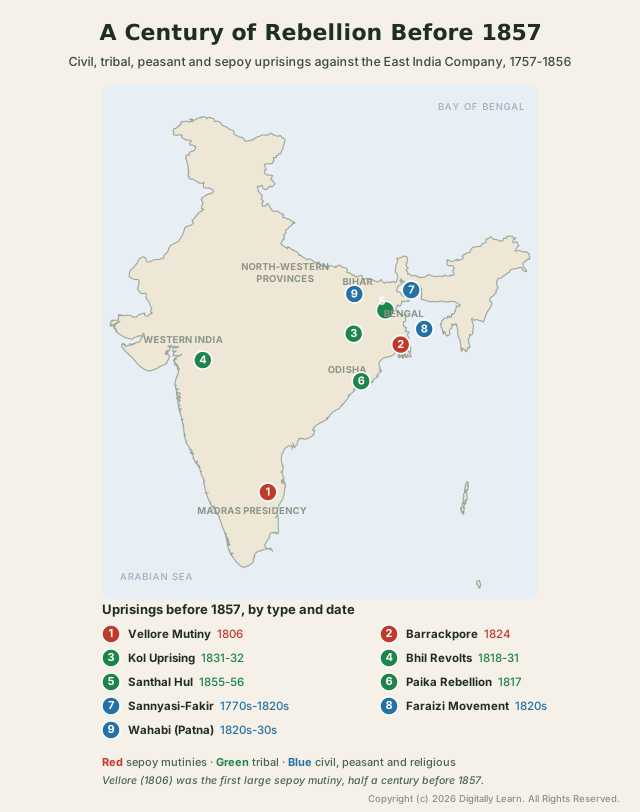
These earlier uprisings were scattered, local and separately crushed, but together they show that discontent with Company rule was widespread and long-standing. The map below sets out the most important of these forerunners, grouped by the kind of people who rose, and shows how rebellion ran across the whole country in the decades before 1857.
| Uprising | Year | Type | Led by / region |
|---|---|---|---|
| Vellore Mutiny | 1806 | Sepoy mutiny | Madras Presidency |
| Barrackpore mutiny | 1824 | Sepoy mutiny | Bengal, 47th Native Infantry |
| Paika Rebellion | 1817 | Peasant-militia | Bakshi Jagabandhu, Khurda (Odisha) |
| Kol Uprising | 1831-32 | Tribal | Chhotanagpur |
| Santhal Hul | 1855-56 | Tribal | Sidhu and Kanhu, Rajmahal hills |
| Sannyasi-Fakir Rebellion | 1770s-1820s | Civil-religious | Bengal |
| Faraizi Movement | 1820s | Peasant-religious | Haji Shariatullah, East Bengal |
| Wahabi Movement | 1820s-30s | Religious-armed | Sayyid Ahmad Barelvi, Patna |
Early Sepoy Mutinies: Vellore (1806) and Barrackpore (1824)
The sepoys had mutinied long before 1857, and over grievances strikingly similar to those of the great revolt. The Vellore Mutiny of 10 July 1806 was the first large-scale and violent mutiny by Indian sepoys against the Company, sparked by new dress regulations that the soldiers saw as an attack on their religion. It was suppressed with great severity, but it was a warning, half a century early, of what religious interference in the army could unleash.
At Barrackpore in November 1824, sepoys of the 47th Native Infantry refused to embark for service in the Anglo-Burmese War, objecting to crossing the sea, which threatened caste, and to the lack of proper provision for the march. The mutiny was crushed and its leaders executed. Both episodes show that the sepoy grievances of 1857, religion, caste and overseas service, had a long history.
Tribal and Peasant Uprisings: Kol, Bhil, Santhal and Paika
Tribal and peasant communities, whose lands, forests and customs were disrupted by Company revenue policy and by the moneylenders and officials who came with it, rose repeatedly. The Paika Rebellion of 1817 in Khurda, Odisha, saw the traditional militia of the Odisha kings rise against Company land and salt policies. The Bhil revolts of western India recurred through the 1810s and 1820s as the Bhils resisted Company control of their hill country.
In Chhotanagpur, the Kol Uprising of 1831 to 1832 was a fierce response to the transfer of tribal land to outsiders. The greatest of these risings was the Santhal Hul of 1855 to 1856, led by Sidhu and Kanhu, in which the Santhals of the Rajmahal hills rose against moneylenders, landlords and the Company, only two years before 1857. These were not minor disturbances; they were sustained popular wars that the Company crushed only with difficulty.
Civil and Religious Movements: Sannyasi-Fakir, Faraizi and Wahabi
Alongside the soldiers and tribes, religious and civil movements also turned against Company rule. The Sannyasi and Fakir Rebellion in Bengal, running from the 1770s into the early nineteenth century, brought wandering Hindu and Muslim ascetics into armed resistance against Company revenue demands, and was famous enough to inspire Bankim Chandra Chatterjee's novel Anandamath.
In nineteenth-century East Bengal, the Faraizi Movement founded by Haji Shariatullah combined religious reform among Muslim peasants with resistance to oppressive zamindars and indigo planters. The Wahabi Movement, inspired by Sayyid Ahmad Barelvi and centred on Patna, built a network of religious reform that turned into sustained armed opposition to British power. Each of these movements, in its own way, fed the reservoir of resentment that 1857 would finally draw upon.
The Company's Conquest of India and the Road to 1857
From Plassey (1757) to Paramountcy: A Century of Expansion
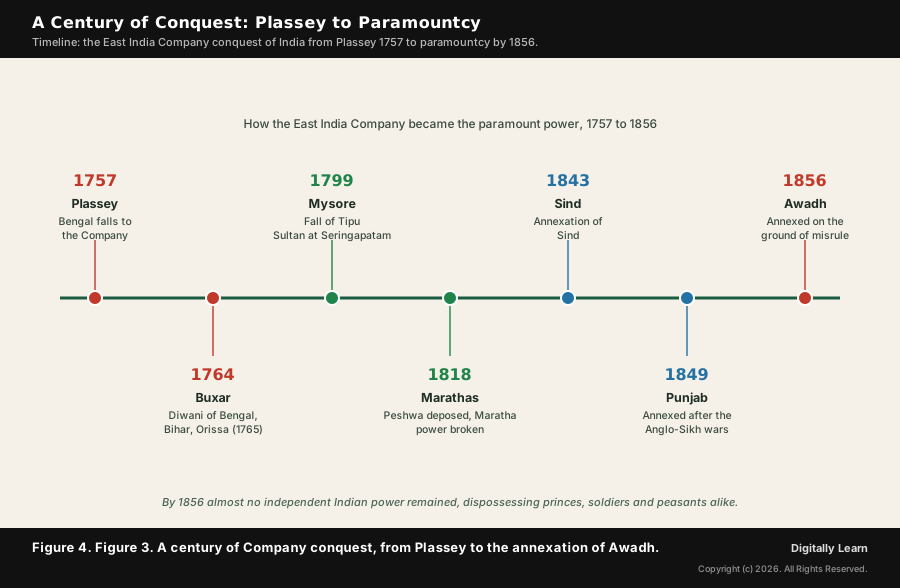
To understand the revolt, one must see how the Company became powerful enough to provoke it. The Company's transformation from a trading body into a ruling power began with the Battle of Plassey in 1757, which gave it mastery of Bengal, and the Battle of Buxar in 1764, after which it secured the Diwani, the right to collect revenue, of Bengal, Bihar and Orissa in 1765.
Over the next ninety years the Company defeated every rival power in turn: Mysore under Tipu Sultan fell in 1799, the Marathas were broken by 1818, Sind was annexed in 1843, and the Punjab was taken after the Anglo-Sikh wars in 1849. Through the Subsidiary Alliance and the Doctrine of Lapse, one princely state after another was absorbed, until the annexation of Awadh in 1856 on the ground of misrule removed the last great buffer.
Why a Hundred Years of Conquest Set the Stage for Revolt
By 1856 almost no independent Indian power was left, and the cost of that conquest fell on every section of society. Dispossessed princes lost their thrones, talukdars and zamindars lost their estates to new revenue settlements, artisans lost their markets to British manufactures, and peasants bore heavier and harsher land taxes.
The soldiers who would mutiny in 1857 were drawn from exactly these dispossessed villages, especially in Awadh, so that the army carried the countryside's grievances into the barracks. A hundred years of conquest had thus created a society with many reasons to resist and, in the Bengal Army, a single instrument through which that resistance could finally erupt. The specific political, economic, military and social causes that turned this discontent into open revolt are examined in Part 2.
Previous Year UPSC-CSE Questions
Previous Year UPSC-CSE Questions By the end you will be able to draft model answers for the following UPSC questions. Each question carries a collapsible framework showing how to approach it in the exam.
- UPSC Mains 2019 GS-IThe 1857 Uprising was the culmination of the recurrent big and small local rebellions that had occurred in the preceding hundred years of British rule. Elucidate
How to structure the answer in the exam
Introduction: Open with the idea that 1857 was not sudden but the culmination of a hundred years of resistance to Company rule.
Body (sub-themes to develop):
- Sepoy mutinies: Vellore 1806 and Barrackpore 1824 raised religion, caste and overseas service.
- Tribal and peasant risings: Paika 1817, Kol 1831, Santhal 1855 against revenue and land policy.
- Civil and religious movements: Sannyasi-Fakir, Faraizi and Wahabi resistance.
- Common thread: a century of conquest dispossessed princes, peasants and soldiers alike.
Conclusion: Conclude that 1857 gathered up these scattered rebellions into one great uprising, which is why it is their culmination.
- UPSC Prelims 1999 GS Paper IConsider the following events and arrange them in correct chronological order:
- Indigo Revolt
- Santhal Rebellion
- Deccan Riot
- Mutiny of the Sepoys
The correct chronological sequence of these events is:
How to approach this Prelims question
Approach: Date each event and order them; the Santhal Rebellion precedes the Mutiny, which precedes the Indigo Revolt and the Deccan Riot.
Trap to watch: Do not place the Sepoy Mutiny first; the Santhal Hul of 1855-56 came just before it.
Key facts to recall:
- Santhal Rebellion 1855-56
- Mutiny of the Sepoys 1857
- Indigo Revolt 1859-60
- Deccan Riots 1875
Answer signal: Order is II, IV, I, III, so option (d).
Sources and Further Reading
- NCERT, Themes in Indian History Part III (Theme 11: Rebels and the Raj, 1857)
- Wikipedia: Indian Rebellion of 1857
- Wikipedia: Causes of the Indian Rebellion of 1857
- Wikipedia: Names of the Indian Rebellion of 1857
- Wikipedia: Vellore Mutiny
- Wikipedia: Santhal rebellion
- Wikipedia: Paika Rebellion
- Wikipedia: Tribal revolts in India before Indian independence
Editorial Disclaimer
This article is for UPSC preparation. Verify dates and interpretations against NCERT and standard reference histories before relying on them.