


Overview
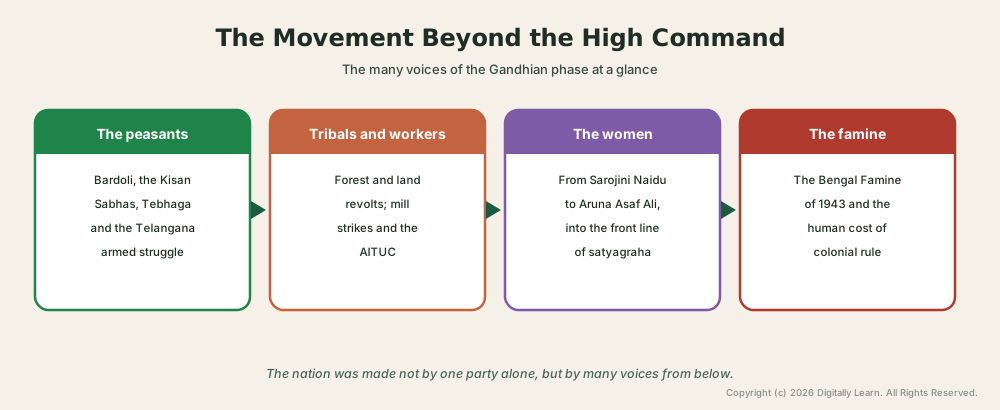
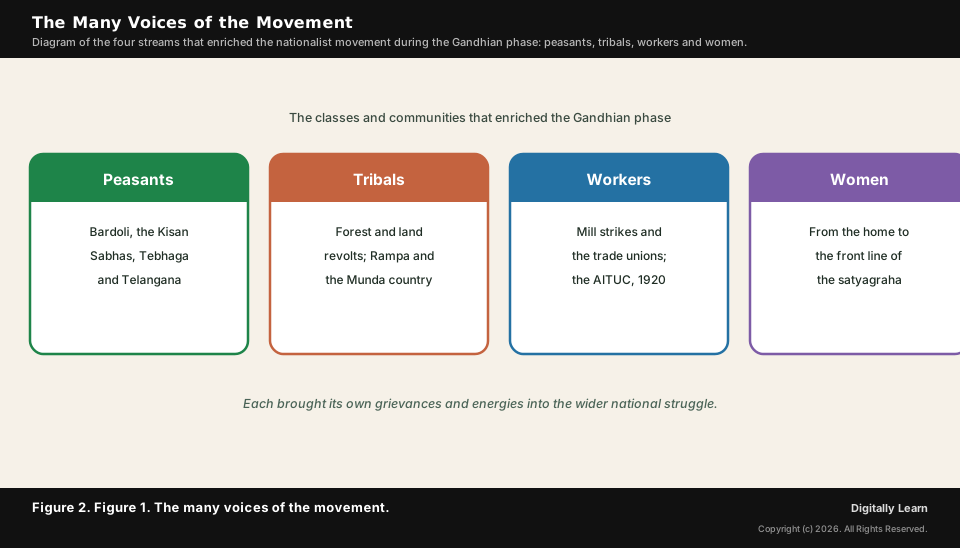
The freedom struggle was carried not only by the Congress high command but by many voices from below. Peasant movements, from Bardoli and the Kisan Sabhas to Tebhaga and Telangana, tribal revolts in the forests and hills, the workers of the mills and their trade unions, and the women who moved from the home into mass politics, all enriched the nationalist movement during the Gandhian phase. The Bengal Famine of 1943, in which millions died, exposed the human cost of colonial rule, and these voices together shaped the social meaning of freedom.
Introduction: The Movement Beyond the Congress High Command
Why the Many Voices Matter
Why this matters: the freedom struggle is often told as the story of its great leaders, but it was also the work of millions outside the Congress high command. Peasants, tribals, workers and women brought their own grievances and energies into the movement and gave it depth.
What is the significance of these voices: they widened the struggle from a contest over power into a movement for social and economic change. The phrase 'many voices', used in the examination, captures how these streams, set out below, strengthened and enriched the nationalist cause.
The Geography of the Movements
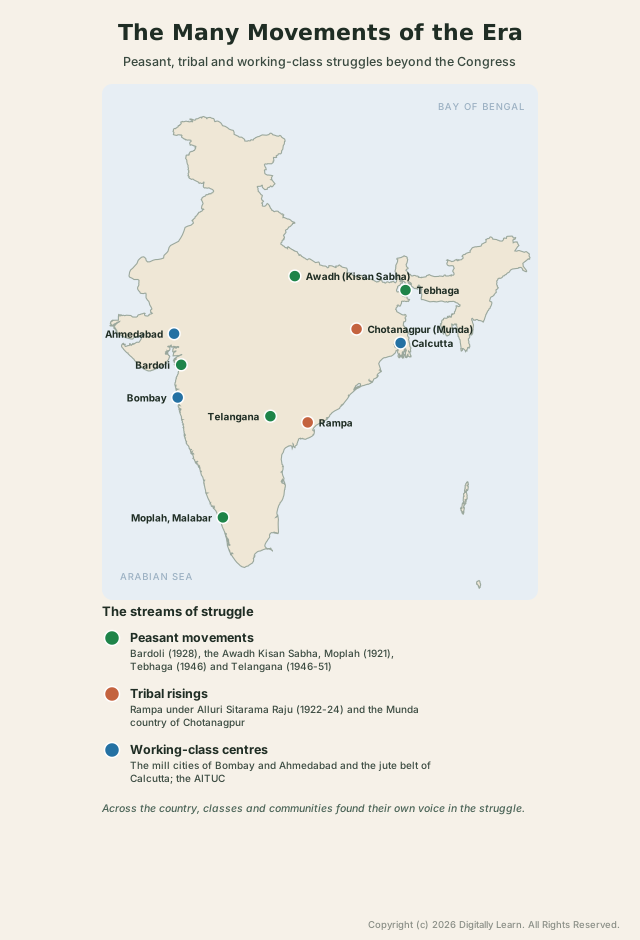
Distinguishing where they arose is the place to begin. The peasant movements ran from Bardoli in Gujarat to Tebhaga in Bengal and Telangana in the Deccan; the tribal risings centred on the forests of the east and the south; and the workers' struggles clustered in the mill cities.
What the map shows is how widely these movements were spread, each rooted in its own region and grievance, as set out below.
The Peasant Movements: Bardoli, Eka, the Kisan Sabhas and Tebhaga-Telangana
The Risings of the Cultivators
What is the significance of the peasant movements: they brought the largest class in India into political life. Early Kisan Sabhas arose in the United Provinces from 1918, the Eka movement followed, and Gandhian leaders linked peasant grievances to the national cause, most famously in the Bardoli Satyagraha of 1928, led by Vallabhbhai Patel, who earned the title 'Sardar'.
Distinguishing the later upsurges: the All India Kisan Sabha was founded in 1936 under Swami Sahajanand Saraswati, and after the war came two great agrarian struggles, the Tebhaga movement of 1946 in Bengal, for a larger share for sharecroppers, and the Telangana armed struggle of 1946 to 1951 against the landlords of Hyderabad, as the table below records.
| Movement | Where and when | Demand or leader |
|---|---|---|
| Bardoli Satyagraha | Gujarat, 1928 | A no-tax stir led by Vallabhbhai Patel ('Sardar') |
| Awadh and UP Kisan Sabha | United Provinces, from 1918 | Against high rents and evictions; Baba Ramchandra |
| Moplah rebellion | Malabar, 1921 | A tenant grievance that turned communal |
| Tebhaga movement | Bengal, 1946-47 | The landlord's share cut from a half to a third |
| Telangana struggle | Hyderabad, 1946-51 | An armed peasant revolt against the landlords |
The Tribal Movements of the Period
Forest, Land and the Adivasi Risings
What is the significance of the tribal movements: India's adivasi communities resisted the loss of their land and forests under colonial law. The most famous earlier rising, Birsa Munda's Ulgulan, the 'Great Tumult' of 1899 to 1900 in Chotanagpur, set the pattern of revolt in defence of tribal land and custom.
Distinguishing the Gandhian-era risings: in the 1920s the Rampa rebellion of 1922 to 1924, led by Alluri Sitarama Raju in the Andhra hills, took up arms against forest laws, while movements such as the Tana Bhagat among the Oraon turned to non-violent protest. These struggles linked tribal grievances to the wider anti-colonial cause.
The Workers and the Trade-Union Movement (AITUC)
The Mills and the Rise of Organised Labour
Observable outcomes appeared as industry grew. The mill cities of Bombay and Ahmedabad and the jute belt of Calcutta saw strikes over wages and conditions, and Gandhi's own Ahmedabad Textile Labour Association of 1918 showed the way of arbitration and discipline.
Distinguishing the organised movement: the All India Trade Union Congress, founded in 1920 with Lala Lajpat Rai as its first president, brought the working class into national politics. Though it later divided over communism, the labour movement gave the freedom struggle an industrial dimension and a voice for the poor.
Women in the National Movement: From Non-Cooperation to Quit India
From the Home to the Front Line
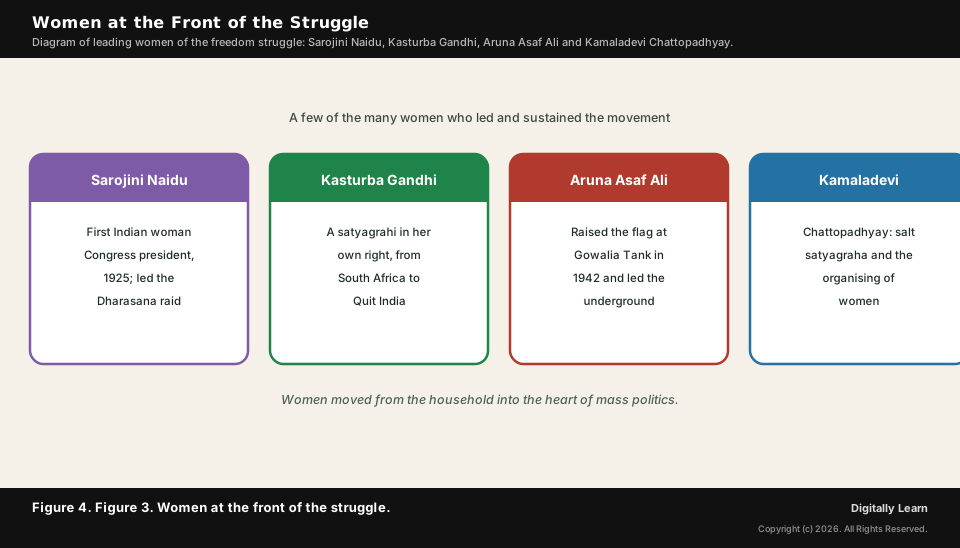
What is the significance of women's participation: it was one of the great changes Gandhi brought, drawing women out of the household and into mass politics for the first time on a large scale. From the Non-Cooperation Movement onward, women picketed shops, spun khadi, courted arrest and led processions.
Distinguishing the leaders: Sarojini Naidu became the first Indian woman president of the Congress in 1925, the first woman president having been Annie Besant in 1917, and led the Dharasana salt raid; Aruna Asaf Ali raised the flag at Gowalia Tank in 1942; and many others, from Kasturba Gandhi to Kamaladevi Chattopadhyay, led at every level, as the diagram below records.
The Bengal Famine of 1943 and the Politics of Hunger
How War and Policy Created the Famine
What is the significance of the Bengal Famine: it was the gravest human disaster of the late colonial period and a damning indictment of British rule. In 1943, famine struck Bengal, and estimates of the dead range widely, from under a million to nearly four million, with a scholarly consensus of around two million.
Distinguishing the causes: the famine was less a failure of harvest than of policy and distribution. Wartime priorities, the loss of Burmese rice, hoarding and a callous administration turned scarcity into catastrophe. It deepened anger at colonial rule and sharpened the demand that Indians govern themselves.
Significance: The Movement Beyond the Congress High Command
What the Many Voices Added
Contemporary linkages run from these movements into independent India. The peasant and worker struggles put social and economic justice on the national agenda, shaping land reform, labour law and the welfare commitments of the new state, while women's participation opened the way to their role in public life.
The larger significance is that the freedom struggle was a many-sided movement, not the work of one party or class alone. The voices of the peasants, tribals, workers and women, and the memory of the Bengal Famine, gave independence a deeper social meaning, as the timeline and points below set out. The final part steps back to weigh the Gandhian era as a whole.
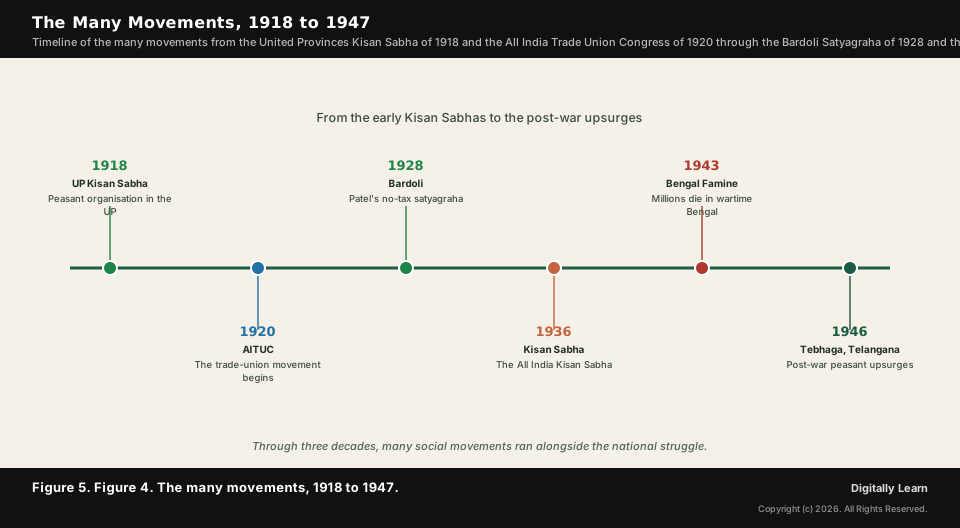
- The freedom struggle drew in classes and communities far beyond the Congress leadership.
- Peasant and worker movements gave the struggle a social and economic content.
- Women moved from the household into mass politics, a lasting change.
- The Bengal Famine of 1943 exposed the human cost of colonial rule.
- These movements shaped the social-justice agenda of independent India.
Previous Year UPSC-CSE Questions
Previous Year UPSC-CSE Questions By the end you will be able to draft model answers for the following UPSC questions. Each question carries a collapsible framework showing how to approach it in the exam.
- UPSC Mains 2019 GS-IMany voices had strengthened and enriched the nationalist movement during the Gandhian phase. Elaborate.
How to structure the answer in the exam
Introduction: Open with the Gandhian phase as the moment many classes and communities entered the struggle.
Body (sub-themes to develop):
- Peasants: the Kisan Sabhas, Bardoli, Tebhaga and Telangana.
- Tribals: forest and land revolts such as Rampa.
- Workers: the AITUC and the trade-union movement.
- Women: from picketing and spinning to leadership in Quit India.
Conclusion: Conclude that these many voices broadened and deepened the freedom struggle.
- UPSC Mains 2016 GS-IDiscuss the role of women in the freedom struggle especially during the Gandhian phase.
How to structure the answer in the exam
Introduction: Open with Gandhi's mobilisation of women as a turning point in mass politics.
Body (sub-themes to develop):
- Mass participation: picketing, khadi, salt satyagraha, courting arrest.
- Leaders: Sarojini Naidu, Kasturba, Aruna Asaf Ali, Kamaladevi Chattopadhyay.
- From Non-Cooperation through Civil Disobedience to Quit India.
- The lasting effect on women's place in public life.
Conclusion: Conclude that women's participation transformed both the struggle and their own position.
- UPSC Prelims 2003 GS Paper IThe leader of the Bardoli Satyagraha (1928) was
How to approach this Prelims question
Approach: Recall the leader of Bardoli 1928.
Trap to watch: Bardoli was led by Vallabhbhai Patel (who earned 'Sardar'), not Gandhi or Vithalbhai Patel.
Key facts to recall:
- Bardoli Satyagraha 1928
- Vallabhbhai Patel = 'Sardar'
- A no-tax peasant stir
Answer signal: Sardar Vallabhbhai Patel, so option (a).
- UPSC Prelims 2013 GS Paper IThe demand for the Tebhaga Peasant Movement in Bengal was for
How to approach this Prelims question
Approach: Recall the specific Tebhaga demand.
Trap to watch: Tebhaga sought a two-thirds share for the sharecropper (landlord's share cut to a third), not land ownership or debt relief.
Key facts to recall:
- Tebhaga = Bengal, 1946
- Landlord's share half to a third
- Sharecroppers' two-thirds
Answer signal: Reduction to one-third, so option (a).
- UPSC Prelims 2005 GS Paper IWho among the following was not associated with the formation of U.P. Kisan Sabha in February 1918?
How to approach this Prelims question
Approach: Identify who was not a founder of the UP Kisan Sabha (1918).
Trap to watch: Misra, Dwivedi and Malaviya were associated with the 1918 founding; Nehru engaged with the peasants slightly later.
Key facts to recall:
- UP Kisan Sabha = February 1918
- Founders: Misra, Dwivedi, Malaviya
- Nehru came later
Answer signal: Jawaharlal Nehru, so option (c).
- UPSC Prelims 2020 GS Paper IWith reference to the history of India, "Ulgulan" or the Great Tumult is the description of which of the following events?
How to approach this Prelims question
Approach: Match 'Ulgulan' to the right revolt.
Trap to watch: 'Ulgulan' (Great Tumult) is Birsa Munda's revolt (1899-1900), not the Mappila or Indigo revolts.
Key facts to recall:
- Ulgulan = Birsa Munda's revolt
- 1899-1900, Chotanagpur
- A tribal/Munda rising
Answer signal: Birsa Munda's Revolt, so option (d).
- UPSC Prelims 2015 GS Paper IConsider the following statements:
- The first woman President of the Indian National Congress was Sarojini Naidu.
- The first Muslim President of the Indian National Congress was Badruddin Tyabji.
Which of the statements given above is/are correct?
How to approach this Prelims question
Approach: Test each statement.
Trap to watch: The first WOMAN president was Annie Besant (1917); Sarojini Naidu was the first INDIAN woman president (1925), so statement 1 is false; statement 2 is correct.
Key facts to recall:
- Annie Besant = first woman president (1917)
- Sarojini Naidu = first Indian woman president (1925)
- Badruddin Tyabji = first Muslim president
Answer signal: 2 only, so option (b).
Sources and Further Reading
- Wikipedia: Bengal famine of 1943
- Wikipedia: All India Trade Union Congress
- Wikipedia: Bardoli Satyagraha
- Wikipedia: Tebhaga movement
- Wikipedia: Sarojini Naidu
- NCERT, India's Struggle for Independence / Themes in Indian History III
- Ministry of Culture: Indian Culture Freedom Archive
- Azadi Ka Amrit Mahotsav (Freedom Movement portal)
- Press Information Bureau, Government of India
- National Portal of India
Editorial Disclaimer
This article is prepared for UPSC examination preparation. Verify key facts and interpretations against standard reference histories before relying on them.