


Overview
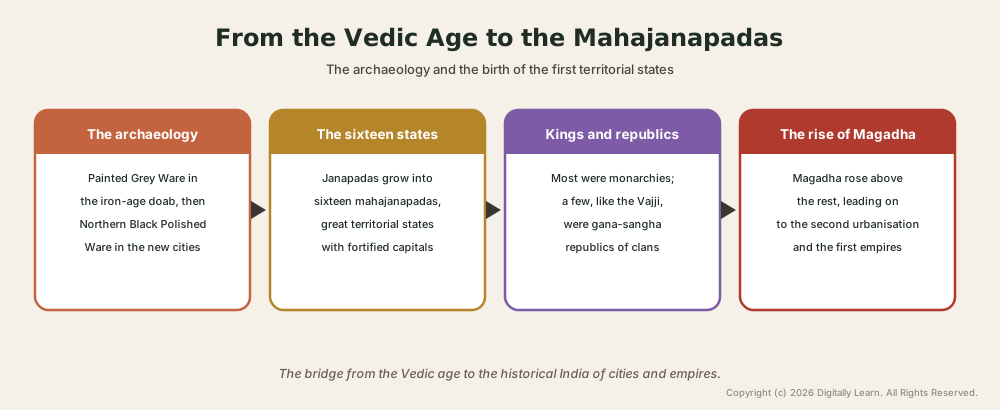
The Mahajanapadas were the sixteen great states that arose at the close of the Vedic age, and they are the bridge from Vedic India to the historical period. The archaeology of the change is read in two pottery cultures: the Painted Grey Ware of the iron-age Later Vedic doab, and the later Northern Black Polished Ware of the new cities. As iron raised a farming surplus, the Vedic tribal janapadas grew into sixteen territorial states, some ruled by kings and some by clan assemblies called gana-sanghas. From among them Magadha rose to supremacy, opening the way to the second urbanisation and the first Indian empires. This closing part of the cluster traces that transition.
The Archaeology of the Transition: Painted Grey Ware and Northern Black Polished Ware
Painted Grey Ware and the Later Vedic Doab
What is the significance of the pottery: archaeologists read the Vedic transition through its pottery cultures, and the examiner expects a student to know which ware belongs to which age.
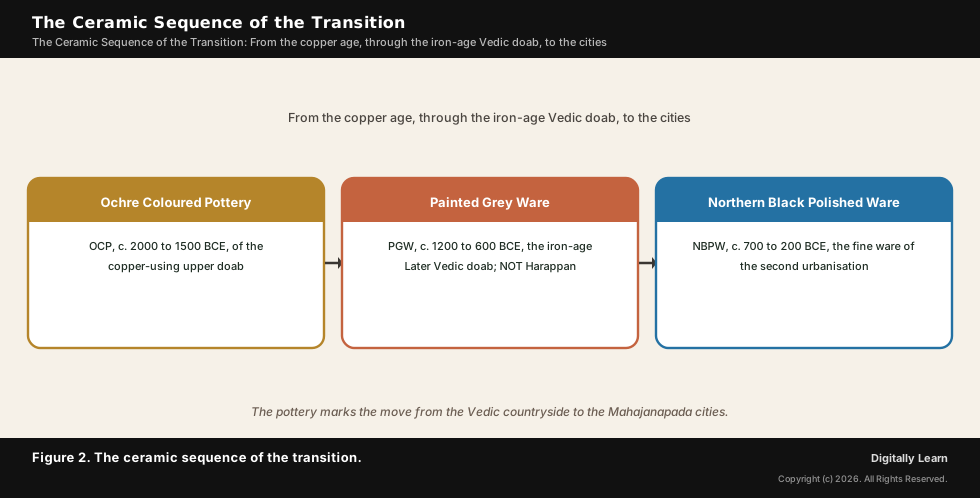
A fine grey pottery painted with simple black designs, Painted Grey Ware marks the iron-age Later Vedic settlements of the Ganga-Yamuna doab, dated from about 1200 to 600 BCE. It is associated with the Kuru-Panchala people and with the use of iron, and it overlies the older Ochre Coloured Pottery of the copper age.
A common error is to call Painted Grey Ware a Harappan ware. It is not: the Harappan civilisation belongs to the bronze age and ended centuries earlier, while Painted Grey Ware is an iron-age culture that succeeded it in a different region. This distinction is a favourite examination trap.
Northern Black Polished Ware and the Second Urbanisation
Distinguishing the later ware: the next pottery culture belongs not to the Vedic countryside but to the new cities, and it is the archaeological marker of the second urbanisation.
A glossy, fine, deluxe pottery, Northern Black Polished Ware is dated from about 700 to 200 BCE and is the marker of the second urbanisation and the Mahajanapada age. It succeeds Painted Grey Ware in time and is found at the great city sites, a luxury ware used by an urban elite, not a Vedic village ware. With it come the first cities of the Ganga plain since the Indus age.
From Janapadas to the Sixteen Mahajanapadas
The Rise of Territorial States
What is the significance of the territorial state: the great political change of the age was the move from the tribe to the territory, and it is the foundation of the historical Indian state.
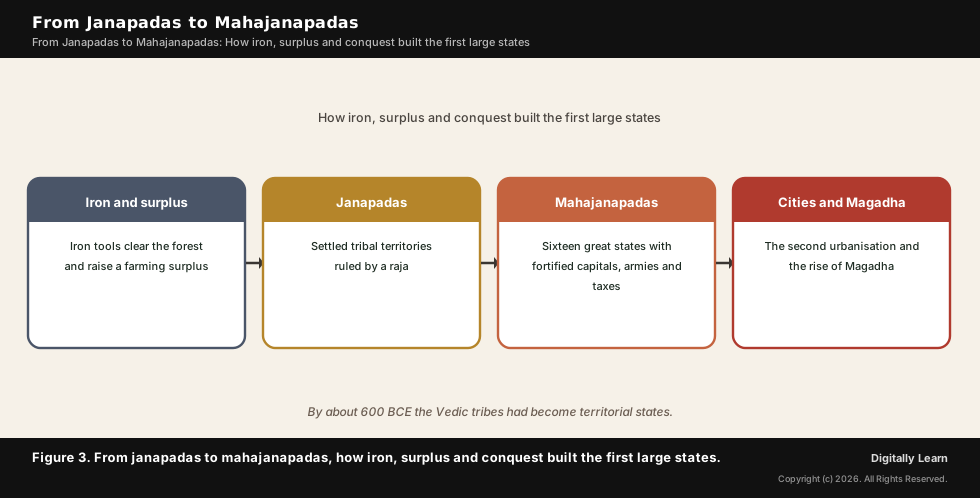
In the Rigvedic age the unit was the jana, a people or tribe. As the tribes settled and farmed, loyalty shifted from the people to the land they held, and the unit became the janapada, literally the place where a people set its foot. The rajas of the janapadas grew more powerful, and by about 600 BCE the larger janapadas had become mahajanapadas, great states defined by territory, with fortified capitals, standing armies and regular taxes.
Taxes replaced the voluntary gifts of the Rigvedic age. The chief tax, the bhaga, was a share of the harvest, fixed at one-sixth of the produce, and there were further taxes on craftspersons, herders and trade. The king now had officials to collect them, the mark of a true state.
Naming the Sixteen Great States
Distinguishing the sixteen: the Buddhist text the Anguttara Nikaya names sixteen great states, the mahajanapadas, that covered the north of the subcontinent in the sixth century BCE.
| Mahajanapada | Region (modern) | Capital |
|---|---|---|
| Magadha | South Bihar | Rajagriha, later Pataliputra |
| Kosala | Eastern Uttar Pradesh (Awadh) | Shravasti |
| Vatsa | Around Kaushambi (on the Yamuna) | Kaushambi |
| Avanti | Malwa (western Madhya Pradesh) | Ujjain |
| Vajji | North Bihar (a republic) | Vaishali |
| Gandhara | North-west (Taxila region) | Taxila |
| Anga | Eastern Bihar | Champa |
| Kuru / Panchala | Delhi-Haryana / western U.P. | Indraprastha / Ahichhatra |
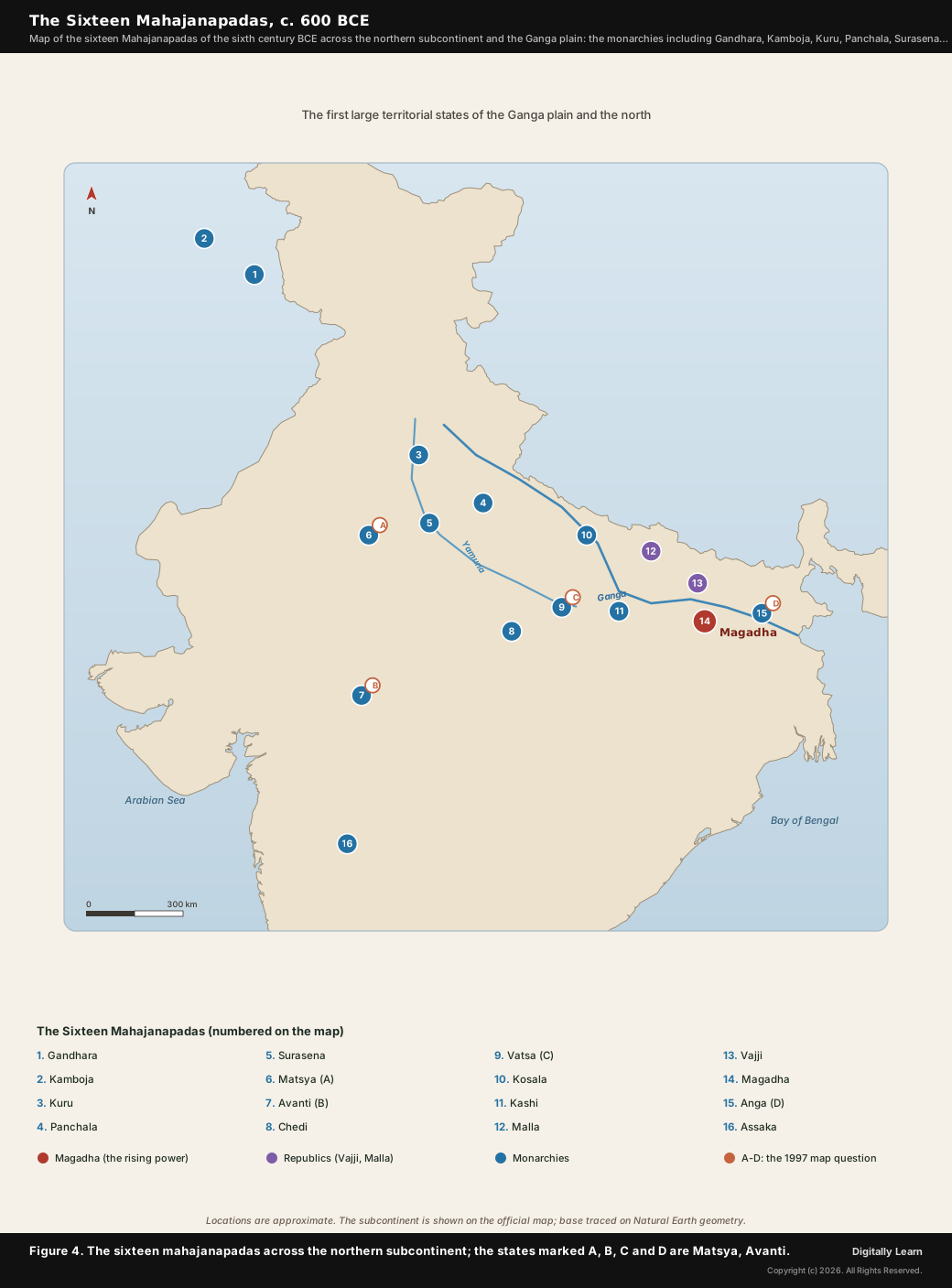
The sixteen were Kashi, Kosala, Anga, Magadha, Vajji, Malla, Chedi, Vatsa, Kuru, Panchala, Matsya, Surasena, Assaka, Avanti, Gandhara and Kamboja. All lay across the north, from Gandhara and Kamboja in the north-west to Anga in the east, with only Assaka, on the Godavari, lying to the south.
The Geography of the Mahajanapadas
Mapping the Sixteen States
What is the significance of the map: the geography of the sixteen states is directly examined, and a clear mental map of where each lay is the surest way to answer the map-based question.
The heart of the Mahajanapada world lay along the Ganga and its plain, with the cluster of eastern states, Kosala, Kashi, Vajji, Magadha and Anga, holding the richest land. The map below places all sixteen, marking the monarchies, the gana-sangha republics and the rising power of Magadha.
Monarchies and Gana-Sangha Republics
Hereditary Kings and Clan Assemblies
What is the significance of the two forms: not every mahajanapada was a kingdom, and the existence of early republics in ancient India is a point the examiner returns to.
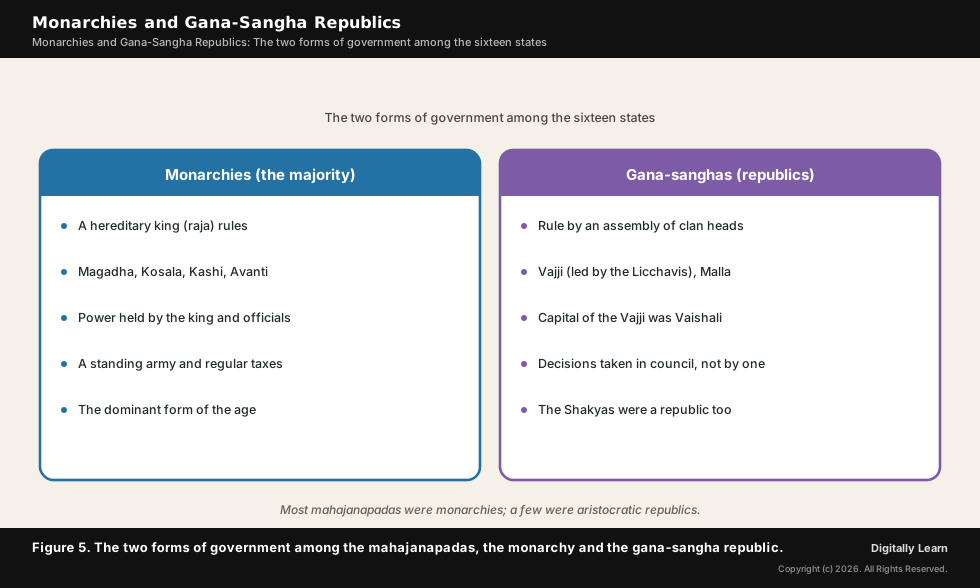
Most of the sixteen were monarchies, ruled by a hereditary king with his army and officials; Magadha, Kosala, Kashi and Avanti were the great kingdoms. But several were gana-sanghas, often translated as republics or oligarchies, in which power lay not with one king but with an assembly of the heads of the ruling clans, who took decisions in council.
The best known was the Vajji confederacy of north Bihar, led by the Licchavis, with its capital at Vaishali; the Mallas were another such republic. The Shakyas, the clan of the Buddha, were also a gana-sangha, though not counted among the sixteen. These republics show that monarchy was not the only political form of early India.
The Rise of Magadha and the Second Urbanisation
The Geographic and Dynastic Edge of Magadha
What is the significance of Magadha: of all the sixteen states it was Magadha that rose to supremacy, and the reasons for its rise are a standing question for both Prelims and Mains.
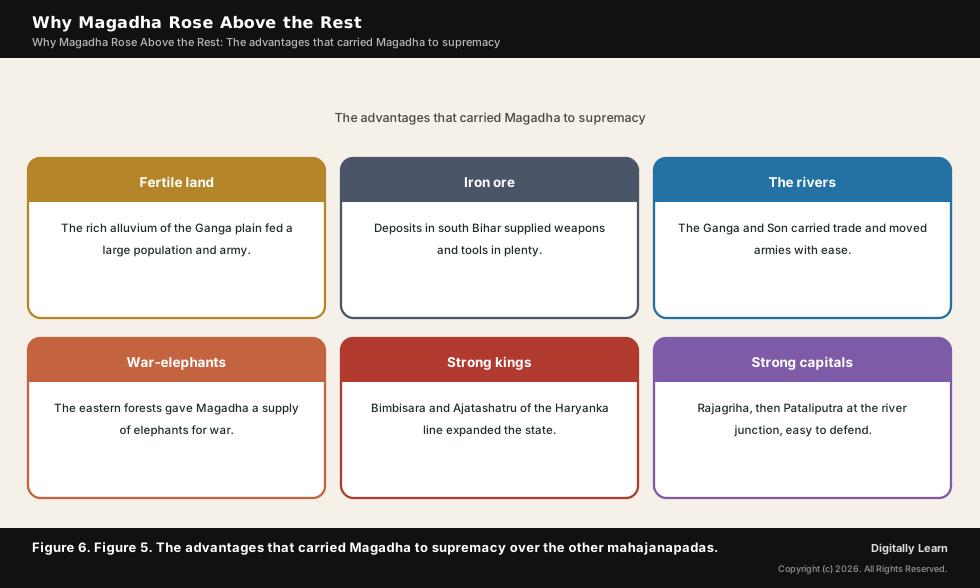
Magadha enjoyed a rare combination of advantages: the fertile alluvium of the Ganga plain that fed a large population, the iron ore of south Bihar for weapons, the Ganga and Son rivers for trade and the movement of armies, and a supply of war-elephants from the eastern forests. Above all it had ambitious rulers, Bimbisara and his son Ajatashatru of the Haryanka line, who enlarged the state by conquest and diplomacy.
The Haryanka dynasty was followed by the Shishunaga and then the Nanda dynasties, each carrying Magadha further. Its capital moved from Rajagriha to Pataliputra, set where the Son meets the Ganga and easy to defend, the city that would become the seat of the Mauryan empire.
The Second Urbanisation, Coins and the New Religions
Distinguishing the second urbanisation: the Mahajanapada age saw cities rise again in the Ganga plain, the first since the Indus civilisation, an event historians call the second urbanisation.
Great cities such as Rajagriha, Champa, Shravasti, Kaushambi, Varanasi, Ujjain and Taxila grew as centres of trade and government. With them came the first punch-marked coins of silver and copper, a sign of a money economy, and a script in which to keep records. Trade and craft flourished, and society grew more complex.
This same age and region produced the new religions: Buddhism and Jainism arose in the sixth century BCE in the eastern Ganga plain, led by the Buddha and Mahavira, challenging the costly ritualism of the Vedic order. With the mahajanapadas, the cities, the coins and these new faiths, the Vedic age gives way to the historical India of empires.
UPSC Relevance and Exam Focus
Where the Mahajanapadas Fit in the UPSC-CSE Syllabus
This topic belongs to General Studies Paper I: ancient Indian history and culture, and the mahajanapadas, with the rise of Magadha, are among the most reliably examined areas of ancient India.
For Prelims, hold the firm facts: Painted Grey Ware is Later Vedic and iron-age, not Harappan; Northern Black Polished Ware marks the second urbanisation; there were sixteen mahajanapadas; the Vajji was a republic led by the Licchavis; the bhaga tax was one-sixth; and Magadha rose under the Haryanka, Shishunaga and Nanda dynasties.
For Mains, the rise of Magadha and the second urbanisation make a complete answer on how the Vedic tribal society became the territorial, urban, state-based society of historical India.
Recurring linked concepts an aspirant should keep in working memory:
- The pottery: Painted Grey Ware (Later Vedic) then Northern Black Polished Ware (second urbanisation).
- The states: Sixteen mahajanapadas; janapada means a settled territory.
- The republics: Gana-sanghas such as the Vajji (Licchavis) and the Malla.
- The taxes: The bhaga, a one-sixth share of the harvest.
- Magadha: Haryanka (Bimbisara, Ajatashatru), Shishunaga, Nanda; Rajagriha then Pataliputra.
A common Prelims trap is to pair Painted Grey Ware with the Harappan civilisation. Painted Grey Ware is an iron-age Later Vedic culture; the Harappan civilisation is bronze-age and far older.
Another trap is to treat every mahajanapada as a kingdom. Several, such as the Vajji and the Malla, were gana-sangha republics ruled by an assembly of clans.
Previous Year UPSC-CSE Questions
Previous Year UPSC-CSE Questions By the end you will be able to draft model answers for the following UPSC questions. Each question carries a collapsible framework showing how to approach it in the exam.
- UPSC Prelims 2015 GS-IWhich of the following kingdoms were associated with the life of the Buddha?
- Avanti
- Gandhara
- Kosala
- Magadha
Select the correct answer using the code given below.
How to approach this Prelims question
Approach: Identify which of the four named states were the Buddha's main theatres.
Trap to watch: Avanti (Ujjain) and Gandhara (Taxila) were far from the Buddha's life; he taught in Kosala and Magadha.
Key facts to recall:
- The Buddha taught chiefly in Kosala (Shravasti) and Magadha (Rajagriha).
- Avanti and Gandhara were not associated with his life.
Answer signal: Kosala and Magadha (3 and 4 only).
- UPSC Prelims 1997 GS-IThe following map shows four of the sixteen mahajanapadas that existed in ancient India. The places marked A, B, C and D respectively are
How to approach this Prelims question
Approach: Match each lettered position to the correct mahajanapada by its known region.
Trap to watch: Several options mix in Surasena, Cedi, Kosala or Magadha; fix each by its region (Matsya west, Avanti south-west, Vatsa centre, Anga east).
Key facts to recall:
- Matsya lay in Rajasthan, Avanti in Malwa, Vatsa around Kaushambi, Anga in eastern Bihar.
- The correct set is Matsya, Avanti, Vatsa, Anga.
Answer signal: Matsya, Avanti, Vatsa, Anga.
Sources and Further Reading
Editorial Disclaimer
This article is for UPSC preparation. The dates of the pottery cultures and the locations of the mahajanapadas are given in the conventional ranges and regions used by historians, and some are approximate.