


Overview
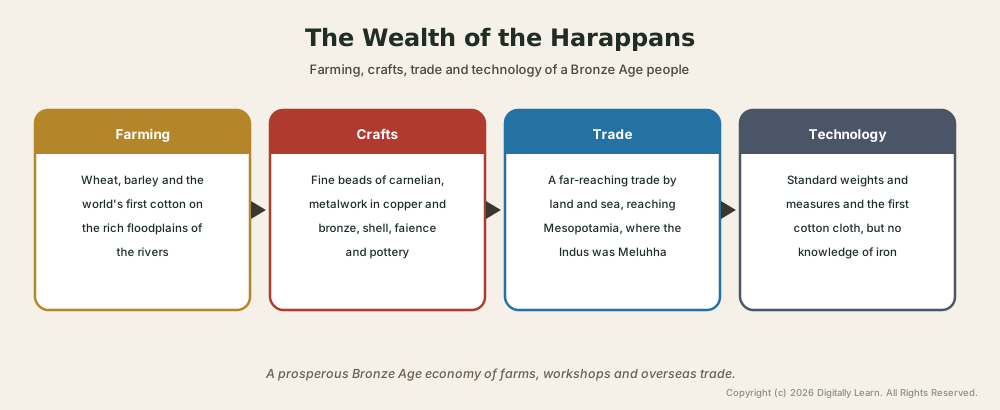
The Harappans were a prosperous Bronze Age people whose wealth rested on farming, crafts and trade. They grew wheat, barley and, famously, the world's first cotton on the river floodplains, and kept cattle and other animals. Their craftsmen made fine beads of carnelian, worked copper and bronze, shell and faience, and wove cotton cloth. Their goods travelled in a far-reaching trade by land and sea that reached Mesopotamia, where the Indus land was known as Meluhha, and the whole exchange was eased by a remarkable system of standardised weights. They worked bronze but did not know iron.
Harappan Agriculture and the World's First Cotton
Farming on the River Floodplains
What is the significance of agriculture: the whole Harappan economy rested on a rich farming base. The rivers flooded each year and left a fertile silt, and on this the Harappans grew the grain that fed their cities.
Distinguishing the crops: their chief crops were wheat and barley, with peas, sesame, mustard and dates, and rice at a few sites in Gujarat. Above all, the Harappans were among the first people in the world to grow cotton, which the later Greeks called sindon after the land of Sindh, and from it they wove the first cotton cloth.
Animal Husbandry and the Horse Question
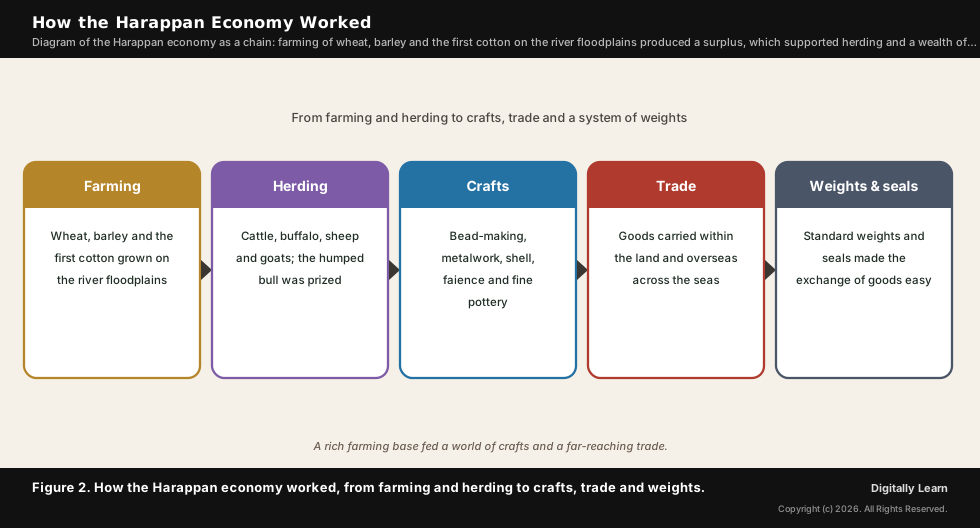
What is the significance of the animals: alongside farming, the Harappans kept many animals, both for food and for work, and their seals show how familiar the beasts of the land were to them.
Distinguishing the herd: they kept cattle, especially the humped bull which appears again and again on the seals, along with buffaloes, sheep, goats, pigs, dogs and elephants. A famous puzzle is the horse: clear evidence of the horse is absent from the Harappan world, and the few claimed finds, as at Surkotada, are much debated, a point that bears on the question of the Aryans in a later part.
The Bronze Age Economy, Metallurgy and the Absence of Iron
Copper, Bronze and the Bronze Dancing Girl
What is the significance of the metals: the Harappan civilisation was a Bronze Age one, and the working of metal was one of its great skills, though one metal was missing.
Distinguishing the metals: the Harappans worked copper, which they got from Rajasthan, and mixed it with tin to make bronze, from which they cast tools, vessels and figures. The most famous of these is the bronze Dancing Girl of Mohenjo-daro, made by the lost-wax method. They also used gold and silver, but they did not know iron, which came to India only in the later Vedic age.
Craft Production: Beads, Faience, Shell and Pottery
The Workshops of the Cities
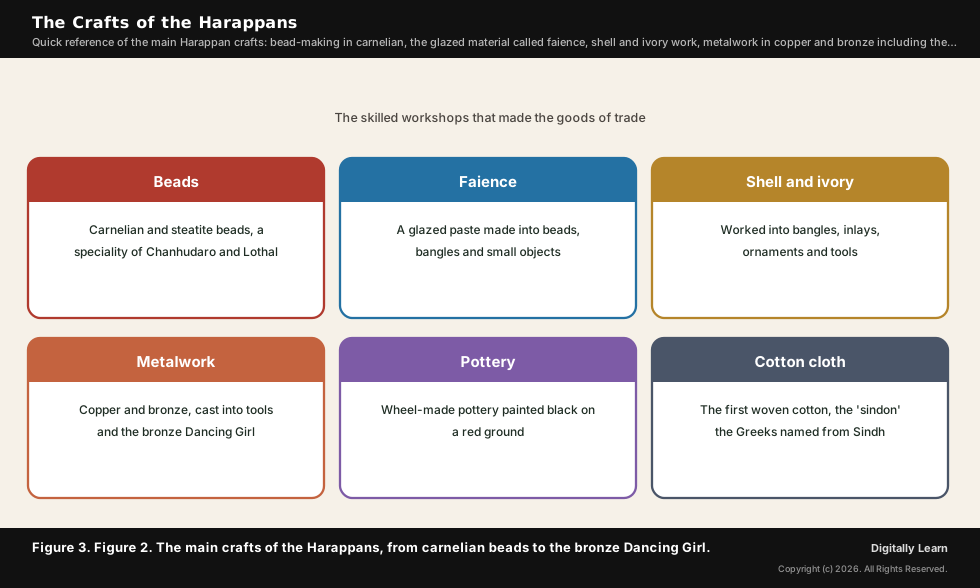
What is the significance of the crafts: the Harappan cities were full of skilled workshops, and it was their goods, above all, that were carried in trade.
Distinguishing the crafts: the most famous was bead-making, especially the long carnelian beads of Chanhudaro and Lothal, prized as far away as Mesopotamia. The Harappans also made the glazed paste called faience, worked shell and ivory into bangles and ornaments, and threw fine wheel-made pottery, painted black on a red ground.
Long-Distance Trade with Mesopotamia, Dilmun and Magan
The Sea Route to Mesopotamia
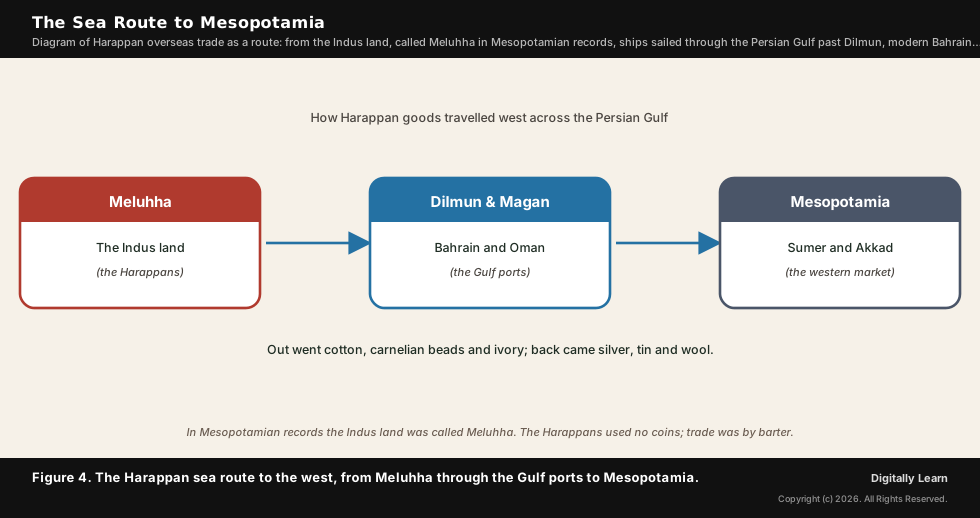
What is the significance of the trade: the Harappans were one of the great trading peoples of the Bronze Age, carrying goods not only within their land but across the sea to the west.
Distinguishing the route: from the port of Lothal and others, Harappan ships sailed through the Persian Gulf, past Dilmun, modern Bahrain, and Magan, modern Oman, to reach Mesopotamia. In the records of Mesopotamia the Indus land was called Meluhha. Out went cotton, carnelian beads and ivory; back came silver, tin and wool. Lapis lazuli came from Afghanistan in the north.
Distinguishing the means: the Harappans used no coins; their trade was by barter, the direct exchange of goods, with the seals serving to mark ownership and the weights to measure quantities.
| Name | Modern region | Role in the trade |
|---|---|---|
| Meluhha | The Indus land | The Harappans themselves, in Mesopotamian records |
| Dilmun | Bahrain | A trading station in the Persian Gulf |
| Magan | Oman | A Gulf trading point and a source of copper |
| Mesopotamia | Iraq (Sumer) | The great market of the west |
| Lapis source | Afghanistan | The northern source of lapis lazuli |
Standardised Weights, Measures and Harappan Technology
A Binary System of Weights
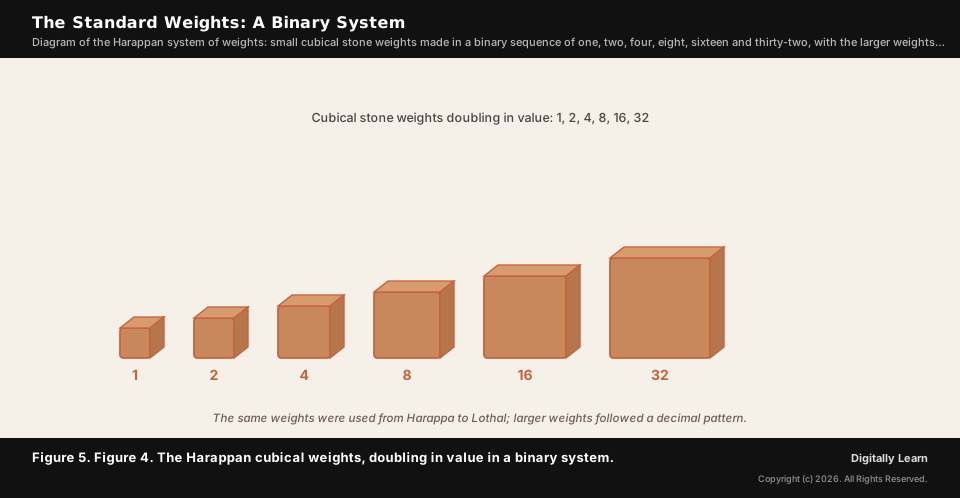
What is the significance of the weights: one of the surest signs of how organised the Harappan economy was is its system of weights and measures, used uniformly across the whole civilisation.
Distinguishing the system: the small cubical stone weights followed a binary scale, doubling from one to two, four, eight, sixteen and thirty-two, with the larger weights following a decimal pattern. The same weights were used from Harappa to Lothal, and the ivory scale found at Lothal shows they measured length with equal care. This standardisation made fair trade possible across great distances.
UPSC Relevance and Exam Focus
Where This Fits in the UPSC-CSE Syllabus
This topic belongs to General Studies Paper I: ancient Indian history and culture, where the Harappan economy, especially the cotton, the trade with Mesopotamia and the weights, is regularly examined in the Prelims.
For Prelims, hold the key facts: the Harappans were the first to grow cotton; they worked bronze but not iron; they traded with Mesopotamia, where the Indus was called Meluhha, through Dilmun and Magan; and their weights followed a binary scale.
For Mains, the Harappan economy is a good example of early craft specialisation, standardisation and long-distance trade in the ancient world.
Recurring linked concepts an aspirant should keep in working memory:
- Cotton: first grown by the Harappans, the Greek sindon.
- No iron: a Bronze Age people who worked copper and bronze.
- Meluhha: the name for the Indus land in Mesopotamian records.
- Binary weights: the standard cubical weights doubling in value.
A common Prelims trap is to credit the Harappans with iron: they were a Bronze Age people, and iron came only later, in the Vedic age.
A common Mains trap is to forget that the Harappan trade was by barter, without coins, which appear in India only much later.
Previous Year UPSC-CSE Questions
Previous Year UPSC-CSE Questions By the end you will be able to draft model answers for the following UPSC questions. Each question carries a collapsible framework showing how to approach it in the exam.
- UPSC Prelims 2025 GS-IThe famous female figurine known as 'Dancing Girl', found at Mohenjo-daro, is made of
How to approach this Prelims question
Approach: Recall the material of the Dancing Girl figurine.
Trap to watch: The Dancing Girl is cast in bronze, not carnelian, clay or gold; the Harappans were skilled in bronze metalwork.
Key facts to recall:
- The Dancing Girl of Mohenjo-daro is a bronze figure made by the lost-wax method.
- The Harappans worked copper and bronze but not iron.
Answer signal: Bronze.
Sources and Further Reading
Editorial Disclaimer
This article is for UPSC preparation. Some claims, such as the presence of the horse at Harappan sites, remain debated among scholars. Verify specific figures against standard histories before relying on them.