


Overview
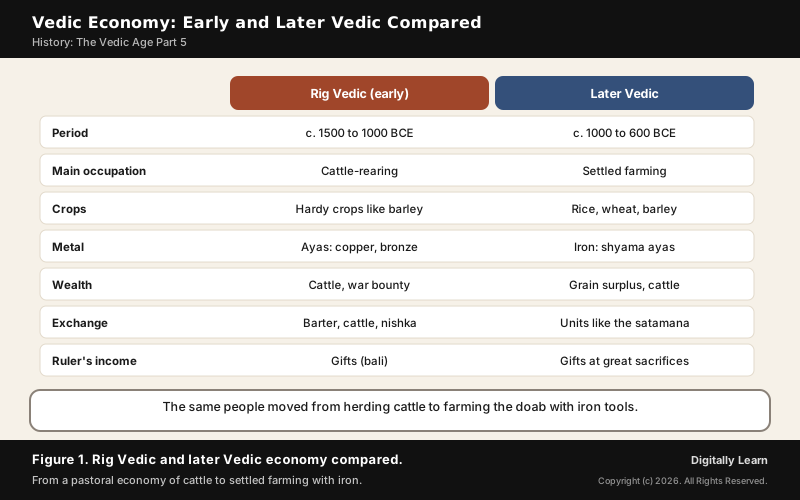
The Vedic economy was the economic life of the Vedic people, from about 1500 to 600 BCE. It was sustained by a mix of pastoralism and agriculture. In the early or Rig Vedic period people were semi-nomadic herders who counted wealth in cattle and gained it through gifts and war; in the later Vedic period, iron axes and ploughs let them clear the forests of the Ganga-Yamuna doab and settle down as farmers. That surplus brought new crafts, wider trade, units of value and, in time, regular taxes.
Vedic Economy: Meaning and the Early and Later Vedic Phases
Economy of the Vedic Period: Early and Later Vedic Compared
The economy of the Vedic period was sustained by a combination of pastoralism and agriculture, but the balance between the two changed over a thousand years. Historians divide the period into two phases, and the economy looks very different in each.
- Early or Rig Vedic period, c. 1500 to 1000 BCE: The age of the Rigveda, the oldest Veda, composed about 3500 years ago in the north-west of the subcontinent; a semi-nomadic, pastoral society.
- Later Vedic period, c. 1000 to 600 BCE: The age of the Samaveda, Yajurveda and Atharvaveda and other later texts, composed mostly in the lands drained by the Ganga and the Yamuna; a society of settled farmers.
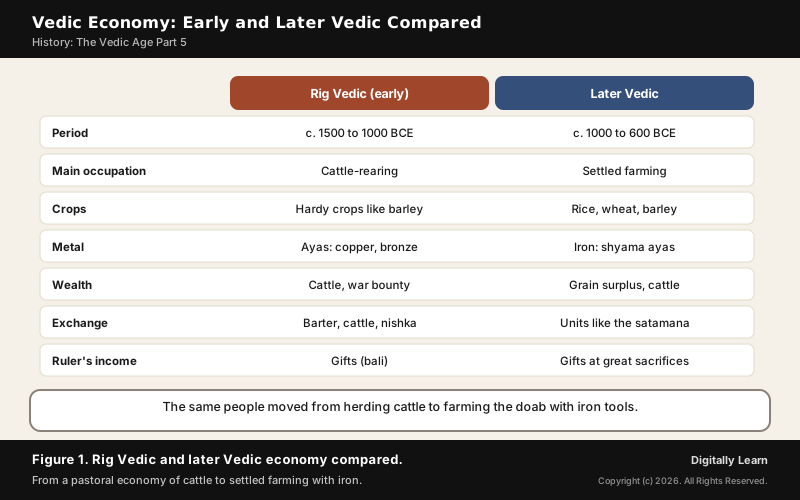
The difference between the early and later Vedic period is clearest in the economy. The same society moved from the pastures of the north-west to the forests of the Ganga-Yamuna doab, from copper and bronze to iron, and from wealth in cattle to a surplus of grain.
| Point | Rig Vedic economy | Later Vedic economy |
|---|---|---|
| Main occupation | Cattle-rearing | Settled agriculture |
| Region | North-west, land of rivers | Ganga-Yamuna doab |
| Crops | Hardy crops like barley | Rice, wheat, barley |
| Metal | Ayas: copper and bronze | Iron: shyama or krishna ayas |
| Exchange | Barter, cattle, gifts | Gold units, wider trade |
| Ruler's income | Gifts, share of war bounty | Gifts at great sacrifices |
- c. 1500 to 1000 BCE: The Rigveda is composed; a pastoral economy of cattle and horses.
- c. 1200 BCE onwards: Painted Grey Ware villages appear in the western Ganga plain.
- After 1000 BCE: Iron axes and ploughs spread; the western Ganga-Yamuna doab is settled.
- c. 700 BCE: Northern Black Polished Ware begins, in the late Vedic period.
- c. 600 to 500 BCE: Paddy transplantation, towns in the Ganga valley, mahajanapadas and punch-marked coins.
Rig Vedic Economy: A Pastoral Economy of Cattle and Horses
Pastoral Economy Meaning: Cattle as the Measure of Wealth
A pastoral economy is one built on pastoralism: herding domesticated animals such as cattle, sheep, goats and horses on open pastures, historically by people who moved with their herds. The early Vedic economy was of this kind. The Rig Vedic society was semi-nomadic and pastoral, with some agriculture.
Cattle were the heart of this economy. The Rigveda has many prayers for cattle, children, especially sons, and horses, and cattle served as a unit of value in barter. Horses were yoked to chariots used in battles, and many battles were fought to capture cattle. Others were fought for land for pasture and for growing hardy crops, for water, and to capture people.
The hymns themselves show what people valued. In a dialogue between the sage Vishvamitra and the rivers Beas and Sutlej, the rivers are compared to swift horses and to shining cows licking their calves. Historians read this as the voice of a society in which horses and cows were valued animals, and in which people crossed rivers with chariots and carts.
Wealth moved through gifts and war rather than trade. Some of what was won was kept by the leaders, some was given to the priests and the rest was distributed among the people, and some was used for sacrifices. Gifts went to kings as bali and to priests as dana. No individual owned land: clans as a whole held rights over lands and herds.
Farming, Crafts and Metals in the Rig Vedic Period
Agriculture was present but secondary. The Rigveda mentions the plough, the levelling of fields, the processing of seed and the storage of grain in large jars. The crops were hardy ones that ripened quickly, such as barley. Rice and porridge appear in some hymns, but there is no discussion of rice cultivation.
- Crafts: The hymns name chariot-making, cart-making, carpentry, metalworking, tanning, bow-making, sewing, weaving and making mats of grass and reed.
- Metals: The Rigveda uses the word ayas for metal and mentions razors, bangles and axes made from it; ayas there most likely meant copper and bronze, so the early Vedic period was a Bronze Age culture.
- Gold: Gold is mentioned in some hymns, but there is no sign of coins.
- Fields: The hymns distinguish fertile land, urvara, from waste land, khila, and a whole hymn of the Rigveda (IV.57) is given to agriculture.
- Trade: The Panis appear in some hymns as merchants, and there are references to boats and oceans.
Society was still simple. Rig Vedic rajas had no capital cities, palaces or armies and did not collect taxes. Slaves, dasas and dasis, were often captured in war and worked in households rather than in production. The rivers named in the hymns, above all the Indus and its tributaries and the Sarasvati, show where this pastoral life was lived; the Ganga and the Yamuna are named only once. The Sindhu, the Indus, is attested 176 times in the Rigveda, and the Punjab appears as Sapta Sindhu, the land of seven rivers; see the Vedic age.
Later Vedic Economy: Iron, the Plough and Settled Agriculture
Iron in the Later Vedic Period: Shyama Ayas or Krishna Ayas
Iron first appears in the Atharvaveda, a post-Rig Vedic text, as shyama ayas or krishna ayas, the black or dark metal. The later Vedic period was therefore an Iron Age culture, and iron changed its economy. The Gangetic plains had been closed to the Vedic tribes by thick forest; after 1000 BCE, iron axes and ploughs came into wide use and the jungles could be cleared with ease.
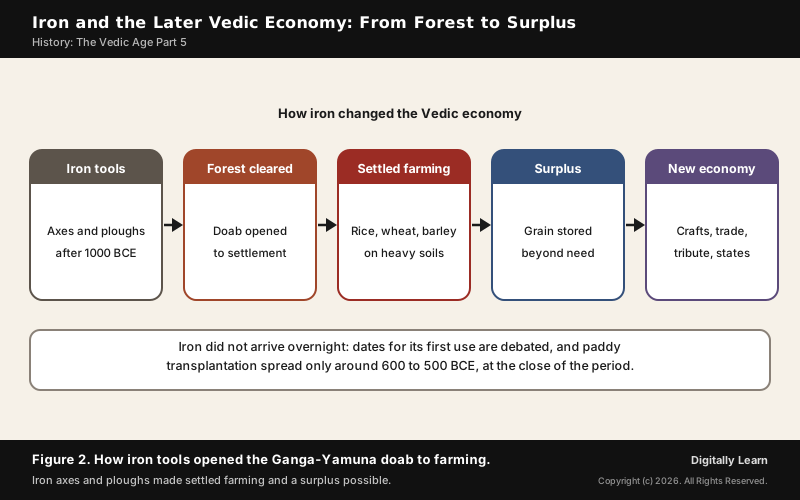
With iron, Vedic settlement spread into the western Ganga-Yamuna doab. An iron ploughshare could turn heavy, clayey soil far better than a wooden one, so more grain could be grown. The use of iron ploughshares kept growing into the age of the mahajanapadas, when people also began transplanting paddy, raising saplings and planting them out, around 600 to 500 BCE.
Later Vedic Agriculture in the Ganga-Yamuna Doab
Agriculture now dominated the economy of the Ganges valley. The clans that formed the Kuru kingdom, the first state-level society of the subcontinent, had been semi-nomadic herders; as they moved into the western Ganga plain, settled farming of rice and barley became more important. Wheat, rice and barley were the main crops.
- Stages: The Shatapatha Brahmana names four stages of cultivation: ploughing (karshana), sowing (vapana), reaping (lavana) and threshing (mardana).
- Methods: Later Vedic texts describe iron implements, ploughing, broadcasting seed and a sequence of cropping and fallowing; cow dung was used as manure and irrigation was practised.
- Crops at excavated sites: Villages at Hastinapur, Purana Qila in Delhi and Atranjikhera grew rice, wheat, barley, pulses, sugarcane, sesame and mustard.
- Animals: Cattle, sheep, pigs and horses were kept; horses, needed for cavalry and sacrifice, could not be bred in India and came through trade routes beyond the Hindu Kush.
- Surplus: Surplus production supported the centralised kingdoms that were emerging.
The shift from herding to farming did not end cattle-keeping. Excavations at Hastinapur found cattle bones in very large numbers alongside charred rice, so the later Vedic villager was a farmer who still kept large herds. How these kingdoms grew is covered in Vedic polity.
Painted Grey Ware: Archaeology of the Later Vedic Economy
Archaeology shows the later Vedic economy at work. The Painted Grey Ware culture, conventionally dated to about 1200 to 600 BCE, spread across the western Gangetic plain and the Ghaggar-Hakra valley. It is named after its fine grey pottery painted with simple lines and geometric patterns, and it probably corresponds to the middle and later Vedic period, the age of the Kuru-Panchala kingdom.
Its chief concentration is the upper Ganga, Sarasvati and Sutlej valleys. It was essentially a village culture of wattle-and-daub houses, living by the cultivation of rice and the keeping of domestic animals, and using objects of copper, iron and bone. At Hastinapur the Painted Grey Ware deposit is dated to about 1100 to 800 BCE, and a radiocarbon date from Atranjikhera is 1025 BCE, give or take a century.
- Settlements: 1,576 sites were known by 2018, mostly small farming villages, with a few dozen larger settlements that can be called towns, some ringed by ditches and earthen embankments.
- Economy: Rice, wheat, millet and barley; cattle, sheep, pigs and horses; the plough; iron metallurgy.
- Signs of surplus and trade: Storage bins for grain, stone weights and ornaments of gold, copper, ivory and semi-precious stones at sites such as Jakhera.
- Iron came gradually: In the Painted Grey Ware layer at Hastinapur copper was still the main metal; only lumps of iron ore and slag appear near the top of the layer.
- What came next: Northern Black Polished Ware, from about 700 BCE, marks the cities and mahajanapadas of the central Ganga plain.
The archaeology of the whole transition is covered in Vedic archaeology and the mahajanapadas.
Crafts, Trade and Units of Exchange in the Vedic Economy
Crafts, Trade and Units of Exchange: Nishka to Satamana
A farming surplus freed people for other work. New crafts and occupations arose in the later Vedic period, among them carpentry, leather work, tanning, pottery, astrology, jewellery, dyeing and winemaking. Besides copper, bronze and gold, the later Vedic texts name tin, lead and silver.
- Specialists: The literature of the Kuru period shows surplus production and the rise of specialised artisans and craftsmen.
- Women’s work: Women tended cattle, milked cows and carded wool, and worked as weavers, dyers and corn grinders.
- Craft finds: Painted Grey Ware sites show ivory-working and ornaments of terracotta, stone, faience and glass.
- Trade: Settled farming led to more trade and to competition for resources.
The Vedic economy had no coins. Exchange ran on barter, with cattle as a unit of value, and on gifts. Countable units of precious metal were used from the Vedic period onwards: the word nishka appears in this sense in the Rigveda, and later texts speak of cows given as gifts adorned with padas, quarter-units, of gold.
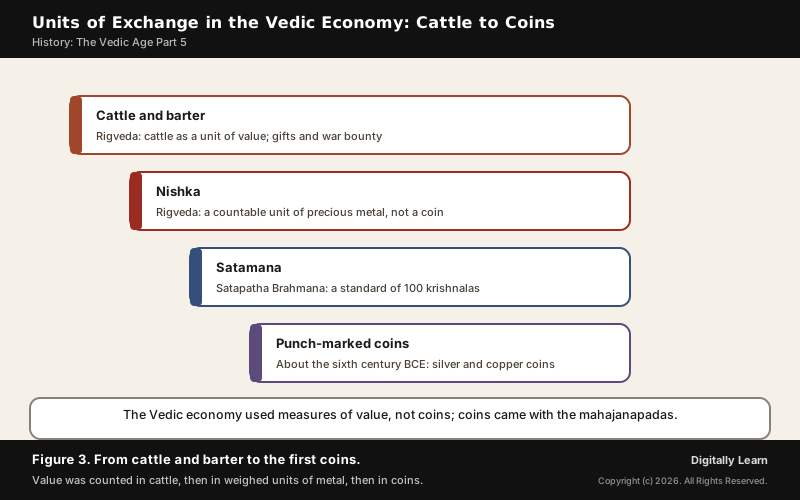
The Satapatha Brahmana names the satamana, a hundred standard of 100 krishnalas. These units first measured gold and were later used for silver. Real coins came only after the Vedic age: punch-marked coins of silver and copper were minted from about the sixth century BCE, and the mahajanapadas issued coins called satamana.
Vedic Economy and Society: From Gifts to Taxes and Varna
From Bali to Bhaga: Gifts, Great Sacrifices and the First Taxes
How rulers were supported changed with the economy. The Rig Vedic raja lived on gifts and a share of war bounty. By the later Vedic period, some rajas came to be recognised through very large sacrifices such as the ashvamedha: other rajas who accepted the horse brought gifts, and ordinary people, the vish or vaishyas, brought gifts too.
By the age of the mahajanapadas, rulers building forts and keeping armies needed regular income, so they began collecting taxes instead of occasional gifts.
- Crops: The most important tax, usually one-sixth of the produce, called bhaga or a share.
- Crafts: Possibly paid in labour, such as a day’s work each month for the king.
- Herders: Animals and animal produce.
- Trade and forests: Taxes on goods bought and sold; forest produce from hunters and gatherers.
Surplus, Varna and the Social Effects of Economic Change
The economy and society changed together. In the later Vedic period the varna order took shape: brahmins were to study and teach the Vedas and perform sacrifices, kshatriyas to fight and protect, and vaishyas to be farmers, herders and traders, while shudras were to serve the other three. The Shatapatha Brahmana links the vaishya with material prosperity, cattle-rearing and agriculture.
- From jana to janapada: The word janapada means the land where the jana set its foot and settled down; settled farming turned tribes into territorial kingdoms.
- Rich and poor: Some priests, warriors, farmers and traders grew rich, while many herders, craftspeople, labourers, fishing folk and hunters remained poor.
- Labour: The back-breaking work of paddy transplantation was usually done by slaves and landless labourers, the kammakaras.
Previous Year UPSC-CSE Questions
Previous Year UPSC-CSE Questions By the end you will be able to draft model answers for the following UPSC questions. Each question carries a collapsible framework showing how to approach it in the exam.
- UPSC Mains 2024 GS-IUnderline the changes in the field of society and economy from the Rig Vedic to the later Vedic period.
How to structure the answer in the exam
Introduction: Place the Rig Vedic (c. 1500 to 1000 BCE) and later Vedic (c. 1000 to 600 BCE) periods and name the pivot: iron and settled farming in the Ganga-Yamuna doab.
Body (sub-themes to develop):
- Economy: pastoral cattle-keeping to settled agriculture of rice, wheat and barley.
- Technology: ayas (copper, bronze) to iron axes and ploughs; forests of the doab cleared.
- Exchange: barter, cattle and gifts to surplus, crafts, trade and units like the nishka and satamana.
- Polity and income: gifts and bounty to great sacrifices and, later, regular taxes.
- Society: jana to janapada; varna takes shape; rich and poor; slaves and labourers.
Conclusion: Conclude that the move from herding to farming with iron made a surplus, and the surplus made kingdoms, varna and, in time, towns.
- UPSC Prelims 1996 Prelims-GSThe river most mentioned in early Vedic literature is
How to approach this Prelims question
Approach: Recall where the Rig Vedic people lived: the land of seven rivers in the north-west.
Trap to watch: The Ganga, central to later Vedic life, is named only once in the Rigveda.
Key facts to recall:
- Sindhu attested 176 times in the Rigveda
- Punjab called Sapta Sindhu
Answer signal: The Sindhu, option (a).
Sources
- NCERT: Our Pasts I (Class VI), What Books and Burials Tell Us
- NCERT: Our Pasts I (Class VI), Kingdoms, Kings and an Early Republic
- NCERT: Themes in Indian History I (Class XII), Kings, Farmers and Towns
- Archaeological Survey of India: Excavation at Hulas (Memoir 113), Painted Grey Ware
- Vedic Heritage Portal (Ministry of Culture): Agriculture
- PIB (Ministry of Culture): Preservation of Cultural Heritage of Mahabharata Age, 2024
- Wikipedia: Vedic period
- Wikipedia: Rigveda
- Wikipedia: Kuru Kingdom
- Wikipedia: Painted Grey Ware culture
- Wikipedia: Iron Age in India
- Wikipedia: Hastinapur
- Wikipedia: History of agriculture in the Indian subcontinent
- Wikipedia: Coinage of India
- Wikipedia: Punch-marked coins
- Wikipedia: Satamana
- Wikipedia: Northern Black Polished Ware
- Wikipedia: Pastoralism
- Wikipedia: Ashvamedha
- UPSC: Civil Services Examination question papers
Editorial Disclaimer
This article draws on the NCERT history textbooks and the other sources listed on this page. Dates for the Vedic period are approximate.