


Overview
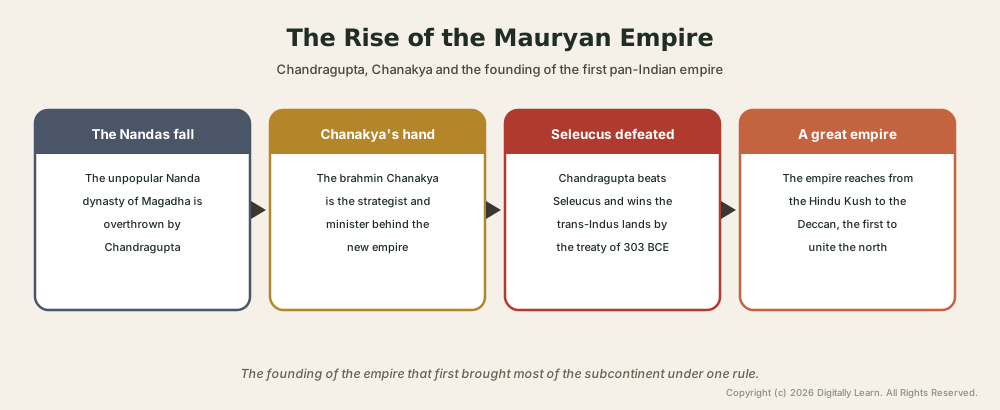
The rise of the Mauryan Empire is the founding story of the first state to bring most of the subcontinent under one rule. About 322 BCE a young adventurer, Chandragupta Maurya, guided by the brahmin strategist Chanakya (Kautilya), overthrew the unpopular Nanda dynasty of Magadha and seized its capital, Pataliputra. He then spread his power across the north and into the Deccan, and when the Greek king Seleucus Nicator tried to recover Alexander's eastern conquests, Chandragupta defeated him and, by the treaty of 303 BCE, won the lands beyond the Indus. This part traces that rise, from the fall of the Nandas to the building of a pan-Indian empire.
The Political Background: The Nandas, Magadha and India after Alexander
The Decline of the Nanda Dynasty under Dhana Nanda
What is the significance of the background: the Mauryan rise did not happen in a vacuum, and the state of Magadha on the eve of Chandragupta is the first thing to grasp.
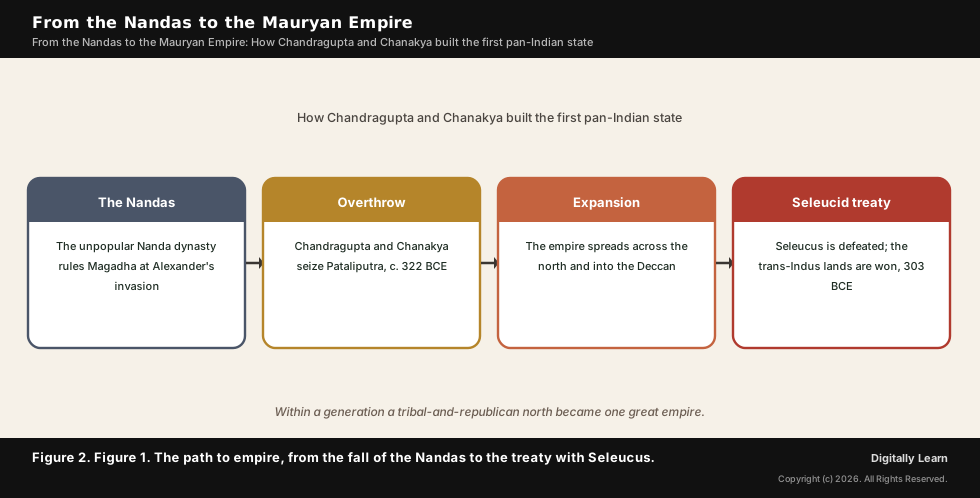
By the late fourth century BCE the throne of Magadha was held by the Nanda dynasty, whose last king, Dhana Nanda, was rich and powerful but widely disliked for his low birth and heavy taxation. Magadha had long been the strongest kingdom of the Ganga plain, with a great army, so whoever held Pataliputra held the key to empire; the Nandas' unpopularity gave an opening to an ambitious challenger.
North-West India after Alexander's Invasion
Distinguishing the north-west: while Magadha dominated the east, the north-west had just been shaken by Alexander, and that disturbance fed the Mauryan rise.
In 326 BCE Alexander of Macedon crossed the Indus and fought as far as the Beas before his army turned back. He left Greek garrisons and governors in the north-west, but they were soon swept away in the unrest that followed his death. The Nanda dynasty was still ruling the heart of north India at the time of Alexander's invasion, and the power vacuum in the north-west became an opportunity that Chandragupta would seize.
Chandragupta Maurya: From the Overthrow of the Nandas to a Pan-Indian Empire
Chandragupta, Chanakya and the Fall of Dhana Nanda
What is the significance of the founder: Chandragupta Maurya is the founder of the empire and of the dynasty, and his overthrow of the Nandas is the hinge of the whole story.
Helped by the brahmin Chanakya, Chandragupta raised an army, first cleared the Greek garrisons from the north-west, then turned east and overthrew Dhana Nanda, taking Pataliputra about 322 BCE. The Sanskrit play Mudrarakshasa dramatises the intrigue by which Chanakya won over the Nanda minister Rakshasa. With Magadha in his hands, Chandragupta held the strongest base in India.
The Expansion of the Empire and the Jain Tradition of Chandragupta's End
Distinguishing the reach and the end: from his Magadhan base Chandragupta built a pan-Indian empire, and a striking tradition surrounds the close of his life.
Chandragupta extended his rule across north India and southward into the Deccan, so that the empire reached from the Hindu Kush to Karnataka. A strong Jain tradition holds that in old age he gave up the throne, became a Jain monk under the teacher Bhadrabahu, and ended his life by the rite of sallekhana (slow fasting) at Shravanabelagola in the south.
Chanakya (Kautilya): Political Philosophy, the Arthashastra and Statecraft
The Arthashastra, the Mandala Theory and the Six-Fold Policy
What is the significance of Chanakya: the rise of the Mauryas was as much a triumph of statecraft as of arms, and its theory is set out in the Arthashastra ascribed to Chanakya.
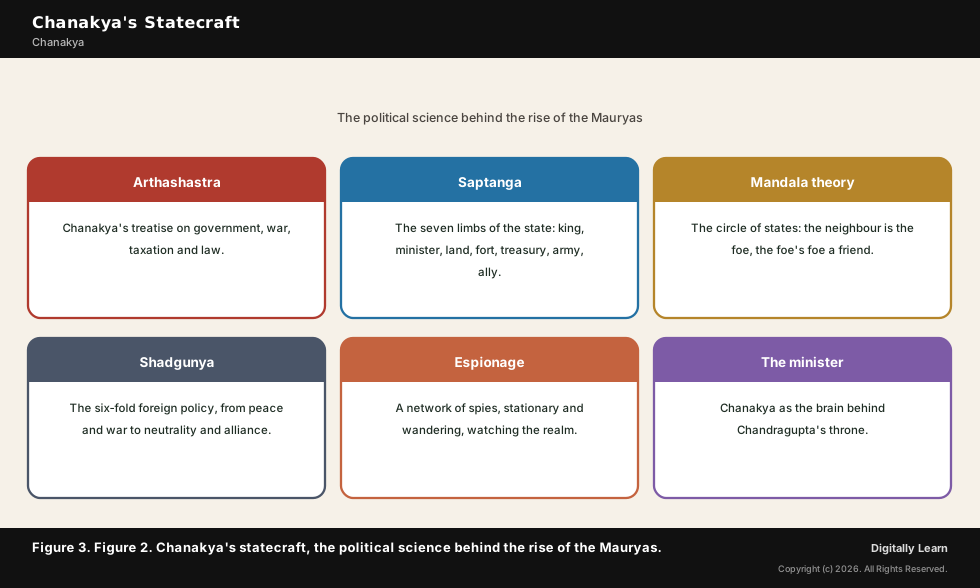
Chanakya, also called Kautilya, is remembered as the brain behind the throne. The Arthashastra ascribed to him teaches a science of government in which the king's first duty is the security and growth of the state. Its mandala theory views the king's neighbours as a circle of natural enemies and the enemy's enemy as a natural friend, and its six-fold policy (shadgunya) ranges from peace and war to neutrality and alliance.
Diplomacy and the Espionage System
Distinguishing the methods: beyond theory, Chanakya's statecraft relied on hard diplomacy and on a far-reaching system of intelligence.
The Arthashastra describes a network of spies, both stationary and wandering, who watched ministers, officials and the people and reported to the king, so that no plot could grow unseen. This combination of diplomacy, espionage and a disciplined army, guided by Chanakya, is what allowed a single generation to turn the divided north into one empire.
The Seleucid-Mauryan War and the Treaty of 303 BCE
The War with Seleucus and the Five Hundred War Elephants
What is the significance of the Seleucid war: the clash with Seleucus Nicator is the first recorded contact between an Indian empire and the Hellenistic world, and its terms are a favourite examination point.
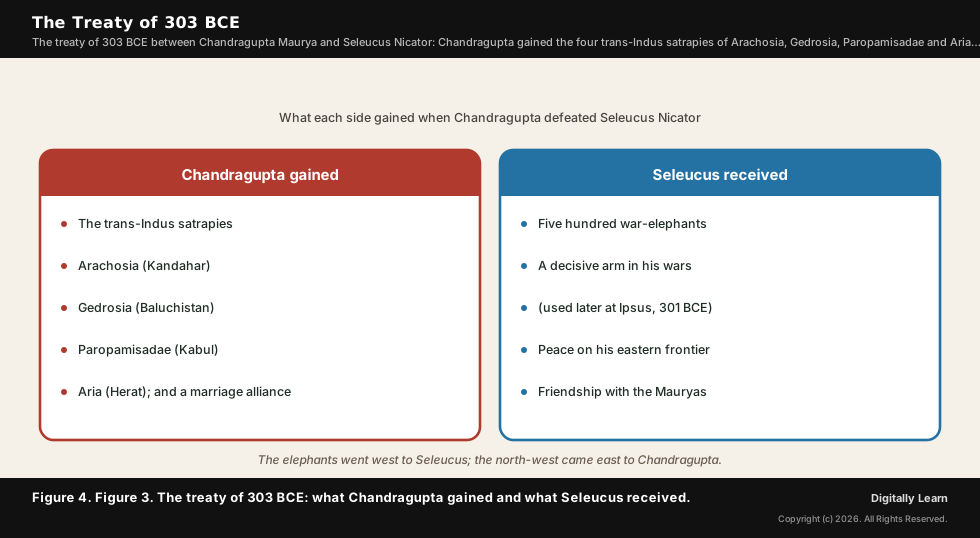
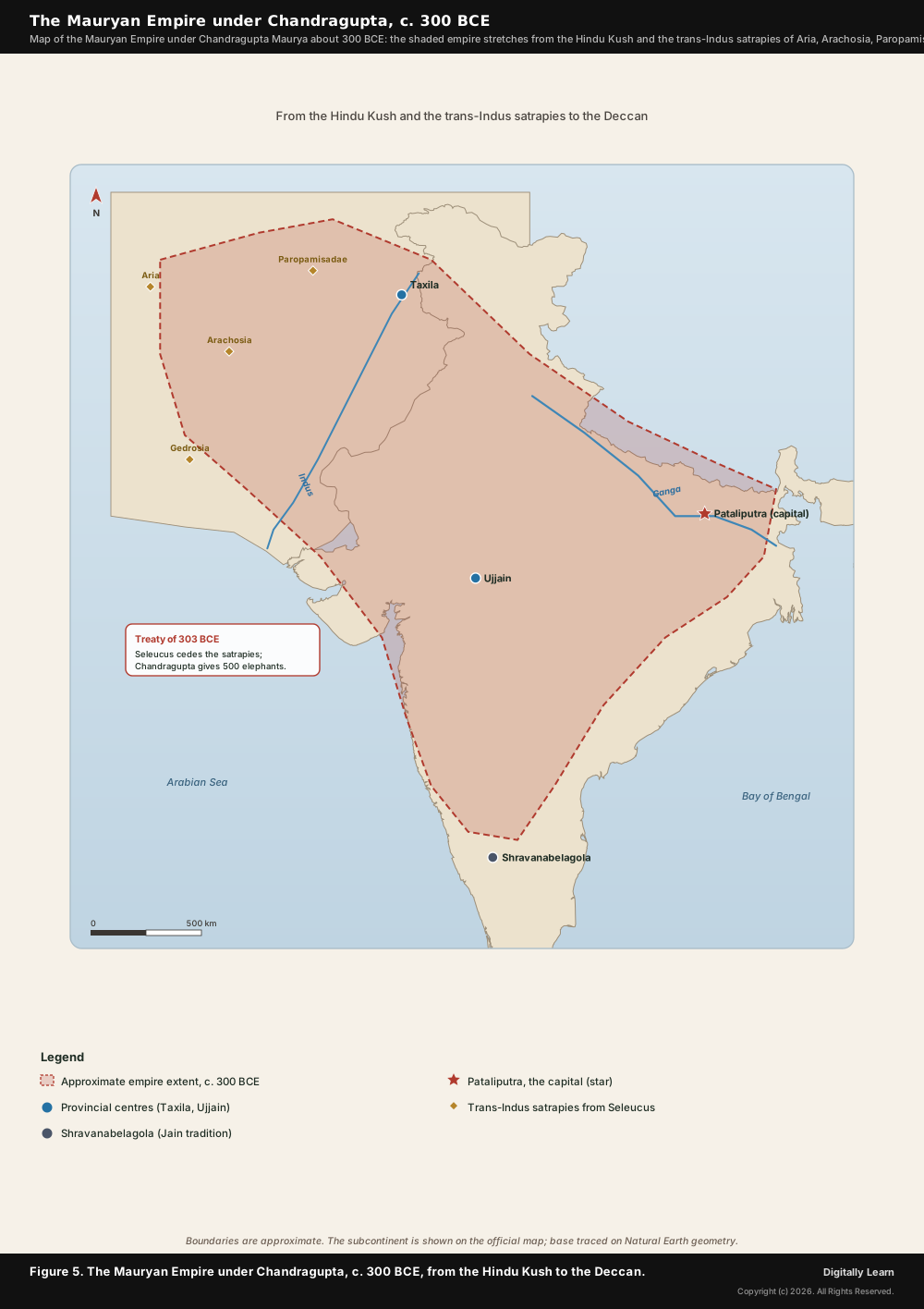
About 305 BCE Seleucus Nicator, one of Alexander's generals who now ruled the eastern Greek world, tried to recover the Indian lands. He was defeated by Chandragupta, and by the treaty of 303 BCE the two made peace. Chandragupta gave Seleucus 500 war elephants, a decisive arm that Seleucus would use in his later wars; the elephants went west, and the north-west came east to Chandragupta.
The Territorial Gains and Megasthenes at the Mauryan Court
Distinguishing the gains: in return for the elephants and peace, Chandragupta won the trans-Indus provinces and a lasting tie with the Greek world.
By the treaty Chandragupta gained the four satrapies beyond the Indus, Arachosia (Kandahar), Gedrosia (Baluchistan), Paropamisadae (Kabul) and Aria (Herat), so that the empire now reached the Hindu Kush; a marriage alliance is also recorded. Seleucus sent the ambassador Megasthenes to the Mauryan court, whose Indica became a famous source for the age, and the Greek form of Chandragupta's name, Sandrokottos, lets historians fix the date of his reign.
| Satrapy | Modern region |
|---|---|
| Arachosia | Around Kandahar (south-east Afghanistan) |
| Gedrosia | Baluchistan (coastal south-west) |
| Paropamisadae | Around Kabul (the Hindu Kush) |
| Aria | Around Herat (western Afghanistan) |
The Extent of the Empire under Chandragupta Maurya
From the Hindu Kush to the Deccan
What is the significance of the extent: by the end of Chandragupta's reign the empire was the largest yet seen in India, and knowing its limits is a frequent map question.
The empire of Chandragupta stretched from the Hindu Kush and the trans-Indus satrapies in the north-west, across the whole Indo-Gangetic plain to Bengal, and south into the Deccan as far as Karnataka. It did not yet include Kalinga, on the east coast, which Ashoka would conquer, nor the far south of the Tamil kingdoms. The map below shows this extent, with the capital at Pataliputra and the satrapies won from Seleucus.
UPSC Relevance and Exam Focus
Where the Rise of the Mauryas Fits in the UPSC-CSE Syllabus
This topic belongs to General Studies Paper I: ancient Indian history and culture, and the rise of the Mauryas under Chandragupta is among the most reliably examined areas of ancient India.
For Prelims, hold the firm facts: the Nanda dynasty was ruling when Alexander invaded; Chandragupta, helped by Chanakya, overthrew the Nandas about 322 BCE; he defeated Seleucus and by the 303 BCE treaty gave 500 elephants and gained the trans-Indus satrapies; and Jain tradition places his death at Shravanabelagola.
For Mains, the rise of the Mauryas shows how statecraft, the army and the strategic base of Magadha combined to produce the first pan-Indian empire, and it can be linked to the wider theme of state formation in early India.
Recurring linked concepts an aspirant should keep in working memory:
- The Nandas: Dhana Nanda ruled Magadha at the time of Alexander’s invasion.
- Chandragupta: Founder of the empire, c. 322 BCE, with Chanakya’s help.
- The Seleucid treaty: 303 BCE; 500 elephants given, trans-Indus satrapies gained.
- Sandrokottos: The Greek name for Chandragupta, fixing the chronology.
- Shravanabelagola: Where Jain tradition places Chandragupta’s death.
A common Prelims trap is to make Chandragupta give the elephants the wrong way. Chandragupta gave Seleucus 500 elephants and received the trans-Indus lands, not the other way round.
Another trap is to place Kalinga or the far south in Chandragupta's empire. Kalinga was conquered later by Ashoka, and the far south was never under the Mauryas.
Previous Year UPSC-CSE Questions
Previous Year UPSC-CSE Questions By the end you will be able to draft model answers for the following UPSC questions. Each question carries a collapsible framework showing how to approach it in the exam.
- UPSC Prelims 2000 GS-IWhich one of the following dynasties was ruling over North India at the time of Alexander's invasion?
How to approach this Prelims question
Approach: Recall which dynasty held Magadha and North India in 326 BCE.
Trap to watch: The Maurya dynasty came just after (c. 322 BCE), founded by overthrowing the Nandas; the Sunga and Kanva are post-Mauryan.
Key facts to recall:
- The Nanda dynasty (Dhana Nanda) ruled at Alexander's invasion (326 BCE).
- Chandragupta overthrew the Nandas about 322 BCE.
Answer signal: Nanda.
Sources and Further Reading
Editorial Disclaimer
This article is for UPSC preparation. The dates of Chandragupta's reign and the boundaries of his empire are given in the conventional ranges used by historians, and the map's limits are approximate.