


Overview
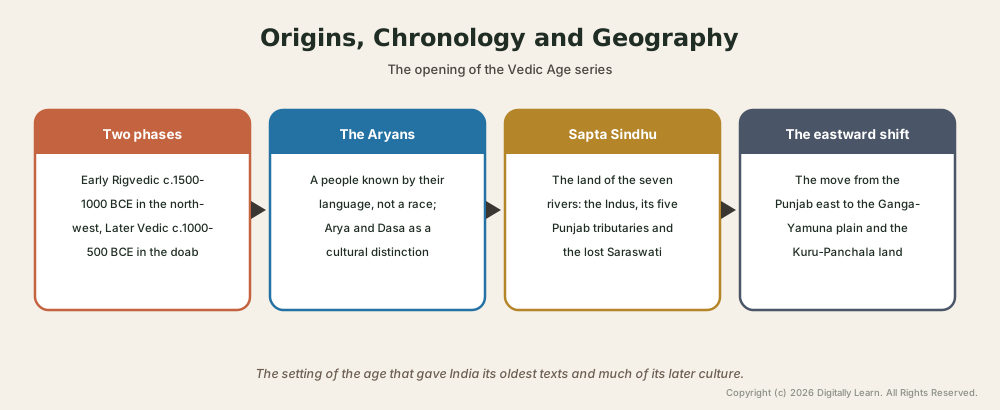
The Vedic Age, lasting roughly from 1500 to 500 BCE, is the period of early Indian history known from the Vedas, the oldest texts of the subcontinent. It opens after the decline of the Indus cities and closes with the rise of the great kingdoms, and historians divide it into two phases: an Early or Rigvedic phase, when the people lived in the north-west in the land of the seven rivers, and a Later Vedic phase, when they moved east into the Ganga-Yamuna plain. The people who composed the hymns called themselves Arya, a term that denotes a speech group rather than a race. This first part sets the stage for the whole age: when it happened, who the Vedic people were, and the land they lived in.
Defining the Vedic Age and Its Two Phases
Dating and Periodisation: Rigvedic and Later Vedic
What is the significance of the periodisation: getting the two phases and their dates clear is the first thing the examiner expects, because almost every other fact about the age hangs on which phase it belongs to.
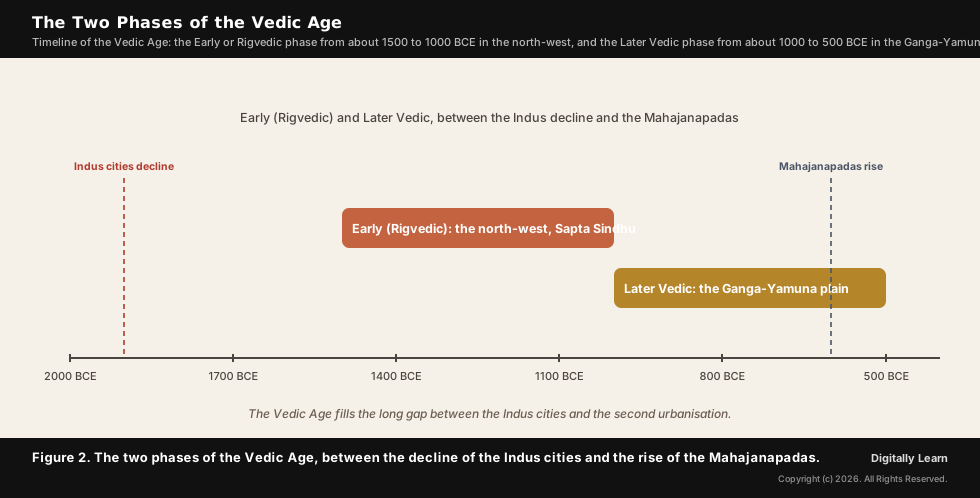
The Vedic Age runs from about 1500 to 500 BCE. The Early Vedic or Rigvedic phase, roughly 1500 to 1000 BCE, is the time of the Rigveda, when the people lived in the north-west. The Later Vedic phase, roughly 1000 to 500 BCE, is known from the later texts, when the centre of life had moved east into the Ganga-Yamuna plain.
Distinguishing its place in time: the age sits in the long gap between two urban worlds. It begins after the Indus cities had declined, around 1900 BCE, and it ends as the Mahajanapadas, the first great kingdoms, were rising around 600 BCE. The Vedic Age is therefore the bridge between the first urbanisation and the second.
| Feature | Early (Rigvedic) | Later Vedic |
|---|---|---|
| Dates | c. 1500 to 1000 BCE | c. 1000 to 500 BCE |
| Home region | The north-west (Sapta Sindhu) | The Ganga-Yamuna plain |
| Main text | The Rigveda | The later Vedic texts |
| Economy | Mainly pastoral, cattle-based | Settled, iron-age agriculture |
| Polity | Tribal, with assemblies | Territorial kingship |
Reconstructing the Age from Texts, Archaeology and Language
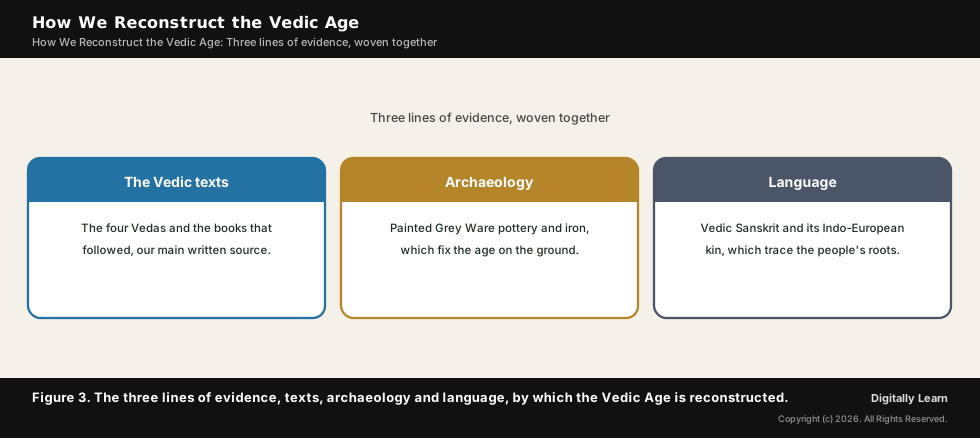
Distinguishing the sources: we know the Vedic Age in a very different way from the Indus civilisation. The Indus is known almost only from its things, because its script cannot be read; the Vedic Age, by contrast, is known mainly from its words, the hymns and the later texts, supported by archaeology and by language.
Three lines of evidence are woven together. The Vedic texts are the main written source, though they were composed to be recited, not as history. Archaeology, above all the Painted Grey Ware pottery and the spread of iron, fixes the later age on the ground. And the study of language, the kinship of Vedic Sanskrit with the wider Indo-European family, helps trace where the people came from.
The Aryan Question and the Origins of the Vedic People
Arya as a Cultural-Linguistic Identity, Not a Race
What is the significance of the term Arya: the single most common error about the Vedic people is to treat Arya as the name of a race, and the examiner tests this directly, so the precise meaning matters.
The people who composed the hymns called themselves Arya and called their opponents Dasa or Dasyu, who did not perform their sacrifices and probably spoke other languages. The distinction was thus cultural and linguistic, not racial. In the language of the examination, the term Aryan denotes a speech group, a people known by their language, and the old colonial idea of an Aryan race has been firmly rejected.
The Invasion, Migration and Indigenous Debates
Distinguishing the debate: where the Indo-Aryan speakers came from is a long and contested question, treated in full in the part of the Indus series on the decline and the Aryan question.
The essentials are these. The old theory of a violent Aryan invasion that destroyed the Indus cities has been rejected. The mainstream view is a gradual migration of Indo-Aryan-speaking pastoralists from the Central Asian steppe, arriving after the Indus decline, while a minority hold the Out-of-India view that they arose within the subcontinent.
This is a genuinely contested and sensitive field, and the responsible course, the one the examiner expects, is to set out the rival theories fairly and take no side. For the present series it is enough to note that the Vedic Age follows the Indus decline and is separate from it in both time and cause.
Sapta Sindhu: The Land of the Seven Rivers
The Seven Rivers of the Rigveda and Their Modern Names
What is the significance of the geography: the Rigveda is full of rivers, and the examiner often asks which river is named most or where the Vedic people lived, so the geography of Sapta Sindhu is core knowledge.
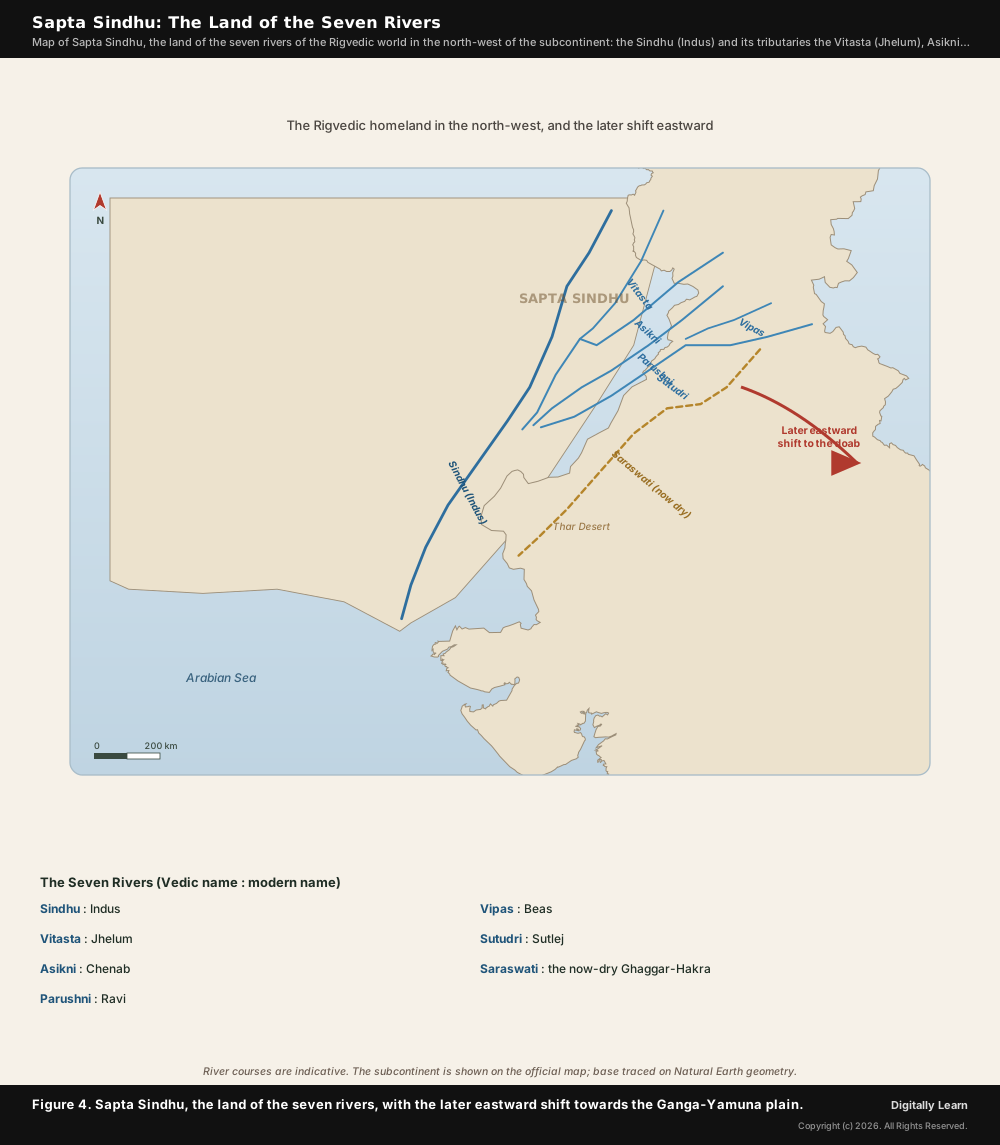
The Rigvedic homeland was Sapta Sindhu, the land of the seven rivers, in the north-west of the subcontinent. The seven are the Sindhu (the Indus) and its tributaries the Vitasta (Jhelum), Asikni (Chenab), Parushni (Ravi), Vipas (Beas) and Sutudri (Sutlej), together with the Saraswati. The Indus, the Sindhu, is the river most often named in the Rigveda; the Ganga and the Yamuna are each mentioned only once, a sign of how far west the early home lay.
| Vedic name | Modern name |
|---|---|
| Sindhu | Indus |
| Vitasta | Jhelum |
| Asikni | Chenab |
| Parushni | Ravi |
| Vipas | Beas |
| Sutudri | Sutlej |
| Saraswati | The now-dry Ghaggar-Hakra |
The Saraswati and the Ghaggar-Hakra Question
Distinguishing the Saraswati: no river is praised more highly in the Rigveda than the Saraswati, hailed as the greatest and most sacred. Many scholars identify it with the now-dry bed of the Ghaggar-Hakra, along which so many ancient settlements lay.
As the part of the Indus series on the decline explains, study of the channel suggests it had become a seasonal, monsoon-fed river rather than a mighty perennial one by the time the cities fell, and it later dried further. The Saraswati therefore links the Vedic texts, the Harappan sites and the changing climate of the north-west into a single story, which is why it draws so much scholarly and popular attention.
The Eastward Shift from the Punjab to the Ganga Plain
From Sapta Sindhu to the Kuru-Panchala Heartland
What is the significance of the eastward shift: the move from the north-west to the Ganga-Yamuna plain is the single biggest change between the two phases, and it underlies the differences in polity, society and economy that the rest of this series traces.
In the Later Vedic phase the centre of Vedic life moved east, from the Punjab into the Ganga-Yamuna doab and the land of the Kuru and Panchala peoples. The later texts were composed in these eastern lands, and the Painted Grey Ware sites of the doab mark the new home on the ground.
The shift was made possible by iron, which let the people clear the heavier forests and farm the richer soils of the plain, a story told in full in the parts on economy and archaeology.
UPSC Relevance and Exam Focus
Where the Vedic Age Origins and Geography Fit in the UPSC-CSE Syllabus
This topic belongs to General Studies Paper I: ancient Indian history and culture, and it is among the most reliably examined areas of ancient India in the Prelims.
For Prelims, hold the firm facts: the Vedic Age runs about 1500 to 500 BCE in two phases; the term Aryan denotes a speech group, not a race; the Rigvedic home was Sapta Sindhu; the Indus is the river most often named in the Rigveda, while the Saraswati is the most praised.
For Mains, the geography and the eastward shift set up the larger themes of the age, the change from a pastoral, tribal society in the north-west to a settled, kingly one in the plain, which later parts of this series develop.
Recurring linked concepts an aspirant should keep in working memory:
- The two phases: Rigvedic c. 1500 to 1000 BCE; Later Vedic c. 1000 to 500 BCE.
- The term Aryan: A speech group, not a race; Arya versus Dasa.
- Sapta Sindhu: The Indus and its tributaries plus the Saraswati.
- The rivers: The Indus most often named; the Saraswati most praised.
- The eastward shift: From the Punjab to the Ganga-Yamuna doab.
A common Prelims trap is to treat Aryan as a race. It denotes a speech group; the colonial racial reading is rejected.
Another trap is to confuse the most-named river with the most-praised: the Indus is named most often, but the Saraswati is the most exalted.
Previous Year UPSC-CSE Questions
Previous Year UPSC-CSE Questions By the end you will be able to draft model answers for the following UPSC questions. Each question carries a collapsible framework showing how to approach it in the exam.
- UPSC Prelims 1996 GS-IThe river most mentioned in early Vedic literature is
How to approach this Prelims question
Approach: Recall which river is named most often in the Rigveda.
Trap to watch: The Saraswati is the most praised river, but the Sindhu (Indus) is the most frequently named; the Ganga appears only once.
Key facts to recall:
- The Sindhu (Indus) is the river most often named in the Rigveda.
- The Ganga and Yamuna are each named only once.
Answer signal: Sindhu.
Sources and Further Reading
Editorial Disclaimer
This article is for UPSC preparation. The origins of the Indo-Aryans are an area of active scholarly debate, and the dates given here are the conventional ranges. Verify specific details before relying on them.