


Overview
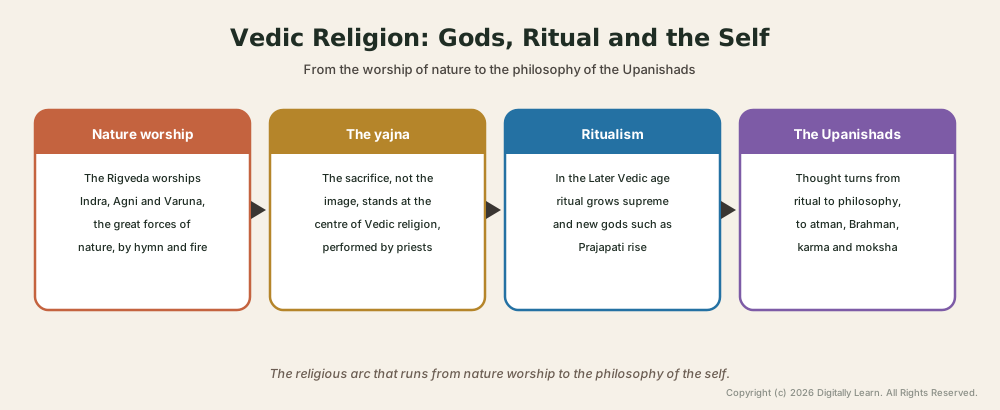
Vedic religion moved through three great phases, and understanding that movement is central to ancient Indian history. In the Rigvedic age it was the worship of nature: the great forces of the world, the storm, the fire, the sun and the sky, were praised as gods such as Indra, Agni and Varuna, and the offering, the yajna, not the image, stood at the centre of worship. In the Later Vedic age the sacrifice grew long and costly and the priest gained immense power, while new gods rose to prominence. Then the Upanishads turned away from ritual towards philosophy, asking after the self and the absolute. This part traces that arc, from the nature worship of the Rigveda to the philosophy of the Upanishads.
The Rigvedic Pantheon: Indra, Agni, Varuna and the Forces of Nature
The Major Deities and the Worship of Nature
What is the significance of the Rigvedic pantheon: the religion of the early Vedic people was the worship of nature, and recognising this is the single fact the examiner tests most often about Vedic religion.
The Rigvedic people personified the great forces of nature as gods and praised them in hymns. The system is best described as a naturalistic polytheism with a henotheistic character, for the worshipper, while accepting many gods, often praised whichever god he addressed as if that one were supreme.
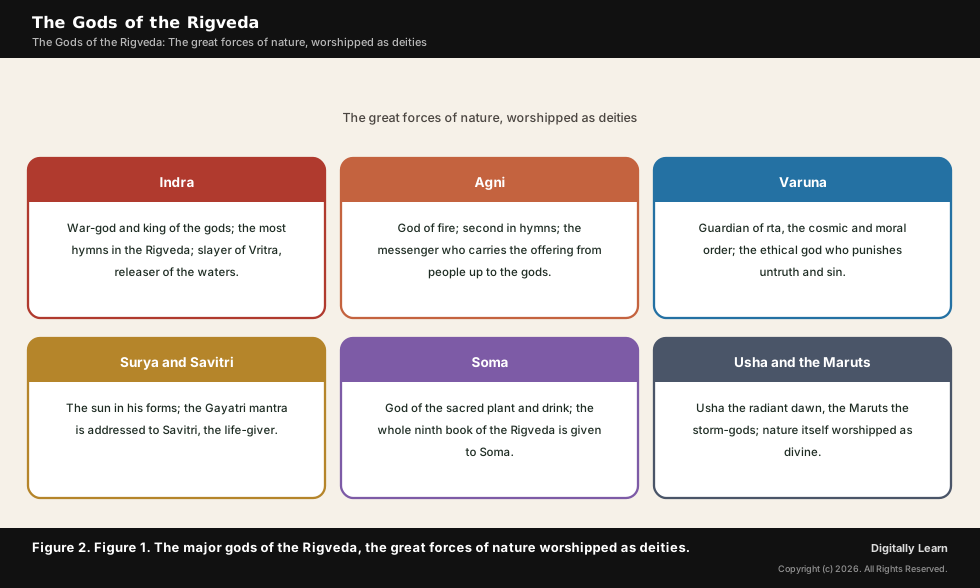
Indra, the war-god and king of the gods, receives the most hymns in the Rigveda; he is the slayer of the demon Vritra and the releaser of the waters. Agni, the fire-god, comes second and is the messenger who carries the offering from people up to the gods, present in every home and at every sacrifice.
Varuna is the guardian of rta, the cosmic and moral order, the ethical god who sees all and punishes untruth. Around them stand Surya and Savitri the sun, Soma of the sacred drink, Usha the dawn and the storm-gods the Maruts; the tradition counts thirty-three gods, a traditional figure rather than a literal census.
Rta and Satya: Cosmic Order and Truth
Distinguishing the moral idea: behind the many gods the Rigveda holds a single ordering principle, and it gives early Vedic religion an ethical depth that bare nature worship would lack.
Rta is the cosmic order that keeps the sun on its path, the seasons in their round and right conduct in its place; Varuna is its guardian. Its human counterpart is satya, truth, the keeping of one's word and the moral law. The Rigvedic prayer was largely for worldly goods, for cattle, sons, victory and long life, and there were no temples and no images, the worship being through the spoken hymn and the fire.
The Yajna and the Sacrificial System
From Simple Offerings to Elaborate Sacrifice
What is the significance of the yajna: the sacrifice, not the image or the temple, was the central act of Vedic religion, and the way it grew over time tells the whole story of the religion's change.
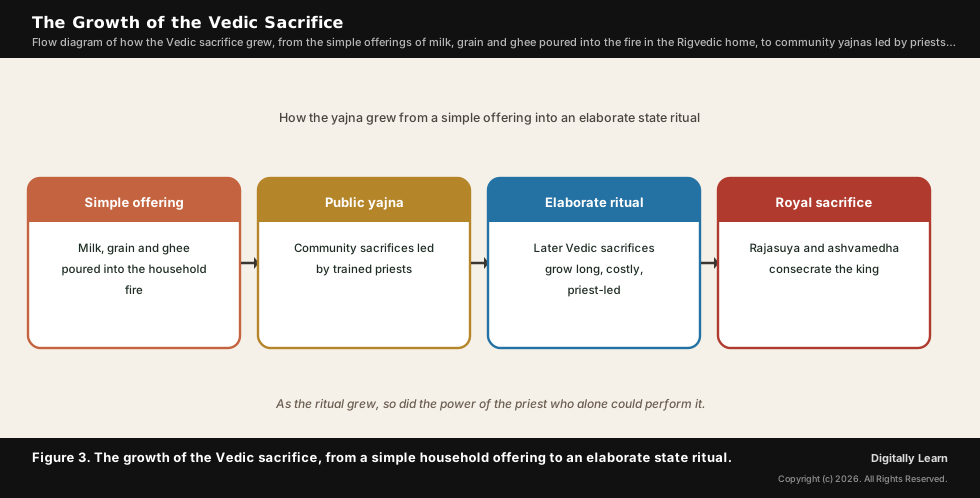
In the Rigvedic age the yajna was simple: milk, grain, ghee and the soma juice were poured into the sacred fire, and Agni carried the offering to the gods, who were asked in return for cattle, rain and sons. The sacrifice could be performed in the home with only a few priests.
In the Later Vedic age the sacrifice grew elaborate, long and costly, hedged about with exact rules whose smallest error could ruin it. The ritual was now thought to compel the gods rather than merely please them, and this gave enormous power to the priest who alone knew how to perform it correctly.
The Priestly Hierarchy and the Four Priests
Distinguishing the priesthood: the great Later Vedic sacrifice needed several kinds of priest, each tied to one of the Vedas, a division the examiner sometimes tests directly.
| Priest | Veda | Role in the sacrifice |
|---|---|---|
| Hotri | Rigveda | Recites the verses of invitation that invoke the gods |
| Adhvaryu | Yajurveda | Performs the manual acts and recites the formulae |
| Udgatri | Samaveda | Chants the melodies that accompany the offering |
| Brahman | Atharvaveda | Oversees the whole rite and corrects any error |
The great royal sacrifices belong to this age: the rajasuya consecrated the king, the ashvamedha or horse sacrifice proclaimed his supremacy, and the vajapeya, with its chariot race, renewed his strength. These rituals made the priesthood indispensable to kingship and bound the two great upper varnas together.
The Later Vedic Shift: Ritualism and the Rise of Prajapati, Vishnu and Rudra
The Supremacy of Ritual and the Power of the Priest
What is the significance of the Later Vedic shift: in this age ritual itself became the supreme thing, more important than the god to whom it was offered, and this is the change the Upanishads would later react against.
The Brahmana texts, composed by the priests, set out in minute detail how each rite was to be performed and taught that the correct sacrifice could itself compel the cosmic order. Religion thus became a matter of exact ritual performance in the hands of a powerful priesthood, and the simple, joyful nature worship of the Rigveda receded into the background.
New Gods: Prajapati, Vishnu and Rudra
Distinguishing the new pantheon: the gods themselves changed in rank, and the shift points forward to the great gods of later Hinduism, which makes it a useful examination link.
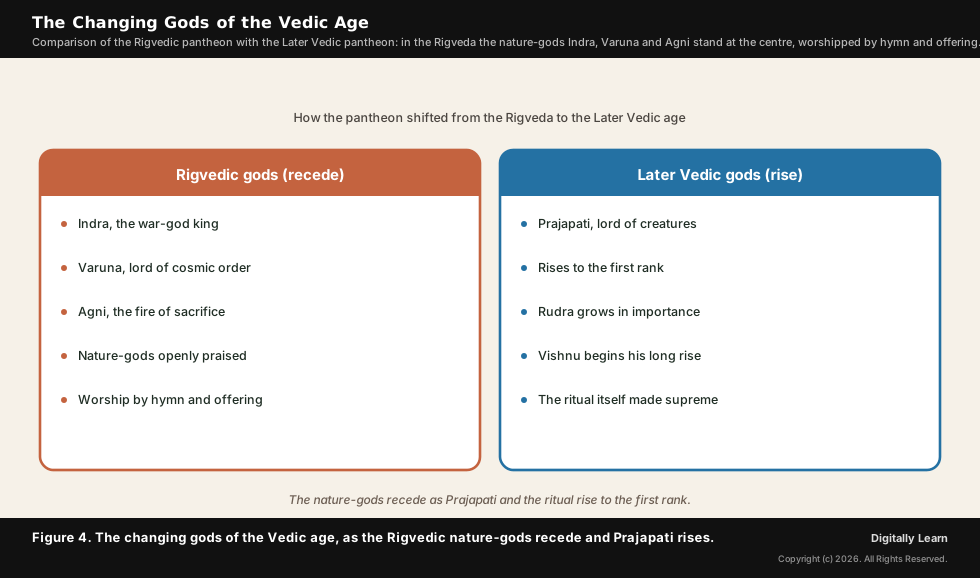
The older nature-gods, Indra and Varuna, receded in importance, while Prajapati, the lord of creatures and the creator, rose to the first rank in the Brahmanas. Rudra, who would become Shiva, and Vishnu, a minor Rigvedic god, both grew in importance, beginning the long rise that would make them the great gods of the Puranic age. The full eclipse of the old gods, however, belongs to that later age, not to the Vedic period itself.
The Upanishadic Turn: From Ritual to Philosophy
Atman and Brahman: The Great Identity
What is the significance of the Upanishadic turn: the Upanishads mark a profound shift from ritual to philosophy, and they are the fountainhead of Indian metaphysics, which makes them a favourite of the examiner.
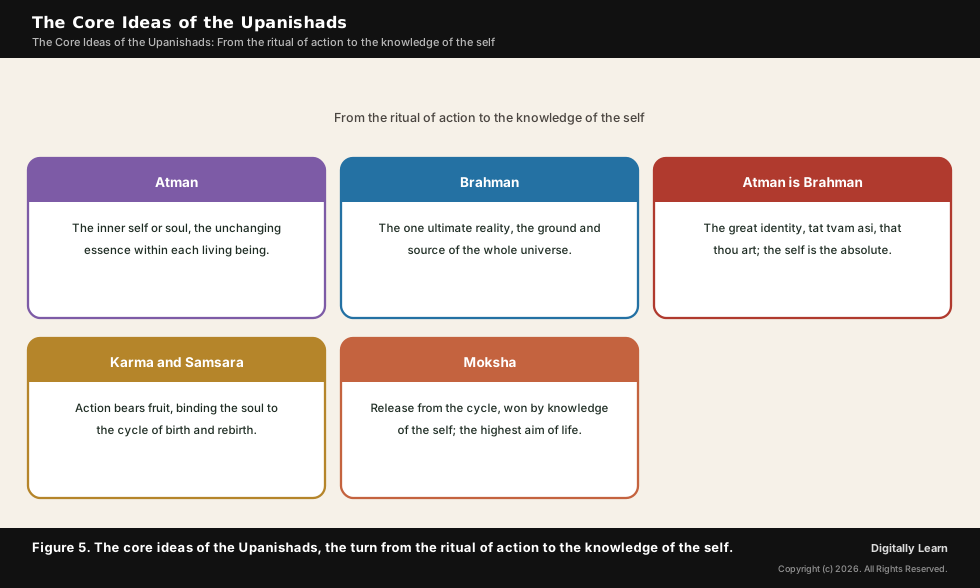
The Upanishads, the closing portion of the Vedic literature, turned away from costly sacrifice towards knowledge. Their central teaching is the identity of the atman, the inner self of the individual, with Brahman, the one ultimate reality behind the whole universe. The self, rightly understood, is the absolute, a truth caught in the great sayings tat tvam asi, that thou art, and aham brahmasmi, I am Brahman.
Karma, Samsara and Moksha
Distinguishing the Upanishadic doctrines: alongside the great identity the Upanishads worked out the linked ideas of karma, rebirth and release that shape all later Indian thought.
Karma holds that every action bears a fruit that the doer must one day reap; this fruit binds the soul to samsara, the unending cycle of birth, death and rebirth. The goal is moksha, liberation from that cycle, won not by sacrifice but by the knowledge that the atman is Brahman. Religion thus moved from the priest's ritual to the seeker's inner realisation, the deepest legacy of the Vedic age.
The living legacy: much of this religious world survives into the present. The fire-sacrifice lives on in the modern havan, the Gayatri mantra is still recited, Rudra and Vishnu grew into the great gods Shiva and Vishnu of living Hinduism, and the ideas of atman, karma and moksha remain the bedrock of Indian philosophy.
UPSC Relevance and Exam Focus
Where Vedic Religion Fits in the UPSC-CSE Syllabus
This topic belongs to General Studies Paper I: ancient Indian history and culture, and the religion of the Vedic age is among the most reliably examined areas of ancient India in the Prelims.
For Prelims, hold the firm facts: the early Vedic religion was the worship of nature with the yajna at its centre, not image worship or bhakti; Indra and Agni receive the most hymns; rta is the cosmic order guarded by Varuna; the four priests are tied to the four Vedas; and Prajapati rises in the Later Vedic age.
For Mains, the arc from nature worship through ritualism to the philosophy of the Upanishads can be linked to the wider Rig Vedic to Later Vedic transition and to the later rise of Hinduism, Buddhism and Jainism, all of which reacted against Vedic ritualism.
Recurring linked concepts an aspirant should keep in working memory:
- Nature worship: Indra, Agni and Varuna; the worship of natural forces.
- Rta and satya: The cosmic and moral order, guarded by Varuna.
- The yajna: The sacrifice, central act of worship; no temples or images.
- The four priests: Hotri, Adhvaryu, Udgatri and Brahman, by Veda.
- The Upanishads: Atman is Brahman; karma, samsara and moksha.
A common Prelims trap is to call early Vedic religion bhakti or image worship. It was the worship of nature through the yajna; bhakti and image worship belong to a much later age.
Another trap is to say the old gods were wholly replaced in the Later Vedic age. Indra and Varuna receded as Prajapati rose, but the full eclipse of the old gods belongs to the later Puranic age.
Previous Year UPSC-CSE Questions
Previous Year UPSC-CSE Questions By the end you will be able to draft model answers for the following UPSC questions. Each question carries a collapsible framework showing how to approach it in the exam.
- UPSC Prelims 2012 GS-IThe religion of early Vedic Aryans was primarily of
How to approach this Prelims question
Approach: Recall the two defining features of early Vedic religion and reject the later features.
Trap to watch: Bhakti and image worship are later developments; the early Vedic religion combined the worship of nature with the yajna.
Key facts to recall:
- Early Vedic religion was the worship of nature (Indra, Agni, Varuna).
- The yajna, the sacrifice, was its central act; there were no temples or images.
- Bhakti and image worship belong to a much later age.
Answer signal: Worship of nature, and Yajnas.
- UPSC Mains 2023 GS-IWhat are the main features of Vedic society and religion? Do you think some of the features are still prevailing in Indian society?
How to structure the answer in the exam
Introduction: Open by defining the two phases of Vedic religion, from Rigvedic nature worship to the Upanishadic philosophy.
Body (sub-themes to develop):
- Religion: nature worship of Indra, Agni and Varuna; rta and satya; the yajna as the central act with no temples or images; Later Vedic ritualism and the powerful priesthood; the Upanishadic turn to atman, Brahman, karma, samsara and moksha.
- Society (summarised, full treatment in Part 4): the fourfold varna order, the four ashramas, the joint family and the changing position of women.
- Survival: the fire-sacrifice in the modern havan, the Gayatri mantra, the rise of Rudra and Vishnu into Shiva and Vishnu of living Hinduism, the samskaras, and atman, karma and moksha as the bedrock of Indian philosophy; the varna idea persists in caste.
Conclusion: Conclude that while ritual forms have changed, the core religious ideas and the varna framework of the Vedic age still shape Indian society and thought.
Sources and Further Reading
Editorial Disclaimer
This article is for UPSC preparation. The names and roles of the Vedic gods follow the standard scholarly account, and some attributions are read differently by different scholars.