


Overview
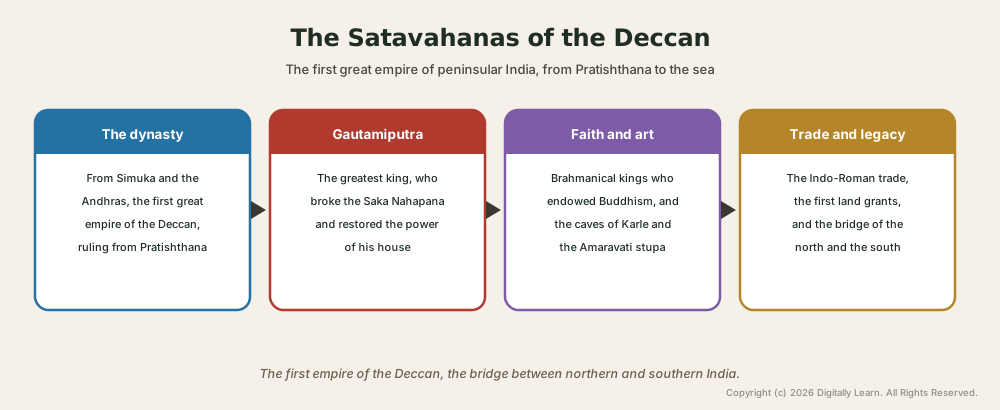
The Satavahanas, called the Andhras in the Puranas, were the first great empire of the Deccan, ruling the lands between the Mauryas and the far south for some four centuries from the late second century BCE. Their founder was Simuka, and they ruled from Pratishthana, the modern Paithan on the Godavari. Their greatest king, Gautamiputra Satakarni, broke the power of the Saka Western Kshatrapas. Brahmanical kings who performed the Vedic sacrifices, they were also great patrons of Buddhism, and their age gave India the rock-cut caves of the western Deccan and the stupas of the Krishna valley. This part covers the rise of the Satavahanas, Gautamiputra and the later kings, their administration and society, their religion and art, and their trade and legacy.
The Rise of the Satavahanas in the Deccan
From the Andhras to the Satavahana Empire
What is the significance of the Satavahanas: they were the first great empire to rise in the Deccan, the bridge of land between the north and the far south of India.
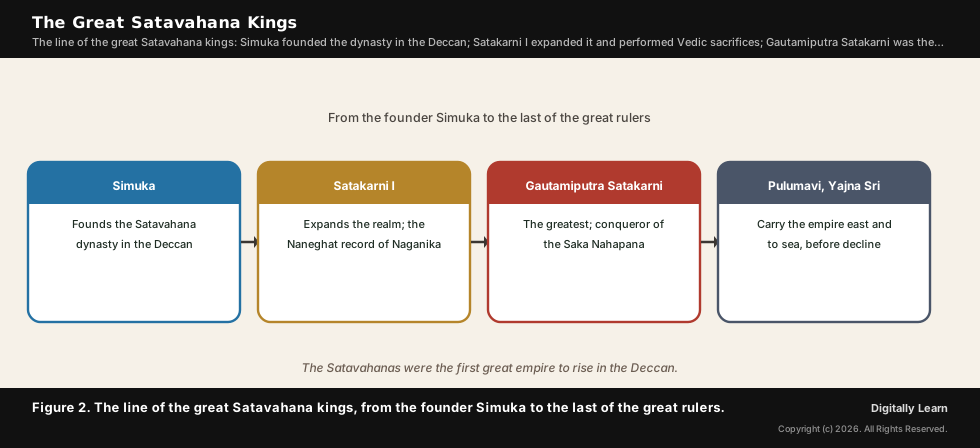
The Satavahanas, whom the Puranas call the Andhras, rose in the Deccan as the Mauryan order fell away. Their founder was Simuka, and a Puranic tradition credits the dynasty with ending the Kanvas. Their dates are debated, for the Puranic lists are long and uncertain, but their power ran for four centuries from the late second century BCE. The early king Satakarni I widened the realm and performed the Vedic sacrifices; his queen Naganika left the record at Naneghat.
Pratishthana and the Extent of the Deccan Empire
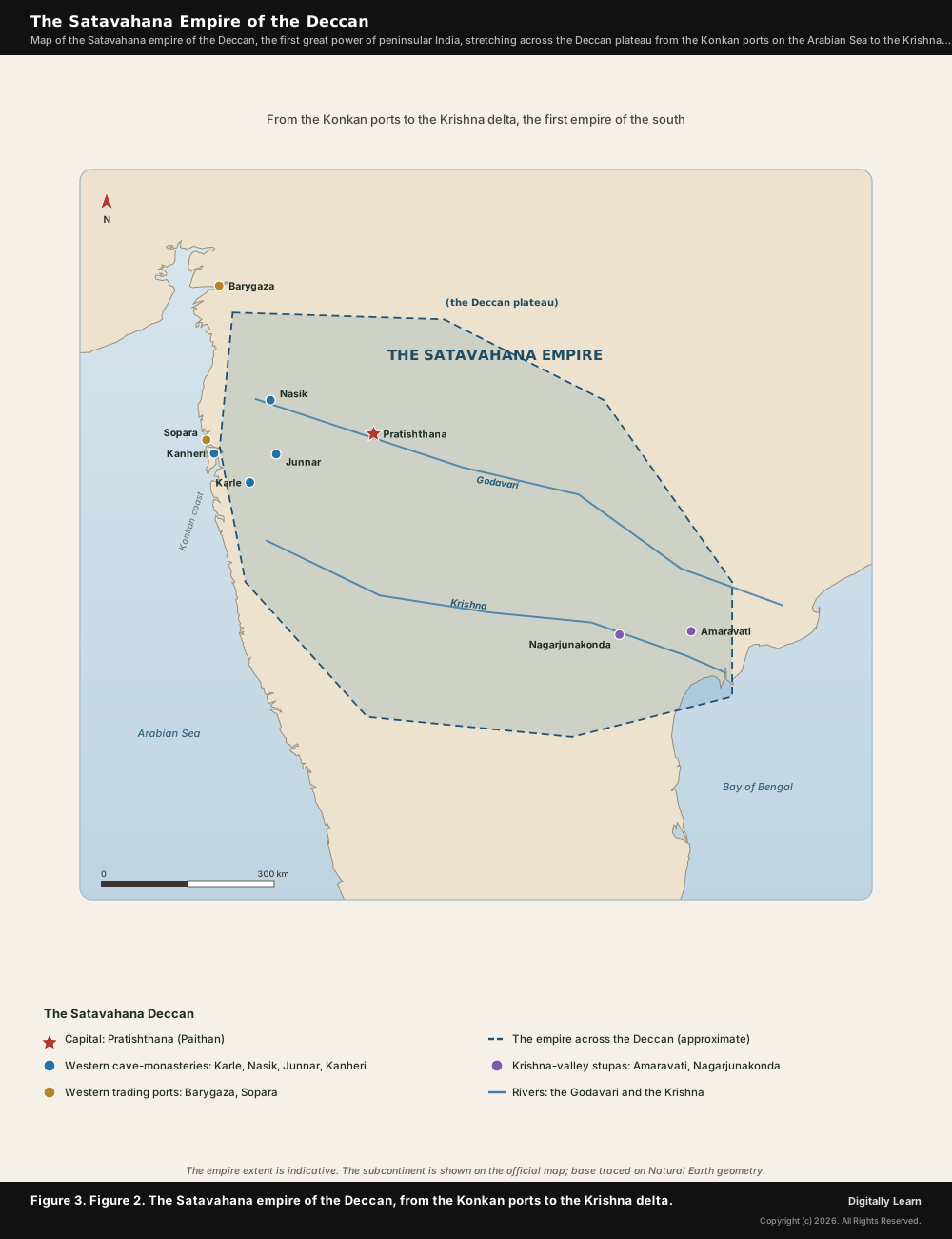
Distinguishing the extent: the Satavahana power reached across the Deccan from the western sea to the eastern, a realm built on the plateau.
The Satavahanas ruled from Pratishthana, the modern Paithan on the Godavari, in the western Deccan. At its height the empire spread across the plateau, from the Konkan ports on the Arabian Sea to the Krishna delta on the Bay of Bengal, holding the rich land between the Godavari and the Krishna. It thus joined the western coast to the Buddhist country of the east, and stood as the first empire of peninsular India.
Gautamiputra Satakarni and the Height of Satavahana Power
Gautamiputra Satakarni's Defeat of the Saka Nahapana
What is the significance of Gautamiputra: he was the greatest of the Satavahanas, the king who broke the foreign Saka power that had pressed upon the Deccan.
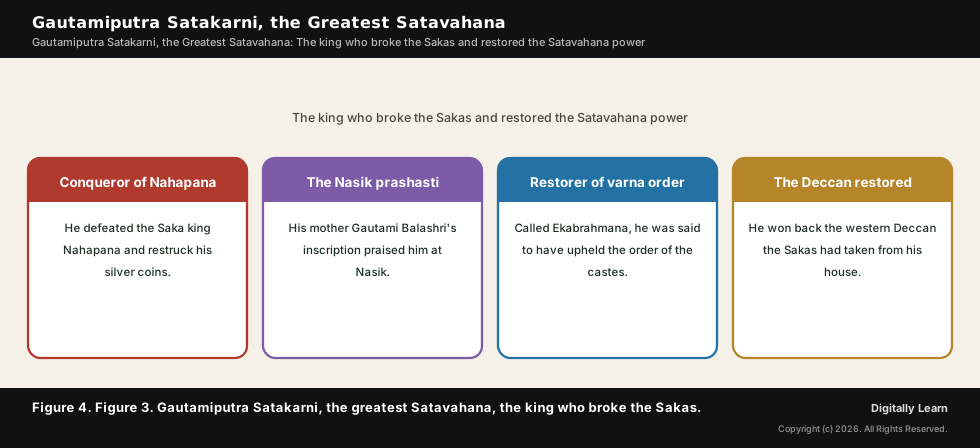
The greatest of the Satavahanas, ruling early in the second century CE, won back the western Deccan that the Sakas had seized. He defeated the Western Kshatrapa king Nahapana, of the Kshaharata house, and so completely that a great hoard of Nahapana's silver coins was found at Jogalthembi restruck with the Satavahana emblem. Gautamiputra Satakarni thus reversed the loss his house had suffered and restored the empire to its full strength.
The Nasik Prashasti of Gautami Balashri
Distinguishing the record: our knowledge of Gautamiputra comes above all from a single famous inscription cut into the rock at Nasik.
The Nasik prashasti, a long inscription set up by Gautamiputra's mother, Gautami Balashri, praises the king in glowing terms. It calls him the Ekabrahmana, the unique or peerless Brahmana, the destroyer of the Shakas, Yavanas and Pahlavas, and the king who stopped the mixing of the four varnas and so upheld the social order. The record is a chief source both for his conquests and for the high Brahmanical ideal the dynasty professed.
Vashishthiputra Pulumavi, Rudradaman and the Later Kings
Distinguishing the later kings: after Gautamiputra the empire turned east, even as the old struggle with the Sakas went on.
Gautamiputra's son, Vashishthiputra Pulumavi, carried the Satavahana power eastward into the Andhra country of the lower Krishna, where Buddhism flourished. In his time the Saka pressure returned: the great Western Kshatrapa Rudradaman defeated the Satavahanas twice, as his Junagadh inscription records, yet spared the king, for the two houses were joined by a marriage. The last of the great kings was Yajna Sri Satakarni, in whose reign the Deccan looked to the sea, as his ship-coins show.
| King | Relation | Chief achievement |
|---|---|---|
| Simuka | The founder | Established the Satavahana dynasty in the Deccan. |
| Satakarni I | An early king | Widened the realm; Vedic sacrifices; the Naneghat record of his queen Naganika. |
| Gautamiputra Satakarni | Son of Gautami Balashri | The greatest king; defeated the Saka Nahapana and restruck his coins. |
| Vashishthiputra Pulumavi | Son of Gautamiputra | Extended the empire east into Andhra; defeated by Rudradaman. |
| Yajna Sri Satakarni | The last great king | The ship-coins and the high age of the Indo-Roman trade. |
Administration, Society and the First Land Grants
The Metronymics: Kings Named after Their Mothers
What is the significance of the names: the Satavahana kings bore a most unusual kind of name, taken from the mother rather than the father.
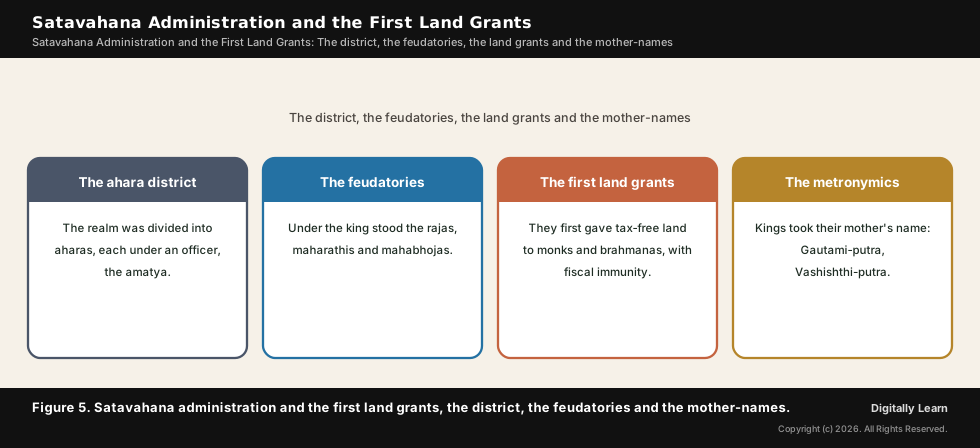
The kings styled themselves by metronymics, names formed from the mother's family: Gautami-putra means the son of Gautami, and Vashishthi-putra the son of Vashishthi. The custom shows the high standing of royal women, for queens such as Naganika and Gautami Balashri set up inscriptions in their own name. Succession itself, however, passed from father to son, so the metronymic honoured the mother but was not a rule of matrilineal descent.
The Ahara District, the Feudatories and the First Land Grants
Distinguishing the administration: the Satavahanas governed through districts and feudatories, and they began a practice that would shape Indian history for a thousand years.
The empire was divided into districts called aharas, each under an officer, the amatya, while below the king stood feudatory chiefs, the rajas, maharathis and mahabhojas. The Satavahanas were among the first rulers to make land grants, gifts of tax-free villages to Buddhist monks and brahmanas, often with a promise that royal officers would not enter them. This grant of land with fiscal and administrative immunity was the seed from which the later land-based order of medieval India would grow.
Religion, Language and the Cave-Architecture of the Deccan
Brahmanical Revival and the Patronage of Buddhism
What is the significance of their religion: the Satavahanas held to the old Brahmanical faith and yet were among the greatest patrons of Buddhism, both at once.
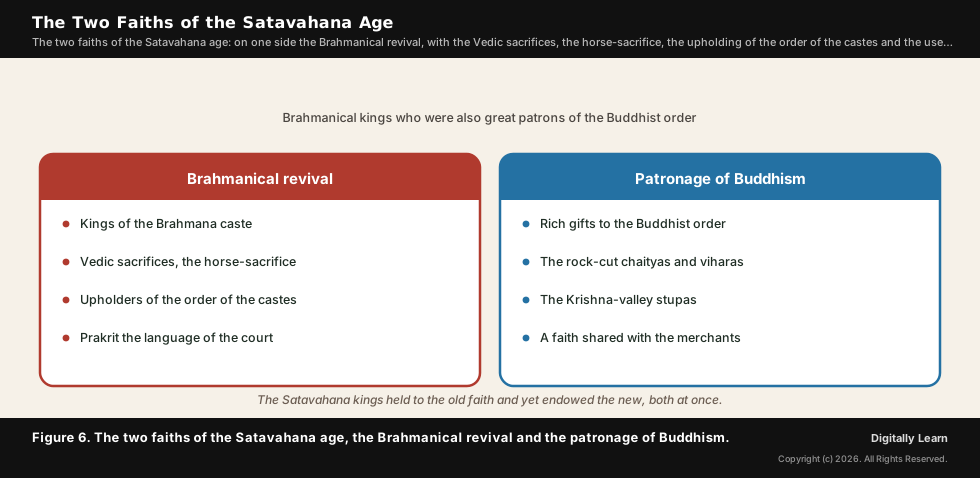
The kings were Brahmanas who performed the great Vedic sacrifices, the ashvamedha or horse-sacrifice and the rajasuya, and the Nasik prashasti makes much of their care for the order of the castes. Yet the same kings, and still more the merchants and the queens of their realm, gave lavishly to the Buddhist order, endowing the cave-monasteries and the stupas. The official language of their inscriptions was not Sanskrit but Prakrit, written in the Brahmi script.
The Western Deccan Caves: Karle, Nasik, Bhaja and Kanheri
Distinguishing the caves: the most lasting monument of the Satavahana age is the great series of rock-cut caves of the western Deccan.
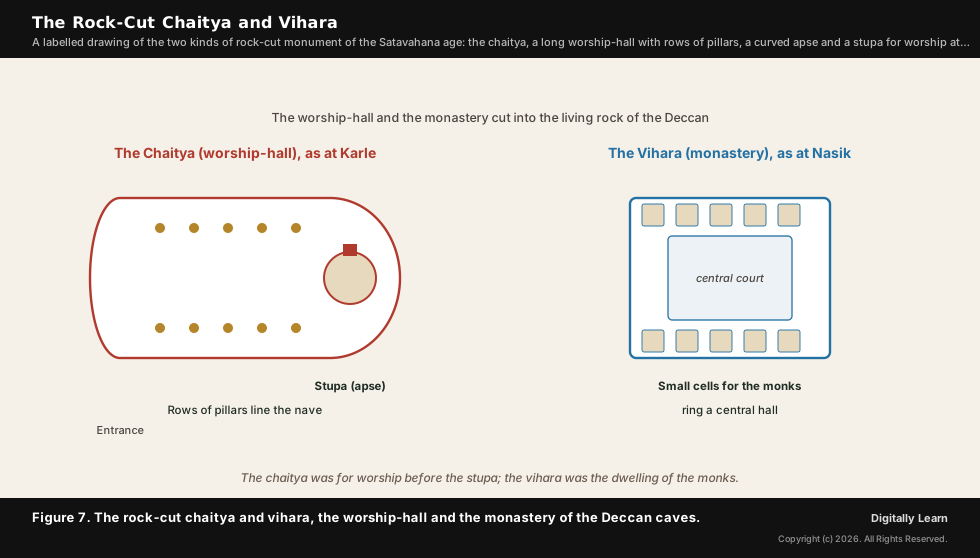
Along the Western Ghats the monks and their patrons cut monasteries into the living rock. These were of two kinds: the chaitya, a long pillared worship-hall with a stupa at its curved end, and the vihara, a monastery of small cells around a court. The grandest is the chaitya at Karle; others stand at Nasik, Bhaja, Junnar and Kanheri. At Naneghat and Nasik the dynasty also left its inscriptions, so the caves are at once art, religion and history.
The Amaravati Stupa and the Buddhist Centres of the Krishna Valley
Distinguishing the eastern centres: in the east of the empire, in the Andhra country of the lower Krishna, rose a second and a still greater school of Buddhist art.
In the valley of the Krishna river, in the Andhra country, lay the great Buddhist centres of the Satavahana age. Chief of them was Amaravati, where a vast stupa was raised and clothed in white marble; near it stood Dhanyakataka (Dharanikota), a city that flourished as a centre of the Mahasanghika school, and later Nagarjunakonda. The Amaravati stupa, in the modern Andhra Pradesh, gave its name to a whole school of sculpture, whose finer story belongs to the next part.
| Site | Region | What it was |
|---|---|---|
| Karle | Western Deccan (Maharashtra) | The grandest rock-cut chaitya, or worship-hall. |
| Nasik | Western Deccan (Maharashtra) | Viharas and the famous Nasik prashasti of Gautami Balashri. |
| Bhaja, Junnar, Kanheri | Western Deccan (Maharashtra) | Early chaityas and viharas of the Western Ghats. |
| Amaravati | Lower Krishna (Andhra Pradesh) | The great marble stupa and the Amaravati school of art. |
| Dhanyakataka, Nagarjunakonda | Lower Krishna (Andhra Pradesh) | Buddhist cities and stupas of the Mahasanghikas. |
Trade, Coinage and the Indo-Roman Commerce of the Deccan
The Western Ports and the Indo-Roman Trade
What is the significance of the trade: the Satavahana Deccan grew rich on a brisk sea trade with the Roman world.
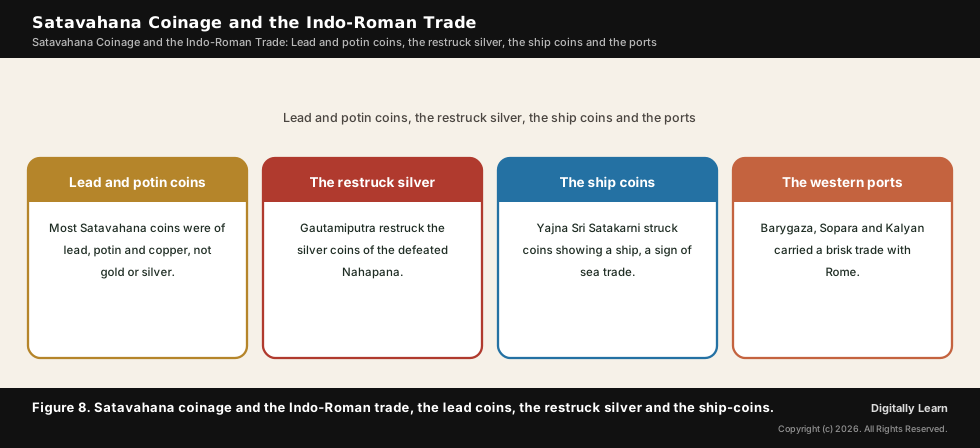
The western coast held the great ports of the age, Barygaza, the modern Bharuch, with Sopara and Kalyan, from which ships carried Indian goods to the markets of Rome. The Greek mariner's guide, the Periplus of the Erythraean Sea, describes this trade, in which India sent out cotton, spices and precious stones and took in Roman gold. The merchant class that grew rich on this commerce was the great patron of the Buddhist caves.
Satavahana Coinage: Lead, Potin and the Ship-Coins
Distinguishing the coinage: the coins of the Satavahanas, humble in metal but rich in meaning, mirror both their wars and their trade.
Unlike the gold-coining Kushanas of the north, the Satavahanas struck mostly in lead, potin and copper, with some silver, much of it the restruck money of the defeated Nahapana. The most telling of all are the ship-coins of Yajna Sri Satakarni, which show a two-masted vessel: a plain sign that the Deccan now looked to the sea and to the Indo-Roman trade for its wealth.
The Decline of the Satavahanas and Their Place in History
The Break-up of the First Deccan Empire
Distinguishing the decline: after the last great king the empire broke into the smaller powers that would rule the Deccan after it.
After Yajna Sri Satakarni, in the early third century CE, the Satavahana empire weakened and broke up. Its place was taken by a cluster of successor powers: the Ikshvakus in the Krishna valley, who carried on the Buddhist building at Nagarjunakonda, with the Abhiras in the west and the Chutus and others elsewhere. The first great empire of the Deccan thus dissolved into the regional kingdoms from which, in time, the later Deccan dynasties would rise.
The Satavahana Legacy: The First Empire of the South
What is the significance of the legacy: though the dynasty fell, the Satavahanas left marks on Indian polity, art and trade that long outlived them.
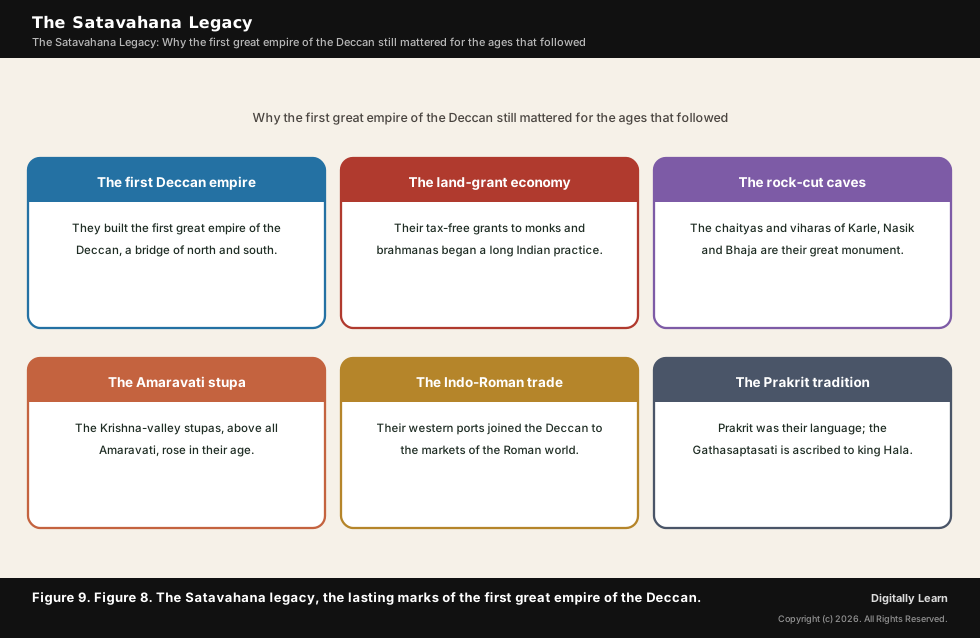
The Satavahanas were the first great empire of the Deccan, the bridge by which northern culture passed to the south and the southern sea's wealth passed to the world. They began the long Indian practice of religious land grants; they gave the country the rock-cut caves and the Amaravati stupa; and they fostered Prakrit, in which the Gathasaptasati is ascribed to king Hala. Their age set the pattern of the Deccan that the Vakatakas, Chalukyas and Rashtrakutas would follow.
UPSC Relevance and Exam Focus
Where the Satavahanas Fit in the UPSC-CSE Syllabus
This topic belongs to General Studies Paper I: ancient Indian history and culture, and the Satavahanas, as the first great power of the Deccan, are among the most examined of the post-Mauryan dynasties.
For Prelims, hold the firm facts: the Satavahanas are the Andhras of the Puranas; Simuka founded them and they ruled from Pratishthana (Paithan); Gautamiputra Satakarni, the greatest king, defeated the Saka Nahapana and is praised in the Nasik prashasti of his mother Gautami Balashri; the kings used metronymics; they made the first land grants; their language was Prakrit; and the Buddhist centres of Amaravati and Dhanyakataka, in Andhra, belong to their age.
For Mains, the Satavahana age is valuable for the Deccan as a bridge between north and south, for the beginning of the land-grant system, and for the brisk Indo-Roman trade of the western ports.
Recurring linked concepts an aspirant should keep in working memory:
- Gautamiputra Satakarni: The greatest king; defeated Nahapana the Saka.
- Pratishthana: The capital, the modern Paithan on the Godavari.
- The Nasik prashasti: Set up by Gautami Balashri; calls the king Ekabrahmana.
- Metronymics: Kings named after the mother, as Gautami-putra.
- Amaravati: The great stupa of the Krishna valley, in Andhra Pradesh.
A common Prelims trap is to confuse which Saka king Gautamiputra defeated; he broke Nahapana of the Kshaharata house, while it was the later king Rudradaman who in turn defeated Gautamiputra's son Pulumavi. A second trap places the Amaravati stupa on the wrong river or in the wrong state; it stands on the Krishna, in Andhra Pradesh, not on the Godavari.
Previous Year UPSC-CSE Questions
Previous Year UPSC-CSE Questions By the end you will be able to draft model answers for the following UPSC questions. Each question carries a collapsible framework showing how to approach it in the exam.
- UPSC Prelims 2023 GS-IIn which one of the following regions was Dhanyakataka, which flourished as a prominent Buddhist centre under the Mahasanghikas, located?
How to approach this Prelims question
Approach: Recall that Dhanyakataka, near Amaravati, lay in the Andhra country of the lower Krishna, in the Satavahana east.
Trap to watch: Gandhara is the north-west (Kushana art), Kalinga is Odisha and Magadha is the Ganga plain; Dhanyakataka is in Andhra.
Key facts to recall:
- Dhanyakataka, near Amaravati, lay in the Andhra country of the lower Krishna.
- It flourished as a Buddhist centre of the Mahasanghikas in the Satavahana age.
Answer signal: Andhra.
- UPSC Prelims 2006 GS-IWhich one of the following pairs is correctly matched?
How to approach this Prelims question
Approach: Place each pair: the Amaravati Buddhist stupa is in Andhra Pradesh, the only correct pairing here.
Trap to watch: Vikramsila was in Bihar (not Uttar Pradesh) and Hemkund is in Uttarakhand (not Himachal); the Amaravati stupa is in Andhra Pradesh.
Key facts to recall:
- The Amaravati Buddhist stupa is in the lower Krishna valley, in Andhra Pradesh.
- It was the great Buddhist monument of the eastern Satavahana country.
Answer signal: Amaravati Buddhist Stupa : Andhra Pradesh.
Sources and Further Reading
Editorial Disclaimer
This article is for UPSC preparation. The chronology of the Satavahanas is debated among historians, since the Puranic king-lists are long and uncertain, and the conventional accounts are given here.