


Overview
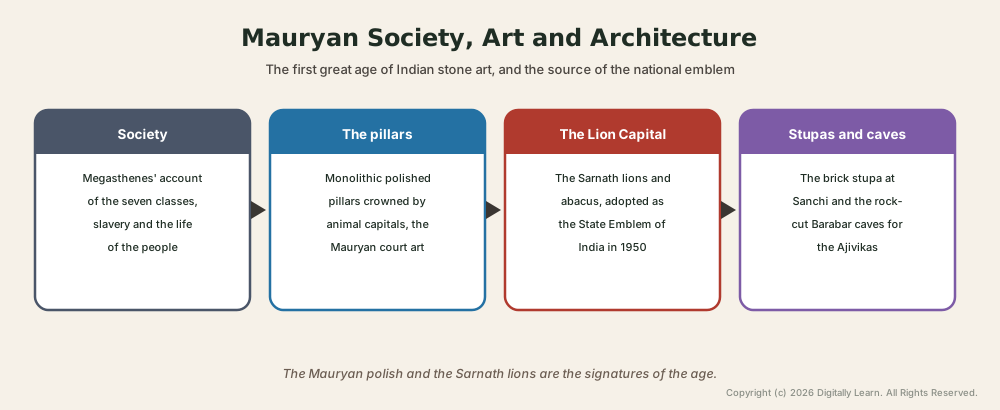
Mauryan society, art and architecture mark the first great age of Indian art in stone, the age that gave the nation its emblem. Mauryan society, described by the Greek envoy Megasthenes, was divided into classes and was ordered around agriculture and the state. Its art ran in two streams: the court art sponsored by Ashoka, above all the tall monolithic pillars with their famous mirror-like polish and animal capitals, and the older popular art of the Yaksha and Yakshi statues and the crafts of the towns. The crowning work of the age is the Sarnath Lion Capital, adopted as the State Emblem of India, while the brick stupa at Sanchi and the rock-cut Barabar caves are its other masterpieces. This part covers Mauryan society, the pillars and capitals, the stupas, the rock-cut caves and the popular art.
Mauryan Society as Seen by Megasthenes and the Texts
The Structure and Classes of Mauryan Society
What is the significance of Mauryan society: it is the first Indian society of which we have a detailed outside account, that of the Greek envoy Megasthenes, set beside the evidence of the Arthashastra.
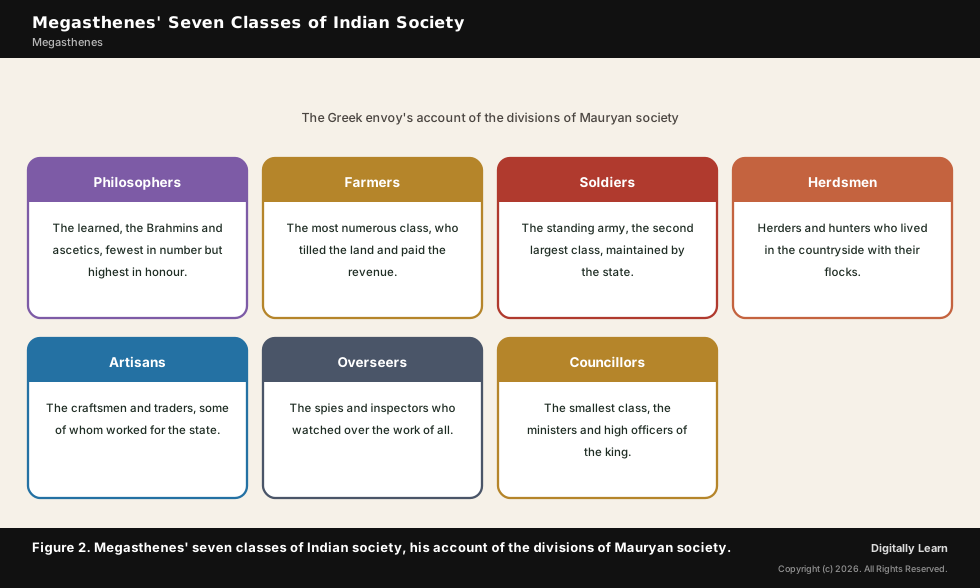
Mauryan society kept the old fourfold order of varna, but it was the Greek envoy Megasthenes who left the fullest description of it. In his lost work, the Indica, known to us through later writers, he divided Indian society into seven classes or groups, by occupation rather than by birth, from the philosophers at the top to the councillors of the king.
Megasthenes on Slavery, and the Place of Women
Distinguishing two famous points: two of Megasthenes' observations are heavily tested, his claim about slavery and the condition of the people.
Megasthenes famously wrote that there was no slavery in India, but in this he was mistaken: the Arthashastra deals at length with slaves, the dasas, though Indian slavery was milder than the Greek kind he knew. He also described a prosperous and orderly people, rarely troubled by famine, and the position of women ranged from the queens and the armed women guards of the palace to the ordinary working women of the towns and fields.
Mauryan Art: Court Art and Popular Art
The Two Streams: Court (Royal) Art and Popular (Folk) Art
What is the significance of the two streams: Mauryan art is best understood as two distinct currents, and the examiner expects an aspirant to keep them apart.
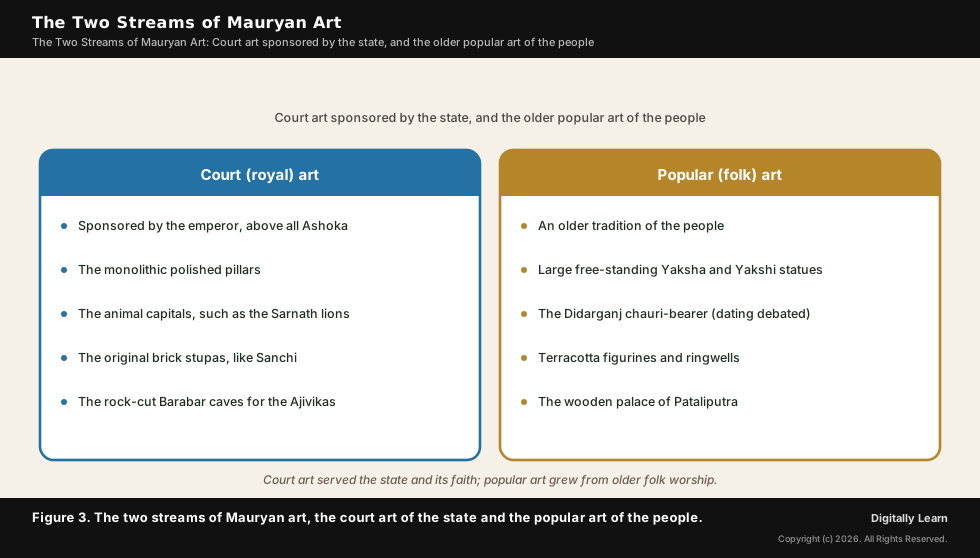
The first stream is the court art sponsored by the state, above all by Ashoka: the monolithic polished pillars, their animal capitals, the original brick stupas and the rock-cut caves. The second is the older popular art of the people, which the court did not create: the large free-standing Yaksha and Yakshi statues, the terracotta figurines and the crafts of the towns. The court art is imperial and Buddhist in spirit; the popular art grew from much older folk worship.
The Ashokan Pillars and the Sarnath Lion Capital
The Monolithic Pillars and the Mauryan Polish
Distinguishing the pillars: the pillars of Ashoka are the supreme achievement of Mauryan court art, and their making is a marvel of craft.
Each pillar was cut from a single block of sandstone, most often the fine stone of Chunar near Varanasi, and could stand more than twelve metres high. The surface was worked to a mirror-like sheen, the famous Mauryan polish, that has survived more than two thousand years. The pillar had a plain, tapering shaft and was crowned by a capital made of an inverted lotus or bell, an abacus, and a carved animal at the top.
The Sarnath Lion Capital and the State Emblem of India
What is the significance of the Sarnath capital: of all the Mauryan capitals, the one from Sarnath is the most famous, for it has become the emblem of the Indian republic.
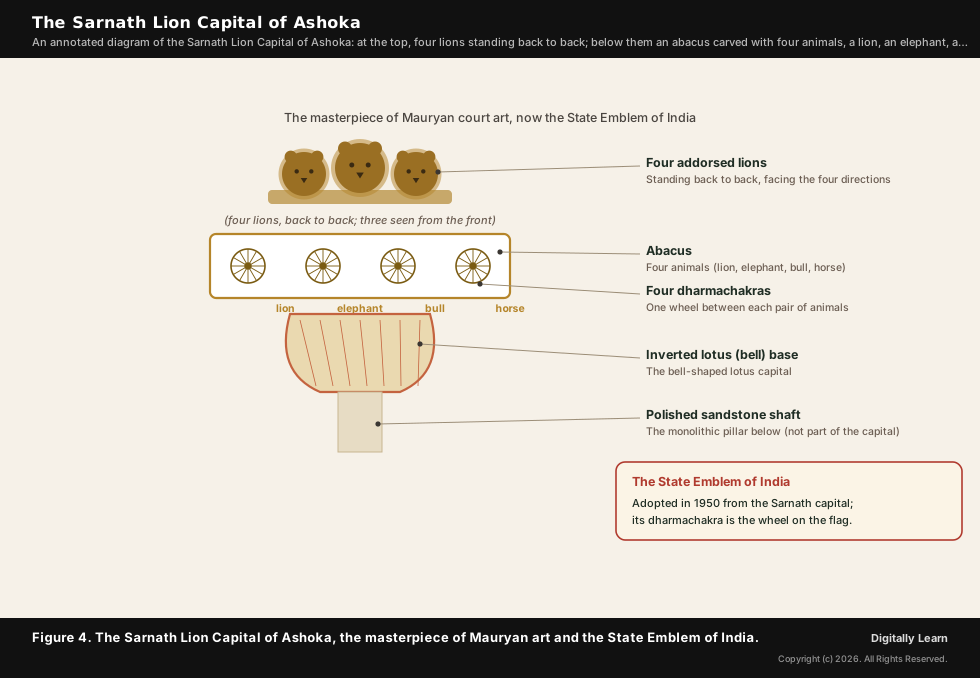
The Sarnath Lion Capital shows four lions standing back to back, addorsed, above a circular abacus carved with four animals, a lion, an elephant, a bull and a horse, separated by four wheels, and resting on an inverted lotus. It once crowned a pillar set up by Ashoka at Sarnath, where the Buddha preached his first sermon.
In 1950 the four lions and the abacus were adopted as the State Emblem of India, and the wheel, the Ashoka Chakra, was placed at the centre of the national flag.
The Other Pillar Capitals and Their Animals
Distinguishing the capitals: Sarnath is not the only animal capital; several others survive, each crowned by a different beast.
Besides the four lions of Sarnath, the surviving capitals include the bull of Rampurva and a separate lion from the same site, the single lion of Lauria-Nandangarh and the elephant of Sankissa. Each animal sits on the same lotus-and-abacus form, and together they show the range and skill of the Mauryan sculptor.
| Capital site | Crowning animal |
|---|---|
| Sarnath | Four lions (addorsed), the State Emblem |
| Rampurva | A bull, and a separate lion |
| Lauria-Nandangarh | A single lion |
| Sankissa | An elephant |
Stupas: The Architecture of the Sacred Mound
The Origin and Structure of the Stupa
What is the significance of the stupa: the stupa is the most characteristic Buddhist monument, and its origin and parts are a steady source of questions.
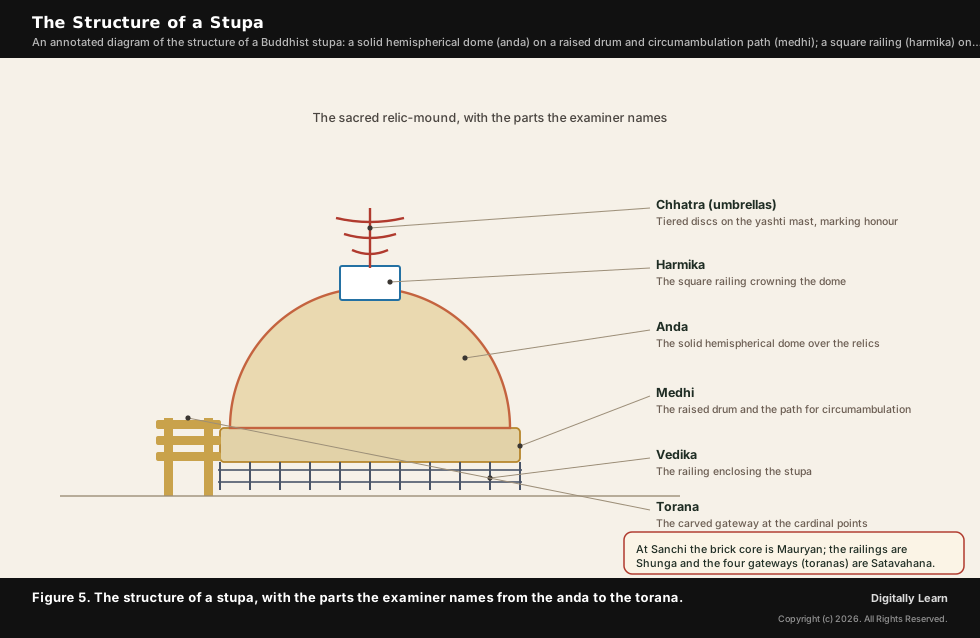
The stupa is older than Buddhism in origin, a burial mound that the new faith took over and made its own as a relic-repository and a votive, commemorative monument. Its core is a solid hemispherical dome, the anda, raised on a drum with a path for circumambulation, the medhi; on top sits a square railing, the harmika, enclosing a mast and tiered umbrellas, the yashti and chhatra; and a railing, the vedika, with gateways, toranas, encloses the whole.
The Great Stupa at Sanchi and the Mauryan Core
Distinguishing what is Mauryan at Sanchi: the Great Stupa at Sanchi is the most famous in India, but only a part of what the visitor sees is Mauryan, a distinction the examiner loves.
Ashoka built the original stupa at Sanchi as a modest dome of brick. The structure was later enlarged and faced in stone, and the carved railing and the four great gateways, the toranas, that make Sanchi famous were added still later.
The stone casing and railing belong to the Shunga period and the four richly carved toranas to the Satavahana period, so only the brick core is truly Mauryan; the nearby stupa railings of Bharhut, often discussed alongside, are Shunga, not Mauryan.
| Work | Period | Dynasty |
|---|---|---|
| Sanchi: the original brick stupa core | Mauryan | Maurya (Ashoka) |
| Sanchi: the stone casing and railing | Post-Mauryan | Shunga |
| Sanchi: the four carved gateways (toranas) | Post-Mauryan | Satavahana |
| Bharhut: the stupa railings and sculptures | Post-Mauryan | Shunga |
| The Ashokan pillars and the Sarnath capital | Mauryan | Maurya (Ashoka) |
| The Barabar caves (for the Ajivikas) | Mauryan | Maurya (Ashoka) |
Rock-Cut Caves and the Popular Art of the Towns
The Barabar Caves: India's Earliest Rock-Cut Caves
What is the significance of the Barabar caves: they are the earliest surviving rock-cut caves in India, and they begin a tradition that would last a thousand years.
The Barabar caves, cut into the hard granite hills near Gaya in Bihar, were given by Ashoka to the Ajivika ascetics, and the nearby Nagarjuni caves by his grandson Dasharatha. They are plain in plan but finished inside with the same mirror-like Mauryan polish as the pillars, and the Lomas Rishi cave has a carved entrance that imitates a wooden arch. A famous Prelims trap is to credit these caves to Chandragupta; they were the gift of Ashoka.
Yakshas, the Didarganj Yakshi and the Life of the Towns
Distinguishing the popular art: beyond the court's monuments lived a vigorous popular art, of which the great Yaksha and Yakshi statues are the finest examples.
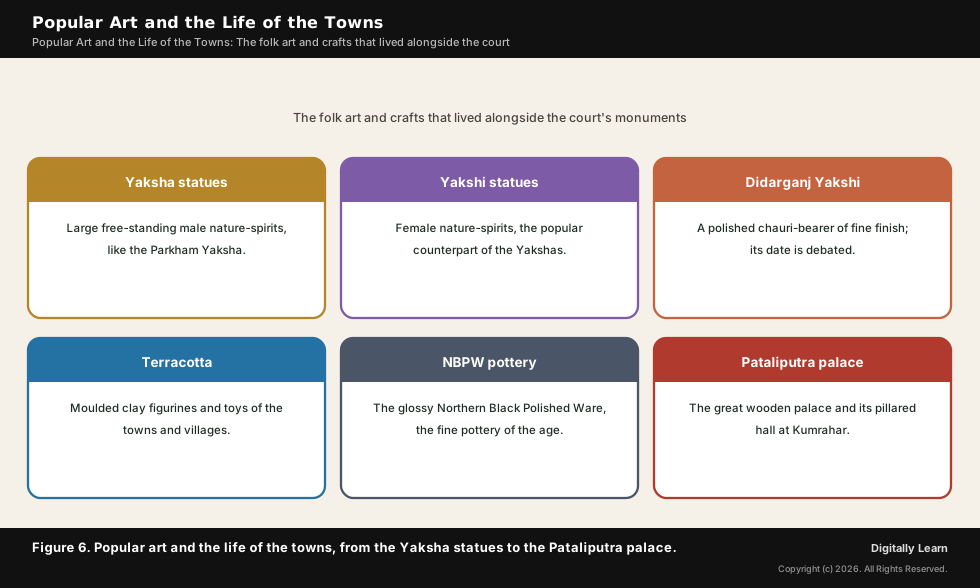
The Yakshas and Yakshis were large free-standing statues of male and female nature-spirits, carved in the round and worshipped in folk religion; the Parkham Yaksha is a well-known example. The most celebrated is the Didarganj Yakshi, a chauri-bearer of polished sandstone whose fine finish has led many to call it Mauryan, though its date is debated.
To these the towns added terracotta figurines, the glossy Northern Black Polished Ware, and the great wooden palace of Pataliputra, whose pillared hall at Kumrahar amazed both Megasthenes and, much later, the Chinese pilgrim Fa-Hien.
UPSC Relevance and Exam Focus
Where Mauryan Society, Art and Architecture Fit in the UPSC-CSE Syllabus
This topic belongs to General Studies Paper I: ancient Indian history and art and culture, and Mauryan art is one of the most frequently examined areas of the whole ancient period.
For Prelims, hold the firm facts: the pillars were monolithic, of Chunar sandstone, with the Mauryan polish; the Sarnath Lion Capital became the State Emblem of India; the stupa is pre-Buddhist in origin and a relic-repository; at Sanchi only the brick core is Mauryan, the toranas being Satavahana; and the Barabar caves were given by Ashoka, not Chandragupta, to the Ajivikas.
For Mains, Mauryan art is valuable for the contrast of court and popular art and as the foundation of the Indian tradition of stone sculpture and architecture.
Recurring linked concepts an aspirant should keep in working memory:
- The pillars: Monolithic Chunar sandstone with the Mauryan polish.
- Sarnath Lion Capital: Four lions on an abacus of four animals; the State Emblem.
- The stupa: Pre-Buddhist in origin; anda, harmika, chhatra, medhi, vedika, torana.
- Sanchi: Ashokan brick core is Mauryan; toranas are Satavahana.
- Barabar caves: The earliest rock-cut caves, given by Ashoka to the Ajivikas.
A common Prelims trap is to call the whole of the Great Stupa at Sanchi, or the Bharhut sculptures, Mauryan; only the Ashokan brick core at Sanchi is Mauryan, while the gateways are Satavahana and Bharhut is Shunga. Another is to assign the Barabar caves to Chandragupta; they were the gift of Ashoka to the Ajivikas.
Previous Year UPSC-CSE Questions
Previous Year UPSC-CSE Questions By the end you will be able to draft model answers for the following UPSC questions. Each question carries a collapsible framework showing how to approach it in the exam.
- UPSC Prelims 2023 GS-IWith reference to ancient India, consider the following statements:
- The concept of Stupa is Buddhist in origin.
- Stupa was generally a repository of relics.
- Stupa was a votive and commemorative structure in Buddhist tradition.
How many of the above statements are correct?
How to approach this Prelims question
Approach: Test each statement; reject the claim that the stupa is Buddhist in origin.
Trap to watch: Statement 1 is the trap: the stupa as a burial mound is older than Buddhism, which adopted it; statements 2 (relic repository) and 3 (votive/commemorative) are correct.
Key facts to recall:
- The stupa is pre-Buddhist in origin.
- It was a relic repository and a votive, commemorative structure.
Answer signal: Only two.
- UPSC Prelims 2013 GS-IWith reference to the history of Indian rock-cut architecture, consider the following statements:
- The caves at Badami are the oldest surviving rock-cut caves in India.
- The Barabar rock-cut caves were originally made for Ajivikas by Emperor Chandragupta Maurya.
- At Ellora, caves were made for different faiths.
Which of the statements given above is/are correct?
How to approach this Prelims question
Approach: Test each statement; the Barabar attribution and the Badami 'oldest' claim are both false.
Trap to watch: The Barabar caves were the gift of Ashoka (not Chandragupta) to the Ajivikas; the oldest rock-cut caves are the Barabar caves, not Badami; only the Ellora multi-faith statement is correct.
Key facts to recall:
- The Barabar caves were given by Ashoka to the Ajivikas.
- Ellora's caves belong to different faiths; Badami is not the oldest.
Answer signal: 3 only.
- UPSC Prelims 1998 GS-IWhich of the following pairs are correctly matched?
- Lothal: Ancient dockyard
- Sarnath: First Sermon of Buddha
- Rajgir: Lion capital of Asoka
- Nalanda: Great seat of Buddhist learning
Select the correct answer using the codes given below.
How to approach this Prelims question
Approach: Check each pair; the Lion Capital's location is the discriminating point.
Trap to watch: The Lion Capital of Asoka is at Sarnath, not Rajgir, so pair III is wrong; Lothal's dockyard, Sarnath's first sermon and Nalanda's learning are all correct.
Key facts to recall:
- The Sarnath Lion Capital is at Sarnath, where the Buddha gave his first sermon.
- Lothal had a dockyard; Nalanda was a great seat of Buddhist learning.
Answer signal: I, II and IV.
Sources and Further Reading
Editorial Disclaimer
This article is for UPSC preparation. The dating of some works, such as the Didarganj Yakshi and the phases of the Sanchi stupa, is debated among historians, and the conventional attributions are given here.