


Overview
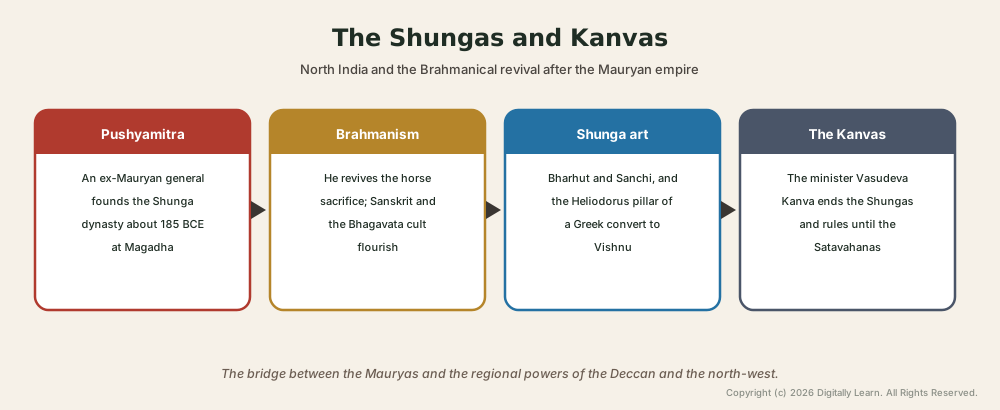
The Shungas and Kanvas were the two dynasties that ruled Magadha and north India in the century after the fall of the Mauryas. The Shunga dynasty was founded about 185 BCE by Pushyamitra Shunga, the commander who killed the last Mauryan king, and it is best known for its revival of Brahmanism, marked by the ashvamedha sacrifice, and for the great early Buddhist art of Bharhut and Sanchi that flourished in its time. A famous Buddhist tradition accuses Pushyamitra of persecuting the Buddhists, a charge most historians now doubt. The Shungas were ended by their own minister, Vasudeva Kanva, who founded the short-lived Kanva dynasty, the last imperial line of Magadha before the Deccan Satavahanas. This part covers the founding of the Shungas, the Brahmanical revival, Shunga art and the Kanva dynasty.
The Founding of the Shunga Dynasty
Pushyamitra Shunga and the End of the Mauryas
What is the significance of the Shunga founding: it marks the passing of the Mauryan empire and the rise of a new, Brahmanical line in its old heartland of Magadha.
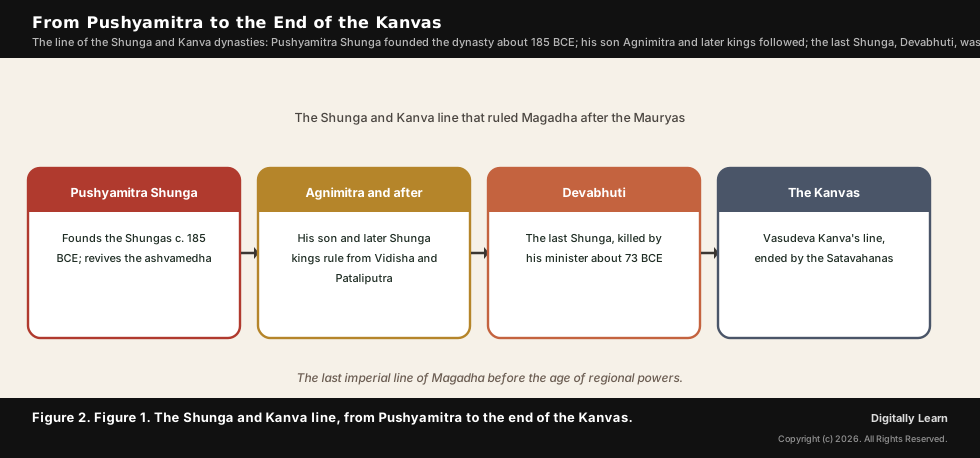
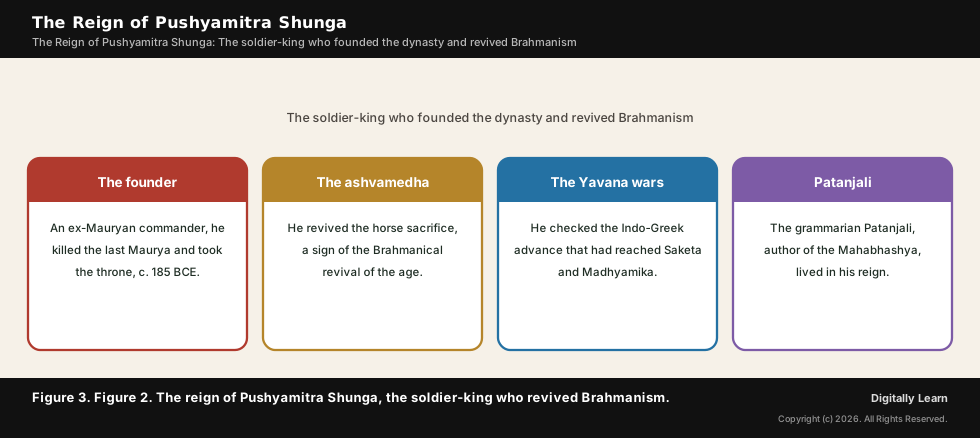
About 185 BCE the Mauryan commander-in-chief Pushyamitra Shunga killed the last Mauryan king, Brihadratha, and seized the throne, founding the Shunga dynasty. He ruled from Pataliputra, with Vidisha in central India as a second centre, and held a kingdom that, though far smaller than the Mauryan empire, still covered Magadha and much of the north.
Pushyamitra's Reign: The Ashvamedha and the Yavana Wars
Distinguishing his reign: two things stand out in Pushyamitra's rule, his revival of the old sacrifices and his defence of the kingdom against the Greeks.
Pushyamitra revived the great ashvamedha, or horse sacrifice, a public sign of the Brahmanical revival that his dynasty led. His reign also saw the deepest Yavana, or Indo-Greek, thrust into India, which had reached Saketa and Madhyamika, and which he and his grandson Vasumitra checked. The grammarian Patanjali, author of the Mahabhashya, lived in his reign and mentions both his sacrifice and the Greek attack.
The Shungas, Brahmanism and the Buddhists
The Brahmanical Revival under the Shungas
What is the significance of the revival: the Shunga age is remembered above all as a time when Brahmanism recovered the ground it had lost under the Buddhist Mauryas.
The Shunga kings patronised the old religion. The ashvamedha returned, Sanskrit revived as the language of learning, and the Bhagavata cult, the early worship of Vishnu as Vasudeva, grew strong, as the Heliodorus pillar shows. The law-books, the Dharmashastras, including the Manusmriti in something like its final form, belong to this age, setting down the social order the Brahmins upheld.
Did Pushyamitra Persecute the Buddhists? A Debated Question
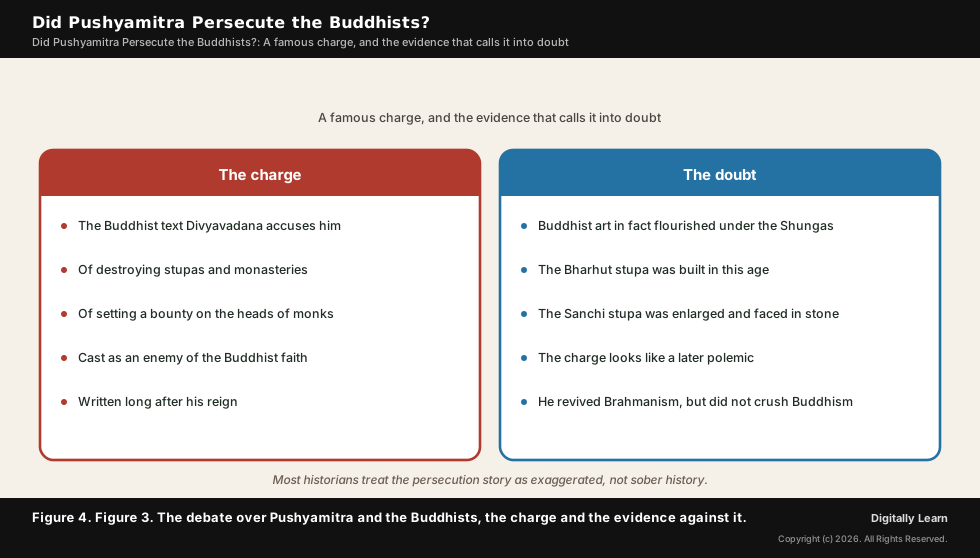
Distinguishing fact from legend: a famous charge against Pushyamitra is that he persecuted the Buddhists, and a careful student knows it as a debated claim, not a settled fact.
The later Buddhist text the Divyavadana paints Pushyamitra as an enemy of the faith, who destroyed stupas and set a price on the heads of monks. Most historians doubt this. Buddhist art in fact flourished under the Shungas: the great stupa of Bharhut was raised and the stupa of Sanchi enlarged in this very age. The persecution story looks like a later polemic, and the truth is that Pushyamitra revived Brahmanism without crushing Buddhism.
Shunga Art and the Heliodorus Pillar
The Stupas of Bharhut and Sanchi under the Shungas
What is the significance of Shunga art: the Shunga age is the first great age of Indian stone relief, and its monuments are landmarks of Buddhist art.
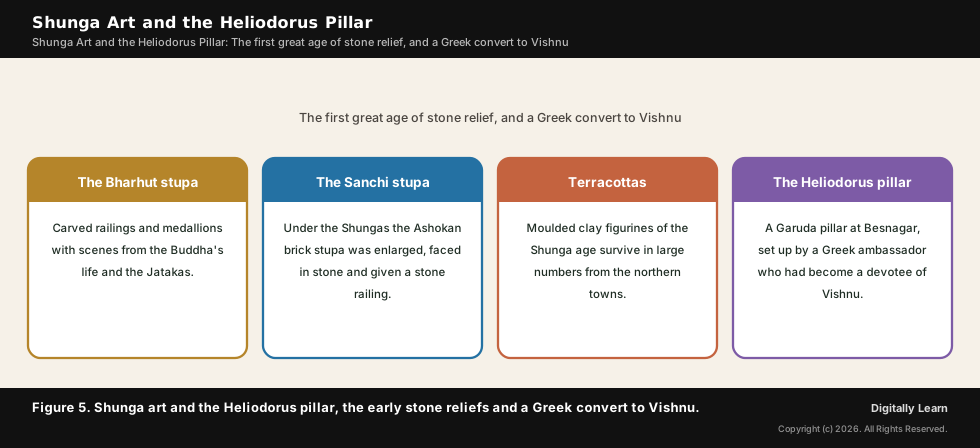
Under the Shungas the stupa of Bharhut, in central India, was given its carved stone railings and gateway, covered with medallions and panels showing scenes from the life of the Buddha and the Jataka stories. At the same time the Ashokan brick stupa of Sanchi was enlarged, faced in stone and surrounded by a stone railing. These are among the earliest masterpieces of Indian narrative sculpture.
The Heliodorus Pillar: A Greek Bhagavata at Besnagar
Distinguishing a unique monument: one Shunga-age pillar is precious beyond its art, for it records a Greek who had taken to the worship of Vishnu.
At Besnagar, near Vidisha, stands a stone column known as the Heliodorus pillar. It was set up by Heliodorus, a Greek ambassador of the Indo-Greek king Antialcidas to the Shunga court, who describes himself in its inscription as a Bhagavata, a devotee of Vasudeva-Vishnu. The pillar, a Garuda standard, is among the earliest evidence of the Bhagavata cult and a striking sign of how readily the foreigners took to Indian religion.
The Kanva Dynasty and the End of the Magadhan Line
Vasudeva Kanva and the Four Kanva Kings
What is the significance of the Kanvas: they were the brief dynasty that closed the long imperial history of Magadha, the seat of the Nandas, Mauryas and Shungas.
About 73 BCE the last Shunga king, Devabhuti, was killed by his own Brahmin minister, Vasudeva Kanva, who took the throne and founded the Kanva dynasty. Four Kanva kings ruled for about forty-five years, until the last of them was overthrown by the Satavahanas of the Deccan. With the Kanvas the old imperial line of Magadha came to an end, and the centre of Indian history moved to the Deccan and the north-west.
| Dynasty | Key rulers | About |
|---|---|---|
| Shunga | Pushyamitra; Agnimitra; Devabhuti (last) | c. 185 to 73 BCE; the Brahmanical revival |
| Kanva | Vasudeva Kanva; Susharman (last) | c. 73 to 28 BCE; four kings, about 45 years |
| Then the Satavahanas | of the Deccan | End the Kanvas and the Magadhan imperial line |
UPSC Relevance and Exam Focus
Where the Shungas and Kanvas Fit in the UPSC-CSE Syllabus
This topic belongs to General Studies Paper I: ancient Indian history and culture, and the Shungas, with their art and their religious history, are a recurring source of questions.
For Prelims, hold the firm facts: Pushyamitra Shunga founded the dynasty about 185 BCE and performed the ashvamedha; the grammarian of his age was Patanjali (the Mahabhashya), not Panini, who is far older; the Bharhut and Sanchi art belong to the Shunga age; the Heliodorus pillar attests the Bhagavata cult; and the Kanvas, founded by Vasudeva Kanva, followed the Shungas.
For Mains, the Shunga age is valuable for the theme of the Brahmanical revival set beside the continued flourishing of Buddhist art.
Recurring linked concepts an aspirant should keep in working memory:
- Pushyamitra Shunga: Founder, c. 185 BCE; revived the ashvamedha.
- Patanjali: The Mahabhashya; the grammarian of the Shunga age.
- Shunga art: The Bharhut stupa and the enlarged Sanchi stupa.
- Heliodorus pillar: Besnagar; early Bhagavata (Vaishnava) cult.
- The Kanvas: Founded by Vasudeva Kanva; ended by the Satavahanas.
A common Prelims trap is to link Panini with Pushyamitra; the scholar of the Shunga age is Patanjali, while Panini lived centuries earlier. Another is to take the persecution of Buddhists by Pushyamitra as settled fact; it is a debated, much-doubted charge.
Previous Year UPSC-CSE Questions
Previous Year UPSC-CSE Questions By the end you will be able to draft model answers for the following UPSC questions. Each question carries a collapsible framework showing how to approach it in the exam.
- UPSC Prelims 2020 GS-IWith reference to the scholars/litterateurs of ancient India, consider the following statements:
- Panini is associated with Pushyamitra Shunga.
- Amarasimha is associated with Harshavardhana.
- Kalidasa is associated with Chandra Gupta – II.
Which of the statements given above is/are correct?
How to approach this Prelims question
Approach: Test each scholar-patron pair; the Pushyamitra-era grammarian is Patanjali, not Panini.
Trap to watch: Panini is far older than Pushyamitra; the Shunga-age grammarian is Patanjali. Amarasimha belonged to Chandragupta II's court, not Harsha's; only the Kalidasa-Chandragupta II pair is correct.
Key facts to recall:
- The grammarian of Pushyamitra's reign was Patanjali (the Mahabhashya), not Panini.
- Kalidasa was associated with Chandragupta II.
Answer signal: 3 only.
- UPSC Prelims 2003 GS-IConsider the following statements:
- The last Mauryan ruler, Brihadratha was assassinated by his commander-in-chief, Pushyamitra Sunga.
- The last Sunga king, Devabhuti was assassinated by his Brahmana minister Vasudeva Kanva who usurped the throne.
- The last ruler of the Kanva dynasty was deposed by the Andhras.
Which of these statements is/are correct?
How to approach this Prelims question
Approach: Trace the chain Maurya to Shunga to Kanva to Satavahana, checking each transfer of power.
Trap to watch: All three statements are correct; the chain is Brihadratha-to-Pushyamitra (Shunga), Devabhuti-to-Vasudeva (Kanva), and the last Kanva to the Andhras (Satavahanas).
Key facts to recall:
- Vasudeva Kanva killed the last Shunga, Devabhuti.
- The last Kanva was deposed by the Satavahanas (Andhras).
Answer signal: 1, 2 and 3.
Sources and Further Reading
Editorial Disclaimer
This article is for UPSC preparation. The charge that Pushyamitra persecuted the Buddhists is debated among historians, and is presented here as a doubted tradition rather than settled fact.