


Overview
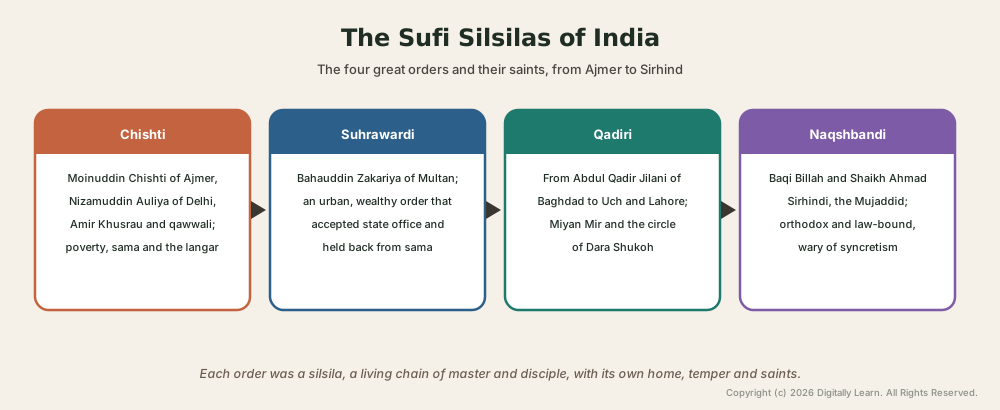
A silsila was a Sufi order, a chain of spiritual descent that bound each living disciple to his master, and through an unbroken line of teachers back to the Prophet. Four great orders carried Sufism across medieval India: the Chishti, the Suhrawardi, the Qadiri and the Naqshbandi. Each had its own home, its own temper and its own saints, from Moinuddin Chishti of Ajmer and Nizamuddin Auliya of Delhi to Bahauddin Zakariya of Multan and Shaikh Ahmad Sirhindi of Sirhind. Around them grew the further orders, the Firdausi of Bihar, the indigenous Rishi order of Kashmir and the wandering dervishes. This part follows the orders and their great men; the origins, doctrines and institutions of Sufism sets out the doctrines and institutions of the path on which they all stood.
The Silsila System and the Map of the Sufi Orders
The Orders as Living Chains of Master and Disciple
A silsila was an order of Sufis, a living chain that linked each disciple to a founding master.
The Arabic word silsila means a chain, and it named both the spiritual genealogy of an order and the order itself. Every initiate was tied through his pir, or guide, to that pir's own master, and so backward through the generations to the founder of the order and beyond him to the Prophet. the origins, doctrines and institutions of Sufism sets out the silsila, the khanqah and the dargah as institutions of the path; this part turns to the four orders that those institutions served, and to the saints who gave each its character.
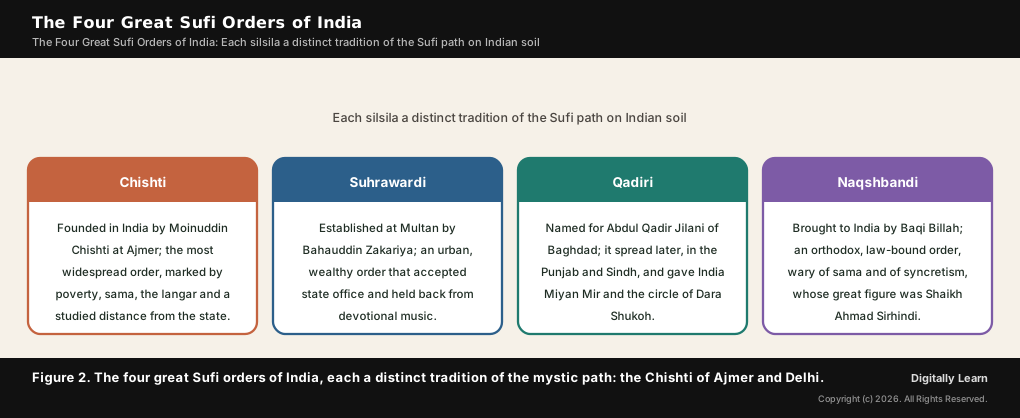
Four orders dominated the Sufism of medieval India. The Chishti were the most widespread and the most loved, marked by poverty and by a studied distance from the state. The Suhrawardi, by contrast, were an urban and propertied order that accepted office and royal favour. The Qadiri came later, taking root in the Punjab and Sindh, and the Naqshbandi, the most orthodox of the four, set themselves against religious compromise. Each order admitted lay followers as well as initiates, so that a single shaikh might guide thousands.
Beside these four ran the further orders: the Firdausi of Bihar, the indigenous Rishi order of Kashmir, the Shattari, the Madari and the wandering Qalandars. The orders also divided by their relation to the sacred law. Those who kept within the sharia were called ba-shara, as the origins, doctrines and institutions of Sufism explains, while the be-shara dervishes set the outward law aside; the great silsilas of this part were all ba-shara orders, lawful and respectable, however unworldly their saints.
The Geography of the Silsila Centres, from Ajmer to Bengal
The orders can be read off the map of the subcontinent, each rooted in its own centres of grace.
The Chishti heartland ran from Ajmer in Rajputana to Delhi, with Baba Farid at Ajodhan, now Pakpattan, and a Deccan outpost at Gulbarga. The Suhrawardi belonged to the north-west, to Multan and Uch in the Indus valley, and reached east into Bengal at Pandua. The Qadiri gathered at Uch and at Lahore, and the Naqshbandi at Delhi and Sirhind. The further orders filled in the gaps, the Firdausi at Bihar Sharif, the Rishis across the valley of Kashmir.
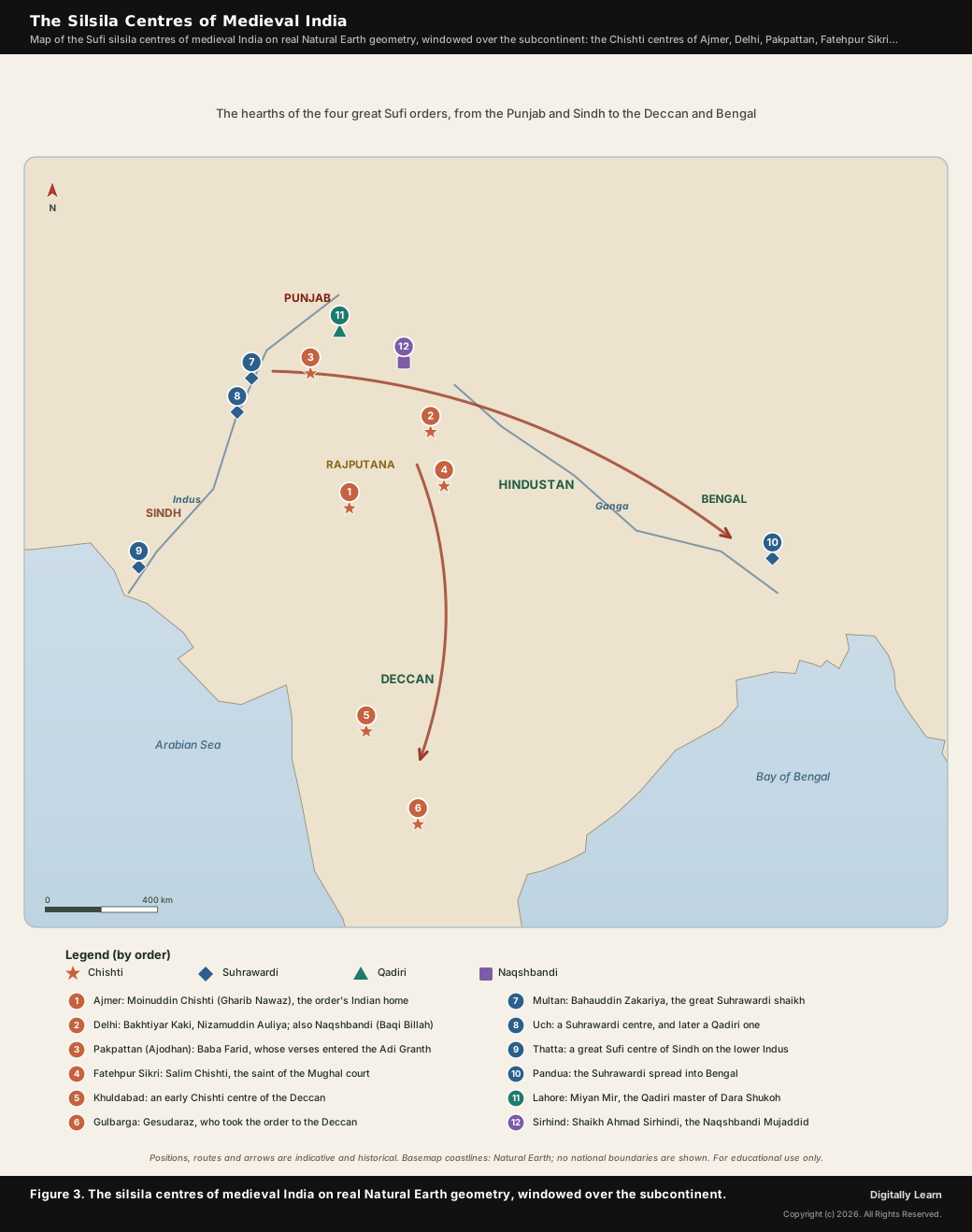
Several of the oldest centres, Multan, Uch and Pakpattan, lie today across the border in Pakistan, a reminder that the map of the orders was drawn long before the map of nations. The geography was not accidental. The north-western towns received Sufism first because they lay on the road from Persia and Central Asia, while Ajmer and Delhi rose with the Sultanate, and the Deccan and Bengal were reached later, as the orders followed the soldiers and the merchants south and east.
The Chishti Order: Ajmer, Delhi and the Way of Poverty
Moinuddin Chishti and the Founding of the Chishti Order in India at Ajmer
Moinuddin Chishti planted the Chishti order on Indian soil at Ajmer, and became the best-loved saint of the subcontinent.
Moinuddin Chishti, born by tradition in 1143, was a Persian mystic who settled at Ajmer in Rajputana and there established the Chishti order in India in the late twelfth century. He is revered as Gharib Nawaz, the comforter of the poor, and his shrine at Ajmer remains the most visited Sufi dargah in the land. The year of his death is usually given as 1236, though the date is uncertain and rests on later tradition rather than firm record.
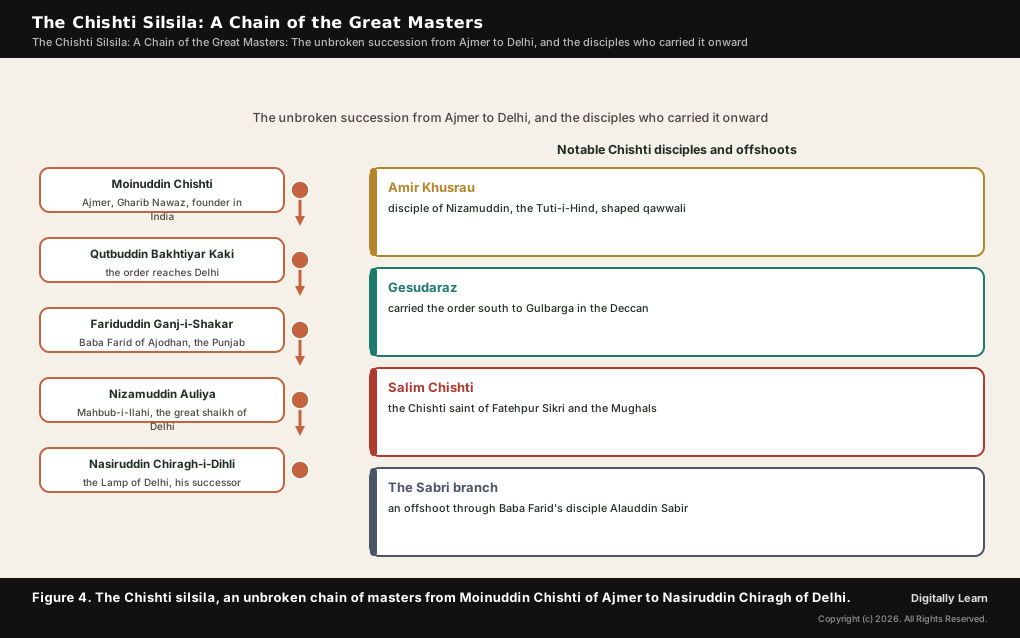
It is important to see what Moinuddin did and did not found. The Chishti order itself was older than his coming to India; it had been founded at the town of Chisht, near Herat in present-day Afghanistan, by Abu Ishaq Shami, and it takes its name from that town, not from any village near Ajmer. What Moinuddin did was to carry the order into the subcontinent and make it flourish there, so that he is rightly called the sponsor and the most prominent figure of the Chishti order in India. The order he established kept two marks above all others: a love of voluntary poverty, and a refusal to seek the favour of kings.
Qutbuddin Bakhtiyar Kaki and Baba Farid: The Order Reaches Delhi and the Punjab
The two disciples who followed Moinuddin carried the Chishti order north to Delhi and into the Punjab.
Qutbuddin Bakhtiyar Kaki, the spiritual successor of Moinuddin, settled at Delhi in the reign of Iltutmish and made the new capital a Chishti centre; the Qutb Minar quarter still bears the memory of his shrine. His own successor was Fariduddin Ganj-i-Shakar, the great Baba Farid, who withdrew from Delhi to the small Punjab town of Ajodhan, now Pakpattan, and there gathered a following famed for its austerity and its hunger for God.
Baba Farid matters far beyond the order. He is counted among the founding fathers of the Chishti tradition in India, and his verses in the Punjabi tongue were later gathered into the Adi Granth, the scripture of the Sikhs, where more than a hundred of his hymns still stand beside the words of the Gurus. In him the Chishti devotion reached out to the wider religious life of the Punjab, a meeting of saint and Sant that the nirguna Sants such as Kabir and Guru Nanak takes up in its account of the nirguna tradition.
| Master | Centre | Place in the order |
|---|---|---|
| Moinuddin Chishti | Ajmer | Established the order in India; revered as Gharib Nawaz |
| Qutbuddin Bakhtiyar Kaki | Delhi | Carried the order to the Sultanate capital |
| Fariduddin Ganj-i-Shakar (Baba Farid) | Ajodhan (Pakpattan) | Founding father; verses entered the Adi Granth |
| Nizamuddin Auliya | Delhi | The order's zenith; Mahbub-i-Ilahi, Beloved of God |
| Nasiruddin Chiragh | Delhi | His successor, called the Lamp of Delhi |
Nizamuddin Auliya and Nasiruddin Chiragh: The Chishti Zenith at Delhi
Under Nizamuddin Auliya the Chishti order reached its height, and the saint of Delhi outshone the sultans who feared him.
Nizamuddin Auliya, who lived from 1238 to 1325, was the disciple of Baba Farid and the greatest of the Chishti shaikhs of Delhi. He is remembered as Mahbub-i-Ilahi, the Beloved of God, and his hospice drew the whole city, rich and poor alike. He held firmly to the order's principle of distance from power, and his strong disapproval of mixing with the sultans and the nobles was famous; he is said to have refused the summons of more than one ruler, trusting that the throne would fall before the dervish did.
The life of his circle is known to us as few medieval lives are, because his table-talk was lovingly recorded. The Fawaid al-Fuad, the collected conversations set down by his disciple Amir Hasan Sijzi, is among the most precious sources for the religious and social world of the Sultanate, and you may read more of that world in the Sufis and the Bhakti movement under the Delhi Sultanate. His chosen successor, Nasiruddin Chiragh of Delhi, the Lamp of Delhi, held the order together through the troubled years of Muhammad bin Tughlaq and is reckoned the last of its great early masters in the capital.
Amir Khusrau and the Making of Qawwali
Amir Khusrau, the favourite disciple of Nizamuddin, gave Indian Sufism its music and its first poetry in the people's tongue.
Amir Khusrau, who lived from 1253 to 1325, was the most celebrated poet of the Delhi Sultanate and the devoted disciple of Nizamuddin Auliya. He is honoured as the Tuti-i-Hind, the Parrot of India, for the sweetness of his Persian verse. Above all, he is credited with shaping qawwali, the devotional song of the Chishti assembly, by fusing the Persian, Arabic, Turkic and Indian musical traditions into a single new form in the late thirteenth century.
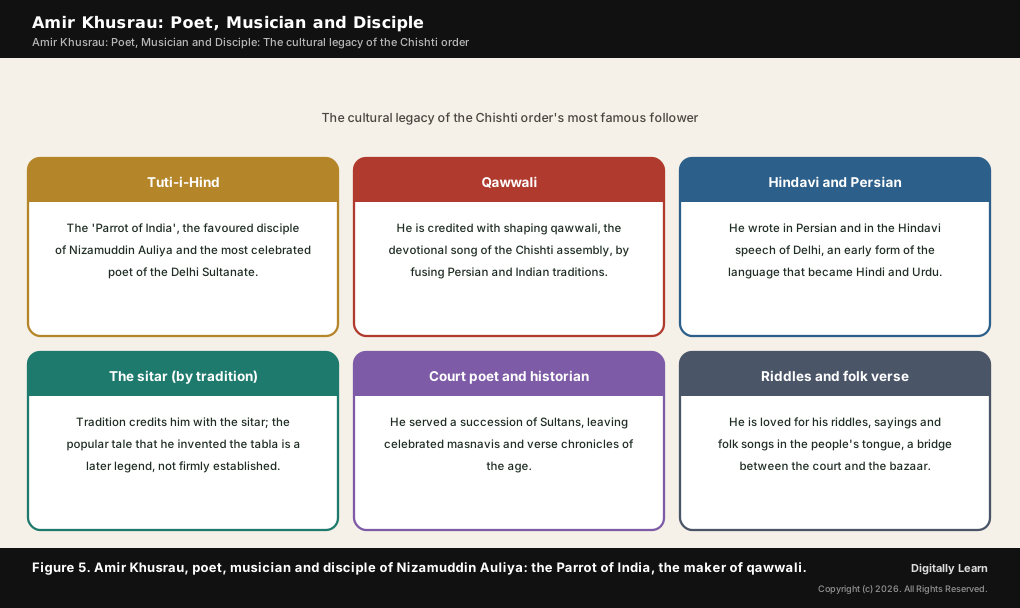
Khusrau was a bridge between worlds. He wrote not only in Persian but also in the Hindavi speech of Delhi, an early form of the language that would grow into Hindi and Urdu, and he is loved for riddles and folk songs in the people's tongue. Tradition also credits him with inventing the sitar, though this is a later attribution rather than firm history, and the popular claim that he invented the tabla is not established and should not be asserted. What is certain is that, through him, the Chishti order gave India a musical and poetic legacy that long outlived the Sultanate.
Gesudaraz and the Chishti Order in the Deccan
Gesudaraz carried the Chishti order south into the Deccan, where it took root in the Bahmani capital.
Muhammad Gesudaraz, honoured as Bandanawaz, was a Chishti shaikh of Delhi who, late in a long life, moved south at the invitation of the Bahmani sultan and settled at Gulbarga around the year 1400. He lived, by tradition, more than a century, from 1321 to 1422, and his coming made Gulbarga a great Chishti centre and planted the order firmly in the Deccan. With him the spiritual map of the order stretched from Ajmer in the north to the heart of the peninsula.
The musical and devotional culture the Chishti carried south left its mark on the Deccan courts. A famous echo of it is the Kitab-i-Nauras, a collection of songs in praise of Hindu deities and Muslim saints alike, composed at Bijapur by the sultan Ibrahim Adil Shah II, who styled himself a devotee of both the goddess of music and the Chishti saint of Gulbarga. The book is a vivid sign of how far the syncretic, music-loving spirit of the Chishti order had travelled, and how deeply it had entered the cultural life of the southern sultanates.
The Suhrawardi Order: Multan, Wealth and the State
Bahauddin Zakariya and the Suhrawardi Order of Multan
The Suhrawardi order chose the opposite path to the Chishti, accepting wealth, office and the friendship of kings.
Bahauddin Zakariya, who lived from about 1170 to 1262, established the Suhrawardi order in the subcontinent and made Multan, in the Indus valley, its great centre. Where the Chishti shunned the court, Zakariya embraced it: he accepted from Sultan Iltutmish the title of Shaikh-ul-Islam and the official patronage of the state, and he held landed wealth, living not as a wandering faqir but as a great urban shaikh with property and standing.
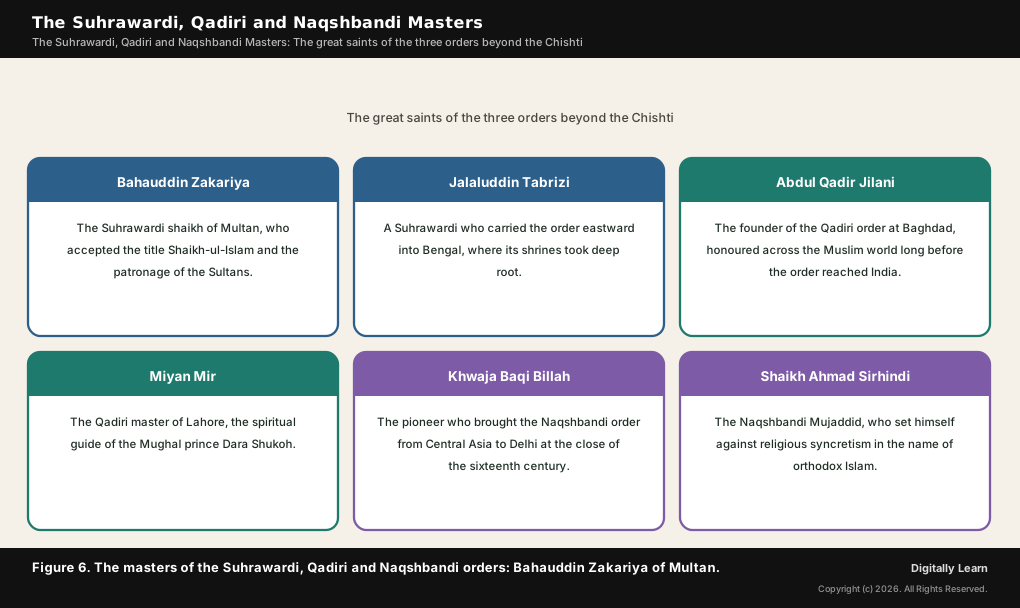
The contrast with the Chishti ran through every part of the order's life. The Suhrawardi were comfortable with the world; they took office, accumulated property and saw service to a just ruler as a religious good rather than a snare. Even their devotion was more restrained: Bahauddin Zakariya did not reject the sama, the audition of music described in the origins, doctrines and institutions of Sufism, but partook of it only on occasion, far from the central place it held in the Chishti assembly. The two orders together mark out the whole range of Sufi attitudes to the state, from holy aloofness to willing partnership.
The Suhrawardi Spread into Sindh and Bengal
From Multan the Suhrawardi reached down into Sindh and far east into Bengal.
The order's network followed the rivers and the trade routes. Southward it spread through Sindh, where Sufi centres such as Thatta grew up along the lower Indus. Eastward, the Suhrawardi Jalaluddin Tabrizi is remembered for carrying the order into Bengal, where its shrines, above all at Pandua, struck deep root in the countryside and drew a wide following among the newly converted. The Suhrawardi thus matched the Chishti in reach, even as they differed from them in temper, and between the two great orders the early Sufism of northern India was largely divided.
The Qadiri Order: Baghdad to the Mughal Court
Abdul Qadir Jilani and the Coming of the Qadiri Order to India
The Qadiri order, the most widespread in the whole Muslim world, came late but firmly to India.
The Qadiri order takes its name from Abdul Qadir Jilani, a scholar of Baghdad who lived from 1077 to 1166 and whose memory is honoured across the entire Islamic world. The order he inspired spread very widely abroad before it reached the subcontinent, where it established itself later than the Chishti and Suhrawardi, taking root above all at Uch and through the towns of the Punjab and Sindh from the fifteenth century onward.
In India the Qadiri were known for learning and for a devotional warmth that made room for local custom. They never matched the Chishti in popular reach, but they gained a particular importance at the Mughal court in the seventeenth century, where their most famous Indian master would become the spiritual guide of a prince. The order thus links the old Sufism of Baghdad to one of the great might-have-beens of Mughal history.
Miyan Mir, Mullah Shah and the Circle of Dara Shukoh
The Qadiri master Miyan Mir of Lahore drew the heir to the Mughal throne into the orbit of Sufism.
Miyan Mir, a Qadiri shaikh who died at Lahore in 1635, was the most revered Sufi of the Punjab in his day. His chief disciple, Mullah Shah Badakhshi, became the spiritual instructor of the Mughal prince Dara Shukoh, the favourite son of Shah Jahan, who sought through the Qadiri masters a meeting of Hindu and Muslim mysticism. Through this circle the order touched the very centre of imperial power, and the open, searching temper of the Qadiri shaped Dara's lifelong quest for the unity of the two faiths.
A famous tradition holds that Miyan Mir laid the foundation stone of the Golden Temple at Amritsar at the invitation of the Sikh Guru. This pleasing story is a later legend, first recorded long after the event, and it cannot be taken as established fact; it is best treated as a sign of the affection between the Qadiri and the early Sikh community rather than as sober history. Either way, the Qadiri stand apart as the order that came closest to the Mughal throne and to the dream of religious reconciliation.
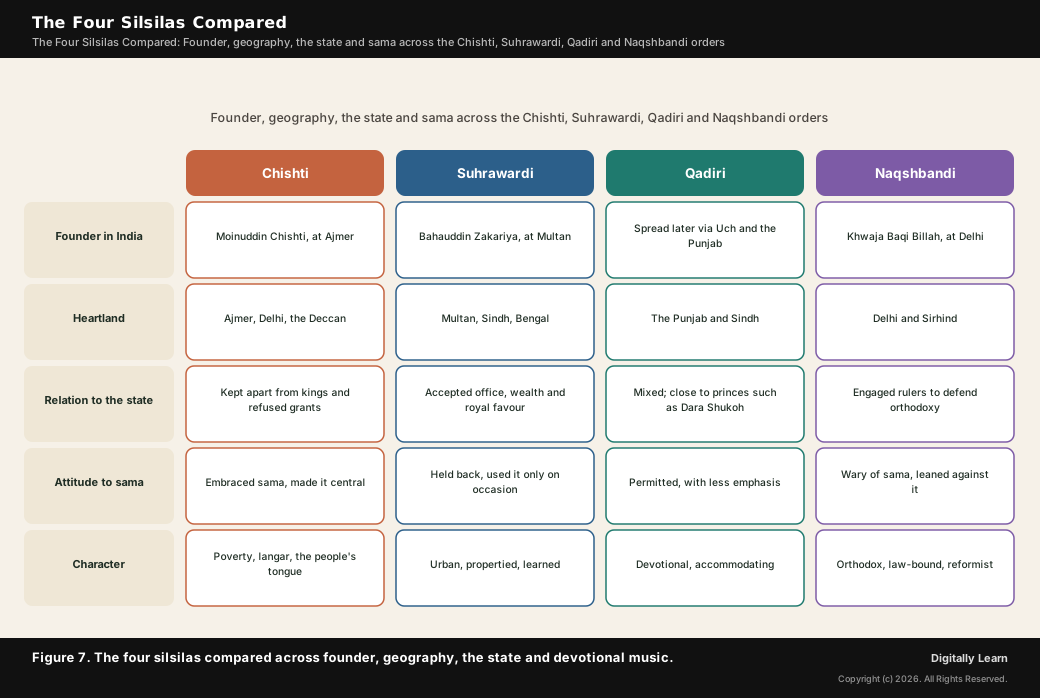
| Order | Founder in India | Heartland | Relation to the state | Attitude to sama |
|---|---|---|---|---|
| Chishti | Moinuddin Chishti, at Ajmer | Ajmer, Delhi, the Deccan | Kept apart from kings | Embraced it, made it central |
| Suhrawardi | Bahauddin Zakariya, at Multan | Multan, Sindh, Bengal | Accepted office and wealth | Used it only on occasion |
| Qadiri | Spread via Uch and the Punjab | Uch, Lahore, the Punjab | Close to princes such as Dara Shukoh | Permitted, with less emphasis |
| Naqshbandi | Khwaja Baqi Billah, at Delhi | Delhi and Sirhind | Engaged rulers to defend orthodoxy | Wary of it, leaned against it |
The Naqshbandi Order: Orthodoxy and Reform
Khwaja Baqi Billah and the Naqshbandi Order in Delhi
The Naqshbandi order arrived last of the four, and brought with it the sternest devotion to the law.
Khwaja Baqi Billah, who lived from 1564 to 1603, was the pioneer who carried the Naqshbandi order from Central Asia to Delhi at the close of the sixteenth century. The order was distinct in its practice: it kept the dhikr, the remembrance of God treated in the origins, doctrines and institutions of Sufism, silent and inward rather than vocal, and it held back from the sama and the cult of the saints that the Chishti embraced. From the first it stood for a sober, law-bound piety, close in temper to the orthodox learning of the ulama.
It is no accident that the Naqshbandi rose to prominence under the Mughals. At a court where Akbar had experimented with a new syncretic faith, the order offered a rallying point for those who feared that Islam was being diluted. Baqi Billah's hospice at Delhi became the seed of a movement that would, in the next generation, set itself squarely against religious compromise in the name of the sharia.
Shaikh Ahmad Sirhindi, the Mujaddid Alf-i Sani
Shaikh Ahmad Sirhindi reshaped the Naqshbandi order into a force for orthodox reform against the syncretism of the age.
Shaikh Ahmad Sirhindi, who lived from 1564 to 1624, was the disciple of Baqi Billah and the figure who gave the Naqshbandi order its lasting character in India. He is honoured as the Mujaddid Alf-i Sani, the Reviver of the Second Millennium, for what his followers saw as his renewal of true Islam. He opposed the heterodox movements of the Mughal court, above all Akbar's Din-i-Ilahi, and called Muslims back to the strict observance of the sacred law, challenging in turn both Akbar and Jahangir.
Sirhindi is also the author of the doctrine of wahdat al-shuhud, the unity of witness, which he set against Ibn Arabi's unity of being; but that doctrine belongs to the metaphysics of Sufism, and the origins, doctrines and institutions of Sufism treats it in full among the doctrines of the path. Here he concerns us as the reformer of the Naqshbandi order, the saint who turned a silsila into a movement of orthodoxy. His work was carried on in the next century by the Naqshbandi thinker Shah Waliullah of Delhi, who sought once more to revive Islam in a time of political collapse.
The Further Orders: Firdausi, Rishi and the Wandering Dervishes
The Firdausi Order and Sharafuddin Yahya Maneri of Bihar
In the east, the Firdausi order made Bihar a province of Sufism through one great teacher of the inner life.
The Firdausi order, a branch of the older Kubrawi tradition, was carried into Bihar by Sharafuddin Yahya Maneri, who settled at Bihar Sharif and made it a famous seat of the mystic path. He is remembered above all for his Maktubat, letters of spiritual counsel written to his disciples, which became classics of Indian Sufi literature and are read for their wisdom to this day. By tradition he lived to a very great age in the fourteenth century, and the Tughlaq sultan is said to have built a hospice for him at his Bihar centre.
The Rishi Order of Kashmir: Nuruddin Rishi and the Indigenous Tradition
Kashmir grew a Sufi order of its own soil, ascetic, vegetarian and rooted in the valley's older saints.
The Rishi order of Kashmir was the most indigenous of all the Indian silsilas. Its founder, Nuruddin Rishi, known with deep affection as Nund Rishi and as Sheikh Nuruddin Noorani, lived from about 1377 to 1438 and led a movement that drew as much on Kashmir's own ascetic traditions as on Islam. Its saints were famed for vegetarianism, withdrawal and a gentle preaching of equality and non-violence, and the order took its very name from the rishis, the holy men, of the older Kashmiri past.
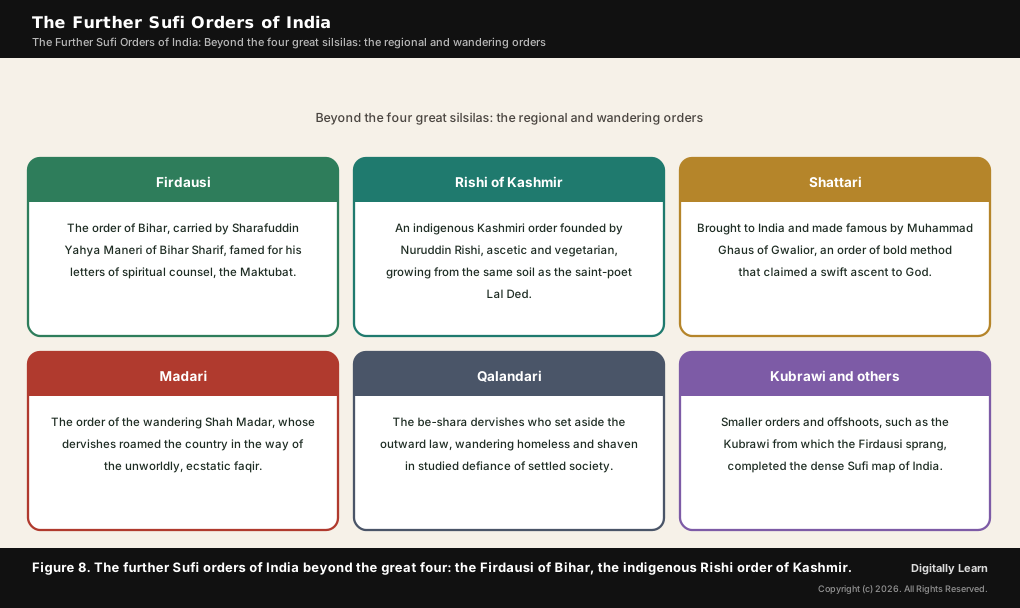
Nuruddin Rishi grew from the same religious soil as the Kashmiri saint-poet Lal Ded, whose verses and example deeply shaped him, and whom the regional and women bhakti saints, including Lal Ded of Kashmir describes among the women bhakti saints. He preached in Kashmiri, not Persian, and taught that Hindus and Muslims had come into the world as partners. In the Rishi order the line between Sufi and yogi, between the Muslim faqir and the Hindu ascetic, grew so thin as almost to vanish, and the order remains a living symbol of Kashmir's shared devotional heritage.
The Shattari, Madari and Qalandari Orders
Smaller orders and wandering dervishes filled out the crowded religious landscape of medieval India.
The Shattari order was made famous in India by Muhammad Ghaus of Gwalior in the sixteenth century, and took its name from a word meaning swift, for it claimed a bold and rapid ascent to God. The Madari, named for the saint Shah Madar, and the Qalandari dervishes belonged to a wilder strain of Sufism: many were be-shara, the dervishes who set aside the outward law, as the origins, doctrines and institutions of Sufism describes, wandering homeless and shaven in defiance of settled society.
- The Shattari, an order of bold method, made prominent by Muhammad Ghaus of Gwalior.
- The Madari, the wandering followers of Shah Madar, given to ecstatic and unworldly ways.
- The Qalandari, the be-shara dervishes who renounced home, property and often the outward forms of the law.
- The Kubrawi, the Central Asian order from which the Firdausi of Bihar had branched.
The Orders as Institutions: Hospice, State and Literature
The Khanqah Network and the Idea of Spiritual Territory
An order held together not as a church but as a network of hospices and an unseen map of spiritual authority.
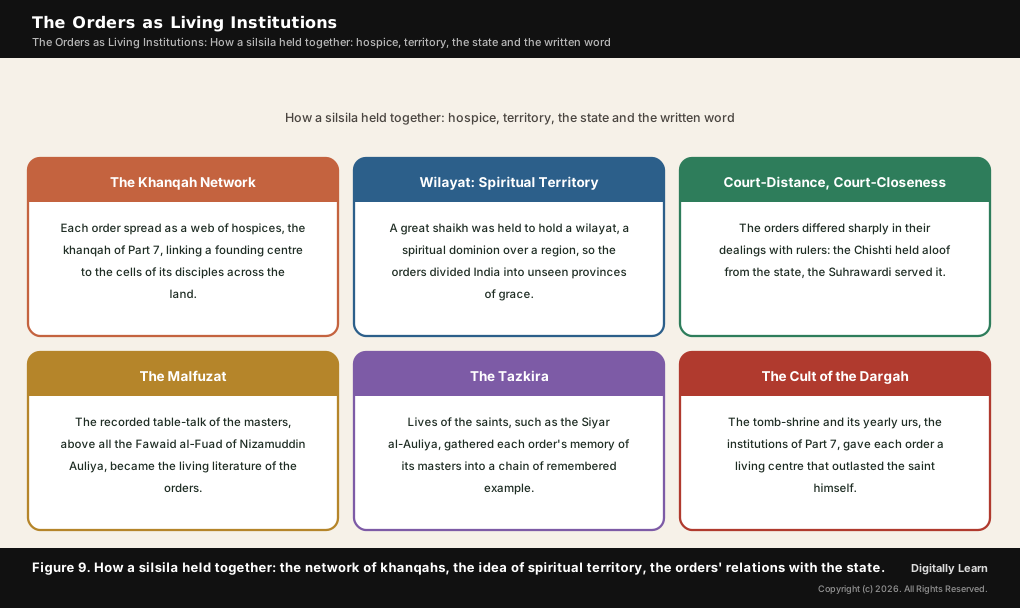
Each silsila spread across India as a web of khanqahs, the hospices described in the origins, doctrines and institutions of Sufism, linking a founding centre to the cells of disciples a master sent out to distant towns. A great shaikh was held to possess a wilayat, a spiritual dominion over a region, so that the orders in effect divided the land into invisible provinces of grace, each watched over by its presiding saint. When a master died, the leadership and the prayer-mat, the khilafat, passed to a chosen successor, and the network renewed itself in each generation.
This was a loose and living structure, not a rigid hierarchy. A disciple owed obedience to his own pir, and through him to the founder, but the orders had no single head and no central command. Their unity lay in shared descent, shared practice and shared veneration of the saints, and it was this flexible, personal form that allowed Sufism to spread so far and to put down roots in so many kinds of Indian soil.
The Orders and the Sultanate: Court-Distance and Court-Closeness
The deepest division among the orders was not over doctrine but over how to stand before the power of the state.
The Chishti made a principle of holding aloof from the Sultanate. They refused state grants and the company of kings, on the conviction that nearness to power corrupted the soul and compromised the saint's freedom to speak for the poor. The Suhrawardi took the opposite view: they accepted office, wealth and titles such as Shaikh-ul-Islam, and saw in the service of a just ruler a way to do good in the world. The Naqshbandi, later, engaged rulers for a third reason again, not for wealth but to bend the state toward orthodoxy.
The rulers, for their part, had a keen interest in the saints. A sultan who could not match the moral authority of a Nizamuddin Auliya still wished to be seen to honour him, for the saint commanded a devotion the throne could not. The tension between the dervish and the king, the holy man who needed no crown and the crowned man who needed the holy man's blessing, runs through the whole political history of the period, and the Sufis and the Bhakti movement under the Delhi Sultanate follows it into the wider religious life of the Sultanate.
The Malfuzat and Tazkira Literature, and the Cult of the Dargah
The orders left a great literature of their own, and a living cult of the tomb that outlasted every saint.
Two kinds of book preserved the memory of the orders. The malfuzat were collections of a master's recorded conversations, and the supreme example, the Fawaid al-Fuad of Nizamuddin Auliya, set the model for the whole genre. The tazkira were lives of the saints, such as the Siyar al-Auliya of Amir Khurd and, later, the Akhbar al-Akhyar of Abdul Haqq, which gathered each order's masters into a remembered chain. Together they form one of the richest bodies of source material for medieval Indian history.
Above all, each order lived on in its dargah, the tomb-shrine of its founding saint, and in the urs, the yearly festival of the saint's death, the institutions set out in the origins, doctrines and institutions of Sufism. At Ajmer, at Delhi, at Multan and at Gulbarga, the shrines became the enduring centres of the orders, drawing Hindu and Muslim pilgrims alike across the centuries. The saint might die, but his dargah kept his order alive, a place of devotion that no change of dynasty could close.
The Significance of the Silsilas and How They Are Examined
The Silsilas and the Making of a Composite Devotional Culture
The orders did more than spread a faith; they helped weave the shared devotional culture of medieval India.
The dargahs of the great saints were open to all, and the spirit of tolerance and love that drew Hindu and Muslim alike to Ajmer or to the shrine of Nizamuddin became one of the most lasting gifts of the orders. In the Hindavi verse and the qawwali of Amir Khusrau, in the indigenous Rishi order of Kashmir, and in the meeting of saint and Sant that the career of Baba Farid records, Sufism reached across the lines of community. This devotional openness runs parallel to the nirguna bhakti of Kabir and Nanak, which the nirguna Sants such as Kabir and Guru Nanak describes, and the fuller story of the bhakti-Sufi synthesis and the composite culture of medieval India, treated in the final part of this series.
It would be wrong to make the saints into modern reformers. They were men of their age, bound by its assumptions, and the social order they left behind was little changed in its outward shape. Yet in softening the hard edges between Hindu and Muslim devotion, in honouring the state of the heart above birth or learning, and in giving ordinary people a religion of love they could feel, the orders enriched Indian culture in ways that long outlived the Sultanates that sheltered them.
The Sufi Orders in the UPSC Examination
For the examination, the orders are best held in the mind as four contrasting types, each tied to its saints and its centre.
The questions turn again and again on the same distinctions: which order embraced the sama and which held back, which kept apart from the state and which served it, and which saint belongs to which centre. A candidate who can place Moinuddin Chishti at Ajmer, Nizamuddin Auliya and Amir Khusrau at Delhi, Bahauddin Zakariya at Multan and Sirhindi at Sirhind, and who knows why the Chishti and the Suhrawardi stood at opposite poles, holds the core of what the examination asks. The practice questions that follow test exactly these points.
Previous Year UPSC-CSE Questions
Previous Year UPSC-CSE Questions By the end you will be able to draft model answers for the following UPSC questions. Each question carries a collapsible framework showing how to approach it in the exam.
- UPSC Prelims 1997 GS-IAssertion (A): The sponsor and the most prominent figure of the Chisti order of Sufis in India is Khwaja Moinuddin Chisti. Reason (R): The Chisti order takes its name from a village Chisti in Ajmer. In the context of the above two statements, which one of the following is correct?
How to approach this Prelims question
Approach: Test the assertion and the reason separately. Confirm that Moinuddin Chishti is the leading figure of the Chishti order in India, then check whether the order is really named after a village in Ajmer.
Trap to watch: The assertion is true and tempts the candidate to accept the reason too; but the order is named after Chisht near Herat, not after any place in Ajmer, so the reason is false.
Key facts to recall:
- Moinuddin Chishti established the Chishti order in India at Ajmer and is its most prominent Indian figure.
- The Chishti order is named after the town of Chisht near Herat, in present-day Afghanistan.
- The order was founded at Chisht by Abu Ishaq Shami, long before Moinuddin carried it to India.
Answer signal: The assertion is true and the reason is false, so the answer is the option stating A true, R false.
- UPSC Prelims 2003 GS-IConsider the following statements:
- Kitab-i-Nauras, a collection of songs in praise of Hindu deities and Muslim saints, was written by Ibrahim Adil Shah II.
- Amir Khusrau was the originator in India of the early form of the musical style known as Qawwali.
Which of these statements is/are correct?
How to approach this Prelims question
Approach: Judge each statement on its own. Check the authorship and character of the Kitab-i-Nauras, then check whether Amir Khusrau is credited as the originator of qawwali in India.
Trap to watch: Both statements are framed precisely and both are correct; the temptation is to doubt the syncretic description of the Kitab-i-Nauras or to misattribute qawwali, but both attributions are sound.
Key facts to recall:
- Amir Khusrau, disciple of Nizamuddin Auliya, is credited with originating qawwali in India.
- The Kitab-i-Nauras, songs praising Hindu deities and Muslim saints, was composed by Ibrahim Adil Shah II of Bijapur.
- Both works show the syncretic, music-loving culture the Chishti order carried into the Deccan.
Answer signal: Both statements are correct, so the answer is both 1 and 2.
- UPSC Mains 2017 GS-IThe spirit of tolerance and love is not only an interesting feature of Indian society from very early times, but it is also playing an important part at the present. Elaborate.
How to structure the answer in the exam
Introduction: The spirit of tolerance and love has been a recurring feature of Indian society, expressed in its religious movements, its shared shrines and its devotional culture, and it remains a resource for a plural society today.
Body (sub-themes to develop):
- The Sufi orders: the open dargahs of the Chishti saints, the syncretic qawwali and Hindavi verse of Amir Khusrau, and the indigenous Rishi order of Kashmir, all drawing Hindu and Muslim together.
- The bhakti movement: the nirguna saints such as Kabir and Nanak who set love of God above caste and creed, treated in the earlier parts of this series.
- Shared institutions and festivals where the communities met, and the meeting of saint and Sant in figures such as Baba Farid.
- A balanced view: the saints were men of their age and did not abolish social divisions, yet they softened the edges between communities.
- The present relevance: this inherited spirit of tolerance and love remains a foundation for harmony in a diverse modern India.
Conclusion: From the Sufi dargahs and the bhakti saints to the present, the spirit of tolerance and love has been a living thread in Indian society, and one worth renewing in our own time.
Sources and Further Reading
- NCERT, Themes in Indian History Part II (the Bhakti-Sufi traditions, the Chishti and Suhrawardi orders)
- Wikipedia: Chishti Order (name from Chisht near Herat; the order in India; sama)
- Wikipedia: Mu'in al-Din Chishti (Gharib Nawaz, Ajmer)
- Wikipedia: Nizamuddin Auliya (Mahbub-i-Ilahi, Delhi)
- Wikipedia: Amir Khusrau (Tuti-i-Hind, qawwali, sitar)
- Wikipedia: Fariduddin Ganjshakar (Baba Farid, Pakpattan, Adi Granth)
- Wikipedia: Bande Nawaz (Gesudaraz, Gulbarga, the Deccan)
- Wikipedia: Bahauddin Zakariya (Suhrawardi, Multan, Shaikh-ul-Islam)
- Wikipedia: Qadiriyya (Abdul Qadir Jilani of Baghdad)
- Wikipedia: Mian Mir (Qadiri, the guide of Dara Shukoh)
- Wikipedia: Khwaja Baqi Billah (Naqshbandi pioneer in India)
- Wikipedia: Ahmad Sirhindi (Mujaddid Alf-i Sani, Naqshbandi)
- Wikipedia: Sharfuddin Yahya Maneri (Firdausi order, Bihar)
- Wikipedia: Nund Rishi (the Rishi order of Kashmir)
- Ministry of Culture, Indian Culture portal: the Sufi tradition of India
- Archaeological Survey of India: monuments and Sufi shrines of medieval India
- Indira Gandhi National Centre for the Arts: Sufism and the devotional arts
- National Portal of India: art and culture of medieval India
Editorial Disclaimer
This article is for UPSC preparation. The account of the Sufi orders follows the standard scholarship on medieval Indian religion. The dates of several saints, such as Moinuddin Chishti and Baba Farid, are traditional and uncertain, and the foundation-stone story of Miyan Mir at the Golden Temple is a later legend; these are flagged in the text.