


Overview
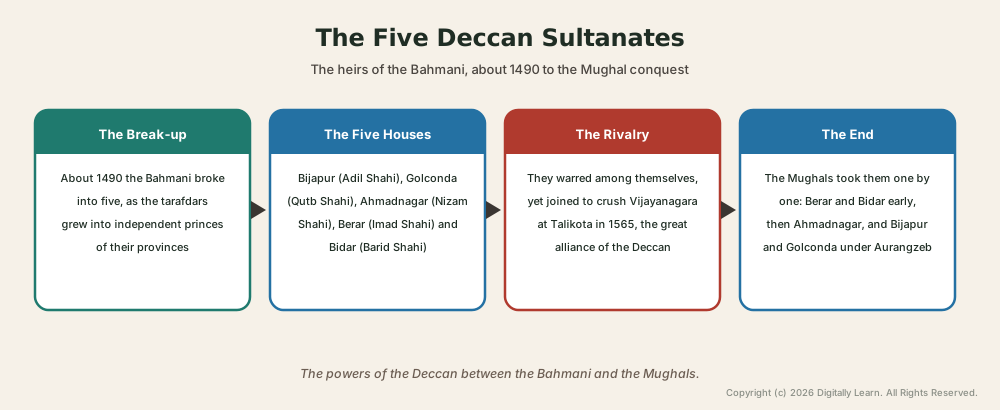
The five Deccan Sultanates were the Muslim kingdoms that rose from the break-up of the Bahmani Sultanate about 1490: Bijapur of the Adil Shahi, Golconda of the Qutb Shahi, Ahmadnagar of the Nizam Shahi, Berar of the Imad Shahi, and Bidar of the Barid Shahi. As the central power of the Bahmani failed, its provincial governors grew into independent princes, each founding a dynasty in his own province. The five warred among themselves, yet joined to crush Vijayanagara at the Battle of Talikota in 1565; and they were taken, one by one, by the Mughals. This part covers the break-up, the five houses and their capitals, the rivalry and the end, and the exam focus.
The Break-up of the Bahmani
From One Kingdom to Five
What is the significance of the break-up: out of the one Bahmani kingdom rose the five Deccan Sultanates, the powers that ruled the Muslim Deccan for nearly two centuries.
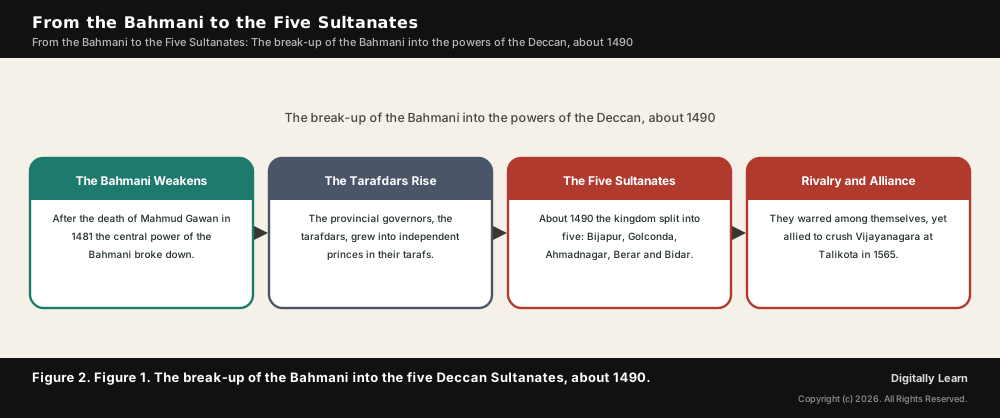
The Bahmani fell apart after Mahmud Gawan. With the death of the great wazir in 1481, as the fourth part of this series described, the central power of the Bahmani broke down. The provincial governors, the tarafdars, who held the great provinces, grew into independent princes, and about 1490 the one kingdom split into five separate sultanates.
Each governor founded a dynasty. In each of the chief provinces a powerful noble threw off the rule of Bidar and made himself a king, founding a line that would rule for generations. The figure below sets out the break-up of the Bahmani into the five.
The Five Sultanates and their Capitals
The Five Houses, Dynasties and Capitals
What is the significance of the five houses: each had its own dynasty, capital and founder, and the five together held the whole Deccan between the Bahmani and the Mughals.
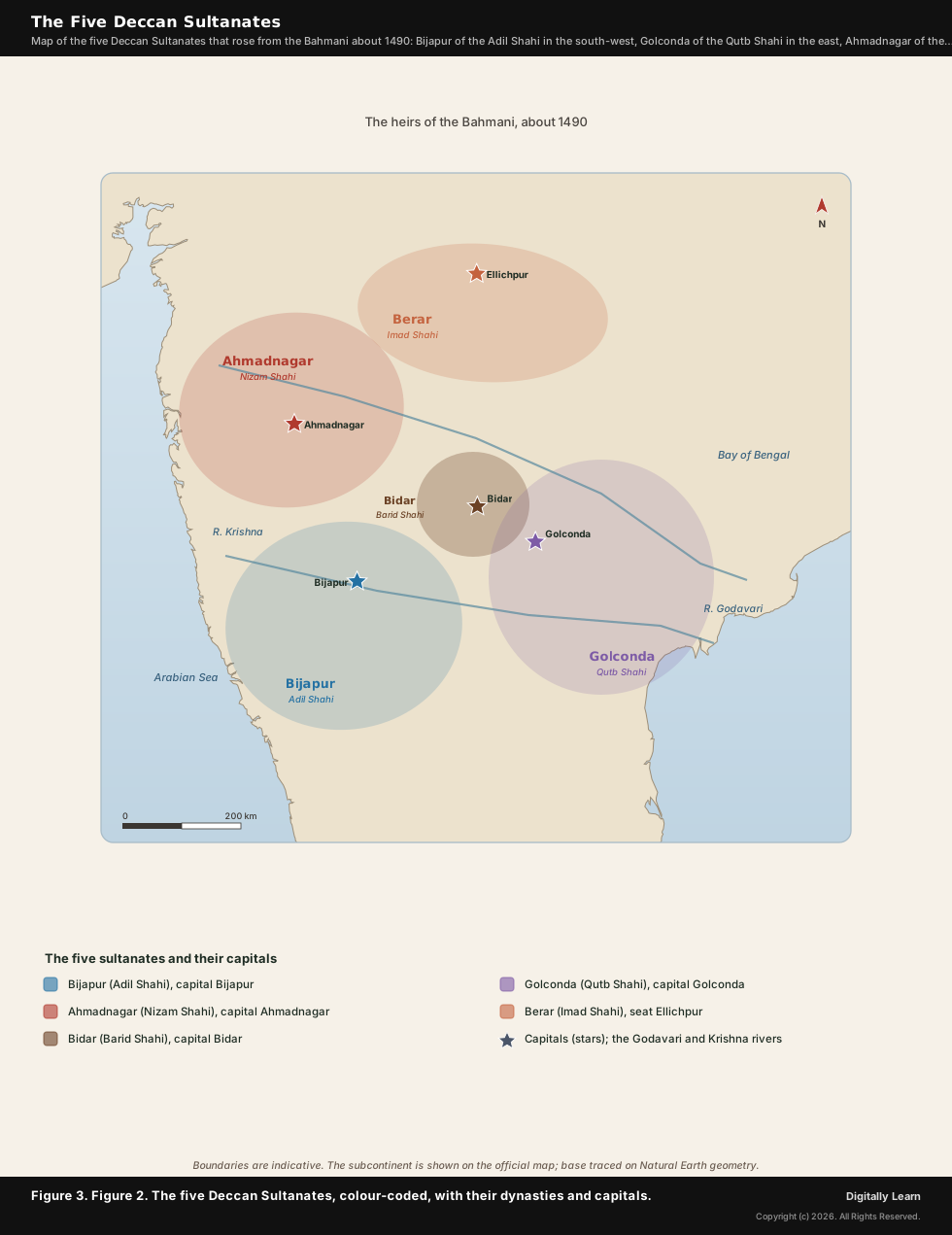
The five sultanates were these. Bijapur was ruled by the Adil Shahi dynasty, founded by Yusuf Adil Shah; Golconda by the Qutb Shahi, founded by Sultan Quli Qutb-ul-Mulk; Ahmadnagar by the Nizam Shahi, founded by Malik Ahmad Nizam Shah I; Berar by the Imad Shahi, with its seat at Ellichpur; and Bidar by the Barid Shahi, founded by Qasim Barid I. The table below sets them out.
| Sultanate | Dynasty | Capital | Founder |
|---|---|---|---|
| Bijapur | Adil Shahi | Bijapur | Yusuf Adil Shah (1490) |
| Golconda | Qutb Shahi | Golconda | Sultan Quli Qutb-ul-Mulk |
| Ahmadnagar | Nizam Shahi | Ahmadnagar | Malik Ahmad Nizam Shah I (1490) |
| Berar | Imad Shahi | Ellichpur (Achalpur) | Fathullah Imad-ul-Mulk (1490) |
| Bidar | Barid Shahi | Bidar | Qasim Barid I (1492) |
They lay across the Deccan, from Bijapur and Ahmadnagar in the west to Golconda in the east, with Berar in the north and the small Bidar in the centre. The map below sets out the five and their capitals.
The Greater and the Lesser Powers
Distinguishing the great from the small: three of the five were great powers, and two were small and soon swallowed by their neighbours.
Bijapur, Golconda and Ahmadnagar were the three great houses. Bijapur, under the Adil Shahis, grew rich and strong, and its sultan Ibrahim Adil Shah II was a great patron of music and the arts, the author of the Kitab-i-Nauras. Golconda, under the Qutb Shahis, grew wealthy on the diamonds of its mines and built the city of Hyderabad. Ahmadnagar, under the Nizam Shahis, held the north-west and later, under the regent Malik Ambar, long resisted the Mughals.
Berar and Bidar were the two lesser houses. Berar, the Imad Shahi kingdom of the north with its seat at Ellichpur, was the first to be swallowed, taken by Ahmadnagar; and the small Bidar of the Barid Shahis, the rump of the old Bahmani capital, was in time absorbed by Bijapur. So the five became three, and then fell to the Mughals.
The Rivalry and the End
The Alliance against Vijayanagara
What is the significance of the rivalry: the five fought one another without end, yet at the one great moment they joined to destroy their common enemy, Vijayanagara.
They were bitter rivals. The five sultanates warred among themselves for the lands of the Deccan, each seeking to grow at the cost of the others, so that no one of them could master the rest. Vijayanagara, to the south, played them off one against another and grew rich on their quarrels.
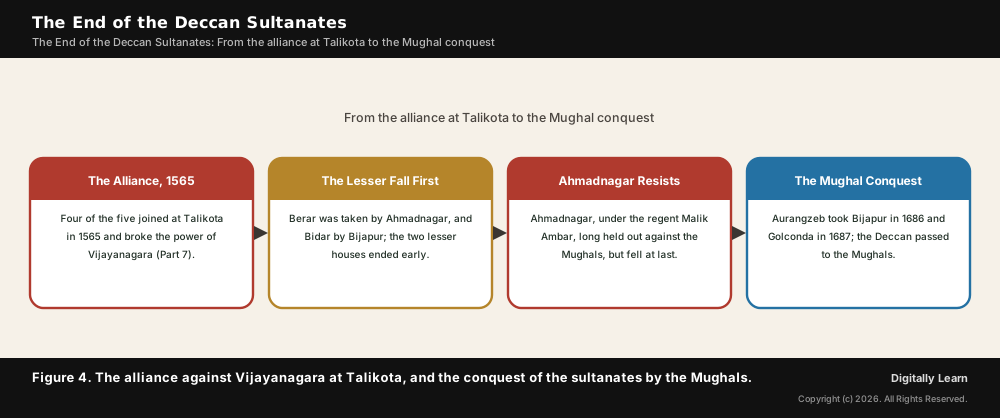
Yet they joined against Vijayanagara. In 1565 four of the five, Bijapur, Ahmadnagar, Golconda and Bidar, laid aside their quarrels and joined in a great alliance against Vijayanagara, and at the Battle of Talikota they broke its power forever, as the next part of this series relates. The figure below sets out the alliance and the end of the sultanates.
The Coming of the Mughals
Distinguishing the end of the sultanates: the kingdoms that had broken Vijayanagara were themselves broken, one by one, by the power of the Mughals from the north.
The Mughals came down into the Deccan. From the reign of Akbar the Mughals pressed southward, and the sultanates fell to them in turn. Berar and then Ahmadnagar were taken, though Ahmadnagar, under the able regent Malik Ambar, held out long against them. The struggle for the Deccan ran on for decades.
Aurangzeb finished the work. In his long southern war the emperor Aurangzeb annexed Bijapur in 1686 and Golconda in 1687, and the last of the Deccan Sultanates passed into the Mughal empire. So ended the powers that had risen from the Bahmani, two hundred years before.
UPSC Relevance and Exam Focus
Where the Deccan Sultanates Fit in the UPSC-CSE Syllabus
This topic belongs to General Studies Paper I: medieval Indian history, and the five Deccan Sultanates, with their dynasties, capitals and their end, are a regular ground for questions.
The questions most often test the five dynasty-capital pairs, the patrons of the arts such as Ibrahim Adil Shah II, and the way each sultanate came to its end at the hands of the Mughals.
Several linked points recur and are worth holding in working memory:
- Bijapur: The Adil Shahi dynasty, founded by Yusuf Adil Shah; the patron-sultan Ibrahim Adil Shah II.
- Golconda: The Qutb Shahi dynasty, rich on diamonds, the builders of Hyderabad.
- Ahmadnagar: The Nizam Shahi dynasty, whose regent Malik Ambar resisted the Mughals.
- Berar and Bidar: The Imad Shahi (seat Ellichpur) and the Barid Shahi, the two lesser houses.
- The end: Bijapur taken by Aurangzeb in 1686, Golconda in 1687.
A 2004 question asked how the Nizam Shahis of Ahmadnagar came to an end; the answer was that Ahmadnagar was annexed into the Mughal empire, and its sultan was consigned to life imprisonment, as the long Mughal conquest of the Deccan closed.
A 2003 question noted that the Kitab-i-Nauras, a collection of songs in praise of Hindu deities and Muslim saints, was written by Ibrahim Adil Shah II of Bijapur; that statement was correct, and it marks the rich Indo-Islamic culture of the Deccan Sultanates.
Previous Year UPSC-CSE Questions
Previous Year UPSC-CSE Questions By the end you will be able to draft model answers for the following UPSC questions. Each question carries a collapsible framework showing how to approach it in the exam.
- UPSC Prelims 2004 GS-IHow did the dynasty of Nizam Shahis of Ahmadnagar come to an end?
How to approach this Prelims question
Approach: Recall the Mughal conquest of the Deccan: Ahmadnagar was annexed into the Mughal empire and its sultan consigned to life imprisonment, the standard account of the dynasty's end.
Trap to watch: Malik Ambar was the regent who resisted the Mughals, but the dynasty's end was the Mughal annexation, not the single battle of the other options.
Key facts to recall:
- The Nizam Shahis ruled Ahmadnagar.
- Ahmadnagar was annexed into the Mughal empire.
- Its last sultan was consigned to life imprisonment.
Answer signal: Annexed into the Mughal empire; the sultan to life imprisonment.
- UPSC Prelims 2003 GS-IConsider the following statement:
- Kitab-I-Nauras, a collection of songs in praise of Hindu deities and Muslim saints, was written by Ibrahim Adil Shah II.
- Amir Khusrau was the originator in India of the early form of the musical style known as Qawwali.
Which of these statements is/are correct?
How to approach this Prelims question
Approach: Test each: the Kitab-i-Nauras was written by Ibrahim Adil Shah II of Bijapur (1, true); Amir Khusrau originated the Qawwali in India (2, true). Both hold.
Trap to watch: Do not reject statement 1 by forgetting Ibrahim Adil Shah II of Bijapur; he was the author of the Kitab-i-Nauras.
Key facts to recall:
- Ibrahim Adil Shah II of Bijapur wrote the Kitab-i-Nauras.
- It praises both Hindu deities and Muslim saints.
- Amir Khusrau originated the Qawwali in India.
Answer signal: Both 1 and 2.
Sources and Further Reading
Editorial Disclaimer
This article is for UPSC preparation. The history of the Deccan Sultanates rests on the Persian chronicles and the standard scholarship on the medieval Deccan.