


Overview
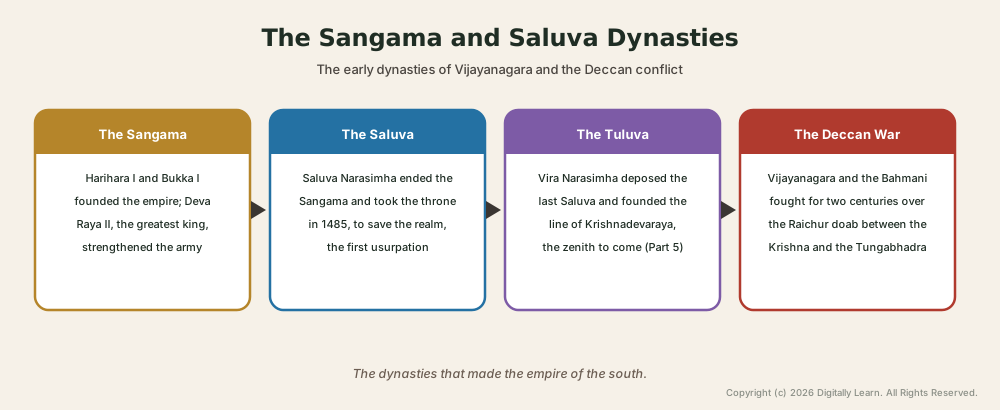
The Sangama and Saluva were the first two of the four dynasties that ruled the Vijayanagara Empire. The Sangama dynasty (1336-1485), the line of the founders Harihara I and Bukka Raya I, built the empire and carried it to its first greatness under Deva Raya II. As the Sangama kings weakened, Saluva Narasimha seized the throne in 1485, the first of two usurpations that brought in the short Saluva line and then the Tuluva of Krishnadevaraya. Through these reigns ran the long war with the Bahmani Sultanate for the Raichur doab, the rich tract between the Krishna and the Tungabhadra. This part covers the Sangama, the usurpations, the Deccan conflict, and the exam focus.
The Sangama Dynasty, the Founders of the Empire
The Line of Harihara and Bukka
What is the significance of the Sangama: it was the founding dynasty of Vijayanagara, which built the empire of the south and held it for a hundred and fifty years.
The empire began with the Sangama. The brothers Harihara I and Bukka Raya I, sons of Sangama, founded Vijayanagara in 1336 and gave their father's name to the line. Harihara and Bukka, and after them Harihara II, fought the Sultanate of Madurai and the Bahmani, and made Vijayanagara the master of the south.
Four dynasties ruled the empire in turn, the Sangama, the Saluva, the Tuluva and the Aravidu, each taking the throne from the one before it. The Sangama was the first and the longest, and held the throne from 1336 to 1485. The figure below sets out the four lines.
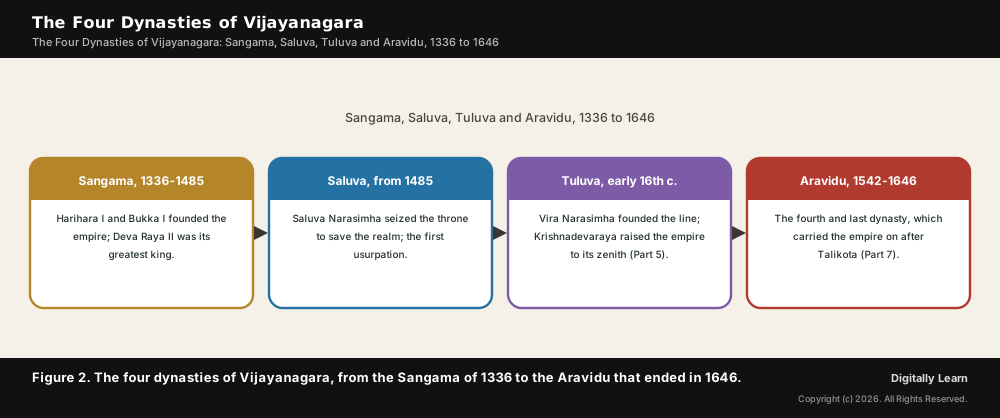
The table below names the four dynasties, with their periods and their chief kings, as a guide to the reigns that this part and the later ones describe.
| Dynasty | Period | Founder and chief kings |
|---|---|---|
| Sangama | 1336-1485 | Harihara I and Bukka Raya I, the founders; Deva Raya II, the greatest. |
| Saluva | From 1485 | Saluva Narasimha, who took the throne in the first usurpation. |
| Tuluva | Early sixteenth century | Vira Narasimha, the founder; Krishnadevaraya, the zenith (Part 5). |
| Aravidu | 1542-1646 | The fourth and last line, which carried the empire on after Talikota (Part 7). |
Deva Raya II and the Height of the Sangama
Distinguishing the greatest Sangama king: Deva Raya II carried the dynasty to its height, and his court drew envoys from across the sea.
Deva Raya II was the greatest of the Sangama kings. In the first half of the fifteenth century he strengthened the army of Vijayanagara, and to match the horsemen of the Bahmani he took Muslim cavalry and archers into his service, a notable step for a Hindu king of the south. Under him the empire reached from coast to coast.
His wealth drew foreign visitors. The Persian envoy Abdur Razzaq, sent by the ruler of Persia, came to his court and left a famous account of the splendour of Vijayanagara, its markets and its walls. His description is one of the great foreign records of the empire, of which Part 8 tells more.
The Saluva and Tuluva Successions
Saluva Narasimha and the First Usurpation
What is the significance of the first usurpation: it ended the founding Sangama dynasty and set the pattern by which a strong general would take the throne to save the realm.
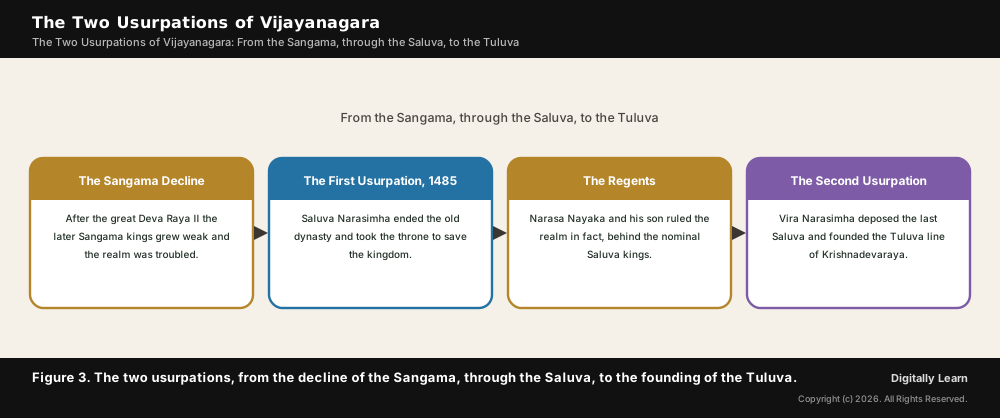
The later Sangama kings grew weak. After Deva Raya II the dynasty declined, the provinces grew restless, and the empire was in danger. In 1485 the powerful noble Saluva Narasimha put an end to the old dynasty and assumed the royal title, founding the Saluva dynasty. He did so, the chroniclers say, to save the kingdom from further decay, and this was the first of the two usurpations of the empire.
The Saluva line was short. Saluva Narasimha ruled for a few years and left young sons, and the real power passed to his able commander, who guarded the throne for the boy-kings. The figure below sets out the two usurpations that carried the empire from the Sangama to the Tuluva.
The Regents and the Rise of the Tuluva
Distinguishing the second usurpation: it carried the throne from the Saluva to the Tuluva, the dynasty that would raise the empire to its zenith.
The regents ruled behind the throne. After Saluva Narasimha, his commander Narasa Nayaka, and then his son Vira Narasimha, governed the empire in fact while the nominal Saluva kings reigned in name. In the early sixteenth century Vira Narasimha deposed the last Saluva ruler and took the crown for himself, founding the Tuluva dynasty, the third line of Vijayanagara.
From the Tuluva came the empire's greatest king. Vira Narasimha was succeeded by his younger brother, Krishnadevaraya, under whom Vijayanagara reached its political and cultural height, and whom Part 5 describes in full. Krishnadevaraya in turn was followed by his half-brother, Achyuta Raya. The fourth and last dynasty, the Aravidu, would carry the empire on after the disaster of Talikota, which Part 7 relates.
The Long War with the Bahmani
The Raichur Doab and the Frontier Wars
What is the significance of the Deccan conflict: the long war of Vijayanagara and the Bahmani over the Raichur doab ran through the whole age and shaped the history of the medieval Deccan.
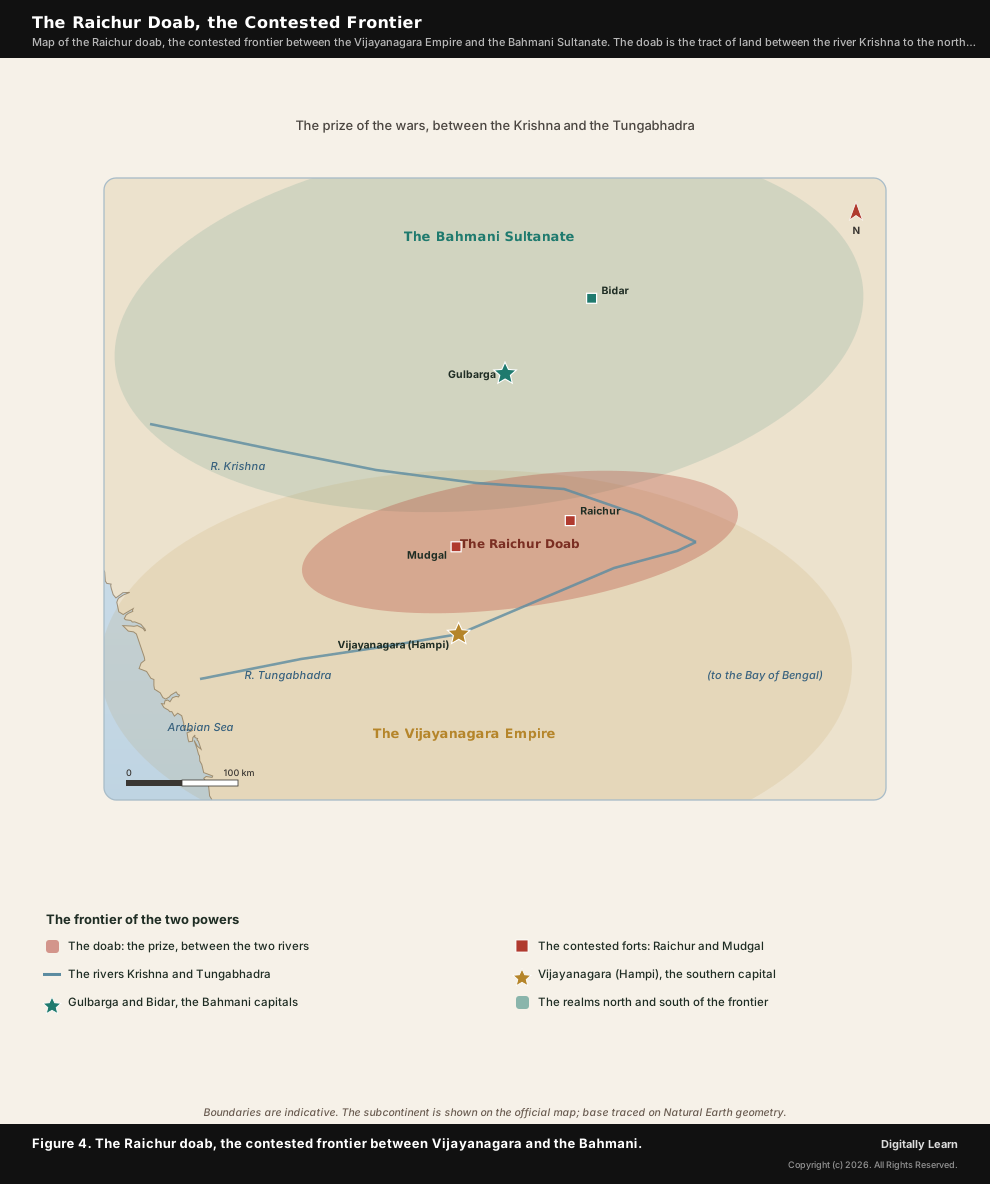
The frontier lay between two rivers. The chief prize of the wars was the Raichur doab, the rich tract of land between the Krishna to the north and the Tungabhadra to the south, holding the strong forts of Raichur and Mudgal. Vijayanagara and its capital lay south of the Tungabhadra; the Bahmani capitals of Gulbarga and Bidar lay north of the Krishna; and the doab between them was fought over again and again.
The war ran for two centuries. It was a contest of two worlds, the Hindu south of Vijayanagara and the Muslim Deccan of the Bahmani, waged with great armies and much slaughter. The map below sets out the contested frontier; the later wars, and the height of the Bahmani under Mahmud Gawan, the next parts of this series describe.
UPSC Relevance and Exam Focus
Where the Vijayanagara Dynasties Fit in the UPSC-CSE Syllabus
This topic belongs to General Studies Paper I: medieval Indian history, and the dynasties of Vijayanagara, with their order and their usurpations, are a regular ground for questions in the Prelims.
The questions most often test the order of the four dynasties, the founder Saluva Narasimha and the first usurpation, and the line from Vira Narasimha to Krishnadevaraya and Achyuta Raya.
Several linked points recur and are worth holding in working memory:
- The four dynasties: Sangama (1336-1485), Saluva, Tuluva and Aravidu, in that order.
- Deva Raya II: The greatest Sangama king, who took Muslim horsemen and archers into his army.
- Saluva Narasimha: Ended the Sangama and founded the Saluva dynasty in 1485, the first usurpation.
- Vira Narasimha: Deposed the last Saluva, founded the Tuluva line, and was succeeded by his younger brother Krishnadevaraya.
- The Raichur doab: The contested tract between the Krishna and the Tungabhadra, fought over by Vijayanagara and the Bahmani.
A 2004 question set out the dynastic transitions in four statements, all of them correct: Saluva Narasimha ended the Sangama and took the throne; Vira Narasimha deposed the last Saluva and seized it; Vira Narasimha was succeeded by his younger brother Krishnadeva Raya; and Krishnadeva Raya by his half-brother Achyuta Raya.
A 2003 question tested the same usurpation as an assertion and reason: that Saluva Narasimha put an end to the old dynasty and assumed the royal title, because he wished to save the kingdom from further decay. Both are true, and the reason explains the assertion, as this part has shown.
Previous Year UPSC-CSE Questions
Previous Year UPSC-CSE Questions By the end you will be able to draft model answers for the following UPSC questions. Each question carries a collapsible framework showing how to approach it in the exam.
- UPSC Prelims 2004 GS-IConsider the following statements:
- Narasimha Saluva ended the Sangama dynasty and seized the throne for himself and started the Saluva dynasty.
- Vira Narasimha deposed the last Saluva ruler and seized the throne for himself.
- Vira Narasimha was succeeded by his younger brother, Krishnadeva Raya.
- Krishnadeva Raya was succeeded by his half-brother, Achyuta Raya.
Which of these statements given above are correct?
How to approach this Prelims question
Approach: Test each statement against the succession: Saluva Narasimha ended the Sangama (1); Vira Narasimha deposed the last Saluva (2); Krishnadeva Raya was Vira Narasimha's younger brother (3); Achyuta Raya was Krishnadeva Raya's half-brother (4). All hold.
Trap to watch: Each statement is individually true, so the answer is all four; do not drop a correct statement by assuming the question must exclude one.
Key facts to recall:
- Saluva Narasimha ended the Sangama and founded the Saluva dynasty.
- Vira Narasimha deposed the last Saluva and founded the Tuluva dynasty.
- Krishnadeva Raya was Vira Narasimha's younger brother; Achyuta Raya was his half-brother.
Answer signal: 1, 2, 3 and 4.
- UPSC Prelims 2003 GS-IConsider the following statements:
- Assertion (A): Saluva Narasimha put an end to the old dynasty and assumed the royal title.
- Reason (R): He wanted to save the kingdom from further degeneration and disintegration.
Which one of the following is correct in respect of the above statements?
How to approach this Prelims question
Approach: Confirm the assertion (Saluva Narasimha ended the Sangama and took the title), then the reason (to save the failing kingdom), then test whether the reason explains the assertion. It does.
Trap to watch: Do not mark R as a mere separate fact; the decline of the realm is the actual motive for the usurpation, so R is the correct explanation of A.
Key facts to recall:
- Saluva Narasimha ended the Sangama and assumed the royal title in 1485.
- The later Sangama kings had grown weak and the realm was in danger.
- He usurped the throne to save the kingdom from further decay.
Answer signal: Both A and R true, and R is the correct explanation of A.
Sources and Further Reading
Editorial Disclaimer
This article is for UPSC preparation. The history of the Vijayanagara dynasties rests on the inscriptions, the foreign accounts and the standard scholarship on the medieval Deccan.