

Overview
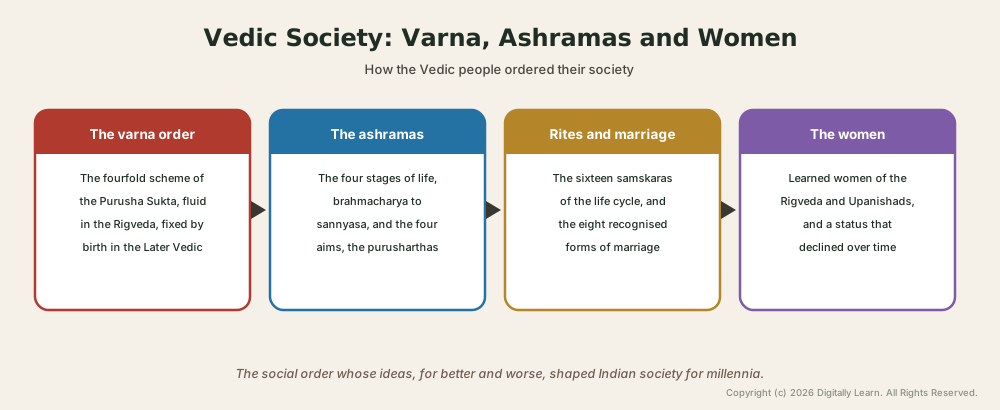
The society of the Vedic Age changed as deeply as its polity. In the Rigvedic age the social order was relatively fluid, built on kinship and occupation; by the Later Vedic age it had hardened into the fixed, birth-based varna order whose fourfold scheme, first named in the Purusha Sukta, would shape Indian society for ages. Around this order grew the ideal of the four ashramas, the stages of a life, and the four purusharthas, its aims; a long series of life-cycle rites, the samskaras; and the recognised forms of marriage. Running through it all is the changing position of women, relatively respected in the Rigveda, when some composed its hymns, but declining in the age that followed. This part sets out that whole social world.
The Varna Order: From Fluid Classes to Birth-Based Hierarchy
The Purusha Sukta and the Fourfold Varna
What is the significance of varna: the fourfold varna order is the single most consequential idea of Vedic society, and the examiner expects a clear grasp of where it is first named and how it changed.
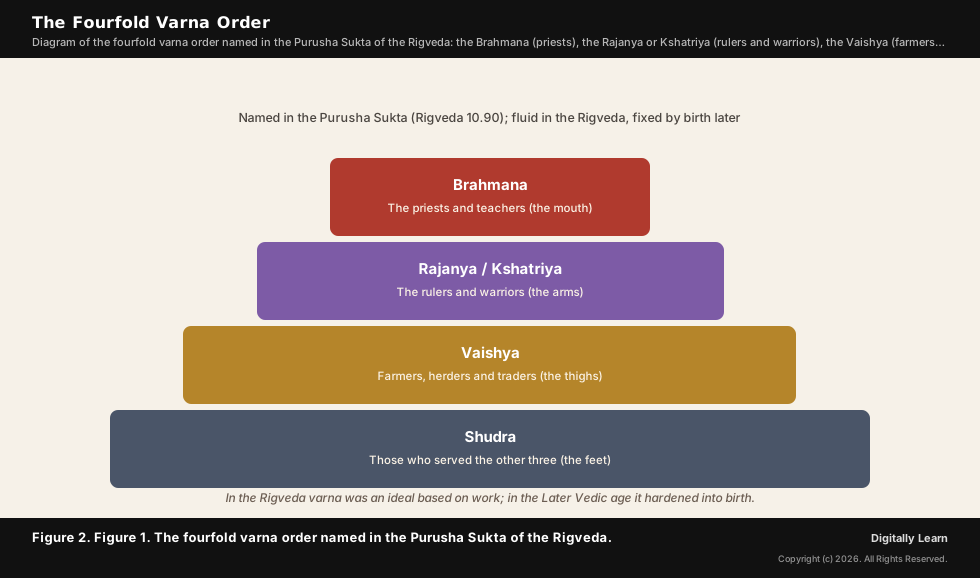
The four varnas are first set out together in the Purusha Sukta, a late hymn of the Rigveda (10.90), which pictures them as born from the body of the cosmic being.
From its mouth came the Brahmana, the priest; from its arms the Rajanya (later the Kshatriya), the ruler and warrior; from its thighs the Vaishya, the farmer, herder and trader; and from its feet the Shudra, who served the rest. As the part of the Indus series on the Aryan question notes, this hymn is a late addition to the Rigveda.
The Hardening of Varna in the Later Vedic Age
Distinguishing the change: in the Rigveda varna was still an ideal rather than a rigid reality, closer to a division of work than of birth, and a person's group was not strictly fixed. The famous Purusha Sukta itself is the exception that names the four, and it is late.
In the Later Vedic age this changed. The four varnas hardened into a birth-based hierarchy with fixed roles and ritual status: the priest and the warrior rose above the vaishya farmer and the serving shudra, who was barred from the Vedic ritual. Certain groups beyond the four, such as the Chandalas, began to be looked down upon, the first stirrings of the much later idea of untouchability, which became a developed institution only in the centuries after the Vedic age.
Family, Kinship and the Gotra System
Patriliny, the Household and the Rule of Gotra Exogamy
What is the significance of the family: beneath the varna order the basic cell of Vedic society was the family, and its form left a deep mark on Indian social life.
The Vedic family was patriarchal and patrilineal, headed by the eldest male, the grihapati, and tracing descent through the father. Families that traced themselves to a common ancestor, usually a sage, formed a gotra, and the rule grew that one should not marry within one's own gotra. The household, with its sacred fire, was the centre of the rituals of daily life, and the ideal of the grihastha, the householder, was the heart of the social order.
The Four Ashramas and the Four Purusharthas
Brahmacharya to Sannyasa: The Stages of Life
What is the significance of the ashramas: the ashramas gave a man's life an ordered shape, dividing it into four stages, and the scheme is a favourite examination point.
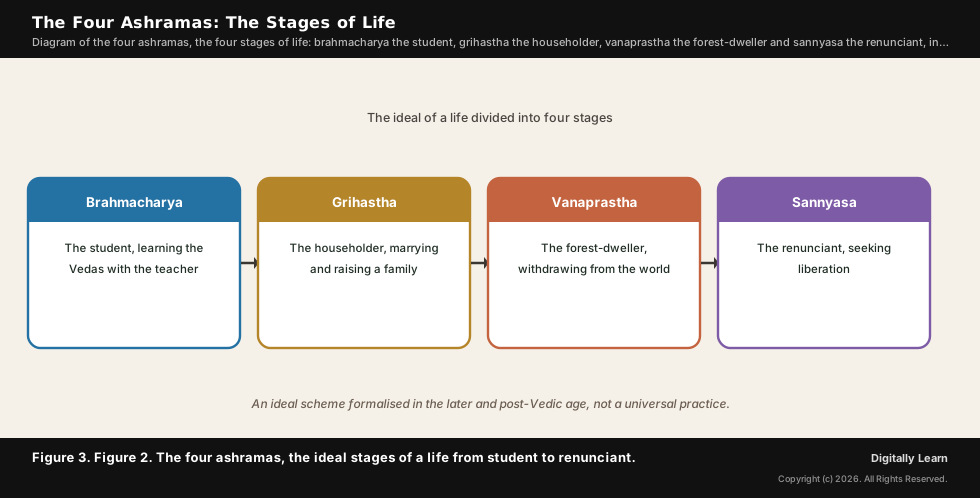
Distinguishing the four stages: brahmacharya, the celibate student living with his teacher; grihastha, the householder who marries, raises a family and supports the others; vanaprastha, the forest-dweller who gradually withdraws from the world; and sannyasa, the renunciant who gives up everything to seek liberation. The scheme was an ideal, formalised in the later and post-Vedic age, not a rule that everyone followed.
Dharma, Artha, Kama and Moksha: The Aims of Life
Distinguishing the four aims: alongside the stages of life the tradition set out four purusharthas, the proper aims of a human life: dharma, righteous duty; artha, wealth and the means of living; kama, desire and pleasure; and moksha, liberation.
The earlier texts speak of the first three together, the trivarga, and moksha was added as the fourth and highest aim in the philosophical, Upanishadic phase, balancing worldly life against the goal of release.
The Samskaras and the Forms of Vedic Marriage
The Sixteen Samskaras of the Life Cycle
What is the significance of the samskaras: from birth to death the Vedic life was marked by a series of sacraments, the samskaras, which knit the individual into the social and ritual order.
These life-cycle rites are counted, in the standard reckoning, as sixteen (the shodasha samskaras), though the texts vary. They run from rites before and at birth, through the naming of the child (namakarana), to the great upanayana, the sacred-thread initiation that began a boy's Vedic education, then vivaha, marriage, and at the last the funeral rites, the antyeshti. Each marked a passage from one stage of life to the next.
The Eight Recognised Forms of Marriage
Distinguishing the forms of marriage: the tradition recognised eight forms of marriage, four approved and four disapproved, set out in the later law-books but rooted in the Vedic world.
| Approved forms | Disapproved forms |
|---|---|
| Brahma (the most honoured: gift of the daughter to a learned groom) | Asura (the groom pays a bride-price) |
| Daiva (the daughter given to the officiating priest) | Gandharva (a love-match by mutual consent) |
| Arsha (a token gift of cattle from the groom) | Rakshasa (marriage by capture) |
| Prajapatya (a simple gift of the daughter) | Paishacha (the most condemned: by stealth or force) |
The list shows a clear order of respectability, from the priestly Brahma form down to the condemned Paishacha, and reflects the growing concern of the later texts to regulate marriage and lineage.
Education and the Gurukula Tradition
Upanayana, the Acharya and Vedic Learning
What is the significance of education: Vedic learning was carried not in schools but in the household of the teacher, and the way it was organised tells us much about the society.
Education began with the upanayana, the initiation that admitted a boy to study. He then lived in the gurukula, the home of the teacher, the acharya or guru, serving him and learning the Vedas by heart through recitation. The learning was oral, intimate and residential, and it was largely closed to the shudra and, increasingly, to women, a narrowing that is one measure of the hardening of the social order.
The Position of Women: Rigvedic Standing and Later Decline
The Learned Women of the Rigveda and the Upanishads
What is the significance of the position of women: the place of women in the Vedic age, and how it changed, is one of the most asked and most debated themes of the period, so the facts must be precise.
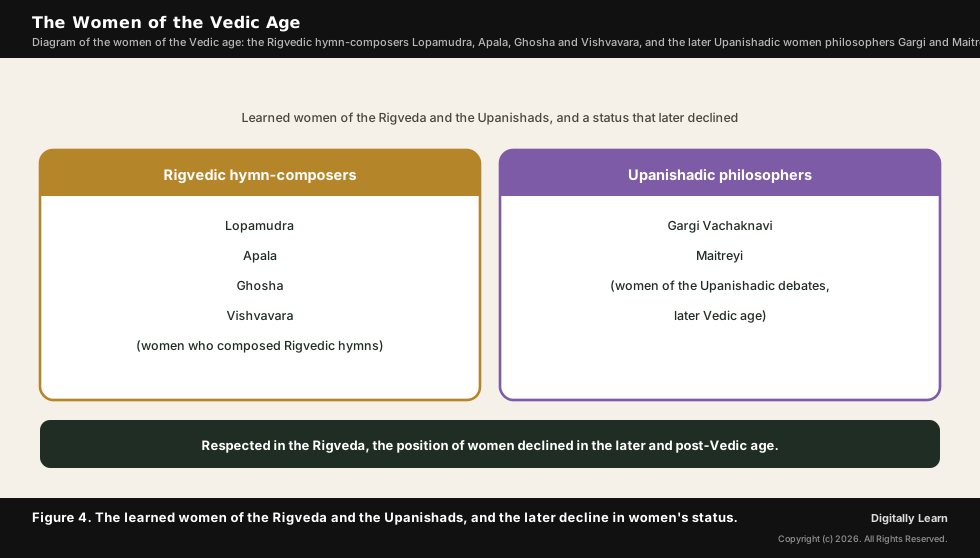
In the Rigvedic age women held a relatively respected place: they could be educated, take part in the assemblies, and some even composed hymns of the Rigveda. Among these women sages were Lopamudra, Apala, Ghosha and Vishvavara. Later, in the Upanishadic phase, the tradition still produced celebrated women philosophers, above all Gargi and Maitreyi, who appear in the debates of the Brihadaranyaka Upanishad.
Distinguishing the decline: yet over the long run the position of women declined. As the social order hardened, women were increasingly excluded from Vedic study and from public life, a narrowing carried furthest by the law-books of the post-Vedic age. The Vedic record thus holds both the memory of learned women and the beginnings of the restrictions that followed.
The Parallel Change in the Economy
Distinguishing the linked change: the social change did not stand alone. As the Mains question on the Rig Vedic to Later Vedic transition reminds us, society and economy changed together.
The Rigvedic cattle-keeping economy, in which wealth was reckoned in cattle and given as voluntary gifts, gave way in the Later Vedic age to settled agriculture on the doab, worked with iron and yielding a surplus from which the king drew tribute. That surplus underpinned the more stratified, birth-based society, the two changes advancing together; the economy is treated in full in the next part of this series.
UPSC Relevance and Exam Focus
Where Vedic Society Fits in the UPSC-CSE Syllabus
This topic belongs to General Studies Paper I: ancient Indian history and culture, and Vedic society, especially varna and the position of women, is among the most reliably examined areas of the period.
For Prelims, hold the firm facts: the four varnas are first named in the Purusha Sukta (Rigveda 10.90); varna was fluid in the Rigveda and birth-based by the Later Vedic age; the four ashramas and four purusharthas; the sixteen samskaras and the eight forms of marriage; and the Rigvedic women sages Lopamudra, Apala, Ghosha and Vishvavara.
For Mains, the social change is one strand of the Rig Vedic to Later Vedic transition, alongside the changes in economy and polity, which a full answer weaves together.
Recurring linked concepts an aspirant should keep in working memory:
- Varna: First named in the Purusha Sukta; fluid in the Rigveda, birth-based later.
- The ashramas: Brahmacharya, grihastha, vanaprastha, sannyasa.
- The purusharthas: Dharma, artha, kama and moksha (moksha added later).
- Marriage: Eight forms, Brahma the most honoured, Paishacha the most condemned.
- Women: Respected in the Rigveda (Lopamudra, Apala, Ghosha), declining later.
A common Prelims trap is to place Gargi and Maitreyi among the Rigvedic hymn-composers. They are women of the Upanishadic age; the Rigvedic women sages are Lopamudra, Apala, Ghosha and Vishvavara.
A common Mains trap is to claim untouchability was fully established in the Vedic age. The Later Vedic texts revile some groups, but untouchability as an institution belongs to the later, post-Vedic centuries.
Previous Year UPSC-CSE Questions By the end you will be able to draft model answers for the following UPSC questions. Each question carries a collapsible framework showing how to approach it in the exam.
- UPSC Mains 2024 GS-IUnderline the changes in the field of society and economy from the Rig Vedic to the later Vedic period.
How to structure the answer in the exam
Introduction: Open with the move from the fluid, kin-based Rigvedic order to the settled, stratified Later Vedic order.
Body (sub-themes to develop):
- Society: from the fluid, occupation-based Rigvedic order to the hardened, birth-based fourfold varna; the rise of the brahmana and kshatriya, the vaishya as taxpayer, the shudra excluded; the declining position of women.
- Economy: from a cattle-keeping pastoral economy with voluntary gifts to settled iron-age agriculture producing a surplus and compulsory tribute (bali, bhaga).
- The link: the agricultural surplus underpinned both the stronger kingship and the more stratified, birth-based society.
Conclusion: Conclude that the Rig Vedic to Later Vedic shift was a single linked transformation of economy and society, from a pastoral tribe to a settled, graded order.
Prelims MCQ practice
Each question below tests one specific concept on the topic. Click to reveal the answer and a full option-wise explanation.
Q1. The four varnas are first named together in which one of the following?
- The Gayatri Mantra
- The Purusha Sukta of the Rigveda
- The Manusmriti
- The Arthashastra
Show answer and explanation
Answer: The Purusha Sukta of the Rigveda
Explanation.
Option (b) is correct. The four varnas are first named together in the Purusha Sukta, a late hymn of the Rigveda (10.90). Hence option (b).
Q2. With reference to the varna order, consider the following statements:
- In the Rigveda varna was relatively fluid, closer to a division of work than of birth.
- By the Later Vedic age varna had hardened into a birth-based hierarchy.
Which of the statements given above is/are correct?
- 1 only
- 2 only
- Both 1 and 2
- Neither 1 nor 2
Show answer and explanation
Answer: Both 1 and 2
Explanation.
Both statements are correct. Varna was fluid in the Rigveda and birth-based by the Later Vedic age. Hence option (c).
Q3. Which one of the following is the correct order of the four ashramas?
- Grihastha – Brahmacharya – Vanaprastha – Sannyasa
- Brahmacharya – Grihastha – Vanaprastha – Sannyasa
- Brahmacharya – Vanaprastha – Grihastha – Sannyasa
- Sannyasa – Vanaprastha – Grihastha – Brahmacharya
Show answer and explanation
Answer: Brahmacharya – Grihastha – Vanaprastha – Sannyasa
Explanation.
Option (b) is correct. The order is brahmacharya (student), grihastha (householder), vanaprastha (forest-dweller), sannyasa (renunciant). Hence option (b).
Q4. Among the four purusharthas, which one was added as the fourth and highest aim in the philosophical, Upanishadic phase?
- Dharma
- Artha
- Kama
- Moksha
Show answer and explanation
Answer: Moksha
Explanation.
Option (d) is correct. The earlier texts speak of the trivarga (dharma, artha, kama); moksha was added as the fourth aim in the Upanishadic phase. Hence option (d).
Q5. Among the eight forms of marriage, which one was regarded as the most honoured?
- Gandharva
- Asura
- Brahma
- Paishacha
Show answer and explanation
Answer: Brahma
Explanation.
Option (c) is correct. The Brahma form, the gift of the daughter to a learned groom, was the most honoured; the Paishacha was the most condemned. Hence option (c).
Q6. Which one of the following groups names women who composed hymns of the Rigveda?
- Gargi and Maitreyi
- Lopamudra, Apala and Ghosha
- Sita and Savitri
- Draupadi and Kunti
Show answer and explanation
Answer: Lopamudra, Apala and Ghosha
Explanation.
Option (b) is correct. Lopamudra, Apala, Ghosha and Vishvavara composed Rigvedic hymns. Gargi and Maitreyi are women of the later, Upanishadic age. Hence option (b).
Sources and Further Reading
Editorial Disclaimer
This article is for UPSC preparation. The dating of social institutions such as the ashramas and the forms of marriage is debated, and the views given here represent the mainstream account. Verify specific details before relying on them.


