


Overview
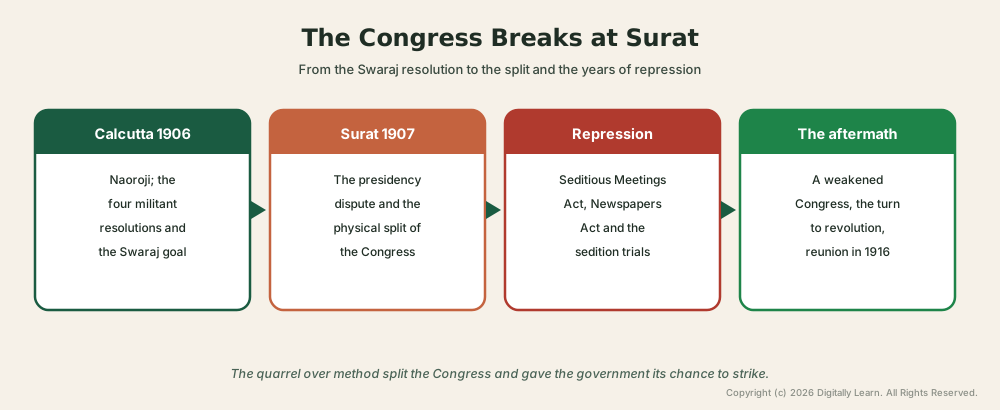
The Surat Split of 1907 was the breaking of the Indian National Congress into two wings, the Moderates and the Extremists, after years of growing conflict over method and goal. Triggered by a dispute over the presidency and the militant resolutions of the 1906 Calcutta session, the split left the Moderates in control of a weakened Congress and the Extremists excluded. The government seized the moment to crush the agitation through a battery of repressive laws and sedition trials, driving nationalism, for a time, underground.
The Widening Moderate-Extremist Rift
The Growing Divide over Method and Goal
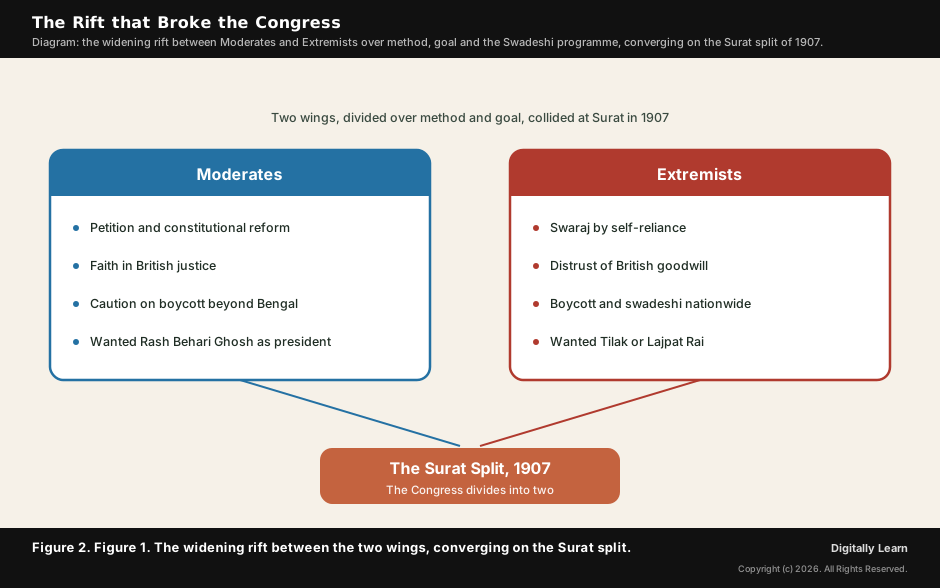
Why this matters: the split at Surat was not a sudden quarrel but the climax of a long rift. Since the rise of the Extremists, the two wings of the Congress had differed sharply over both method and goal. The Moderates trusted petition and constitutional reform; the Extremists demanded Swaraj through self-reliance, swadeshi and boycott.
The Swadeshi movement sharpened the quarrel. The Extremists wanted to extend boycott and the full programme across the whole country; the Moderates, fearful of confrontation, wished to keep the agitation within limits. By 1906 the two groups were struggling for control of the Congress itself, and the contest came to a head over who should lead it.
The Calcutta Session of 1906 and the Swaraj Resolution
Naoroji's Presidency and the Four Resolutions
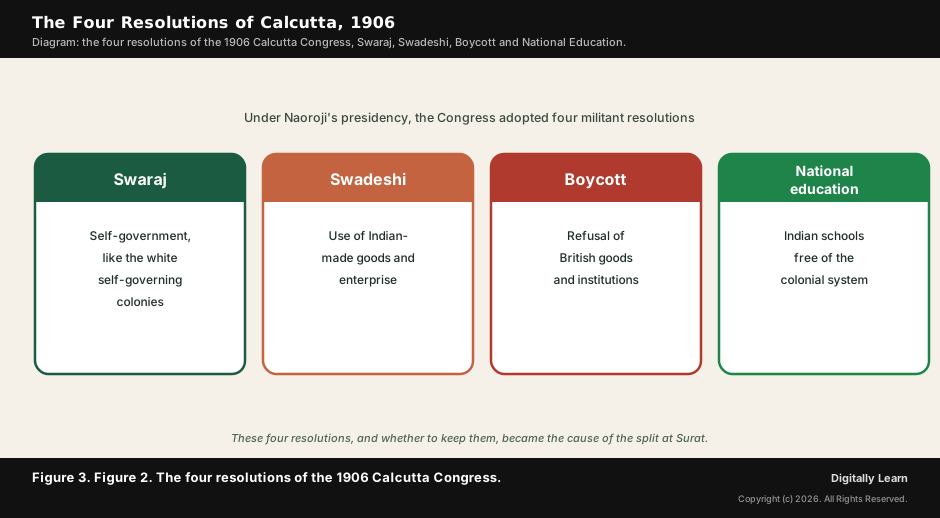
What is the significance of the 1906 Calcutta session: it marked the high point of unity and the seed of the split. Presided over by the venerable Dadabhai Naoroji, the session for the first time declared the goal of the Congress to be Swaraj, or self-government on the model of the self-governing colonies, a major victory for the Extremists.
The session passed four militant resolutions: Swaraj, Swadeshi, Boycott and National Education. Naoroji's immense prestige held the two wings together for the moment, but the resolutions were a Moderate concession made under pressure. The question of whether to keep or water down these four resolutions would, a year later, tear the Congress apart.
The Surat Split of 1907
The Venue Manoeuvre and the Presidency Dispute
Distinguishing features of the split lay first in the contest over the presidency. The Extremists wanted Lala Lajpat Rai or Bal Gangadhar Tilak in the chair; the Moderates put forward Rash Behari Ghosh. The session was held at Surat, in the Bombay Presidency.
The choice of venue was itself a manoeuvre. Since Surat lay in Tilak's home province, the convention that a leader could not preside over a session in his own province barred Tilak from the chair. Lajpat Rai withdrew, and Rash Behari Ghosh, the Moderate candidate, was duly proposed, deepening the Extremists' sense that the Moderates were rigging the Congress against them.
The Physical Split and the Expulsion of the Extremists
Observable outcomes followed swiftly when the session met in December 1907. Amid uproar over the presidency and the resolutions, the meeting broke up in disorder and physical chaos; the Congress could not continue. The two wings could no longer work together under one roof.
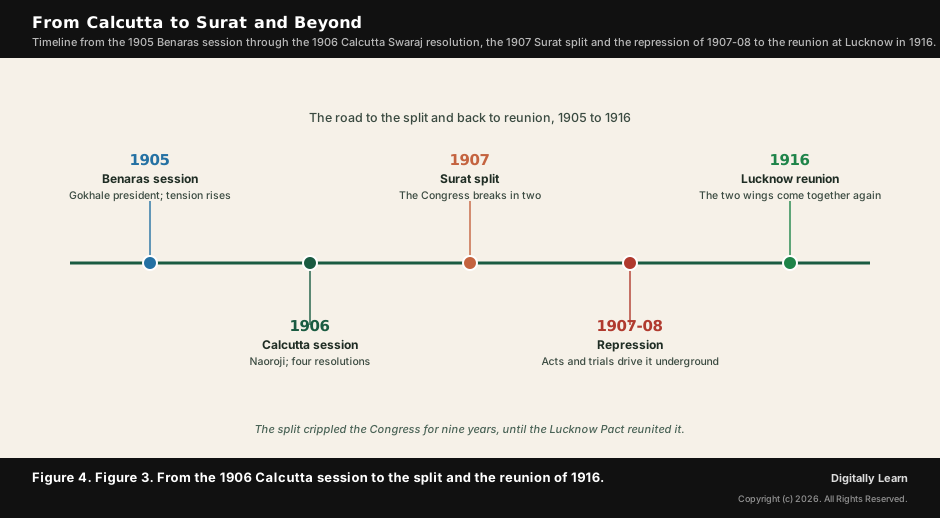
In the aftermath, the Moderates, who controlled the organisation, met separately and effectively excluded the Extremists from the Congress. The party that Hume and the early nationalists had built as a single national platform now stood divided, and it would remain so until the reunion of 1916. The arc of these events is shown later in this article.
Causes and Consequences of the Split
Why the Congress Broke and What Followed
What is the significance of the causes: they show that the split was a failure of both temperament and organisation. The deepest cause was the Extremists' lack of faith in the Moderate method, their conviction that polite negotiation with the government could never win Swaraj. Personal rivalry, the presidency dispute and mutual distrust did the rest.
The consequences were grave. A divided Congress was a weak Congress, and the split, set out in the table below, opened the door to the repression that followed. It also drove some of the disillusioned youth towards revolutionary violence, examined later in this series.
| Causes of the split | Consequences of the split |
|---|---|
| Extremists' distrust of the Moderate method | A weakened, divided Congress |
| Dispute over the presidency at Surat | Moderates in control; Extremists excluded |
| Quarrel over the Swadeshi and boycott resolutions | The open movement loses its national platform |
| Mutual personal and regional rivalry | Some youth turn to revolutionary violence |
The damage proved lasting. With the militant wing shut out, the open mass movement lost its driving force, and the government found a divided opponent far easier to suppress. The chief consequences can be summarised simply.
- A weakened Congress: The organisation lost much of its energy and mass appeal.
- Moderate dominance: The Moderates controlled the Congress until 1916.
- The turn to revolution: Excluded militants and angry youth turned to underground methods.
- An opening for repression: A divided movement was far easier for the government to crush.
The Machinery of British Repression (1907-08)
The Seditious Meetings Act and the Newspapers Act
Distinguishing features of the government's response were a series of repressive laws. The Prevention of Seditious Meetings Act of 1907 allowed the authorities to ban or control political public meetings, striking at the very method by which the agitation reached the people.
The press, the great weapon of the nationalists, was the next target. The Newspapers (Incitement to Offences) Act of 1908 let the government act against papers it judged to be inciting violence, and the later Indian Press Act of 1910 tightened the grip still further. The full battery of laws is shown below.
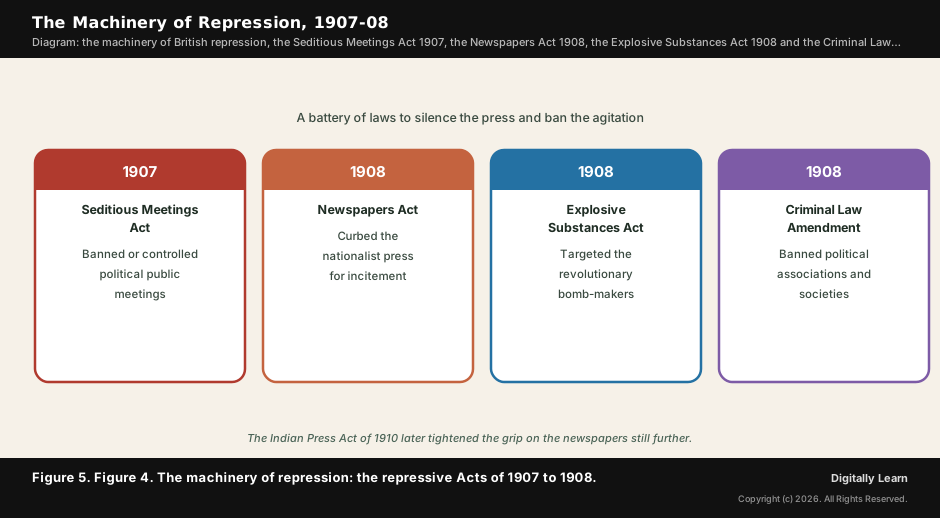
The Explosive Substances and Criminal Law Amendment Acts
Observable outcomes of the rise of revolutionary activity were two further laws of 1908. The Explosive Substances Act was aimed squarely at the bomb-makers of the new revolutionary movement, and the Criminal Law Amendment Act empowered the government to ban political associations and societies it deemed dangerous.
Together these Acts gave the government sweeping powers to suppress organisation, assembly and the press. They reflected a hardening of policy: where the early nationalists had been tolerated as a safety valve, the militant agitation of the Swadeshi years was now to be met with the full force of the law.
The Trials: Tilak, Lajpat Rai and Aurobindo
Contemporary linkages between the laws and the leaders were direct. The repression fell hardest on the Extremist leaders profiled earlier in this series. Bal Gangadhar Tilak was tried for sedition in 1908 and sentenced to six years' transportation at Mandalay; Lala Lajpat Rai had already been deported to Mandalay without trial in 1907.
In Bengal, Aurobindo Ghosh was arrested in the Alipore Bomb Case of 1908 and tried, though later acquitted. With its foremost leaders in prison, in exile or withdrawn from politics, the militant wing was, for the time being, broken as an open force, and the initiative passed for some years to the underground revolutionaries.
Significance: A Movement Divided and Driven Underground
A Weakened Congress and the Turn to Revolution
Contemporary linkages run from the Surat split through the whole later movement. The split was a self-inflicted wound that crippled the Congress for nearly a decade and handed the government an easy victory; it stands as a warning of how disunity can squander the gains of agitation.
The repression that followed drove the militant energy underground, feeding the revolutionary nationalism examined later in this series, while the Moderates ran a quiet, much-diminished Congress. Yet the division was not permanent: the shock of these years, and the changing politics of the war, would bring the two wings back together in the Lucknow Pact of 1916, the subject of a later part. The Congress had learned, at heavy cost, the price of a split.
Previous Year UPSC-CSE Questions
Previous Year UPSC-CSE Questions By the end you will be able to draft model answers for the following UPSC questions. Each question carries a collapsible framework showing how to approach it in the exam.
- UPSC Mains 2017 GS-IWhy did the 'Moderates' failed to carry conviction with the nation about their proclaimed ideology and political goals by the end of the nineteenth century?
How to structure the answer in the exam
Introduction: Open with the Moderate faith in petition and British justice, and its meagre results.
Body (sub-themes to develop):
- Meagre gains from two decades of petition discredited the constitutional method.
- Curzon's reaction and the partition of Bengal exposed the limits of moderate politics.
- The Extremists captured the national mood with Swaraj, swadeshi and boycott.
- The Surat split (1907) showed the Moderates could no longer carry the militant wing or the nation.
Conclusion: Conclude that the Moderates' failure to convince a new generation culminated in the loss of leadership at Surat.
- UPSC Prelims 2016 GS Paper IWhat was the main reason for the split in the Indian National Congress at Surat in 1907?
How to approach this Prelims question
Approach: Identify the principal cause of the 1907 split, not a coincidental event.
Trap to watch: The Muslim League (1906) and Morley-Minto communal electorates (1909) are of the same period but are NOT the cause of the split; the cause was the Extremist-Moderate methodological rift.
Key facts to recall:
- The split was over method, not communalism
- Extremists distrusted the Moderate strategy of negotiation
- The presidency dispute was the immediate trigger
Answer signal: Extremists' lack of faith in the Moderates' capacity to negotiate, so option (b).
- UPSC Prelims 2010 GS Paper IFour resolutions were passed at the famous Calcutta session of Indian National Congress in 1906. The question of either retention OR of rejection of these four resolutions became the cause of a split in Congress at the next Congress session held in Surat in 1907. Which one of the following was not one of those resolutions?
How to approach this Prelims question
Approach: Recall the four Calcutta 1906 resolutions and pick the one that was not among them.
Trap to watch: Boycott, national education and swadeshi were all resolutions; the fourth was Swaraj, not the annulment of the partition (which came later, in 1911).
Key facts to recall:
- The four 1906 resolutions: Swaraj, Swadeshi, Boycott, National Education
- Annulment of the partition came in 1911, not a 1906 resolution
Answer signal: Annulment of partition of Bengal was not a resolution, so option (a).
Sources and Further Reading
- Wikipedia: Surat Split
- Wikipedia: Indian National Congress
- Wikipedia: Dadabhai Naoroji
- Wikipedia: Prevention of Seditious Meetings Act, 1907
- Wikipedia: Freedom of the press in British India
- NCERT, Our Pasts III (The Making of the National Movement)
- Ministry of Culture: Indian Culture Freedom Archive
- Azadi Ka Amrit Mahotsav (Freedom Movement portal)
- Press Information Bureau, Government of India
- National Portal of India
Editorial Disclaimer
This article is prepared for UPSC examination preparation. Verify key facts and interpretations against standard reference histories before relying on them.