


Overview
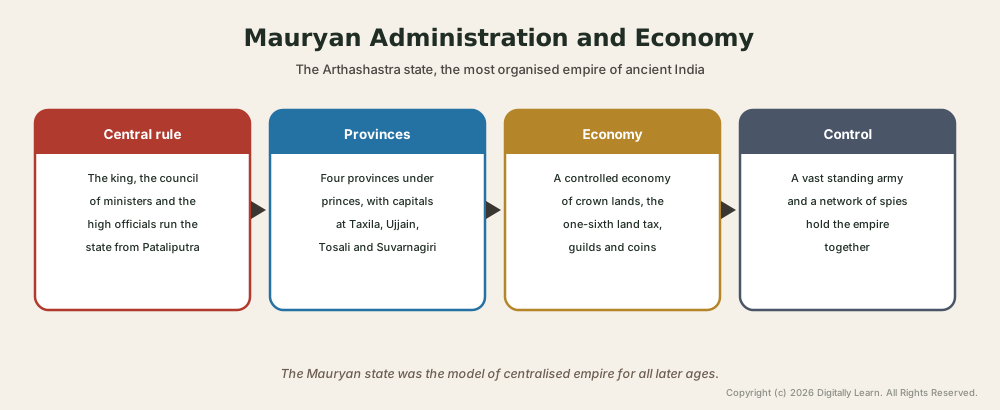
Mauryan administration and economy made up the first great centralised state in Indian history, a vast bureaucratic empire run on the model set out in Kautilya's Arthashastra. At its head stood the king, advised by a council of ministers and served by a graded body of officials, the amatyas and the departmental superintendents. The empire was governed from the capital Pataliputra through provinces under royal princes, down to districts and villages, and it was held together by a huge standing army and an elaborate network of spies. Its economy was closely directed by the state, resting on agriculture and a land revenue of about one-sixth, on crafts organised in guilds, and on a brisk trade carried in punch-marked coins. This part covers the central administration, the provinces and local government, the economy and revenue, and the instruments of control.
The Mauryan State and the Arthashastra Model
Why the Mauryan State Was India's First Great Bureaucratic Empire
What is the significance of the Mauryan state: it was the first time the greater part of the subcontinent was brought under a single, closely governed administration, the model of empire for every later age.
Before the Mauryas, India was a patchwork of kingdoms and republics. The Mauryas built over it a single centralised state that reached from the Hindu Kush to the edge of the far south, governed not by tribute-paying vassals alone but by a paid, graded body of officials answerable to the king.
Our knowledge of the Mauryan state rests on two great sources, Kautilya's Arthashastra and the account of the Greek envoy Megasthenes, which together let us reconstruct the working of the state in unusual detail.
Kautilya's Arthashastra and the Saptanga Theory of the State
Distinguishing the blueprint: the Arthashastra is the great manual of statecraft behind the Mauryan system, though a careful student treats its date with caution.
The Arthashastra is a treatise on government, economy and law traditionally ascribed to Kautilya, also called Chanakya, the minister of Chandragupta. It describes the state under the saptanga theory of seven limbs (angas): the king (swamin), the minister (amatya), the territory and people (janapada), the fortified capital (durga), the treasury (kosha), the army (danda) and the ally (mitra).
The text reflects the Mauryan state, but it was added to over later centuries, so its precise dating is debated and not every detail can be tied to Mauryan practice.
On the Arthashastra's wide reach, it covers far more than administration: it lays down rules of civil and criminal law, of marriage and property, even allowing a deserted wife to remarry, which shows how completely the state sought to order society.
The Central Administration: King, Council and Officials
The King, the Mantriparishad and the Council of Ministers
What is the significance of the central administration: at the heart of the empire stood the king, but he ruled through a structured council and a civil service, not by personal whim alone.
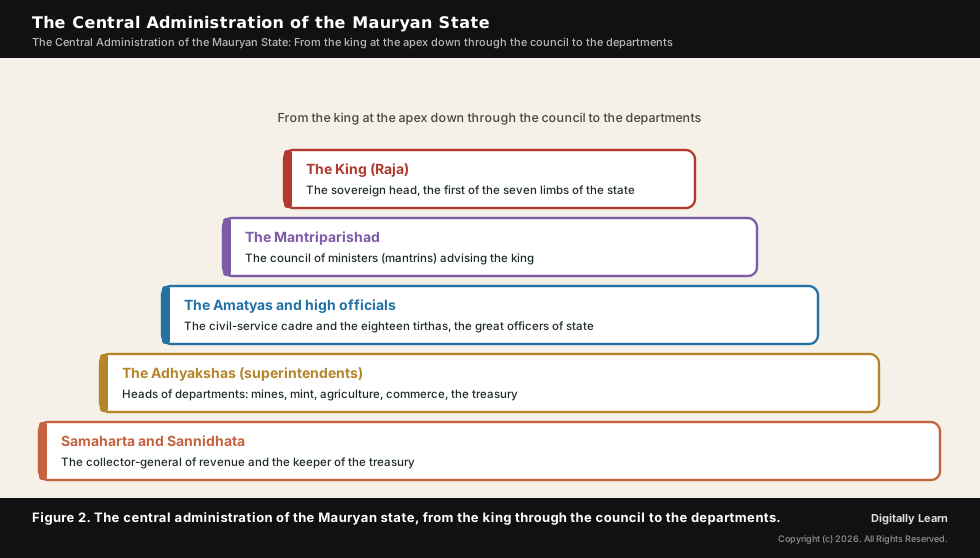
The king was the supreme head of the state, the source of law, the commander of the army and the final judge. He was advised by a small inner body of ministers, the mantrins, and by a larger mantriparishad, or council of ministers, that he consulted on weighty matters. Below them served the amatyas, the higher civil servants who staffed the offices of the state and from whom the great functionaries, sometimes counted as eighteen tirthas, were drawn.
The Superintendents (Adhyakshas), the Treasury and Revenue
Distinguishing the departments: the daily work of government was done by a host of superintendents, each in charge of one branch of the state's wide-ranging activity.
The adhyakshas, or superintendents, headed the many departments of the state, including those of mines, the mint, agriculture, commerce, weights and measures, the ports and the storehouses, which shows how closely the Mauryan state directed the economy. Over the whole revenue stood the samaharta, the collector-general, who assessed and gathered the income of the empire, while the sannidhata, the treasurer, kept the royal treasury and the state stores.
| Official | Office |
|---|---|
| Mantrins / Mantriparishad | The inner ministers and the council of ministers |
| Amatyas | The higher civil servants and great officers of state |
| Adhyakshas | Superintendents of departments (mines, mint, trade, agriculture) |
| Samaharta | The collector-general, in charge of revenue assessment |
| Sannidhata | The treasurer, keeper of the treasury and stores |
| Senapati | The commander of the army |
Provincial, District and City Administration
The Provinces and Their Viceregal Capitals
What is the significance of the provinces: so vast an empire could not be ruled from one centre, so it was divided into provinces, usually placed under princes of the royal house.
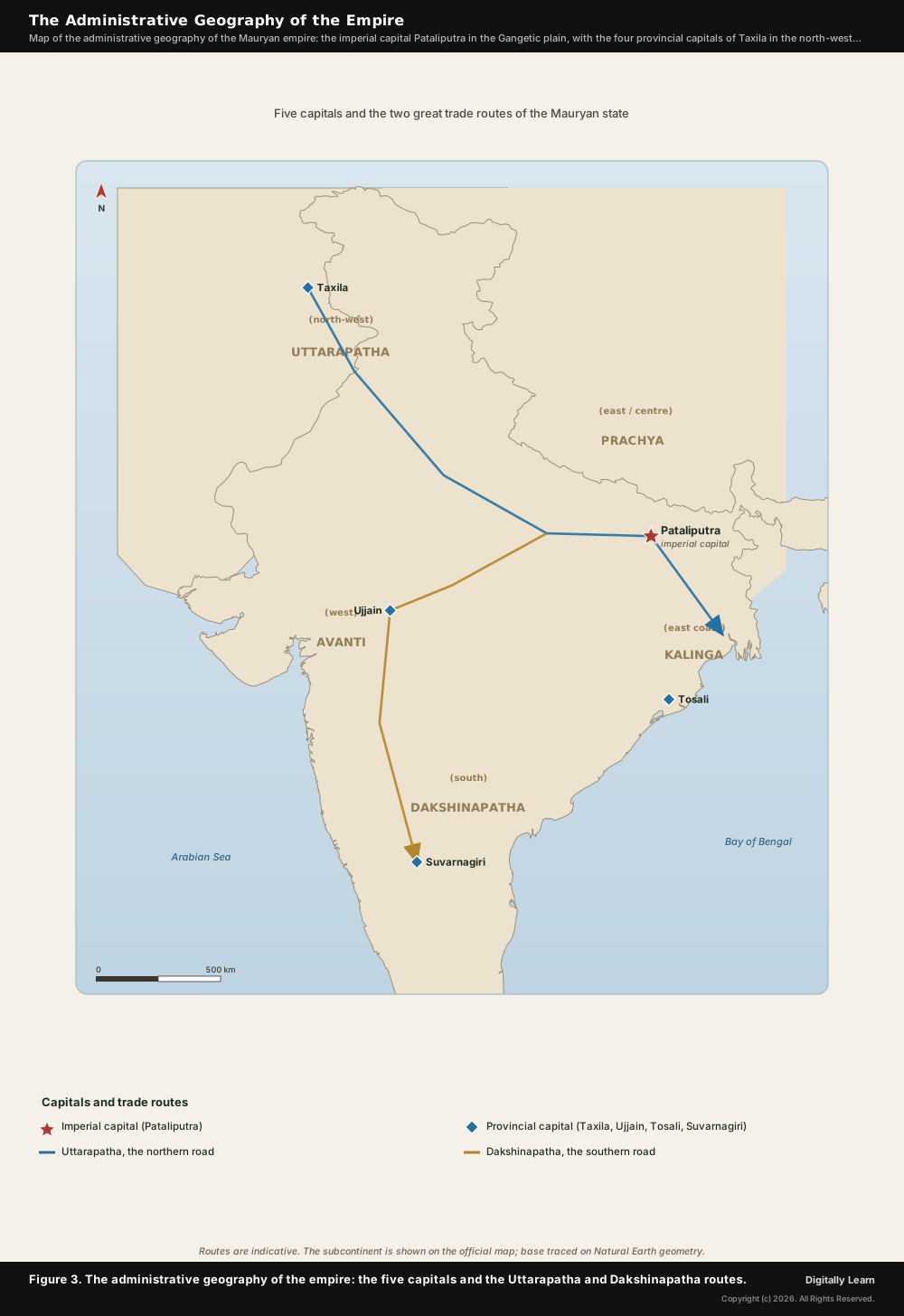
Besides the home province around the capital Pataliputra, the empire was divided into four great provinces, each governed by a viceroy, often a kumara or royal prince. Their capitals were Taxila in the north-west, Ujjain in the west, Tosali in the east in conquered Kalinga, and Suvarnagiri in the south. This placing of princes over the provinces bound the distant regions to the ruling family.
| Province | Capital | Region |
|---|---|---|
| Home province | Pataliputra | The Gangetic heartland (Magadha) |
| Uttarapatha (north-west) | Taxila | The north-west frontier |
| Avantirashtra (west) | Ujjain | Western and central India |
| Kalinga (east) | Tosali | The east coast, conquered by Ashoka |
| Dakshinapatha (south) | Suvarnagiri | The Deccan and the south |
Mapping the Capitals and the Great Trade Routes
Distinguishing the administrative geography: the five capitals and the two great roads that joined them give the clearest picture of how the empire was held and supplied.
The map shows the imperial capital Pataliputra in the Gangetic plain and the four provincial capitals ringing the empire. It also traces the two great trade and military roads: the Uttarapatha, the northern road running from the north-west frontier through the Gangetic plain to the eastern ports, and the Dakshinapatha, the southern road leading down through Ujjain to the Deccan. Along these roads moved the empire's armies, officials, goods and news.
District, Village and City Administration
What is the significance of local government: below the provinces a fine mesh of district and village officials carried the state's authority down to the smallest community.
The provinces were divided into districts, watched over by officials such as the pradeshika, the rajuka and the yukta, who supervised revenue and order, while the affairs of the village rested with its headman, the gramika.
The capital had its own elaborate government. According to Megasthenes, Pataliputra was administered by a municipal body of thirty officials grouped into six committees of five, charged with crafts, foreigners, births and deaths, trade, the inspection of manufactures and the collection of the sales tax.
The Instruments of Control: The Army and the Spies
The Mauryan Army and Megasthenes' War Office
Distinguishing the army: the empire rested in the last resort on a standing army of a size unmatched in the India of its day.
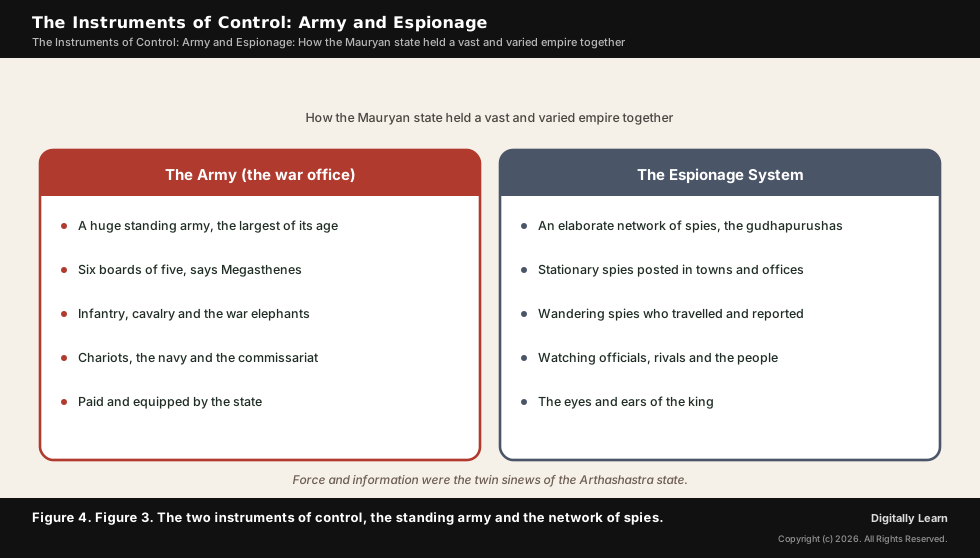
The Mauryan army was large, professional and paid by the state. Megasthenes describes a war office run, like the city, by six boards of five, managing the infantry, the cavalry, the war elephants, the chariots, the navy and the commissariat or transport. Greek accounts credit Chandragupta with a force of many hundreds of thousands, and the elephants in particular made the Mauryan army formidable.
The Espionage System and the Gudhapurushas
What is the significance of the spy system: alongside open government ran a hidden one, an organised system of espionage that the Arthashastra treats as a normal arm of the state.
The Mauryan state kept an elaborate network of spies, the gudhapurushas, who served as the eyes and ears of the king. The Arthashastra distinguishes stationary spies, posted in towns and offices under various disguises, from wandering spies who travelled the empire and reported back. They watched not only enemies and rivals but the king's own officials, so that corruption and disloyalty might be detected, a striking sign of how thorough the Mauryan control was meant to be.
The Mauryan Economy: Agriculture, Land and Revenue
State Control of Agriculture and the Crown Lands
What is the significance of the economy: the wealth that paid for the army and the bureaucracy came from a closely controlled economy in which the state was the greatest landholder and entrepreneur.
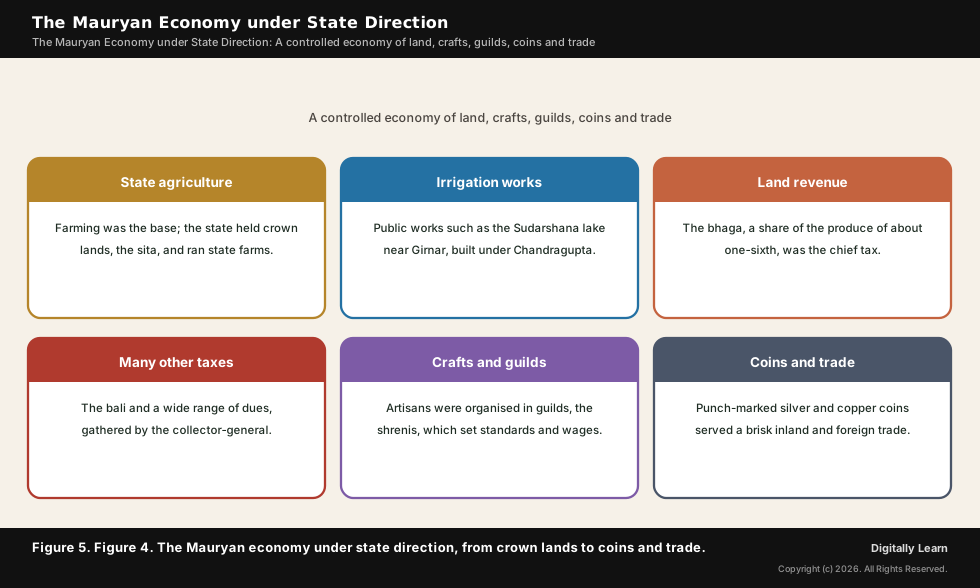
Agriculture was the base of the economy, and the state took a direct hand in it. It held large crown lands, the sita, worked by hired labourers and cultivators under a superintendent, and it promoted the settlement of new villages and the clearing of waste land. The state also undertook irrigation works: the famous Sudarshana lake near Girnar in Gujarat was built by a governor of Chandragupta, and water channels were added to it later under Ashoka.
Revenue and Taxation: The Bhaga, the Bali and Other Dues
Distinguishing the revenue system: the state drew its income from a wide range of taxes, of which the land revenue was by far the most important.
The chief tax was the bhaga, the king's share of the produce of the land, usually about one-sixth, though it could be raised in times of need. To it were added the bali, an older and additional levy, and a host of other dues on trade, crafts, herds, mines, forests, ferries and the like. All of this the samaharta assessed and the treasury received, giving the Mauryan state a revenue large enough to maintain its vast establishment.
Trade, Crafts, Guilds and Coinage
The Guilds (Shreni) and the Organisation of Crafts
What is the significance of the guilds: the craft economy of the empire was organised in guilds, self-governing bodies that the state recognised and used.
Artisans and merchants were grouped in guilds, the shrenis, each following a single craft or trade. The guilds were largely self-governing: they fixed the wages, the rules of work, the standards and the prices for their members, and they exercised a measure of judicial authority over their own people. They were not, however, mere creatures of the king; their autonomy made them a real force in the economy and in the towns.
Trade Routes, Markets and the Punch-Marked Coins
Distinguishing trade and money: a brisk inland and foreign trade was carried along the great roads and paid for in a developed coinage.
Goods moved along the Uttarapatha and the Dakshinapatha, the two great roads, and out to the wider world through ports on both coasts. Trade was watched by a superintendent of commerce who regulated prices and markets. The medium of exchange was the punch-marked coin, the silver karshapana or pana and its copper fractions, stamped with symbols rather than legends, which circulated widely and shows how monetised the Mauryan economy had become.
UPSC Relevance and Exam Focus
Where Mauryan Administration and Economy Fit in the UPSC-CSE Syllabus
This topic belongs to General Studies Paper I: ancient Indian history and culture, and the Mauryan administrative and economic system is one of its most institution-heavy and frequently examined areas.
For Prelims, hold the firm facts: the state followed the Arthashastra and the saptanga theory of seven limbs; the empire had four provinces with capitals at Taxila, Ujjain, Tosali and Suvarnagiri besides Pataliputra; the land revenue, the bhaga, was about one-sixth; Pataliputra was run by six committees of five; and the guilds, the shrenis, fixed standards and wages and judged their own members.
For Mains, the Mauryan state is valuable as the first model of centralised, bureaucratic empire in India, and for the controlled economy described in the Arthashastra.
Recurring linked concepts an aspirant should keep in working memory:
- Saptanga: The seven limbs of the state in the Arthashastra.
- The provinces: Taxila, Ujjain, Tosali and Suvarnagiri, besides Pataliputra.
- Adhyakshas: The departmental superintendents of the state.
- Revenue: The bhaga, a land tax of about one-sixth, plus the bali.
- Guilds: The shrenis, self-governing bodies of craftsmen and traders.
A common Prelims trap is to think the guilds were registered with and controlled by the king; in fact the shrenis were largely self-governing, fixing their own wages and standards and judging their own members. Another is to date the whole Arthashastra firmly to Chandragupta's reign; the text reflects the Mauryan state but was added to over later centuries.
Previous Year UPSC-CSE Questions
Previous Year UPSC-CSE Questions By the end you will be able to draft model answers for the following UPSC questions. Each question carries a collapsible framework showing how to approach it in the exam.
- UPSC Prelims 2012 GS-IWith reference to the guilds (Shreni) of ancient India that played a very important role in the country's economy, which of the following statements is/are correct?
- Every guild was registered with the central authority of the State and the king was the chief administrative authority on them.
- The wages, rules of work, standards and prices were fixed by the guild.
- The guild had judicial powers over its own members.
Select the correct answer using the codes given below.
How to approach this Prelims question
Approach: Test each statement against the autonomy of the guilds; reject the one that makes the king their administrative head.
Trap to watch: Statement 1 is the trap: guilds were self-governing, not registered with and controlled by the king; statements 2 (they fixed wages and standards) and 3 (they judged their own members) are correct.
Key facts to recall:
- Guilds fixed wages, rules, standards and prices.
- Guilds had judicial powers over their own members, but were not state-controlled.
Answer signal: 2 and 3 only.
- UPSC Prelims 1996 GS-IWhich one of the following texts of ancient India allows divorce to a wife deserted by her husband?
How to approach this Prelims question
Approach: Recall that the Arthashastra covers civil law, including marriage and divorce, not only administration.
Trap to watch: The Dharmashastra texts are more restrictive on divorce; it is Kautilya's Arthashastra that permits a deserted wife to remarry.
Key facts to recall:
- The Arthashastra is a wide treatise covering law and society, not only the state.
- It allows a deserted wife to remarry.
Answer signal: Arthashastra.
Sources and Further Reading
- NCERT, Ancient India (Our Pasts I), Ashoka, the Emperor Who Gave Up War / the Mauryan empire (NCERT-inspired grounding)
- Wikipedia: Maurya Empire
- Wikipedia: Arthashastra
- Wikipedia: Chanakya
- Wikipedia: Megasthenes
- Wikipedia: Mauryan art (administration context)
- Wikipedia: Sudarshana Lake
- Wikipedia: Punch-marked coins
Editorial Disclaimer
This article is for UPSC preparation. The details of the Mauryan administration rest mainly on the Arthashastra and Megasthenes, whose accounts are read with caution by historians, and the dating of the Arthashastra is debated.