


Overview
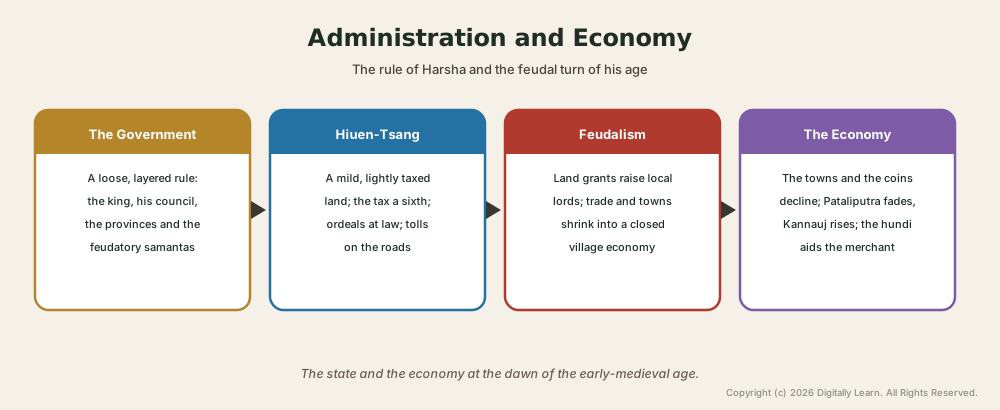
The Harsha administration and economy reveal the great turn of the age, from the centralized empire of old to the loose, feudal order of early-medieval India. Harsha ruled not by a close machinery of officials but as the overlord of feudatory lords, the samantas; the pilgrim Hiuen-Tsang describes a mild, lightly taxed land where guilt was tried by ordeals. Beneath the surface, the spread of land grants was raising local lords and shrinking trade, towns and coinage, the beginning of what scholars call Indian feudalism. This part covers the administration, the account of Hiuen-Tsang, the economy and the exam focus.
The Administration of Harsha's Age
A Loose, Decentralized Government
What is the significance of Harsha's administration: it shows the loosening of the old centralized state into the layered, feudal rule that would mark the whole early-medieval age.
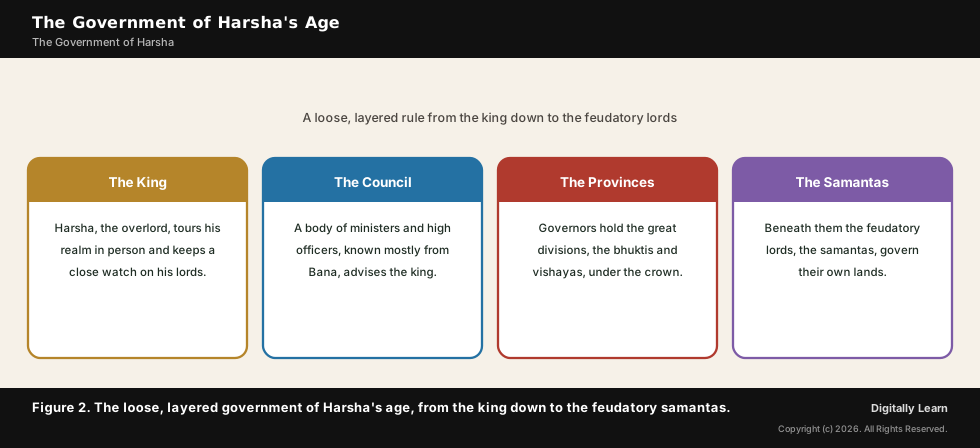
Harsha did not govern through a close chain of officials reaching to every village, as the Mauryas had. He toured his realm in person, keeping watch over his lords, and ruled through a body of high officers and provincial governors, the bhuktis and vishayas of the older order. But beneath them sat the feudatory lords, the samantas, who held their own lands.
Our picture of this government is drawn from Bana's poem and the pilgrim's record, and so is thin; it is wrong to draw a neat chart of ministries. What is clear is the layering of power, from the king at the head down through the great samantas to the lesser, the shape of a feudal state.
Law and Order in the Account of Hiuen-Tsang
The Mild Rule, the Ordeals and the Roads
What is the significance of Hiuen-Tsang's account: it is the fullest picture of life in Harsha's India, though it is the admiring view of an outsider and must be read as such.
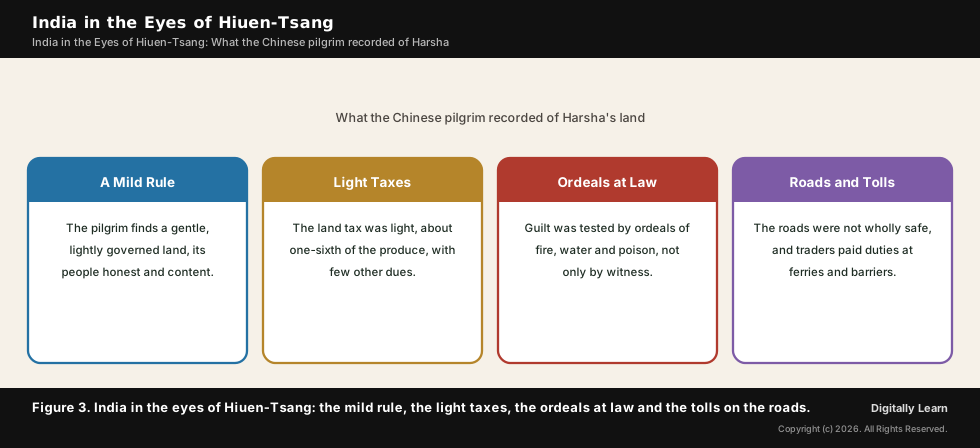
The Chinese pilgrim describes a mild and gently governed land, lightly taxed and orderly, its people honest and its king just. Yet he also records its harsher side: that guilt at law was tried by ordeals of fire, water and poison, and that the roads were not wholly safe, so that travellers went in fear of robbers.
On trade and travel he notes that tradesmen had to pay duties at the ferries and the barrier stations of the realm. These details, the ordeals and the tolls, are a favourite of the examiner, who pairs them against the false claim that the roads were completely free of robbery.
What Hiuen-Tsang Recorded of the Conditions
Distinguishing the record: an aspirant should know exactly which of the pilgrim's observations are true, for the examiner tests them one by one.
Three points recur in the questions: the roads were not completely safe; ordeals of fire, water and poison were used at law; and tradesmen paid duties at the ferries and barriers. The first is the trap, for the roads were not wholly immune from robbery; the other two are true.
| What Hiuen-Tsang is asked about | The truth |
|---|---|
| The roads were completely safe from robbery. | False: he records that they were not wholly safe. |
| Guilt was tried by ordeals of fire, water and poison. | True: he describes these ordeals at law. |
| Tradesmen paid duties at ferries and barrier stations. | True: he records these tolls on trade. |
The Economy and the Coming of Feudalism
Land Grants and the Closed Village Economy
What is the significance of the land grants: they are the engine of the great economic change of the age, the turn that scholars call the coming of Indian feudalism.
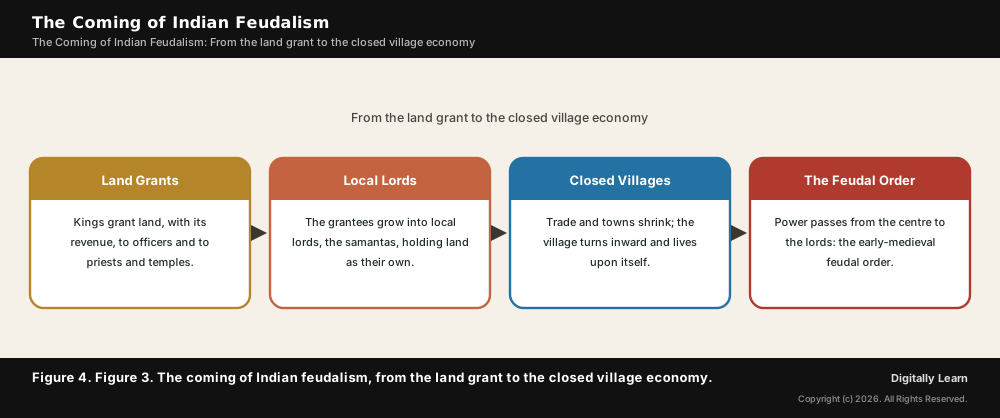
Through this age, kings granted away land, with the right to its revenue, to officers and to priests and temples, more freely than before. The grantees grew into local lords, the samantas, who held their land almost as their own and stood between the king and the peasant.
As land replaced cash and the lords looked inward to their own estates, trade and towns shrank, and the village turned into a self-sufficient, closed economy. This loosening of the centre and tightening of the village is the model the historian R.S. Sharma named Indian feudalism, a reading widely held though not unchallenged.
Revenue and the Royal Income
Distinguishing the revenue: the chief tax was light, and the king's income, in Hiuen-Tsang's account, was spent in four well-marked ways.
The land tax, the bhaga, was light, about a sixth of the produce, and there were few other dues. Hiuen-Tsang reports that the royal income was divided into four parts: for the work of government, for the salaries of officials, for the reward of scholars and learning, and for charity and religion.
| Part of the royal income | Its purpose |
|---|---|
| The first part | For the work and worship of the government. |
| The second part | For the salaries of the public servants. |
| The third part | For the reward of scholars and men of learning. |
| The fourth part | For gifts, charity and the support of religion. |
Trade, the Towns and the Coinage
The Decline of Towns and Coins, and the Hundi
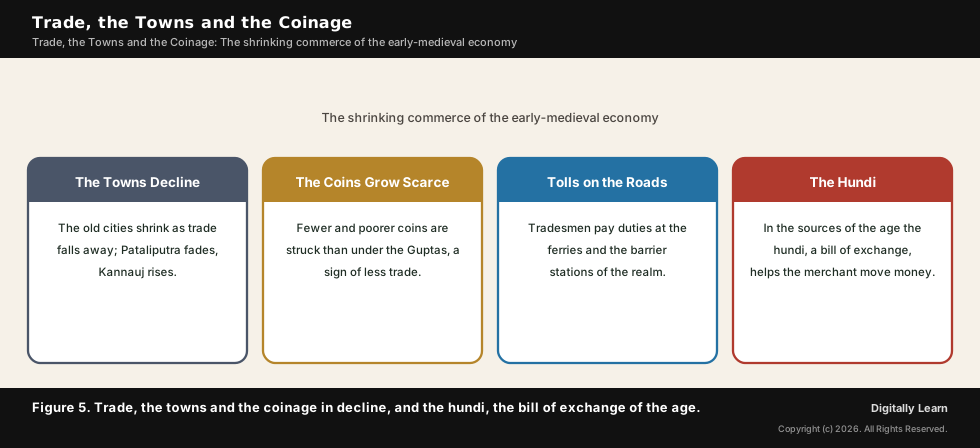
What is the significance of the decline of trade: the shrinking of towns and coins is the surest sign of the new, inward-looking economy of the early-medieval age.
The great cities of the older order began to fade as trade fell away: Pataliputra, the seat of the Mauryas and Guptas, declined, while Kannauj, the new political centre, rose. The coins of the age grow fewer and poorer than those of the Guptas, a plain mark of a less monied, less trading world.
Trade did not vanish, however. Tradesmen still paid their tolls at the ferries and barriers, and in the sources of the age there appears the hundi, a bill of exchange, a written order that let a merchant move money without carrying the coin, a tool of the credit that trade still needed.
UPSC Relevance and Exam Focus
Where Harsha's Administration and Economy Fit in the UPSC-CSE Syllabus
This topic belongs to General Studies Paper I: ancient Indian history and economy, and the administration and economy of Harsha's age, above all the account of Hiuen-Tsang and the coming of feudalism, are a regular ground for Prelims.
For Prelims, hold the points from Hiuen-Tsang: the mild rule and the light tax of about a sixth, the ordeals of fire, water and poison at law, and the duties tradesmen paid at ferries and barriers; but remember that the roads were not completely safe. Hold too that the hundi of the sources was a bill of exchange.
For Mains, the coming of Indian feudalism, the land grants, the samantas, and the decline of towns and coins, is a strong question, to be presented as R.S. Sharma's model, widely held but contested.
Recurring linked concepts an aspirant should keep in working memory:
- The samantas: The feudatory lords of the new feudal order.
- Hiuen-Tsang’s revenue: A land tax of about one-sixth, in four parts.
- The ordeals: Trial by fire, water and poison at law.
- Indian feudalism: R.S. Sharma’s model of the land-grant economy.
- The hundi: A bill of exchange in the sources of the age.
A common Prelims trap says the roads of Harsha's India were completely free of robbery; Hiuen-Tsang in fact records that they were not, while the ordeals at law and the tolls at ferries are the true points. Another forgets that the hundi was a bill of exchange, not a royal order.
Previous Year UPSC-CSE Questions
Previous Year UPSC-CSE Questions By the end you will be able to draft model answers for the following UPSC questions. Each question carries a collapsible framework showing how to approach it in the exam.
- UPSC Prelims 2013 GS-IThe Chinese traveller Yuan Chwang (Hiuen-Tsang) recorded the general conditions of India in his time. In this context, consider the following statements:
- The roads and river-routes were completely immune from robbery.
- As regards punishment for offences, ordeals by fire, water and poison were the instruments for determining the innocence or guilt of a person.
- The tradesmen had to pay duties at ferries and barrier stations.
Select the correct answer using the codes given below.
How to approach this Prelims question
Approach: Judge each: roads completely immune from robbery is the trap (false); ordeals of fire, water and poison are true; ferry and barrier duties are true. So statements two and three only.
Trap to watch: Statement one is false: Hiuen-Tsang did NOT record the roads as completely immune from robbery; he noted they were not wholly safe.
Key facts to recall:
- The roads were not completely safe from robbery (statement one false).
- Ordeals of fire, water and poison were used at law (true).
- Tradesmen paid duties at ferries and barrier stations (true).
Answer signal: 2 and 3 only.
- UPSC Prelims 2020 GS-IWhich of the following phrases defines the nature of the 'Hundi' generally referred to in the sources of the post-Harsha period?
How to approach this Prelims question
Approach: Recall that the hundi was a credit instrument of trade, a bill of exchange that moved money in place of coin.
Trap to watch: The hundi was not a royal advisory nor a feudal lord's order; it was a merchant's bill of exchange.
Key facts to recall:
- The hundi is referred to in the sources of the post-Harsha period.
- It was a bill of exchange used by merchants.
- It let money move without carrying coin, in a less-monied economy.
Answer signal: A bill of exchange.
Sources and Further Reading
Editorial Disclaimer
This article is for UPSC preparation. The figures of Harsha's revenue come from Hiuen-Tsang's account, and the model of Indian feudalism follows the standard scholarship of R.S. Sharma, which has been debated.