


Overview
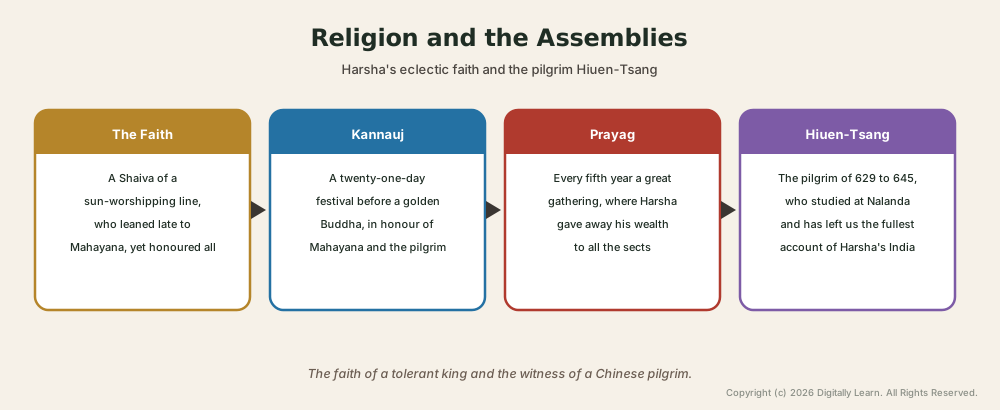
The Harsha religion and Hiuen-Tsang together light up the faith of seventh-century India. Harsha was an eclectic king, a Shaiva of a sun-worshipping line who leaned late in life to Mahayana Buddhism yet honoured every sect. He is famous for two great gatherings, the festival of Kannauj and the quinquennial assembly of Prayag, and for his guest, the Chinese pilgrim Hiuen-Tsang, who studied at Nalanda and left the fullest account of the age. This part covers his faith, the assemblies, the pilgrim and the exam focus.
Harsha's Eclectic Faith
A Shaiva, a Sun-Worshipper and a Friend of the Buddha
What is the significance of Harsha's faith: it was eclectic and tolerant, the faith of a king who honoured every sect and favoured no single one, a point on which the examiner often tries to trip the unwary.
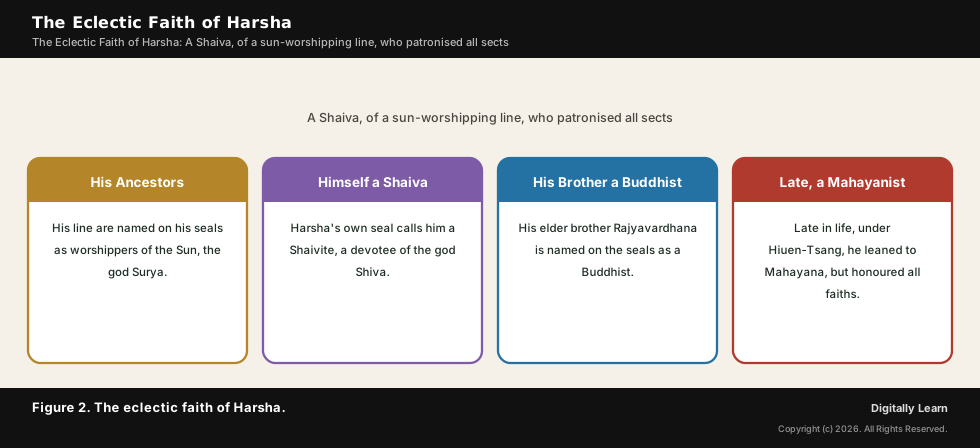
Harsha's own seals tell the story plainly: his ancestors are named as worshippers of the Sun, his elder brother as a Buddhist, and Harsha himself as a Shaivite, a devotee of Shiva. The royal house thus held more than one faith at once, in the easy manner of the age.
Late in his life, under the influence of the pilgrim Hiuen-Tsang, Harsha leaned more and more toward Mahayana Buddhism, and Hiuen-Tsang calls him a devout Buddhist. Yet he never ceased to honour the other faiths, and it is wrong to call him a narrow convert who favoured Buddhism alone.
The Great Assemblies
The Festival of Kannauj and the Gathering of Prayag
What is the significance of the assemblies: Harsha's two great gatherings, at Kannauj and at Prayag, were the grand public shows of his faith and his generosity.
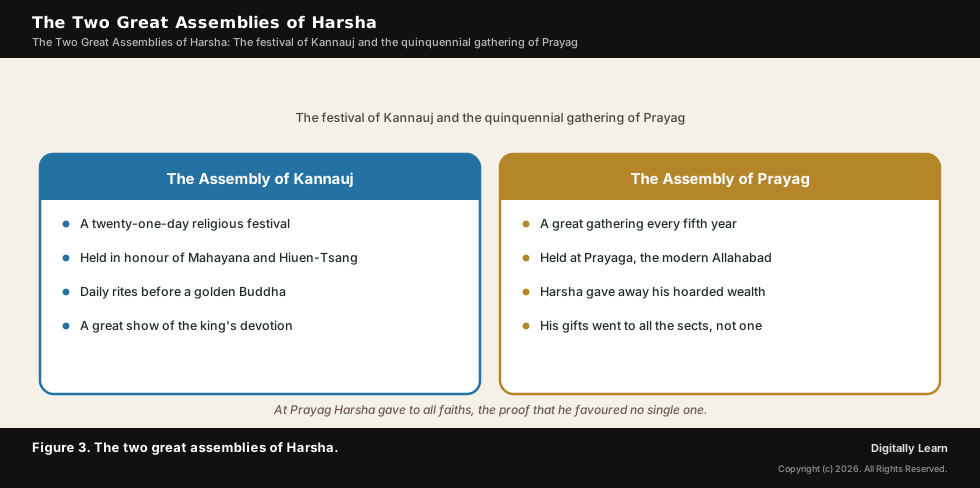
The assembly of Kannauj was a religious festival of twenty-one days, held in honour of Mahayana Buddhism and of the pilgrim Hiuen-Tsang, with daily rites before a life-size golden image of the Buddha. It was the high show of Harsha's Buddhist devotion in his later years.
The assembly of Prayag, at the modern Allahabad, was held every fifth year, a quinquennial gathering at which Harsha gave away the wealth he had gathered in the years between. Crucially, his gifts went to all the sects alike, to Buddhists, to Brahmanas and to the poor, the very proof that he favoured no single faith.
The Two Assemblies Compared
Distinguishing the two: an aspirant should keep the festival of Kannauj and the gathering of Prayag clearly apart, for each has its own marks.
The one was a single festival in honour of Mahayana, the other a regular gathering, held every five years, for the giving away of the royal wealth to all faiths. The table below sets the two side by side.
| The assembly | Where and how often | What marked it |
|---|---|---|
| The Kannauj assembly | At Kannauj, a single great festival. | Twenty-one days; a golden Buddha; in honour of Mahayana. |
| The Prayag assembly | At Prayaga (Allahabad), every fifth year. | Harsha gave away his wealth to all the sects. |
Hiuen-Tsang, the Pilgrim of Harsha's Reign
Xuanzang's Journey and his Study at Nalanda
What is the significance of Hiuen-Tsang: the Chinese pilgrim is at once a guest of Harsha and our fullest witness to his age, the eyes through which we see seventh-century India.
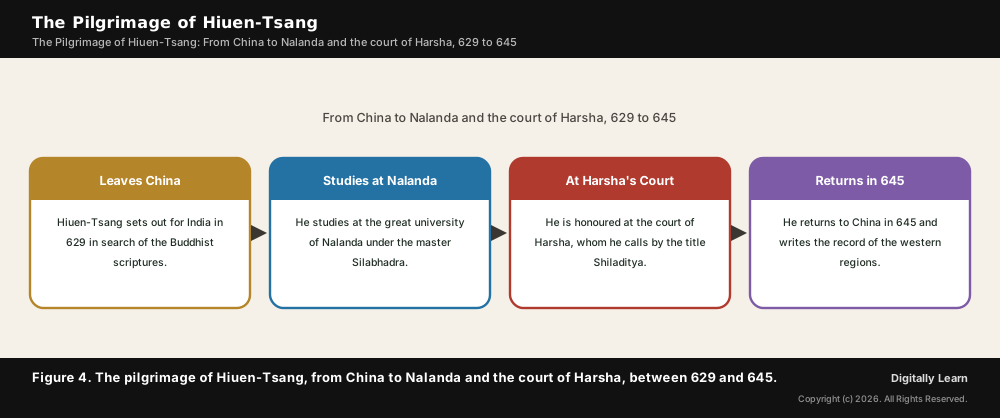
Hiuen-Tsang, or Xuanzang, journeyed to India between 629 and 645 in search of the Buddhist scriptures, and set down what he saw in his great record, the Si-yu-ki. He studied at the famous university of Nalanda under the master Silabhadra, and Harsha granted Nalanda the revenue of a hundred villages for its upkeep.
At Harsha's court he was honoured as a friend, and he repaid the king with a warm account, praising the justice and generosity of the ruler he calls Shiladitya. How long he stayed at Nalanda is not certainly known: the popular figure of five years is often given, though some scholars reckon his stay there at nearer two.
The Three Chinese Pilgrims
Distinguishing the pilgrims: three great Chinese travellers came to India over the ages, and the examiner loves to test whether an aspirant can keep them apart.
Fa-Hien came in the Gupta age, in the reign of Chandragupta II; Hiuen-Tsang in the reign of Harsha, between 629 and 645; and I-Tsing later still, by the sea route. To set Hiuen-Tsang in the Gupta age, or Fa-Hien in Harsha's, is the classic error the table below guards against.
| Pilgrim | When and in whose reign | What he left |
|---|---|---|
| Fa-Hien (Faxian) | Gupta age, reign of Chandragupta II. | An account of Gupta India. |
| Hiuen-Tsang (Xuanzang) | Reign of Harsha, 629 to 645. | The Si-yu-ki, the record of the western regions. |
| I-Tsing (Yijing) | Later, about 671 to 695, by sea. | An account of Nalanda and the Buddhist law. |
UPSC Relevance and Exam Focus
Where the Religion of Harsha's Age Fits in the UPSC-CSE Syllabus
This topic belongs to General Studies Paper I: ancient Indian history and culture, and the religion of Harsha's age, the assemblies and the pilgrim Hiuen-Tsang are a steady ground for Prelims.
For Prelims, hold above all that Harsha was eclectic, not a narrow Buddhist convert: he convened the Prayag assembly and gave to all sects, so the claim that he wished to popularise only Mahayana is false. Hold too the quinquennial nature of the Prayag assembly and that Hiuen-Tsang belongs to the reign of Harsha.
For Mains, the value and the limits of Hiuen-Tsang's account, and the religious life of the age, the rise of Puranic Hinduism beside a still-strong Buddhism centred on Nalanda, make good material.
Recurring linked concepts an aspirant should keep in working memory:
- Harsha’s faith: Eclectic; a Shaiva who patronised all sects.
- The Prayag assembly: Quinquennial; gifts to all faiths.
- The Kannauj assembly: A 21-day festival for Mahayana.
- Hiuen-Tsang: The pilgrim of Harsha’s reign, 629 to 645.
- Nalanda: Where he studied under Silabhadra.
A common Prelims trap, set in an assertion-and-reason form, says that Harsha convened the Prayag assembly in order to popularise only the Mahayana; the assertion is true but the reason is false, for the gifts of Prayag went to all the sects, and Harsha favoured no single faith.
Previous Year UPSC-CSE Questions
Previous Year UPSC-CSE Questions By the end you will be able to draft model answers for the following UPSC questions. Each question carries a collapsible framework showing how to approach it in the exam.
- UPSC Prelims 2001 GS-IConsider the following assertion (A) and reason (R):
- Assertion (A): Harshavardhana convened the Prayag Assembly.
- Reason (R): He wanted to popularise only the Mahayana form of Buddhism.
In the context of the above, select the correct answer using the codes given below:
How to approach this Prelims question
Approach: Test the assertion (Harsha convened the Prayag assembly, true) and the reason (he wished to popularise only Mahayana, false, for he was eclectic and gave to all sects); the answer is A true, R false.
Trap to watch: The reason is the false part: Harsha was eclectic and gave at Prayag to all faiths, not only to the Mahayana.
Key facts to recall:
- Harsha convened the quinquennial Prayag assembly (assertion true).
- He gave his wealth at Prayag to all sects, not only Buddhists.
- Harsha was an eclectic patron, not a Mahayana-only convert (reason false).
Answer signal: A is true, but R is false.
Sources and Further Reading
Editorial Disclaimer
This article is for UPSC preparation. The length of Hiuen-Tsang's stay at Nalanda is uncertain, and the account of Harsha's religion follows the standard scholarship and the pilgrim's own record.