


Overview
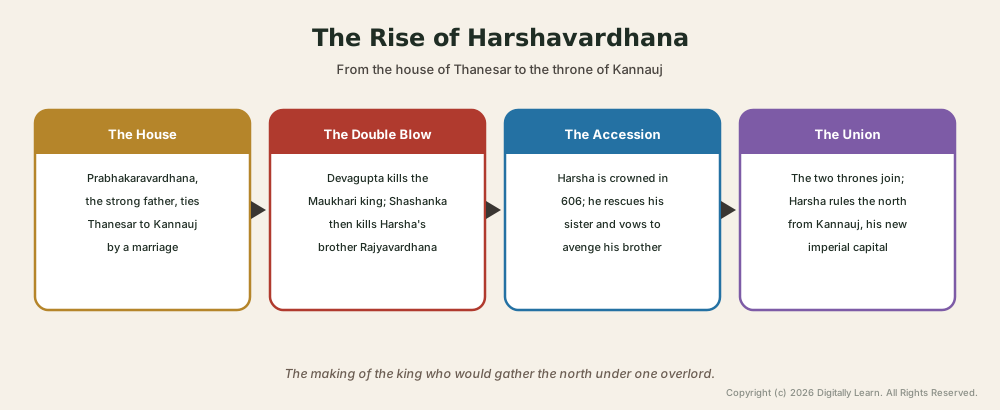
The rise of Harshavardhana is one of the great dramas of early Indian history. The young prince of Thanesar came to the throne through a double murder: Devagupta of Malwa killed the Maukhari king of Kannauj, and Shashanka of Gauda then killed Harsha's elder brother Rajyavardhana. Crowned in 606, Harsha rescued his widowed sister, joined the thrones of Thanesar and Kannauj, and set out to make himself the overlord of the north. This part covers the house of Thanesar, the double blow, the accession, the union of the two kingdoms and the exam focus.
The House of Thanesar before Harsha
Prabhakaravardhana and the Alliance with Kannauj
What is the significance of Prabhakaravardhana: he raised the Pushyabhuti house of Thanesar to real power and tied it, by marriage, to the Maukhari kings of Kannauj, the bond on which the whole later drama would turn.
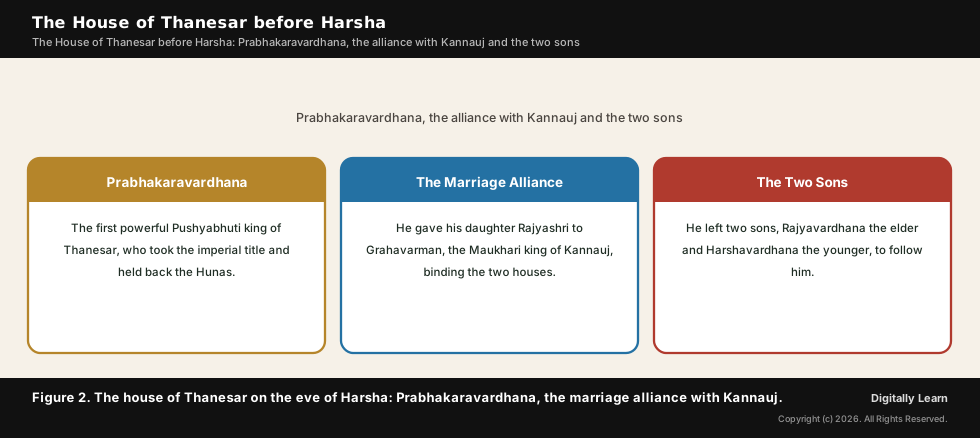
Prabhakaravardhana, who ruled at the close of the sixth century, was the first great king of his line. He took the imperial style of Parama-bhattaraka Maharajadhiraja, held back the Hunas of the north-west, and made Thanesar a power to be reckoned with among the kingdoms of the north.
His chief stroke of policy was a marriage. He gave his daughter Rajyashri to Grahavarman, the Maukhari king of Kannauj, binding the two strongest houses of the upper Ganga. He left two sons, Rajyavardhana the elder and Harshavardhana the younger, and on his death the elder took the throne.
The Double Blow
The Killing of Grahavarman and of Rajyavardhana
What is the significance of the double blow: two murders, by two different kings, struck down the Maukhari throne and then the Pushyabhuti heir, and so raised Harsha to power. An aspirant must keep the two killers apart.
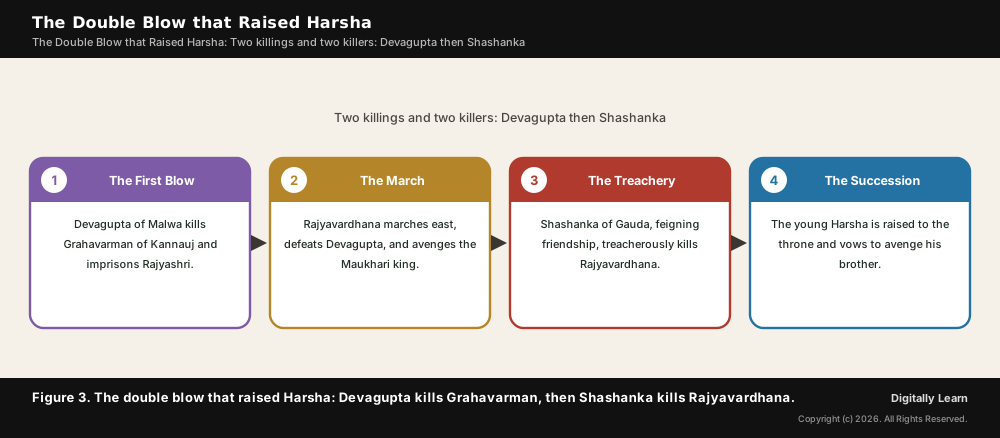
The first blow fell on Kannauj: Devagupta, the king of Malwa, attacked and killed Grahavarman, the Maukhari husband of Rajyashri, and threw the widowed princess into prison. The bond of marriage had become a cause of war.
The second blow fell on Thanesar's own house. Rajyavardhana marched east, defeated Devagupta of Malwa, and avenged his brother-in-law; but at the moment of victory he was treacherously killed by Shashanka, the king of Gauda, who had come as a friend while secretly leagued with Malwa.
The Players in the Drama
Distinguishing the cast: the rise of Harsha turns on a handful of kings and princes, allies and enemies, whom an aspirant should be able to tell apart.
On one side stood the house of Thanesar and its Maukhari kin; against them stood Devagupta of Malwa and Shashanka of Gauda, allies in the double murder. The table sets each in place, and shows at a glance who killed whom.
| Person | Who they were | Their part |
|---|---|---|
| Prabhakaravardhana | King of Thanesar, Harsha's father. | Built the power and the marriage alliance. |
| Rajyavardhana | Harsha's elder brother. | Avenged Grahavarman; killed by Shashanka. |
| Grahavarman | Maukhari king of Kannauj. | Married Rajyashri; killed by Devagupta. |
| Devagupta | King of Malwa (a Later Gupta). | Struck the first blow at Grahavarman. |
| Shashanka | King of Gauda (Bengal). | Treacherously killed Rajyavardhana. |
Harsha's Accession and the Union of the Two Kingdoms
The Coronation of 606 and the Rescue of Rajyashri
What is the significance of 606: in that year the young Harsha took up the burden of the kingdom, and from his accession the Harsha era of dating begins.
With his father and brother dead, the nobles of Thanesar pressed the crown on the younger son, and Harsha was raised to the throne in 606, still only a youth. So great was the moment that a new reckoning of years, the Harsha era, was counted from it. His first care was his sister.
Rajyashri, freed from her prison amid the wars, had fled into the Vindhya forest and was on the point of throwing herself into the fire when Harsha, riding hard, reached her and held her back. The rescue of his sister, told at length by the poet Bana, is the human heart of the story of his rise.
Thanesar and Kannauj United under Harsha
Distinguishing the union: the double murder had emptied two thrones at once, and Harsha alone had the right to both.
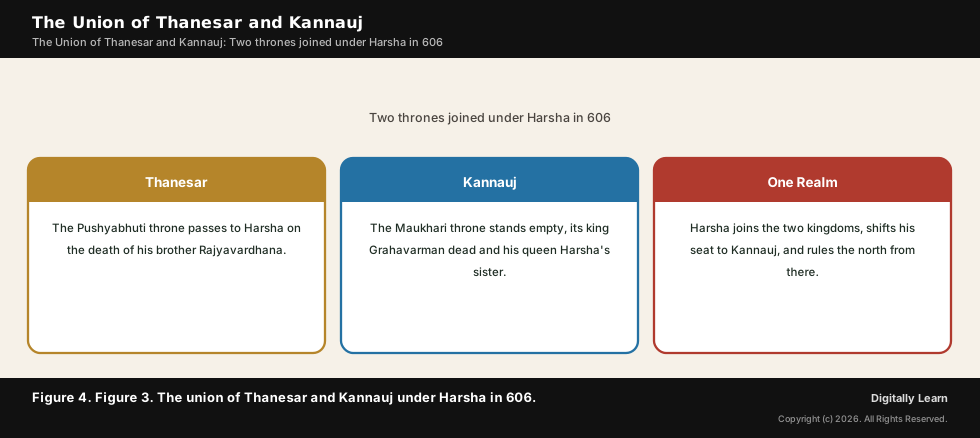
The throne of Thanesar was his by birth, on the death of Rajyavardhana; the throne of Kannauj stood empty, its king Grahavarman dead and his widow Harsha's own sister. Joining the two, Harsha shifted his seat from Thanesar to the greater city of Kannauj and ruled the north from there, so that the two strongest houses of the upper Ganga became one.
| Step | What happened |
|---|---|
| The throne of Thanesar | Passed to Harsha on the death of his brother Rajyavardhana. |
| The throne of Kannauj | Stood empty, the Maukhari king dead and the queen Harsha's sister. |
| The union | Harsha joined the two kingdoms under a single crown. |
| The new capital | Harsha moved his seat to Kannauj and ruled the north from there. |
The First Campaigns and the Eastern Alliance
The Vow against Shashanka and the Alliance with Kamarupa
What is the significance of the eastern war: Harsha's first task as king was to punish Shashanka, the killer of his brother, and for this he reached out to a powerful ally in the far east.
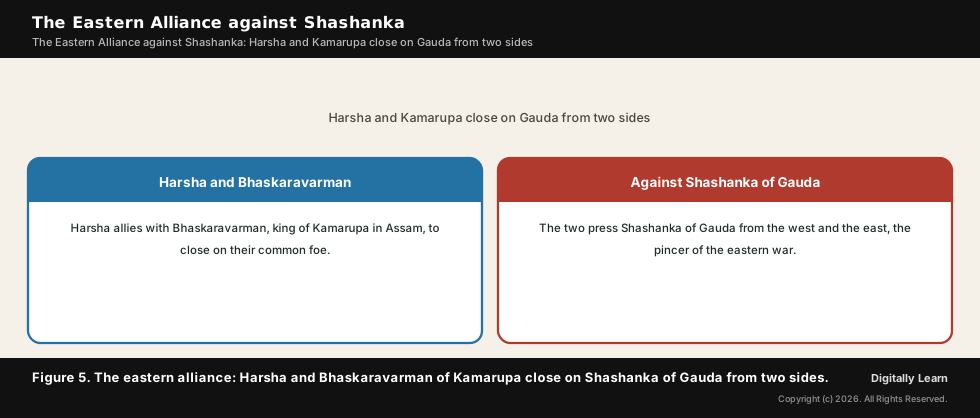
Harsha vowed to break the power of Shashanka of Gauda, but Gauda lay far to the east, beyond the reach of Thanesar alone. He therefore made an alliance with Bhaskaravarman, the king of Kamarupa, the land of Assam, who was Shashanka's neighbour and his enemy on the other side.
Between them, Harsha from the west and Bhaskaravarman from the east, the two kings pressed Shashanka of Gauda in a pincer. The eastern war did not at once destroy Shashanka, who held Bengal for many years, but it set Harsha on the path of conquest that the next part will follow.
UPSC Relevance and Exam Focus
Where the Rise of Harsha Fits in the UPSC-CSE Syllabus
This topic belongs to General Studies Paper I: ancient Indian history, and the rise of Harsha, though more a narrative than a ground of direct questions, supplies the names and the sequence that the matching questions on the age depend upon.
The point to fix above all is the order of the two killings. Devagupta of Malwa killed Grahavarman, the Maukhari king; Shashanka of Gauda killed Rajyavardhana, Harsha's brother. The two are constantly confused, and the firm rule is that Shashanka killed the brother, not the brother-in-law.
Hold too the accession of Harsha in 606, from which the Harsha era is counted, the union of Thanesar and Kannauj, the shift of the capital to Kannauj, and the alliance with Bhaskaravarman of Kamarupa.
Recurring linked concepts an aspirant should keep in working memory:
- Devagupta: The king of Malwa who killed Grahavarman.
- Shashanka: The king of Gauda who killed Rajyavardhana.
- 606: The year of Harsha’s accession and of the Harsha era.
- Kannauj: The capital to which Harsha moved his seat.
- Bhaskaravarman: The king of Kamarupa, Harsha’s eastern ally.
The Harshacharita, from which this whole story is drawn, is the work of Banabhatta, the court poet of Harsha; it stands beside the other classics an aspirant has met, the Mrichchhakatika of Shudraka and the Mudrarakshasa of Vishakhadatta from the Gupta age, and the Buddhacharita of Ashvaghosha, not Vasubandhu, from the Kushana age.
A common Prelims trap credits Shashanka with the killing of Grahavarman; in truth Grahavarman was killed by Devagupta of Malwa, and it was Rajyavardhana, Harsha's brother, whom Shashanka killed.
Previous Year UPSC-CSE Questions
Previous Year UPSC-CSE Questions By the end you will be able to draft model answers for the following UPSC questions. Each question carries a collapsible framework showing how to approach it in the exam.
- UPSC Prelims 1998 GS-IWhich of the following pairs of a classical Sanskrit work and its author are correctly matched?
- Mrichchhakatikam: Shudraka
- Buddhacharita: Vasuvandhu
- Mudrarakshasha: Vishakhadatta
- Harshacharita: Banabhatta
Select the correct answer using the codes given below:
How to approach this Prelims question
Approach: Fix the Harsha-age pair first, the Harshacharita with Banabhatta (pair four, correct); then recall that the Buddhacharita is by Ashvaghosha, not Vasubandhu (pair two, wrong), while Mrichchhakatika with Shudraka and Mudrarakshasa with Vishakhadatta are correct. The answer is I, III and IV.
Trap to watch: Pair two is the wrong one: the Buddhacharita is by Ashvaghosha, not Vasubandhu.
Key facts to recall:
- The Harshacharita is by Banabhatta, Harsha's court poet.
- The Buddhacharita is by Ashvaghosha, not Vasubandhu.
- Mrichchhakatika is by Shudraka and Mudrarakshasa by Vishakhadatta.
Answer signal: I, III and IV.
Sources and Further Reading
Editorial Disclaimer
This article is for UPSC preparation. The dates of Harsha's rise are approximate, and the account of the events follows the standard scholarship and Bana's Harshacharita.