


Overview
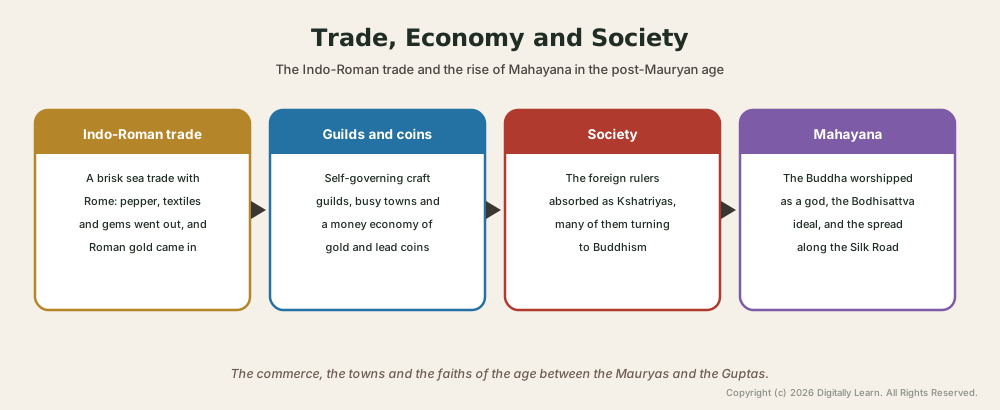
The Indo-Roman trade made the post-Mauryan age, between the Mauryas and the Guptas, a great age of commerce, when India sent out pepper, textiles and gems by sea and took in Roman gold. It was also an age of busy towns and of self-governing craft guilds, and of a society that took in its foreign rulers, the Sakas and Kushanas, as new castes. Above all, it was the age in which Mahayana Buddhism rose, with its worship of the Buddha as a god. This final part of the series covers the trade and the ports, the economy and the guilds, the assimilation of the foreigners, and the rise of Mahayana Buddhism and the Bhagavata cult.
The Indo-Roman Trade and the Western Sea
The Sea Route to Rome and the Monsoon Winds
What is the significance of the Indo-Roman trade: it joined India, as never before, to the markets of the Roman world by a direct sea route.
The great change was the use of the monsoon winds, which let ships sail straight across the Arabian Sea instead of creeping along the coast. A Greek merchant's guide, the Periplus of the Erythraean Sea, written in the first century CE, describes the ports and goods of this trade in detail, and the geographer Ptolemy adds to the picture. By these routes the goods of India reached Rome, and Roman ships and gold came to the Indian coast.
The Ports and the Goods of the Indo-Roman Trade
Distinguishing the ports and goods: a string of great ports handled the trade, and the goods that passed through them were famous across the ancient world.
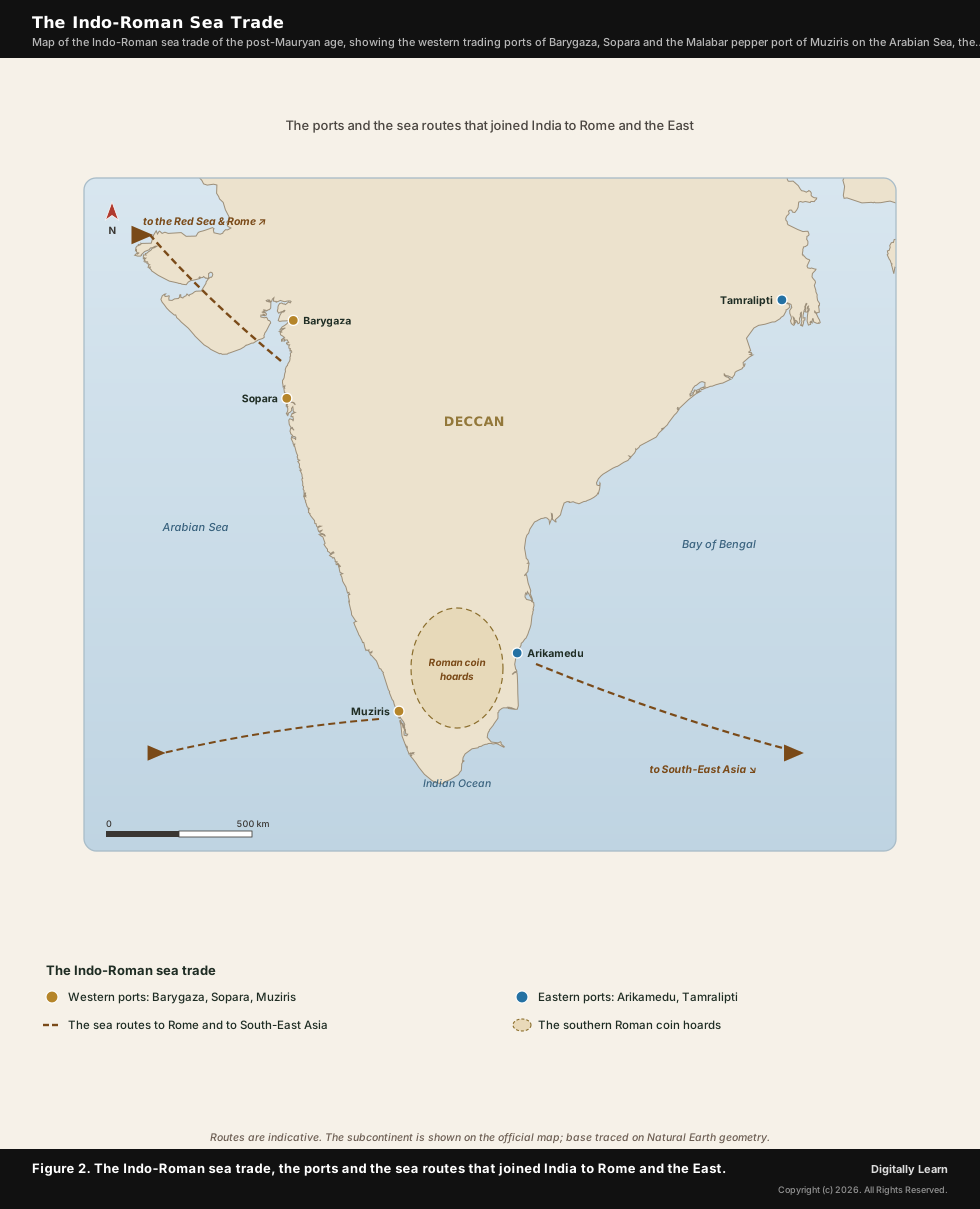
On the western coast stood Barygaza (Bharuch), with Sopara and the Malabar pepper port of Muziris; on the eastern coast lay Arikamedu, near Pondicherry, a Roman trading station, and Tamralipti in Bengal. India sent out pepper, the spice the Romans called Yavanapriya, with fine cottons, ivory and pearls. In return came Roman gold and silver coins, found in hoards in the south, with wine and glass; Pliny complained of the drain of Roman gold to India.
| India sent out (exports) | Rome sent in (imports) |
|---|---|
| Pepper and other spices (Yavanapriya) | Gold and silver coins |
| Fine cotton textiles and muslin | Wine (in amphorae) |
| Ivory, pearls and precious stones | Glass and fine pottery |
| Silk, carried on from the east | Metals such as tin and lead |
The Economy: Crafts, Guilds and Coins
The Craft Guilds (Shreni) and Their Self-Government
What is the significance of the guilds: the craft and merchant guilds, the shreni, were the great engines of the post-Mauryan economy, and they governed themselves.
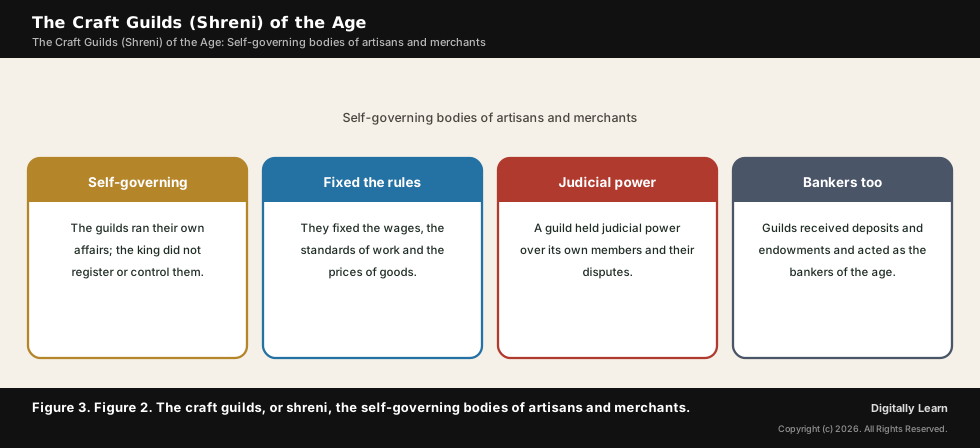
A shreni was a body of artisans or merchants of one trade. The guild, not the king, fixed the wages, the standards of work and the prices of its goods, and it held judicial power over its own members and their disputes. Guilds also acted as the bankers of the age, receiving deposits and religious endowments and lending at interest. They were largely self-governing bodies, and the king did not register or run them.
Busy Towns, Coinage and the Money Economy
Distinguishing the money economy: the trade and the crafts together made an age of prosperous towns and of abundant coinage.
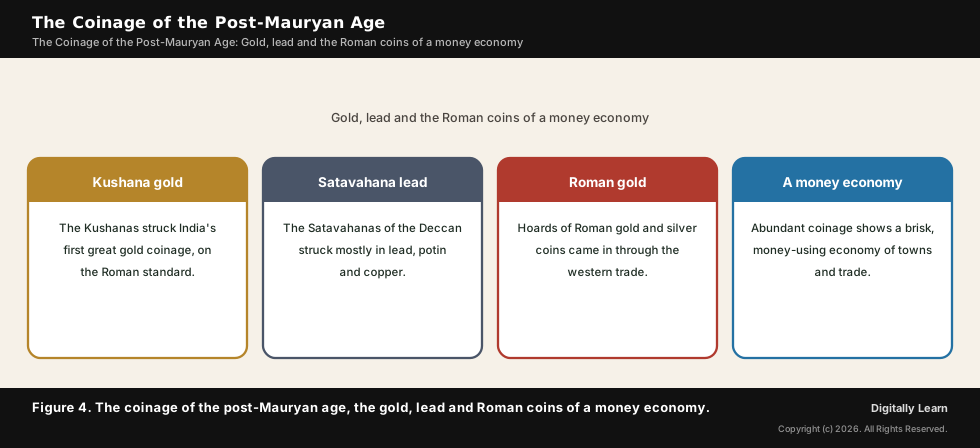
The age was rich in coins: the Kushanas struck India's first great gold coinage, the Satavahanas of the Deccan struck mostly in lead and potin, and Roman gold flowed in through the western ports. This abundant coinage is the surest sign of a brisk, money-using economy, centred on busy towns such as Mathura, Taxila, Ujjain and Pratishthana, where the artisans and merchants of the guilds lived and worked.
Society: The Assimilation of the Foreigners
The Foreign Rulers and the Varna Order
What is the significance of the assimilation: the great social fact of the age was the taking-in of the foreign rulers, the Sakas and Kushanas, into Indian society.
The foreign conquerors, the Indo-Greeks, Sakas, Parthians and Kushanas, did not stay a people apart. They were slowly absorbed into the varna order, chiefly as Kshatriyas, the warrior caste; the law-books, faced with rulers who lay outside the old fourfold scheme, treated them as Kshatriyas fallen from their proper rank for neglecting the sacred rites. Their kings took Indian titles and Indian faiths, and so passed into the society they ruled.
| Foreign people | Origin | Absorbed in society as |
|---|---|---|
| The Indo-Greeks (Yavanas) | The Bactrian Greeks | A warrior people; some became Bhagavatas. |
| The Sakas (Scythians) | Central Asian Scythians | Kshatriyas (Western Kshatrapas). |
| The Parthians (Pahlavas) | Iran | A ruling warrior class of the north-west. |
| The Kushanas | The Yuezhi of Central Asia | Kshatriyas; great patrons of Buddhism. |
Why the Foreigners Embraced Indian Faiths
Distinguishing the turn to Buddhism: many of the foreign rulers turned to Buddhism rather than to Brahmanism, and the reason lies in the society of the day.
The caste-ridden order of Brahmanism gave the foreigner, who stood outside the four varnas, no easy or honoured place. Buddhism, which set no store by birth and was open to all, offered them an easier access to Indian society, and so many of the Greeks, Sakas and Kushanas embraced it. Others, like the Greek envoy Heliodorus, turned instead to the Brahmanical Bhagavata cult, but the same openness drew the rest to the Buddha.
Religion: The Rise of Mahayana Buddhism and Bhagavatism
Mahayana Buddhism: The Buddha Deified and the Bodhisattva Ideal
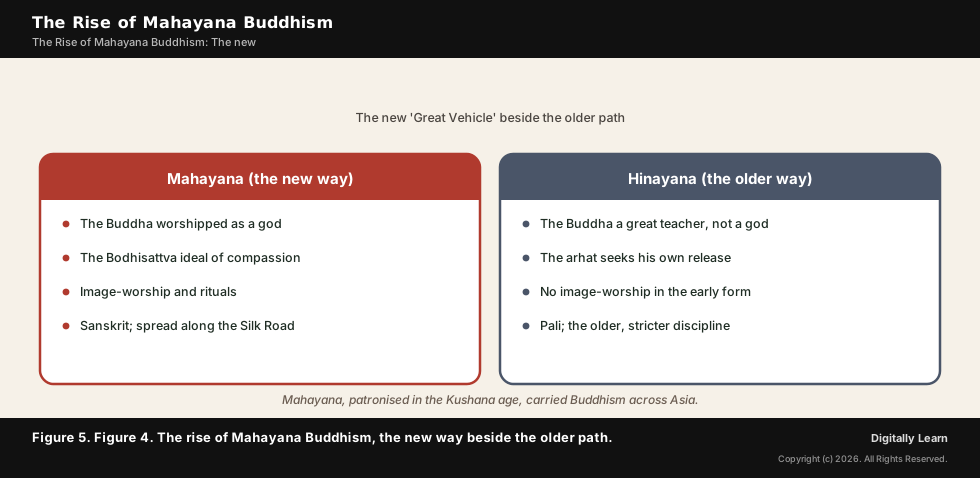
What is the significance of Mahayana: the post-Mauryan age, above all the Kushana age, was the age in which Buddhism took a wholly new form, the Mahayana.
In the older Buddhism the Buddha was a great teacher and each sought his own release as an arhat. In the new Mahayana, the great vehicle, the Buddha was worshipped as a god, the compassionate Bodhisattvas who delay their own salvation to help others became objects of devotion, and image-worship and ritual entered the faith. It was this devotional Mahayana, patronised by Kanishka and carried along the Silk Road, that spread Buddhism across Central Asia and into China.
Brahmanism and the Bhagavata Cult
Distinguishing the Brahmanical revival: the same age saw the growth of a devotional Brahmanism, centred on the worship of Vishnu.
Beside the rise of Mahayana grew the Bhagavata cult, the worship of Vishnu in his form as Vasudeva-Krishna, an early shape of later Vaishnava devotion. Its great witness is the Heliodorus pillar at Besnagar, set up by a Greek envoy who had become a Bhagavata, a sign that even the foreigner was drawn to the Indian faiths. This devotional turn, in both Buddhism and Brahmanism, is the mark of the age.
The Legacy of the Post-Mauryan Age
How the Age Between the Mauryas and the Guptas Shaped India
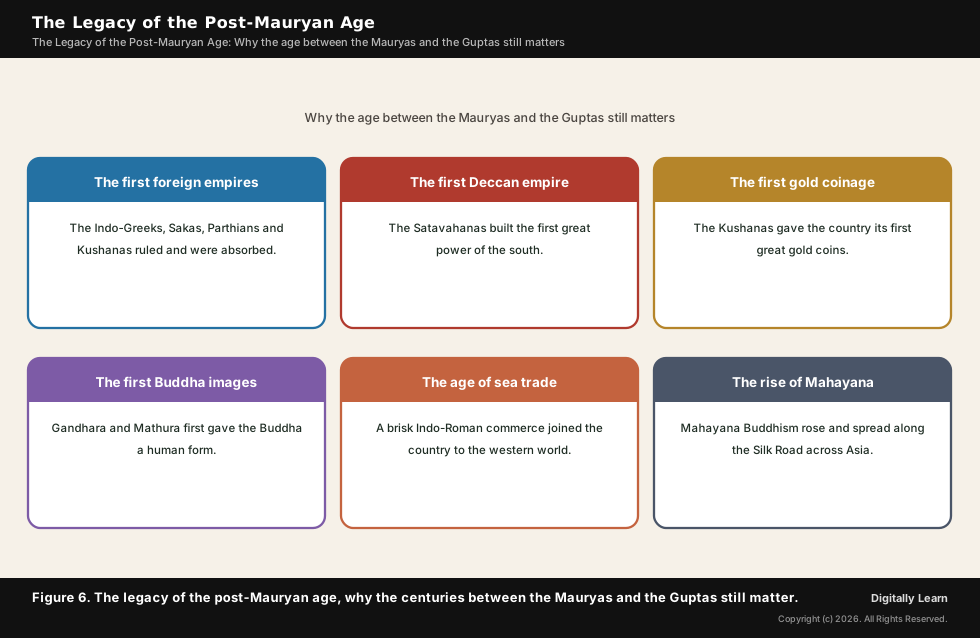
What is the significance of the whole age: the centuries between the Mauryas and the Guptas were no mere gap, but a creative age that shaped much of what followed.
This was the age of the first foreign empires and of the first great empire of the Deccan, of India's first gold coinage and of the first images of the Buddha, of a brisk sea trade with Rome and of the rise of Mahayana. The wealth, the art and the faiths of the age passed on to the Gupta golden age that came after it, so that the post-Mauryan centuries are a bridge in the long history of ancient India.
UPSC Relevance and Exam Focus
Where Post-Mauryan Trade and Society Fit in the UPSC-CSE Syllabus
This topic belongs to General Studies Paper I: ancient Indian history and culture, and the trade, economy and society of the post-Mauryan age are a favourite source of Prelims questions.
For Prelims, hold the firm facts: the Indo-Roman trade ran by the monsoon route described in the Periplus; pepper was the Yavanapriya, dear to the Greeks; Roman gold drained into India; the craft guilds or shreni were self-governing, fixing standards and judging their members but not registered by the king; the foreign rulers were absorbed as Kshatriyas; and Mahayana Buddhism deified the Buddha, honoured the Bodhisattvas and brought in image-worship.
For Mains, this age is valuable for India's place in ancient world trade and for the social process by which the foreign rulers were absorbed.
Recurring linked concepts an aspirant should keep in working memory:
- Yavanapriya: Pepper, the spice dear to the Greeks and Romans.
- The Periplus: The Greek guide to the Indo-Roman sea trade.
- Shreni: The self-governing craft and merchant guilds.
- Assimilation: The Sakas and Kushanas absorbed as Kshatriyas.
- Mahayana: The deified Buddha, the Bodhisattva ideal, image-worship.
A common Prelims trap is to say the guilds were registered with, and run by, the king; in fact the shreni were self-governing, fixing their own rules and judging their own members. A second trap is to confuse Yavanapriya with a textile or with ivory; it was pepper.
Previous Year UPSC-CSE Questions
Previous Year UPSC-CSE Questions By the end you will be able to draft model answers for the following UPSC questions. Each question carries a collapsible framework showing how to approach it in the exam.
- UPSC Prelims 1995 GS-IThe term Yavanapriya, mentioned in ancient Sanskrit texts, denoted
How to approach this Prelims question
Approach: Recall that Yavanapriya means 'dear to the Greeks/Yavanas' and was the name for the chief Indian export to Rome, pepper.
Trap to watch: Muslin and ivory were also exported, but the term Yavanapriya specifically denoted pepper.
Key facts to recall:
- Yavanapriya means 'dear to the Greeks (Yavanas)'.
- It denoted pepper, the great Indian export to Rome.
Answer signal: Pepper.
- UPSC Prelims 2012 GS-IWith reference to the guilds (Shreni) of ancient India that played a very important role in the country's economy, which of the following statements is/are correct?
- Every guild was registered with the central authority of the State and the king was the chief administrative authority on them.
- The wages, rules of work, standards and prices were fixed by the guild.
- The guild had judicial powers over its own members.
Select the correct answer using the codes given below:
How to approach this Prelims question
Approach: Test each statement against the self-governing nature of the shreni: they fixed their own standards and judged their own members, but were not state-registered.
Trap to watch: Statement 1 is the trap: the guilds were self-governing, not registered with or run by the king; statements 2 and 3 are correct.
Key facts to recall:
- The shreni fixed wages, standards and prices and held judicial power over members.
- They were self-governing, not registered by the state.
Answer signal: 2 and 3 only.
- UPSC Prelims 1998 GS-IMany of the Greeks, Kushanas and Shakas embraced Buddhism rather than Hinduism because
How to approach this Prelims question
Approach: Identify the best reason: Buddhism's openness gave the foreigner, who lay outside the varna order, easier access to Indian society.
Trap to watch: 'Caste-ridden Hinduism did not attract them' is partly true but is the negative half; the fuller best answer is that Buddhism provided easier access to society.
Key facts to recall:
- The foreigners lay outside the fourfold varna order of Brahmanism.
- Buddhism, open to all regardless of birth, gave easier access to Indian society.
Answer signal: Buddhism provided easier access to Indian society.
- UPSC Prelims 2019 GS-IConsider the following:
- Deification of the Buddha
- Treading the path of Bodhisattvas
- Image worship and rituals
Which of the above is/are the feature/features of Mahayana Buddhism?
How to approach this Prelims question
Approach: Check each: deification of the Buddha, the Bodhisattva path and image-worship are all hallmarks of Mahayana.
Trap to watch: All three are Mahayana features; the older Hinayana lacked the deified Buddha, the Bodhisattva-devotion and image-worship of the early kind.
Key facts to recall:
- Mahayana deified the Buddha and honoured the Bodhisattvas.
- It brought image-worship and ritual into Buddhism.
Answer signal: 1, 2 and 3.
Sources and Further Reading
Editorial Disclaimer
This article is for UPSC preparation. The details of ancient trade and the process of social assimilation are reconstructed from texts, coins and archaeology, and the conventional accounts are given here.