


Overview
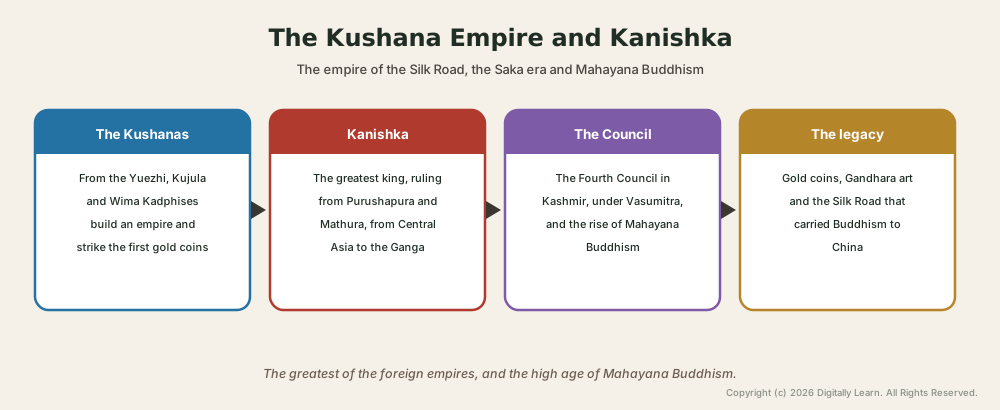
The Kushana empire was the greatest of the foreign empires of ancient India, stretching from Central Asia across the Hindu Kush into the Gangetic plain. The Kushanas were one of the tribes of the Yuezhi; their king Kujula Kadphises founded the empire, and Wima Kadphises struck India's first great gold coins. Their greatest ruler was Kanishka I, who ruled from Purushapura, the modern Peshawar, and Mathura, and from whose accession the Saka era is traditionally reckoned. Kanishka is remembered above all as a patron of Buddhism: he called the Fourth Buddhist Council in Kashmir and supported the rise of Mahayana Buddhism, which spread along the Silk Road to Central Asia and China. This part covers the rise of the Kushanas, Kanishka and the Saka era, the Fourth Council and Mahayana, and the Kushana coinage and legacy.
The Rise of the Kushanas
From the Yuezhi to the Kushana Empire
What is the significance of the Kushanas: they built the largest of all the foreign empires in India and joined the country, as never before, to the wider world of Central Asia.
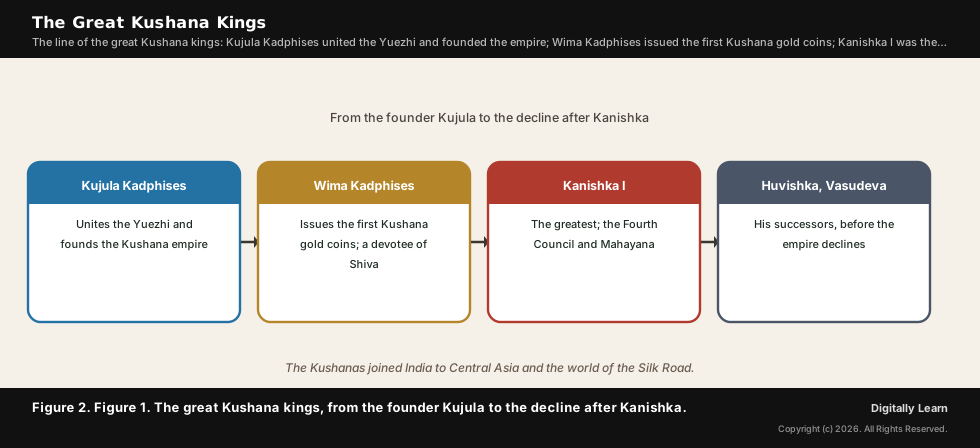
The Kushanas were one of the five tribes of a Central Asian people, the Yuezhi, who had themselves driven the Sakas before them. Their chief, Kujula Kadphises, united the five tribes and founded the Kushana empire in the first century CE. His successor, Wima Kadphises, extended the empire into India and struck the first great Kushana gold coins; he was a devotee of Shiva.
Kanishka's Empire from Central Asia to the Ganga
Distinguishing the extent: under Kanishka the empire reached its height, a vast realm spanning two worlds.
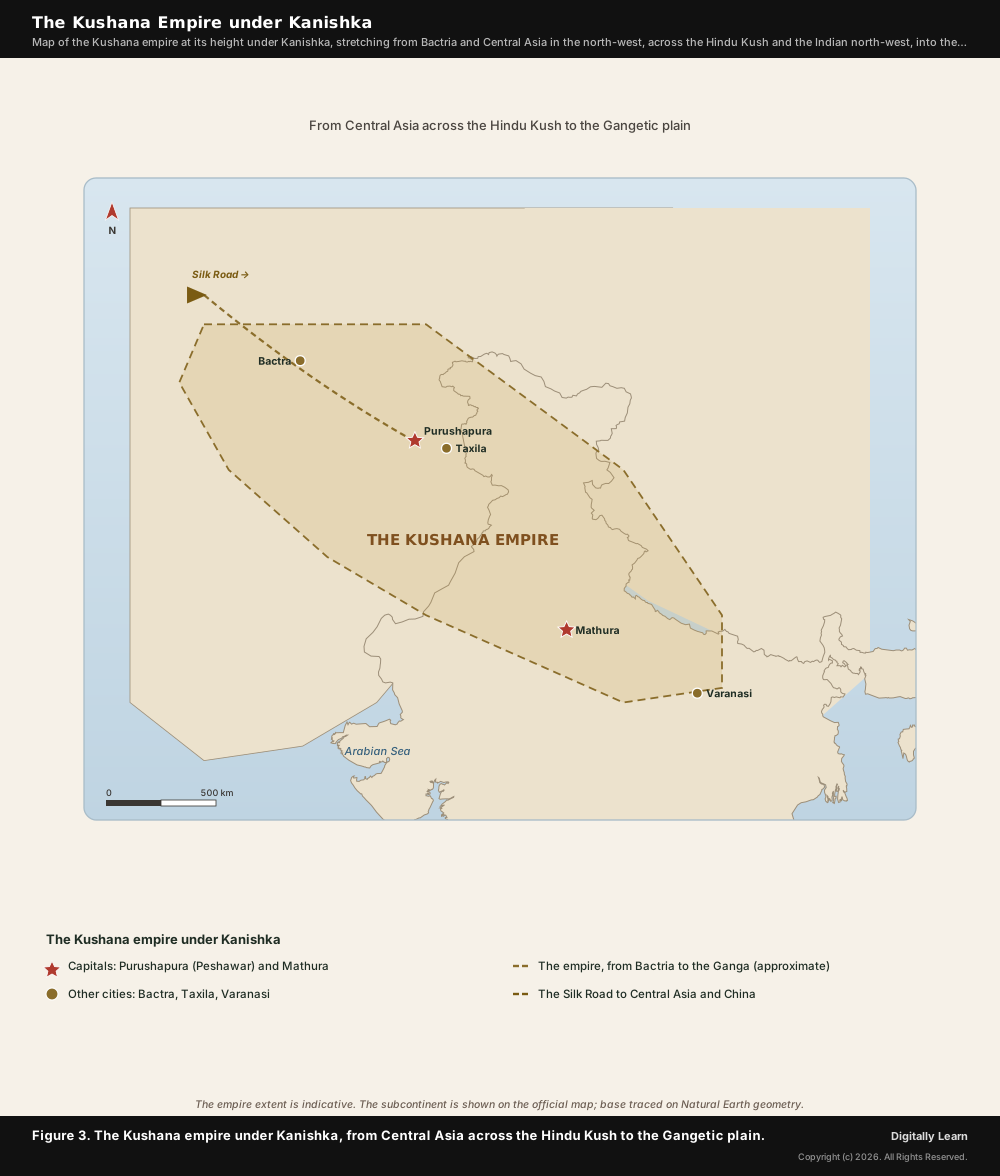
The greatest Kushana ruler was Kanishka I, who ruled in the first half of the second century CE. His empire stretched from Bactria and Central Asia, across the Hindu Kush and the north-west, deep into the Gangetic plain. He ruled from two capitals, Purushapura, the modern Peshawar, and Mathura, and held the great trade routes that joined India to Central Asia and China.
Kanishka and the Saka Era
The Saka Era of 78 CE and Its Debate
What is the significance of the era: Kanishka's name is bound up with the most important era of ancient India, though the link is debated.
By a long tradition, the Saka era, which begins in 78 CE, is reckoned from the accession of Kanishka, and this era is the very one chosen as the basis of the national calendar of India. Modern scholars, however, debate the date of Kanishka's accession, which some now place later, and the origin of the era itself; it is safest to remember the 78 CE epoch firmly while treating its founder as an open question.
Kanishka, Buddhism and the Fourth Council
The Fourth Buddhist Council and the Rise of Mahayana
What is the significance of Kanishka's Buddhism: like Ashoka before him, Kanishka is remembered as a great royal patron of Buddhism, in the age when the faith took a new form.
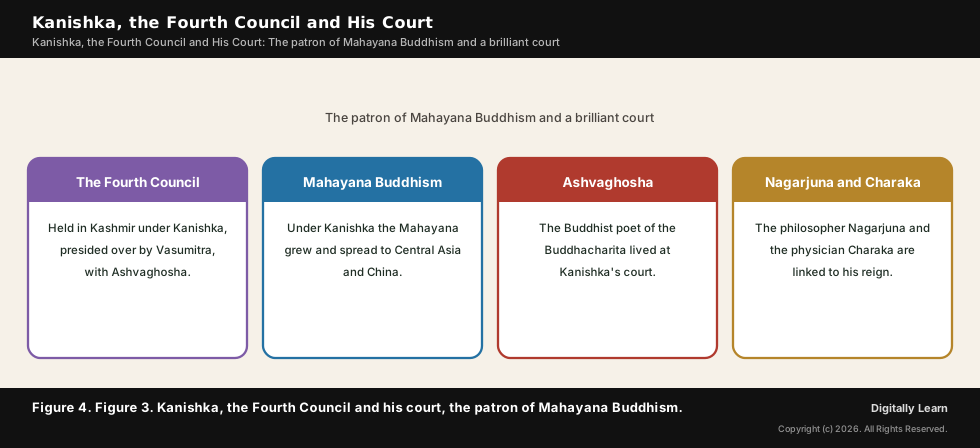
Kanishka called the Fourth Buddhist Council, held in Kashmir under the presidency of the monk Vasumitra, with the poet Ashvaghosha closely associated; the council was a Sarvastivada assembly that drew up the great Abhidharma commentary, the Mahavibhasha. It is in Kanishka's age, too, that Mahayana Buddhism, with its worship of the Buddha as a god and its bodhisattvas, grew strong, and from his empire it spread along the trade routes into Central Asia and China.
The Four Buddhist Councils and the Place of the Fourth
Distinguishing the four councils: Kanishka's Fourth Council was the last of the four great assemblies that shaped the Buddhist canon, and the examination often tests them as a connected set.
The first council met at Rajagriha under Ajatashatru soon after the Buddha's death, and the second at Vaishali under Kalasoka, where the order split into two schools. The third, at Pataliputra under Ashoka, completed the Pali canon and sent out the missionaries. Kanishka's fourth council at Kashmir thus stands at the end of this line, the one assembly held under a foreign king and the one most closely tied to the rise of Mahayana Buddhism.
| Council | Venue | Royal patron | President and outcome |
|---|---|---|---|
| First, c. 483 BCE | Rajagriha | Ajatashatru | Mahakasyapa presided; the Sutta and Vinaya were compiled. |
| Second, c. 383 BCE | Vaishali | Kalasoka | Sabakami presided; the order split into Sthaviravada and Mahasanghika. |
| Third, c. 250 BCE | Pataliputra | Ashoka | Moggaliputta Tissa presided; the Abhidhamma was added and missions were sent out. |
| Fourth, c. first-second century CE | Kashmir | Kanishka | Vasumitra presided, with Ashvaghosha; the Mahavibhasha commentary was compiled. |
The Scholars and Artists of Kanishka's Court
Distinguishing the court: Kanishka's reign is famous for the brilliant company of scholars and writers gathered around the throne.
Tradition places at Kanishka's court some of the greatest names of the age: Ashvaghosha, the Buddhist poet of the Buddhacharita; Nagarjuna, the philosopher of the Madhyamaka school of Mahayana; Vasumitra, who led the council; and the physician Charaka, whose name is given to a great work of medicine.
His reign also saw the flowering of the Gandhara and Mathura schools, which made the first images of the Buddha. A point often confused is whether the Chinese pilgrim Fa-Hien attended Kanishka's council; he came much later, in the age of the Guptas, and was no witness of it.
Kushana Coinage, Art and Legacy
The Gold Coinage and the Many Gods
What is the significance of the coinage: the Kushanas gave India its first great gold coinage and a coinage of remarkable religious variety.
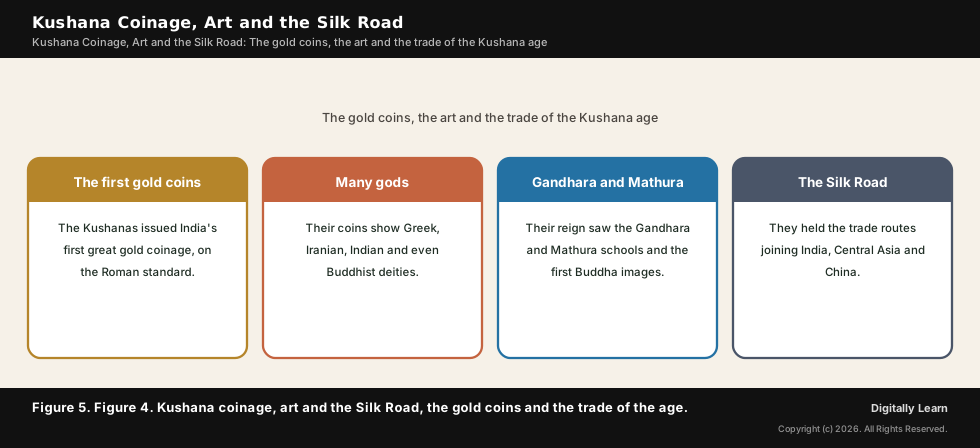
Beginning with Wima Kadphises, the Kushanas struck a fine gold coinage, the first of its kind in India, on the standard of the Roman gold coin, with which their trade brought them into close contact. Their coins show a remarkable crowd of gods, Greek, Iranian, Indian and Buddhist, from Helios and Mithra to Shiva and the Buddha himself, a sure sign of the mingling of faiths in their wide and open empire.
The Kushana Legacy and the Decline of the Empire
Distinguishing the legacy: though the empire fell, the Kushana age left lasting marks on Indian art, religion and trade.
The Kushanas held the Silk Road, the great trade artery between India, Central Asia, China and the Roman world, and it was along this road that Buddhism passed out of India into the wider east. Their reign gave India the Gandhara and Mathura art and a brisk gold economy.
After Kanishka came Huvishka and Vasudeva, and in the third century CE the empire weakened and broke up, pressed in the west by the Sasanians of Persia and in the east by the rising Guptas.
UPSC Relevance and Exam Focus
Where the Kushanas and Kanishka Fit in the UPSC-CSE Syllabus
This topic belongs to General Studies Paper I: ancient Indian history and culture, and the Kushanas, with Kanishka, the Fourth Council and the coinage, are among the most examined of the post-Mauryan dynasties.
For Prelims, hold the firm facts: the Kushanas came from the Yuezhi and Kujula Kadphises founded the empire; Kanishka ruled from Purushapura and Mathura; the Saka era of 78 CE is traditionally dated from him; he called the Fourth Buddhist Council in Kashmir, presided over by Vasumitra, and patronised Mahayana; the Kushanas struck the first great gold coins; and Fa-Hien, a Gupta-age pilgrim, did not attend his council.
For Mains, the Kushana age is valuable for India's place on the Silk Road and for the spread of Buddhism across Asia.
Recurring linked concepts an aspirant should keep in working memory:
- Kanishka: The greatest Kushana; capitals Purushapura and Mathura.
- The Fourth Council: Kashmir; presided by Vasumitra; the rise of Mahayana.
- The court: Ashvaghosha, Nagarjuna, Charaka and Vasumitra.
- The coins: India’s first great gold coinage, on the Roman standard.
- The Silk Road: Carried Mahayana Buddhism to Central Asia and China.
A common Prelims trap is to place Fa-Hien at Kanishka's Fourth Council; Fa-Hien was a pilgrim of the Gupta age, centuries later, and no witness of it. The same paired question adds the later king Harsha, whom the pilgrim Hiuen-Tsang, not Fa-Hien, met and found a patron, not an enemy, of Buddhism.
A further trap is to credit India's first gold coins to the Guptas; the Kushanas struck them first.
Previous Year UPSC-CSE Questions
Previous Year UPSC-CSE Questions By the end you will be able to draft model answers for the following UPSC questions. Each question carries a collapsible framework showing how to approach it in the exam.
- UPSC Prelims 2001 GS-IWho among the following presided over the Buddhist Council held during the reign of Kanishka at Kashmir?
How to approach this Prelims question
Approach: Recall that the Fourth Council at Kashmir was presided over by Vasumitra (Ashvaghosha its vice-president).
Trap to watch: Vasumitra presided; Nagarjuna was a Mahayana philosopher of the age but did not preside, and Sudraka is a playwright.
Key facts to recall:
- The Fourth Buddhist Council was held in Kashmir under Kanishka.
- Vasumitra presided over it, with Ashvaghosha.
Answer signal: Vasumitra.
- UPSC Prelims 2004 GS-IConsider the following statements:
- The Chinese pilgrim Fa-Hien attended the fourth Great Buddhist Council held by Kanishka.
- The Chinese pilgrim Hiuen-Tsang met Harsha and found him to be antagonistic to Buddhism.
Which of these statements given above is/are correct?
How to approach this Prelims question
Approach: Place each pilgrim in time: Fa-Hien is Gupta-age (not Kanishka's), and Harsha patronised Buddhism.
Trap to watch: Fa-Hien came in the Gupta age, long after Kanishka, so he did not attend the Fourth Council; Harsha was a patron, not an enemy, of Buddhism; so neither statement is correct.
Key facts to recall:
- Fa-Hien was a Gupta-age pilgrim, not a witness of Kanishka's council.
- Harsha patronised, not opposed, Buddhism.
Answer signal: Neither 1 nor 2.
Sources and Further Reading
Editorial Disclaimer
This article is for UPSC preparation. The date of Kanishka's accession and the origin of the Saka era are debated among historians, and the conventional accounts are given here.