

Overview
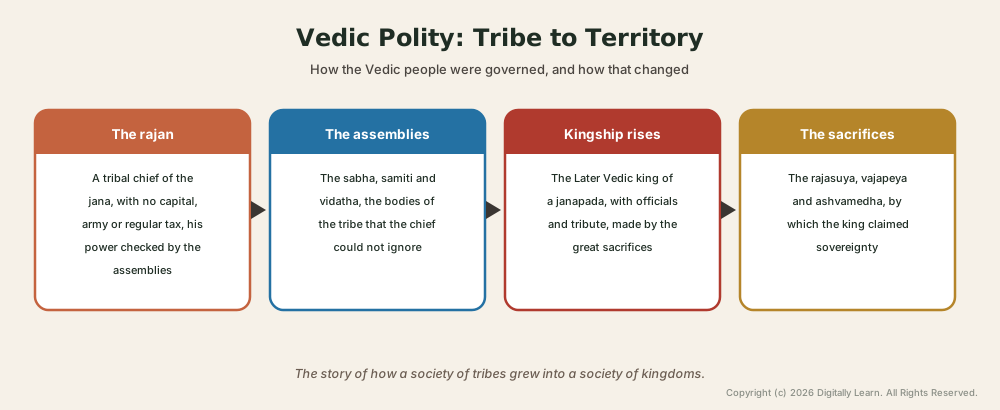
The polity of the Vedic Age changed profoundly between its two phases, and that change, from tribe to territory, is the heart of the whole period. In the Rigvedic age the people were governed not by a state but by the tribe, the jana, led by a chief, the rajan, whose power was real but limited, checked by the assemblies of the people, the sabha and the samiti. By the Later Vedic age the chief had become a king of a fixed territory, the janapada, served by officials and supported by tribute, his power proclaimed through great royal sacrifices while the old assemblies faded. This part traces that transformation, from the tribal assemblies and the famous Battle of Ten Kings to the territorial kingship that prepared the way for the great kingdoms to come.
Rigvedic Tribal Polity: The Rajan and the People
The Jana, the Vish and a Chief Without a State
What is the significance of the tribal polity: the Rigvedic people had no state in the later sense, and grasping that the basic unit was the tribe, not the territory, is the first thing the examiner expects.
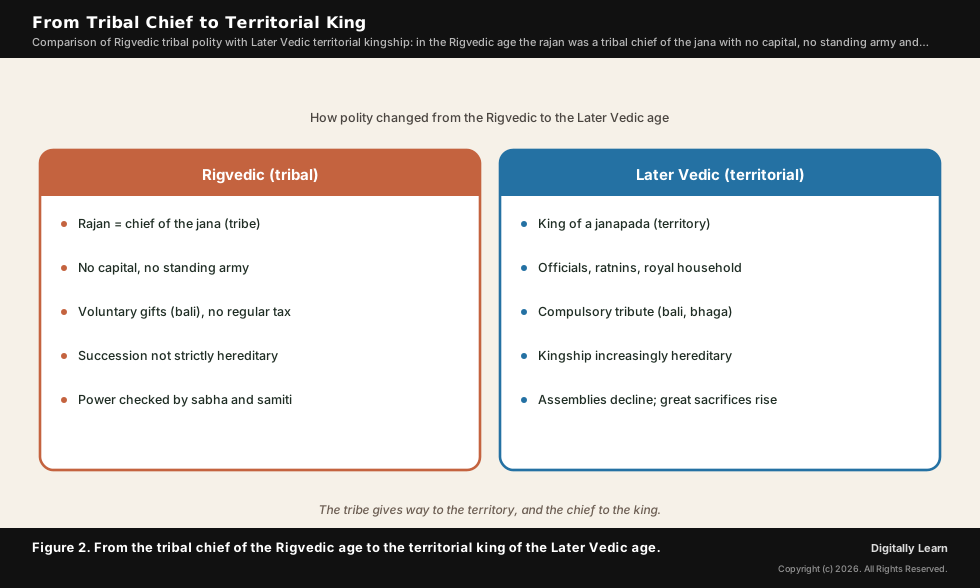
The basic unit was the jana, the tribe, and its people were the vish; below them lay the village, the grama, and the family, the kula. At the head stood the rajan, a chief rather than a territorial king.
He had no capital city, no standing army and collected no regular taxes, living instead on the voluntary gifts, the bali, that the people offered. His main duty was to lead the tribe in war, often in cattle-raids, and to protect it.
Distinguishing the limits on his power: the rajan's position was not yet strictly hereditary, and it was subject to the approval of the tribal assemblies. The Rigveda even says that a chief could not rule without the assembly behind him. His was a power of leadership, not of command over a subject population.
The Rigvedic Assemblies: Sabha, Samiti, Vidatha and Gana
The Bodies That Checked the Chief
What is the significance of the assemblies: the Rigvedic tribe was governed not by the chief alone but through a set of popular assemblies, and the examiner often asks to tell them apart.
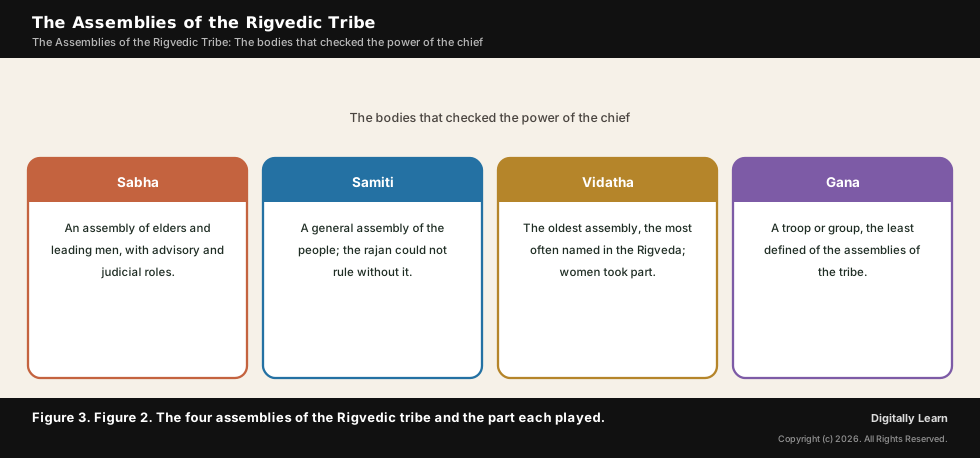
Distinguishing the four bodies: the Sabha was an assembly of elders and leading men, with advisory and judicial functions. The Samiti was a larger, general assembly of the people, so important that the Rigveda says the rajan could not rule without it.
The Vidatha was the oldest assembly of all and the one most often named in the Rigveda, with religious, military and social roles, and notably one in which women took part. The Gana was a troop or group, the least clearly defined of the four.
Together these bodies meant that power in the Rigvedic tribe was shared, not absolute, and their later decline is one of the surest signs that the age of kings had arrived.
The Battle of Ten Kings (Dasarajna) and the Rise of the Bharatas
Sudas, the Bharatas and the Birth of the Kurus
What is the significance of the Dasarajna: the Battle of Ten Kings, described in the seventh book of the Rigveda, is the one great political event the early texts record, and it shows the tribal world in motion.
In this battle, the Dasarajna, Sudas, the king of the Bharata tribe, faced a confederation of ten tribes, among them the Purus, and defeated them on the banks of the Parushni, the river now called the Ravi. The victory of the Bharatas left a deep mark, for it is from their name that the country would later take the name Bharat.
Distinguishing the aftermath: in the years that followed, the once-rival Bharatas and Purus drew together and merged into a single people, the Kuru, who would dominate the Later Vedic age from their land in the Ganga-Yamuna doab. The Battle of Ten Kings thus stands at the very point where the scattered Rigvedic tribes began to coalesce into the larger units of the age of kingdoms.
Later Vedic Kingship and the Territorial State
From Jana to Janapada: The Birth of the Territorial Kingdom
What is the significance of the territorial state: the single greatest political change of the age was the rise of the territorial kingdom, and it is the key to almost everything that distinguishes the Later Vedic from the Rigvedic world.
In the Later Vedic age the tribe gave way to the janapada, the land where the jana had settled, a word that literally means the place where the people set their foot.
The rajan was now a king of a territory rather than a chief of a people; his office grew more firmly hereditary; and, crucially, the old assemblies, the sabha and samiti, lost their power as the king's grew. Royal authority was no longer shared with the tribe but held above it.
The Ratnins and the Officers of the King
Distinguishing the king's servants: the Later Vedic king no longer ruled alone but was now surrounded by a body of high officials, the ratnins, the jewels, whom he honoured during his consecration. They were the first beginnings of a royal administration.
| Officer (ratnin) | Role |
|---|---|
| Purohita | The chief priest and chaplain, the king's chief adviser |
| Senani | The commander of the army |
| Gramani | The head of the village or of the host |
| Bhagadugha | The collector of the king's share of the produce |
| Suta | The charioteer and chronicler of the king's deeds |
The very existence of such a group of officers, each with a defined duty, shows how far the simple tribal chiefship of the Rigveda had grown into something like a kingdom with a court and an administration.
The Linked Changes in Society and Economy
What is the significance of the linked change: the political change did not happen alone, and a strong answer ties the rise of kingship to the parallel shifts in society and economy, which the next two parts develop in full.
The economic change was the foundation. The Rigvedic cattle-keeping economy, in which the chief lived on voluntary gifts, gave way in the Later Vedic age to settled agriculture on the rich soils of the doab, worked with iron tools, which produced a surplus. From that surplus the king now drew compulsory tribute, the bali and the bhaga or share of the crop, though there was still no organised system of taxation.
The social change ran alongside. The fluid groups of the Rigveda hardened into the fixed fourfold varna order, with the king drawn from the kshatriya and the priests from the brahmana, while the vish became the taxpaying farmers and the shudra served. Kingship, surplus and a graded society rose together, each supporting the others.
The Royal Sacrifices as Instruments of Power: Rajasuya, Vajapeya and Ashvamedha
How the King Turned Ritual into Sovereignty
What is the significance of the royal sacrifices: in an age before a standing army or a settled bureaucracy, the Later Vedic king proclaimed and enlarged his power above all through great sacrifices, and these are a favourite examination topic.
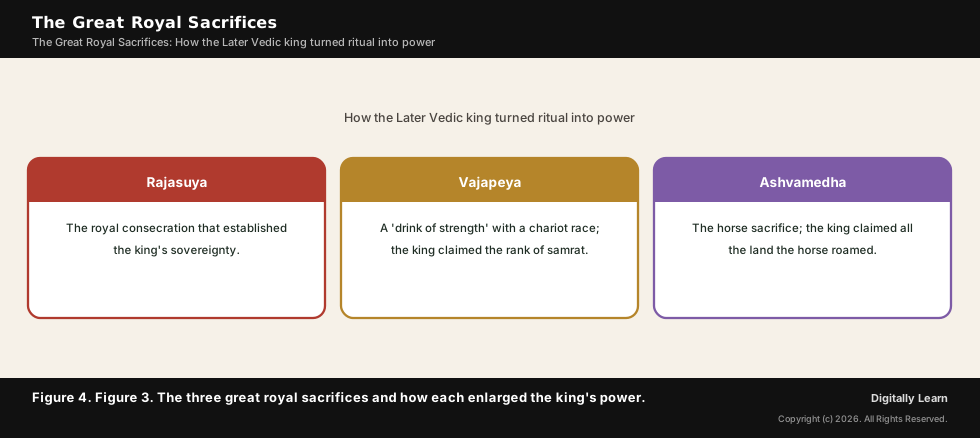
Distinguishing the three great rites: the Rajasuya was the royal consecration, the ceremony that made a man a king and established his sovereignty. The Vajapeya, a drink of strength, included a ritual chariot race that the king was made to win, by which he claimed the higher rank of samrat.
The Ashvamedha, the horse sacrifice, was the grandest of all: a horse was let loose to wander for a year, and all the land through which it passed unchallenged was claimed as the king's, so that the rite asserted his paramountcy over his neighbours.
UPSC Relevance and Exam Focus
Where Vedic Polity Fits in the UPSC-CSE Syllabus
This topic belongs to General Studies Paper I: ancient Indian history and culture, and the change from tribal to territorial polity is one of the central themes of the Vedic Age for both Prelims and Mains.
For Prelims, hold the firm facts: the Rigvedic rajan had no capital, army or regular tax; the assemblies were the sabha, samiti, vidatha and gana, the vidatha being the oldest; the Battle of Ten Kings was won by Sudas of the Bharatas on the Parushni (Ravi); and the great sacrifices were the rajasuya, vajapeya and ashvamedha.
For Mains, the polity change is one strand of the larger transformation from the Rig Vedic to the Later Vedic age, alongside the changes in society and economy, which a complete answer weaves together.
Recurring linked concepts an aspirant should keep in working memory:
- The Rigvedic rajan: A tribal chief, no capital or army, voluntary gifts (bali).
- The assemblies: Sabha, samiti, vidatha (oldest) and gana.
- The Battle of Ten Kings: Sudas of the Bharatas on the Parushni (Ravi).
- The territorial state: From jana to janapada; the ratnins; hereditary kingship.
- The royal sacrifices: Rajasuya, vajapeya and ashvamedha.
A common Prelims trap is to call the Rigvedic rajan a territorial king who taxed his people. He was a tribal chief who lived on voluntary gifts, not regular taxes.
A common Mains trap is to read the assemblies as a full democracy that elected the king. They affirmed and checked the chief, but the strong claim of popular election is not settled.
Previous Year UPSC-CSE Questions By the end you will be able to draft model answers for the following UPSC questions. Each question carries a collapsible framework showing how to approach it in the exam.
- UPSC Mains 2024 GS-IUnderline the changes in the field of society and economy from the Rig Vedic to the later Vedic period.
How to structure the answer in the exam
Introduction: Open with the move from the Rig Vedic tribal order in the north-west to the Later Vedic settled order in the Ganga-Yamuna plain.
Body (sub-themes to develop):
- Economy: from a cattle-keeping pastoral economy with voluntary gifts (bali) to settled iron-age agriculture producing a surplus and compulsory tribute (bali, bhaga).
- Society: from the fluid groups of the Rigveda to the hardened fourfold varna order, with the vish becoming taxpaying farmers and the shudra serving.
- Polity (the connecting change): from the tribal rajan checked by the sabha and samiti to the hereditary territorial king of a janapada, served by the ratnins.
Conclusion: Conclude that the economic surplus underpinned a more stratified society and a stronger territorial kingship, the three changes advancing together.
Prelims MCQ practice
Each question below tests one specific concept on the topic. Click to reveal the answer and a full option-wise explanation.
Q1. In the Rigvedic period, the basic unit of society and polity was the:
- Janapada (territory)
- Jana (tribe)
- Mahajanapada (great kingdom)
- Nagara (city)
Show answer and explanation
Answer: Jana (tribe)
Explanation.
Option (b) is correct. The Rigvedic unit was the jana, the tribe; the janapada (territory) belongs to the Later Vedic age. Hence option (b).
Q2. Which one of the following was the oldest assembly, and the one most frequently mentioned in the Rigveda?
- Sabha
- Samiti
- Vidatha
- Gana
Show answer and explanation
Answer: Vidatha
Explanation.
Option (c) is correct. The Vidatha was the oldest assembly and the most often named in the Rigveda, and women took part in it. Hence option (c).
Q3. With reference to the Battle of Ten Kings (Dasarajna), consider the following statements:
- It was won by Sudas, the king of the Bharatas.
- It was fought on the banks of the Parushni, the modern Ravi.
Which of the statements given above is/are correct?
- 1 only
- 2 only
- Both 1 and 2
- Neither 1 nor 2
Show answer and explanation
Answer: Both 1 and 2
Explanation.
Both statements are correct. Sudas of the Bharatas won the Battle of Ten Kings on the Parushni (the modern Ravi). Hence option (c).
Q4. The word 'janapada', which appears in the Later Vedic period, literally means the:
- Assembly of the people
- Land where the jana set its foot
- Council of the king
- Sacrifice of the horse
Show answer and explanation
Answer: Land where the jana set its foot
Explanation.
Option (b) is correct. Janapada means the land where the jana (people) set its foot, the territorial state of the Later Vedic age. Hence option (b).
Q5. The 'ratnins' of the Later Vedic period were the:
- Sacred jewels worn by the king
- Chief officers and dignitaries of the king
- Hymns of royal consecration
- Tribes defeated in the Dasarajna
Show answer and explanation
Answer: Chief officers and dignitaries of the king
Explanation.
Option (b) is correct. The ratnins (the 'jewels') were the chief officers of the Later Vedic king, such as the purohita, senani and gramani. Hence option (b).
Q6. The horse sacrifice, by which a Later Vedic king claimed paramountcy over all the land the horse roamed, was the:
- Rajasuya
- Vajapeya
- Ashvamedha
- Agnihotra
Show answer and explanation
Answer: Ashvamedha
Explanation.
Option (c) is correct. The Ashvamedha, the horse sacrifice, asserted the king's paramountcy over the land the horse wandered. The Rajasuya was the consecration and the Vajapeya the chariot-race rite. Hence option (c).
Sources and Further Reading
Editorial Disclaimer
This article is for UPSC preparation. The exact powers of the Vedic assemblies are debated, and the dates given are the conventional ranges used by historians. Verify specific details before relying on them.


