

Overview
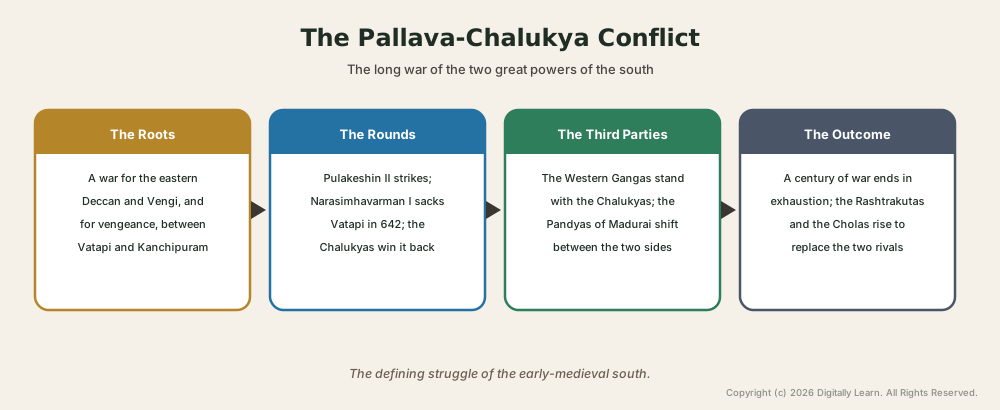
The Pallava-Chalukya conflict was the defining struggle of the early-medieval south, a war of more than a century between the Chalukyas of Vatapi in the Deccan and the Pallavas of Kanchipuram in the Tamil country. It began when Pulakeshin II drove the Pallavas behind their walls, and turned when Narasimhavarman I sacked Vatapi itself in 642; it ran on, through recovery and revenge, until both powers were spent. The war was fought for the eastern Deccan and Vengi, and it ended in the rise of two new powers. This part covers the roots of the war, the rounds of the fighting, the third parties, the outcome and the exam focus.
The Long War of the South
The Roots of the Conflict
What is the significance of the conflict: it was the great struggle that shaped the political history of the early-medieval south, a war that ran for more than a hundred years between its two greatest powers.
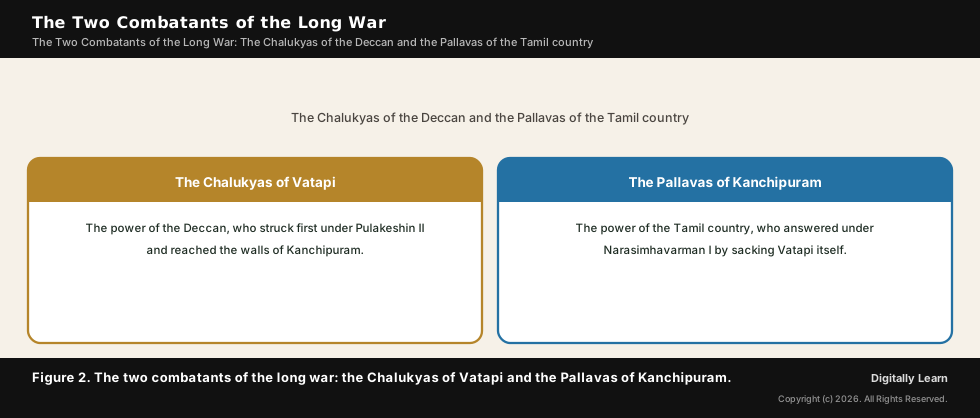
The Chalukyas and the Pallavas were the two strongest powers of the peninsula, and their lands met along the eastern Deccan. The war between them was fought for the rich land of the east, above all the country of Vengi on the Andhra coast, and, once blood had been shed, for vengeance as much as for land.
It was not a quarrel over the far western Deccan, as the later wars of the Chalukyas and Cholas would be; it was a struggle of the two courts, of Vatapi against Kanchipuram, each seeking to humble the other and to master the east. The two combatants are set side by side below.
The Field of the War
Distinguishing the field: the war ran up and down the eastern Deccan, between the two capitals, and drew in the lesser powers of the south on one side or the other.
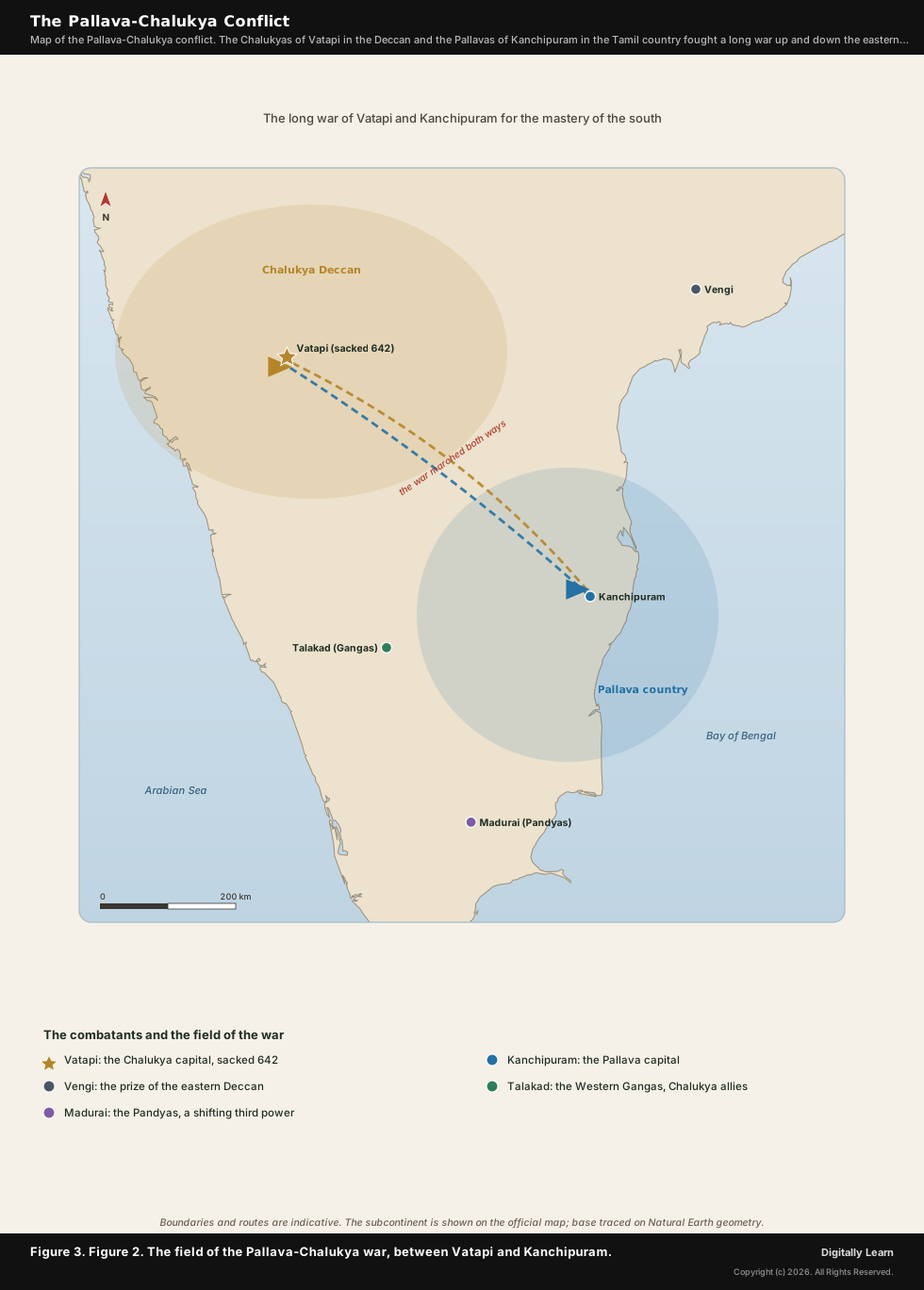
The heart of the war lay between Vatapi in the Deccan and Kanchipuram in the Tamil country, and the armies of each marched again and again on the capital of the other. To the south-west the Western Gangas of Talakad stood as allies of the Chalukyas, while the Pandyas of Madurai shifted between the two sides as it suited them.
The map shows the field of the war, the two capitals, the prize of Vengi, and the lesser powers ranged about them. The two-headed line between Vatapi and Kanchipuram marks the long, swaying course of the struggle.
The Rounds of the Conflict
From Pulakeshin's Triumph to the Sparing of Kanchipuram
What is the significance of the rounds: the war swung back and forth between the two powers, neither able to hold its advantage, in a struggle that neither could win.
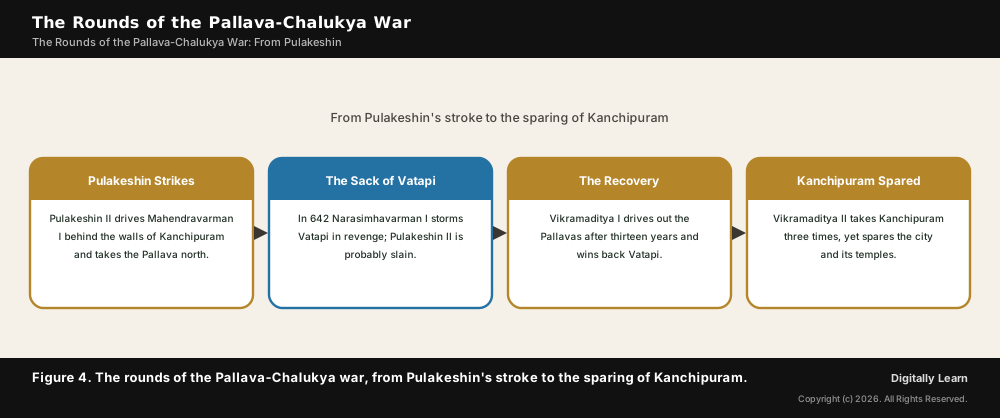
The Chalukyas struck first. Pulakeshin II invaded the Pallava country, drove the king Mahendravarman I behind the very walls of Kanchipuram, and took the northern Pallava provinces. But the Pallavas answered with terrible force: in 642 Narasimhavarman I stormed Vatapi itself, in whose fall Pulakeshin II was probably slain, and held the Chalukya capital for some thirteen years.
The Chalukyas recovered. Vikramaditya I drove out the Pallavas and won back Vatapi, and his successors carried the war south once more. The last great stroke was that of Vikramaditya II, who took Kanchipuram three times, yet, in a famous act of grace, spared the Pallava city and its temples rather than destroy them.
The Third Parties and the Outcome
The Gangas, the Pandyas and the Lesser Powers
What is the significance of the third parties: the war was not of the two great powers alone, for the lesser kingdoms of the south took their part on one side or the other, and shaped the balance of the struggle.
The Western Gangas of Talakad, bound to the Chalukyas by marriage and friendship, stood as their faithful allies through the war. The Pandyas of Madurai, the old power of the far south, were a shifting third force, who more than once joined the Chalukyas against their nearer enemy, the Pallavas.
| Power | Capital | Role in the war |
|---|---|---|
| The Chalukyas | Vatapi (Badami) | One of the two great combatants. |
| The Pallavas | Kanchipuram | The other great combatant. |
| The Western Gangas | Talakad | Faithful allies of the Chalukyas. |
| The Pandyas | Madurai | A shifting third power, often against the Pallavas. |
The End of the War and the Two New Powers
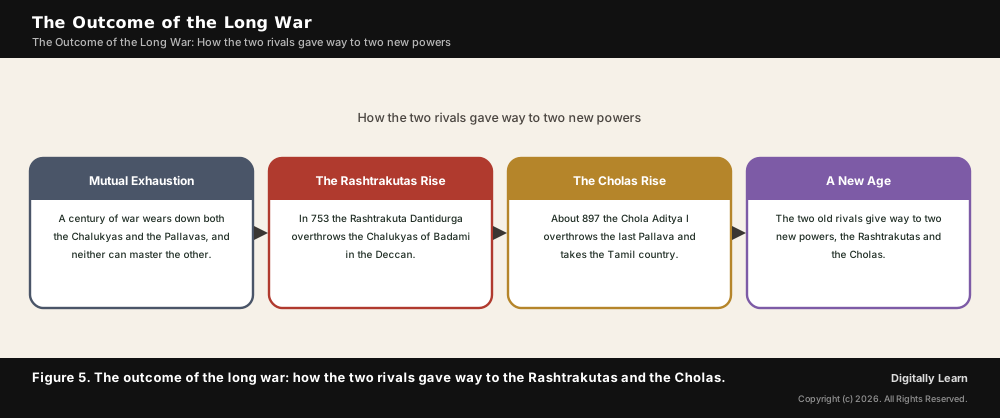
Distinguishing the outcome: the long war had no victor among its first contestants; it wore both down, and made way for two new powers to take their place.
A century of war spent the strength of both the Chalukyas and the Pallavas, and neither could master the other. In the end each fell, not to its old rival, but to a new power that rose from within its own house. The Rashtrakutas overthrew the Chalukyas of Badami in 753, and the Cholas overthrew the Pallavas about 897.
So the long war ended, and with it the age of the two old powers; the Rashtrakutas took the Deccan and the Cholas the Tamil country, and a new chapter of the history of the south began. The two falls had different conquerors and different dates, and should not be confused.
UPSC Relevance and Exam Focus
Where the Pallava-Chalukya Conflict Fits in the UPSC-CSE Syllabus
This topic belongs to General Studies Paper I: ancient and early-medieval Indian history, and the long war of the south is a regular ground for questions on its kings and its turning-points.
The questions most often test the great events and the chronology: Pulakeshin II and the Pallavas, the sack of Vatapi by Narasimhavarman I in 642, and the two new powers that rose at the war's end.
Several linked points recur and are worth holding in working memory:
- The sack of Vatapi: Narasimhavarman I’s revenge in 642.
- Vikramaditya II: Took Kanchipuram three times, but spared it.
- The Western Gangas: The faithful allies of the Chalukyas.
- The two falls: Chalukyas to the Rashtrakutas (753), Pallavas to the Cholas (897).
- Vengi: The eastern prize over which the war was fought.
A 2020 question set four dynastic events in order, among them the establishment of Pallava power under Mahendravarman I, in whose reign the great war with Pulakeshin II began; the Pallava rise is the earliest of the four events.
A common trap treats the war as a quarrel over the Raichur or Krishna-Tungabhadra doab; that was the later struggle of the Chalukyas and the Cholas. Another cross-wires the two falls; the Chalukyas fell to the Rashtrakutas, the Pallavas to the Cholas.
Previous Year UPSC-CSE Questions By the end you will be able to draft model answers for the following UPSC questions. Each question carries a collapsible framework showing how to approach it in the exam.
- UPSC Prelims 2020 GS-IConsider the following events in the history of India:
- Rise of Pratiharas under King Bhoja
- Establishment of Pallava power under Mahendravarman I
- Establishment of Chola power by Parantaka I
- Pala dynasty founded by Gopala
What is the correct chronological order of the above events, starting from the earliest time?
How to approach this Prelims question
Approach: Date each: Pallava power under Mahendravarman I (early 7th c., earliest), Gopala founding the Palas (mid-8th c.), the Pratihara peak under Bhoja (from c.836), Parantaka I the Chola (early 10th c.); then order 2-4-1-3.
Trap to watch: The Pallava event (the start of this cluster's war) is the earliest; do not place the Cholas (Parantaka I) before the Pallavas.
Key facts to recall:
- Pallava power under Mahendravarman I belongs to the early 7th century.
- Gopala founded the Palas about the mid-8th century; the Pratihara peak under Bhoja came from about 836.
- Parantaka I the Chola ruled in the early 10th century, the latest of the four.
Answer signal: 2 – 4 – 1 – 3.
Prelims MCQ practice
Each question below tests one specific concept on the topic. Click to reveal the answer and a full option-wise explanation.
Q1. The Pallava-Chalukya war was fought chiefly for the mastery of which of the following regions?
- The Raichur doab
- The eastern Deccan and Vengi
- The Punjab
- Gujarat
Show answer and explanation
Answer: The eastern Deccan and Vengi
Explanation.
Option (b) is correct. The Pallava-Chalukya war was fought for the eastern Deccan and Vengi; the Raichur doab was the flashpoint of the later Chalukya-Chola wars. Hence option (b).
Q2. The sack of the Chalukya capital Vatapi in 642 was the work of which one of the following Pallava kings?
- Mahendravarman I
- Narasimhavarman I
- Narasimhavarman II
- Nandivarman II
Show answer and explanation
Answer: Narasimhavarman I
Explanation.
Option (b) is correct. Narasimhavarman I sacked Vatapi in 642 in revenge for the Chalukya invasion, taking the title Vatapikonda. Hence option (b).
Q3. The Chalukya king who took Kanchipuram three times yet spared the Pallava city and its temples was which one of the following?
- Pulakeshin II
- Vikramaditya I
- Vikramaditya II
- Kirtivarman II
Show answer and explanation
Answer: Vikramaditya II
Explanation.
Option (c) is correct. Vikramaditya II captured Kanchipuram three times but spared the city and its monuments, an act recorded in his inscription. Hence option (c).
Q4. With reference to the third parties in the Pallava-Chalukya war, consider the following statements:
- The Western Gangas of Talakad were faithful allies of the Chalukyas.
- The Pandyas of Madurai were a shifting third power, often against the Pallavas.
Which of the statements given above is/are correct?
- 1 only
- 2 only
- Both 1 and 2
- Neither 1 nor 2
Show answer and explanation
Answer: Both 1 and 2
Explanation.
Both statements are correct. The Western Gangas were Chalukya allies, and the Pandyas were a shifting third power, often ranged against the Pallavas. Hence option (c).
Q5. With reference to the outcome of the Pallava-Chalukya war, consider the following statements:
- The Chalukyas of Badami were overthrown by the Rashtrakutas in 753.
- The Pallavas were overthrown by the Cholas about 897.
Which of the statements given above is/are correct?
- 1 only
- 2 only
- Both 1 and 2
- Neither 1 nor 2
Show answer and explanation
Answer: Both 1 and 2
Explanation.
Both statements are correct. The Rashtrakutas ended the Chalukyas in 753, and the Cholas the Pallavas about 897; the two falls had different conquerors and dates, and must not be cross-wired. Hence option (c).
Q6. In the first round of the war, the Chalukya Pulakeshin II drove which Pallava king behind the walls of Kanchipuram?
- Simhavishnu
- Mahendravarman I
- Narasimhavarman I
- Rajasimha
Show answer and explanation
Answer: Mahendravarman I
Explanation.
Option (b) is correct. Pulakeshin II drove the Pallava king Mahendravarman I behind the walls of Kanchipuram and took the northern provinces. Hence option (b).
Sources and Further Reading
Editorial Disclaimer
This article is for UPSC preparation. The dates of the Pallava-Chalukya war are approximate, and the account follows the standard scholarship on the early-medieval south.


