


Overview
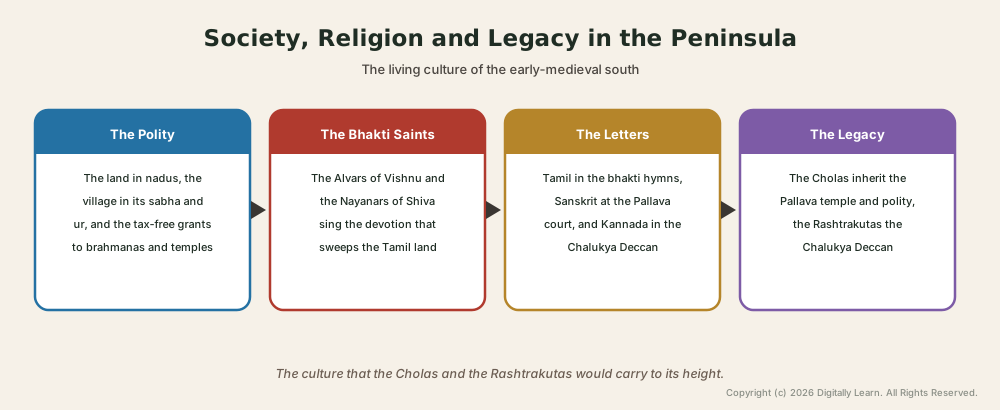
The early-medieval peninsula was not only a land of kings and temples but of a living society and faith. Its polity rested on the village, the nadu and the assemblies of the Sabha and the Ur; its religion was renewed by the Bhakti saints, the Alvars of Vishnu and the Nayanars of Shiva; and its letters flowered in Tamil, Sanskrit and Kannada. From this age the Cholas would inherit the Pallava temple and polity, and the Rashtrakutas the Chalukya Deccan. This part covers the society and administration, the Bhakti movement, the letters and the legacy, and the exam focus.
Society and Administration in the Peninsula
The Nadu, the Village Assemblies and the Land Grants
What is the significance of the southern polity: the early-medieval south rested its government on the village and its assemblies, a tradition of local self-rule that the Cholas would carry to its height.
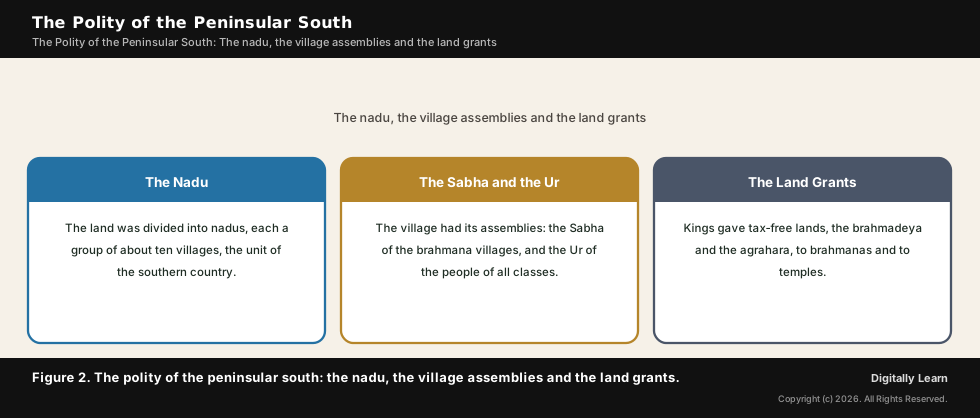
The land was divided into nadus, each a group of about ten villages, and the village itself had its assemblies. The Sabha was the assembly of the brahmana villages, the brahmadeya, and the Ur the assembly of the village of all classes; together they managed the land, the tanks and the temple.
These assemblies existed already under the Pallavas, whose inscriptions at Uthiramerur are the earliest we have. It is worth marking, though, that the famous detailed election by the kudavolai, the palm-leaf ballot, belongs to the later Chola age, not the Pallava. The kings, meanwhile, gave tax-free lands, the brahmadeya and the agrahara, to brahmanas and to temples.
Religion and the Bhakti Movement
The Alvars, the Nayanars and the Bhakti Tide
What is the significance of the Bhakti movement: the early-medieval south was the cradle of the great Bhakti tide, a religion of loving devotion sung in the people's own tongue that would in time sweep all India.
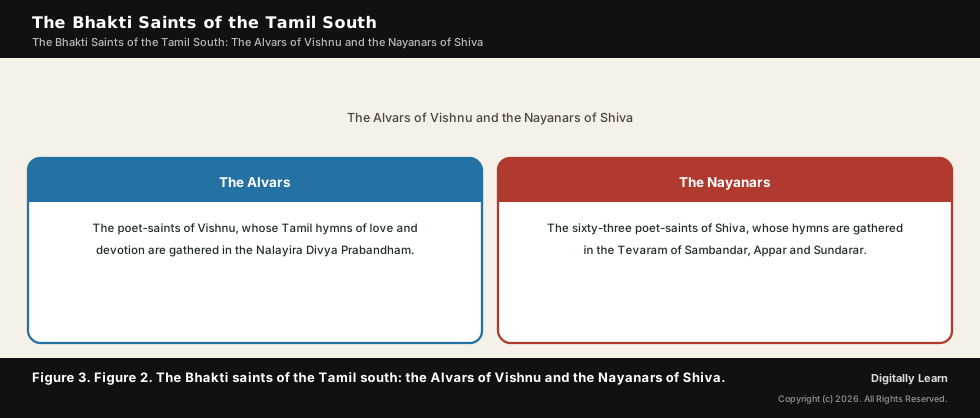
In the Tamil land, in the very age of the Pallavas, rose the poet-saints of devotion. The Alvars were the saints of Vishnu, whose hymns are gathered in the Nalayira Divya Prabandham; the Nayanars, sixty-three in number, were the saints of Shiva, whose hymns make up the Tevaram of Sambandar, Appar and Sundarar.
Their devotion, sung in Tamil and open to all, gave the older faiths a warmth they had lacked, and under its tide the strength of Jainism and Buddhism in the Tamil country gradually waned, as kings and people alike turned to the gods of Bhakti, above all to Shiva.
The Letters and the Legacy of the Two Powers
Tamil, Sanskrit and Kannada
What is the significance of the letters of the age: the peninsular age was a great age of language, in which Tamil, Sanskrit and Kannada each found their place in the courts and the temples of the south.
In the Pallava country, Sanskrit was the language of the court and of learning, and the king Mahendravarman himself wrote a Sanskrit play; yet Tamil was the language of the people and of the Bhakti hymns, in which the saints sang their devotion. In the Chalukya Deccan, Kannada rose beside Sanskrit, and the Badami inscriptions are written in both.
| Language | Where | Its place |
|---|---|---|
| Sanskrit | The Pallava court; the Chalukya inscriptions. | The language of the court and of learning. |
| Tamil | The Tamil country. | The language of the people and of the Bhakti hymns. |
| Kannada | The Chalukya Deccan. | The rising language of the Deccan, beside Sanskrit. |
The Gift of the Pallavas and Chalukyas to the South
Distinguishing the legacy: the two great powers did not vanish without trace, for they passed on to their successors a tradition of art, letters and government that would shape the south for centuries.
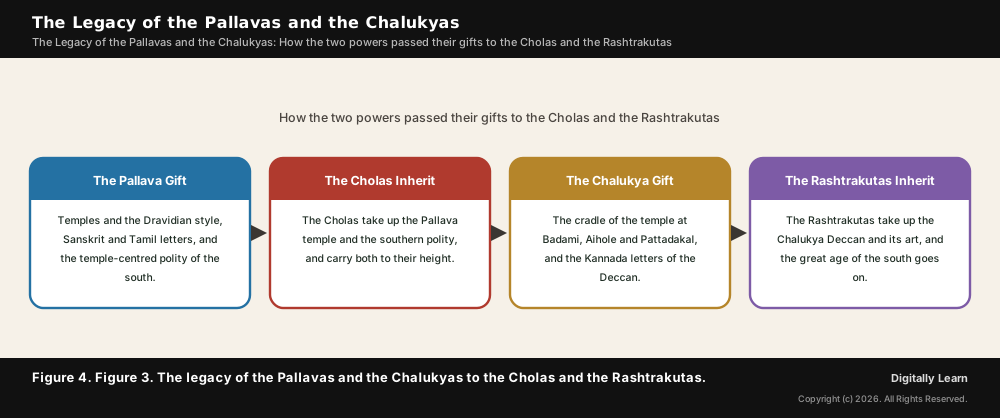
The Pallavas' gift was the greatest. In art they gave the south its temple, from the rock-cut caves and rathas of Mamallapuram to the structural Kailasanatha of Kanchipuram, and so the Dravidian style itself; in letters they gave it the Sanskrit of the court, the play of Mahendravarman, and the patronage under which the Tamil Bhakti hymns flowered. The rising Cholas would take up this temple and this polity and carry both to their height.
The Chalukyas' gift was no less rich: the cradle of the temple at Badami, Aihole and Pattadakal, where the styles of north and south first met, and the Kannada letters of the Deccan. Their successors, the Rashtrakutas, would inherit the Deccan and its art, so that through both lines the great age of the south flowed on. This part closes the cluster on the early-medieval peninsula.
UPSC Relevance and Exam Focus
Where the Peninsular Society and Legacy Fit in the UPSC-CSE Syllabus
This topic belongs to General Studies Paper I: ancient and early-medieval Indian history, art and culture, and it draws together the whole story of the cluster for both Prelims and Mains.
The questions most often test the polity and the Bhakti saints: the village assemblies, the Sabha and the Ur; the Alvars and the Nayanars; and the contribution of the Pallavas to the art and letters of the south.
Several linked points recur and are worth holding in working memory:
- The nadu: A group of about ten villages, the unit of the south.
- The Sabha and the Ur: The assemblies of the brahmana and the common villages.
- The Alvars and Nayanars: The Bhakti saints of Vishnu and of Shiva.
- The brahmadeya: A tax-free land grant to brahmanas.
- The Pallava gift: The Dravidian temple, Sanskrit letters and Tamil Bhakti.
A 2024 Mains question asked for an estimate of the contribution of the Pallavas of Kanchi to the art and letters of the south; the answer rests on their temples and the Dravidian style, on the Sanskrit of their court and the Tamil Bhakti hymns of their age, all of which this cluster has set out.
A common trap credits the Pallavas with the famous Uttaramerur election by the kudavolai; the village assemblies were Pallava, but that detailed system of the palm-leaf ballot belongs to the later Chola age.
Previous Year UPSC-CSE Questions
Previous Year UPSC-CSE Questions By the end you will be able to draft model answers for the following UPSC questions. Each question carries a collapsible framework showing how to approach it in the exam.
- UPSC Mains 2024 GS-IEstimate the contribution of Pallavas of Kanchi for the development of art and literature of South India.
How to structure the answer in the exam
Introduction: The Pallavas of Kanchipuram (c. 575 to 897) were among the great makers of South-Indian culture, giving the south both its temple and a rich life of letters.
Body (sub-themes to develop):
- Architecture: the rock-cut caves of Mahendravarman, the monolithic rathas and the Descent of the Ganges of Mamalla, the structural Shore Temple and Kanchipuram Kailasanatha of Rajasimha, and so the Dravidian style.
- Sculpture: the great open-air reliefs and the carved mandapas of Mamallapuram.
- Sanskrit literature: the court language of the Pallavas; the Mattavilasa Prahasana of Mahendravarman I.
- Tamil literature and Bhakti: the Alvars and Nayanars, whose Tamil hymns flowered under Pallava rule.
- The legacy: the Cholas inherited the Pallava temple and the Dravidian style and carried them to their height.
Conclusion: In temple and in letters alike, the Pallavas of Kanchi laid the foundations of the classical culture of the Tamil south, which the Cholas would build upon.
Sources and Further Reading
Editorial Disclaimer
This article is for UPSC preparation. The account of the peninsular society follows the standard scholarship, and the detailed Uttaramerur election system is best attested in the later Chola age.