


Overview
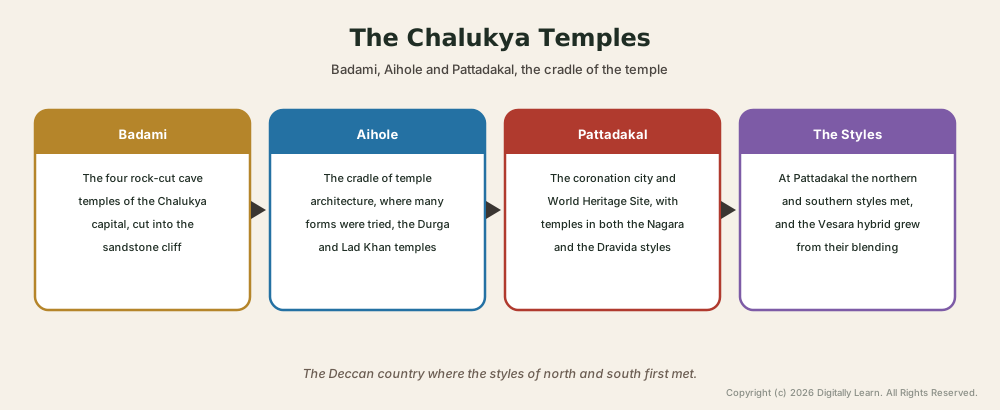
The temples of the Chalukyas of Badami, at Badami, Aihole and Pattadakal in the Deccan, are one of the great cradles of South-Indian temple architecture. Here, on the river Malaprabha, the Chalukyas cut the rock-cut cave temples of Badami, tried a hundred forms in the temples of Aihole, and raised at Pattadakal, a World Heritage Site, great structural temples in both the northern and the southern styles. It was here that the styles of north and south first met, and from their blending the Vesara style would grow. This part covers the three sites, Badami, Aihole, Pattadakal and the styles, and the exam focus.
The Cradle of the Temple in the Deccan
Badami, Aihole and Pattadakal: The Three Great Sites
What is the significance of the Chalukya temples: they are one of the cradles of the Indian temple, where the styles of north and south met and the temple grew from rock-cut cave to soaring tower.
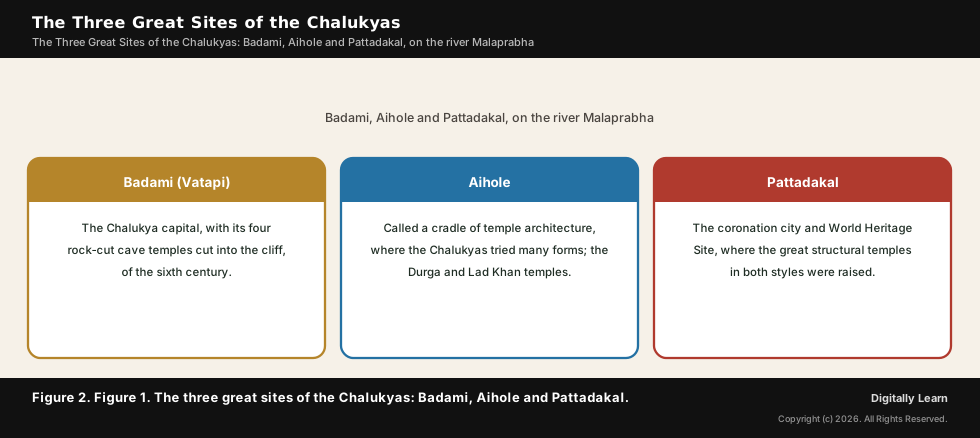
In a small stretch of the Deccan, on the river Malaprabha in Karnataka, lie three towns that hold the whole early story of the Chalukya temple. Badami, the capital, with its rock-cut caves; Aihole, the workshop where a hundred forms were tried; and Pattadakal, the coronation city, where the great structural temples rose.
Together these three show the temple growing through the Chalukya age, from the cave cut into the rock, through the bold experiments of Aihole, to the finished temples of Pattadakal in both the great styles of India. The figure sets out the three sites and their place in the story.
The Caves of Badami and the Temples of Aihole
The Four Rock-Cut Shrines in the Cliff
What is the significance of the Badami caves: they are the Chalukyas' rock-cut temples, four shrines cut into the cliff of the capital, where Hindu and Jain faith stood side by side.
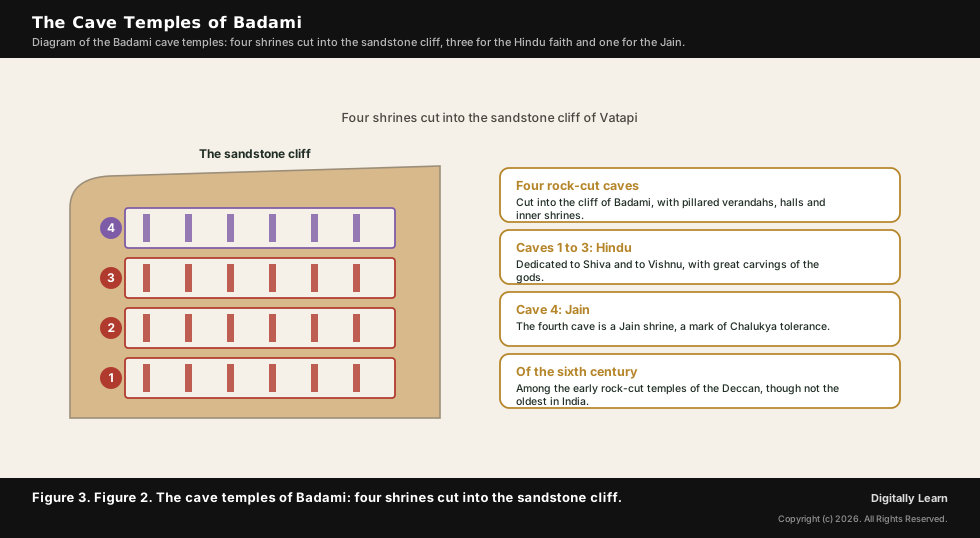
At Badami the Chalukyas cut four cave temples into the soft sandstone cliff above the town, each with a pillared verandah, a hall and an inner shrine. Caves one to three are Hindu, given to Shiva and to Vishnu and rich with carving; the fourth is a Jain shrine, a mark of the tolerance of the age.
These caves are among the early rock-cut temples of the Deccan, of the sixth century. It is worth marking, though, that they are not the oldest rock-cut caves in India: that honour belongs to the far older Barabar caves of the Mauryan age, in Bihar.
Aihole, the Cradle of Temple Architecture
Distinguishing Aihole: it is the workshop of the Chalukya temple, a town so full of early shrines of every form that it has been called a cradle of temple architecture.
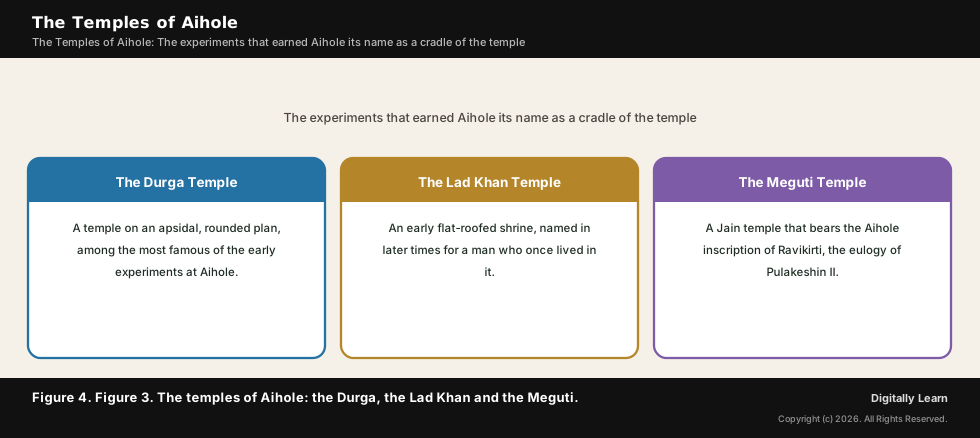
At Aihole the builders tried form after form, and the town holds the bold experiments from which the finished temple would grow. The Durga temple, on a rounded, apsidal plan, and the early Lad Khan temple are among its most famous, and the Meguti Jain temple bears the great Aihole inscription of Ravikirti.
So full is Aihole of these early temples, of so many kinds, that it is often called a cradle of Hindu rock architecture, the place where the Indian temple learned its forms. The figure sets out three of its famous temples.
Pattadakal and the Meeting of the Styles
Pattadakal, the Coronation City and World Heritage Site
What is the significance of Pattadakal: it is the climax of the Chalukya temple, a World Heritage Site where the great structural temples rose in both the northern and the southern styles.
At Pattadakal, where the Chalukya kings were crowned, the dynasty raised its finest temples, and the place is today a UNESCO World Heritage Site, inscribed in 1987. Its greatest temple is the Virupaksha, built by Queen Lokamahadevi to commemorate the victory of her husband Vikramaditya II over the Pallavas of Kanchi.
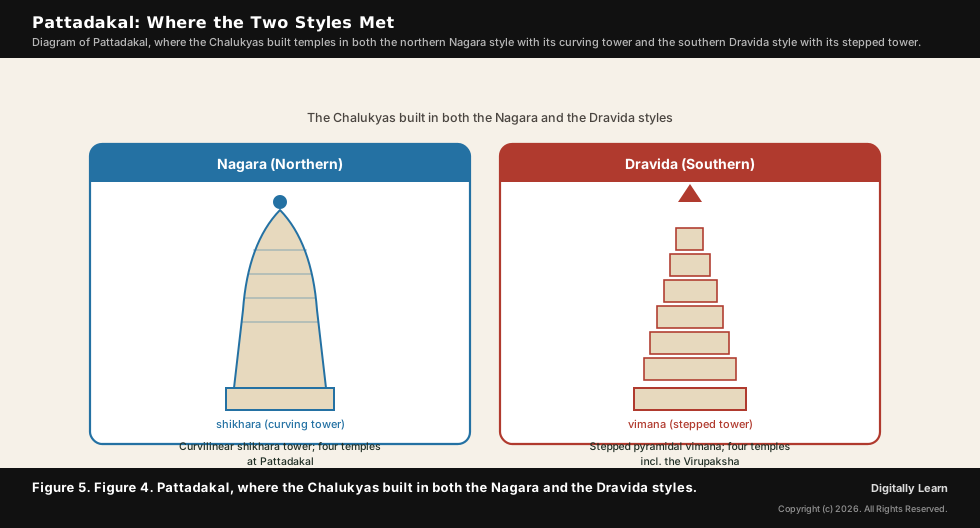
The wonder of Pattadakal is that its temples were built in both the great styles of India: four in the curving, northern Nagara manner and four in the stepped, southern Dravida manner, with the Papanatha temple a blend of the two. The figure sets the two styles side by side.
The Nagara, the Dravida and the Vesara
Distinguishing the styles: at Pattadakal the northern and southern styles stood together, and from their meeting in the Deccan would grow the hybrid called the Vesara.
The two great styles of the Indian temple are the Nagara of the north, with its curving tower, and the Dravida of the south, with its stepped tower; both are found at Pattadakal. The table below sets out the Chalukya temples there by their style and their mark.
| Style | Mark | Example at Pattadakal |
|---|---|---|
| Nagara (northern) | A curving shikhara tower. | Four temples, including the Kashivishvanatha. |
| Dravida (southern) | A stepped vimana tower. | Four temples, including the Virupaksha. |
| A blend of the two | Elements of both styles. | The Papanatha temple. |
From this meeting of the styles in the Deccan grew the hybrid manner known as the Vesara, which joins the southern plan with northern detail; it flowered most fully under the later Chalukyas and the Hoysalas, and its exact origins are still debated by scholars.
UPSC Relevance and Exam Focus
Where the Chalukya Temples Fit in the UPSC-CSE Syllabus
This topic belongs to General Studies Paper I: Indian art and culture, and the Chalukya temples, above all Pattadakal and the Badami caves, are a favourite ground for Prelims questions.
The questions most often test the three sites and the styles: the rock-cut caves of Badami, Aihole as a cradle of the temple, and Pattadakal, the World Heritage Site of both the Nagara and the Dravida styles.
Several linked points recur and are worth holding in working memory:
- The Badami caves: Four rock-cut caves, three Hindu and one Jain.
- Aihole: A cradle of temple architecture; the Durga and Meguti temples.
- Pattadakal: A World Heritage Site of both Nagara and Dravida temples.
- The Virupaksha: Built by Lokamahadevi for Vikramaditya II’s victory.
- The Vesara: The hybrid of the Nagara and the Dravida styles.
A 2013 question on rock-cut architecture noted that the Badami caves are not the oldest in India, that the Barabar caves were made for the Ajivikas by Ashoka, not Chandragupta Maurya, and that the caves at Ellora were made for different faiths; only the last statement is fully correct.
A common trap calls the Badami caves the oldest rock-cut caves in India; the older Barabar caves of the Mauryan age hold that place. Another forgets that Pattadakal holds temples of both the Nagara and the Dravida styles, not one alone.
Previous Year UPSC-CSE Questions
Previous Year UPSC-CSE Questions By the end you will be able to draft model answers for the following UPSC questions. Each question carries a collapsible framework showing how to approach it in the exam.
- UPSC Prelims 2013 GS-IWith reference to the history of Indian rock-cut architecture, consider the following statements:
- The caves at Badami are the oldest surviving rock-cut caves in India.
- The Barabar rock-cut caves were originally made for Ajivikas by Emperor Chandragupta Maurya.
- At Ellora, caves were made for different faiths.
Which of the statements given above is/are correct?
How to approach this Prelims question
Approach: Test each statement: Badami caves not the oldest (the Barabar caves are older), so 1 is wrong; the Barabar caves were given to the Ajivikas by Ashoka, not Chandragupta Maurya, so 2 is wrong; Ellora has caves of different faiths, so 3 is correct.
Trap to watch: Statement 1 tempts with the Badami caves as oldest; the Mauryan Barabar caves are older. Statement 2 swaps Ashoka for Chandragupta Maurya.
Key facts to recall:
- The Badami caves are sixth-century Chalukya, not the oldest rock-cut caves in India.
- The Barabar caves were given to the Ajivikas by Ashoka, not Chandragupta Maurya.
- Ellora has Buddhist, Hindu and Jain caves.
Answer signal: 3 only.
Sources and Further Reading
Editorial Disclaimer
This article is for UPSC preparation. The account of the Chalukya temples follows the standard scholarship, and the origins of the Vesara style are debated among historians.