


Overview
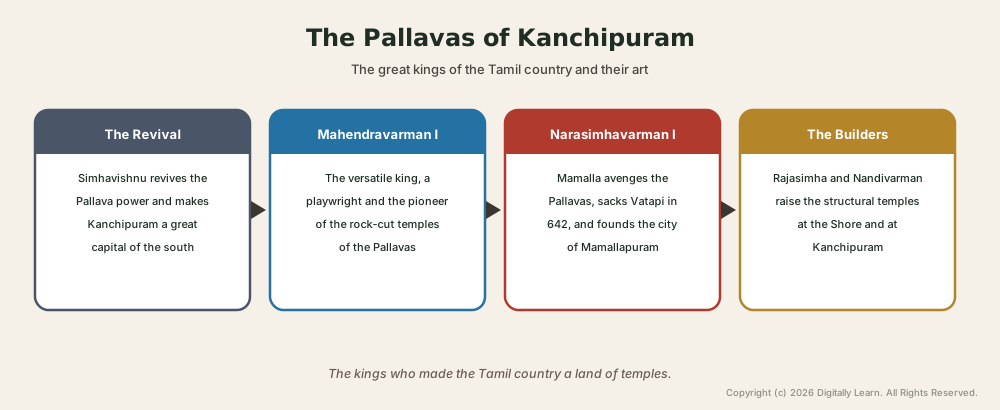
The Pallavas of Kanchipuram were the great power of the Tamil country in the early-medieval age, the rivals of the Chalukyas and the founders of a brilliant school of art. Revived by Simhavishnu, the dynasty rose under the versatile Mahendravarman I, a king who was also a playwright and the pioneer of the rock-cut temple, and under his son Narasimhavarman I Mamalla, who avenged the Pallavas by sacking the Chalukya capital and founded the city of Mamallapuram. Their later kings raised the great structural temples of the south. This part covers the revival, the two great kings, the later builders, the end of the line and the exam focus.
The Rise of the Pallavas of Kanchipuram
Simhavishnu and the Pallava Revival
What is the significance of the Pallavas: they were the great power of the Tamil country, the rivals of the Chalukyas and the founders of one of the great schools of Indian art.
The Pallavas had long ruled around Kanchipuram, but their greatness began with Simhavishnu, who in the later sixth century revived the dynasty's power, overcame its rivals, and made Kanchipuram a great capital of the south, a city of temples and learning.
From this revival sprang the line of great kings who would fill the next century, from the versatile Mahendravarman I to the conqueror Narasimhavarman I and the temple-builders who came after them.
Mahendravarman I and Narasimhavarman I
Mahendravarman I, the Versatile
What is the significance of Mahendravarman I: he was one of the most gifted kings of Indian history, a poet and playwright, a builder, and a man of his faith, as well as a ruler.
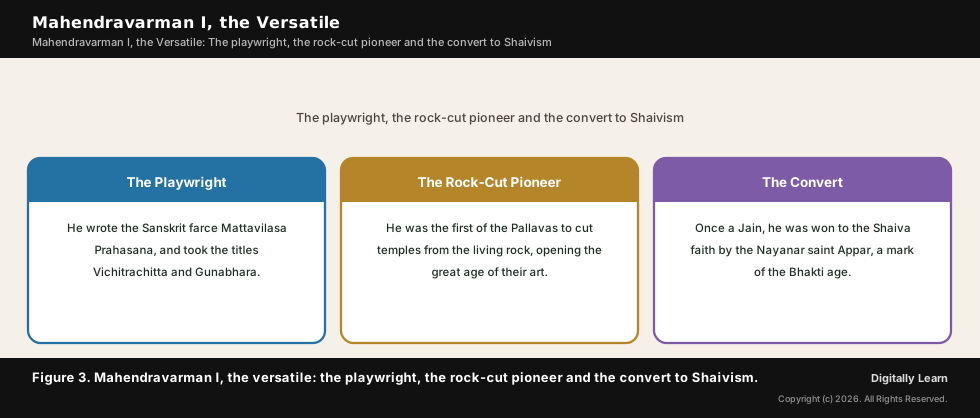
Mahendravarman I, who ruled in the early seventh century, took the proud titles Vichitrachitta and Gunabhara, and wrote a Sanskrit farce, the Mattavilasa Prahasana, that mocks the ascetics of his day. He was also the pioneer of the Pallava rock-cut temple, the first of his line to cut shrines from the living rock.
In faith he was at first a Jain, but was won to the Shaiva religion by the Nayanar saint Appar, a sign of the rising tide of Bhakti in the Tamil land. Yet his reign was darkened by war: the Chalukya Pulakeshin II invaded the Pallava country, and though Mahendravarman saved his capital, he lost its northern provinces.
Narasimhavarman I Mamalla, the Conqueror of Vatapi
Distinguishing the conqueror: the son of Mahendravarman, Narasimhavarman I, avenged his father's defeat and raised the Pallavas to the first rank of the powers of the south.
Narasimhavarman I, called Mamalla, the great wrestler, was the greatest of the Pallava kings. In 642 he marched on the Chalukya capital, stormed Vatapi, and slew or scattered its defenders, taking the title Vatapikonda, the conqueror of Vatapi, in revenge for the earlier Chalukya invasion.
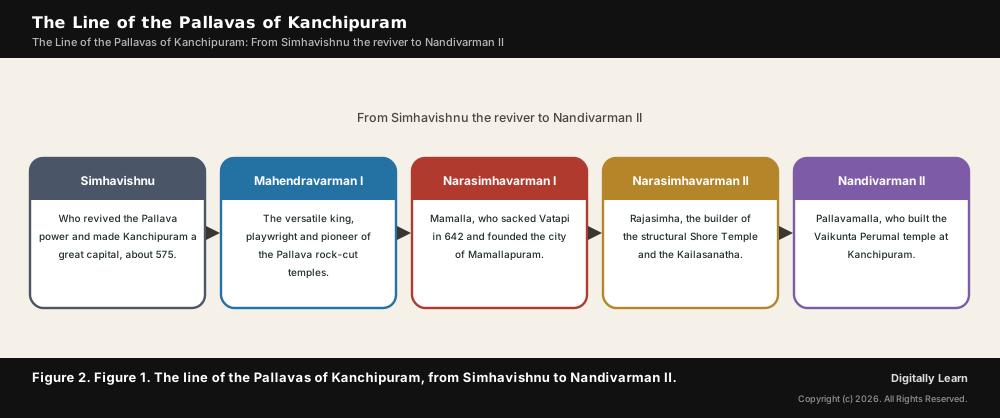
His name lives on in Mamallapuram, the great port and city of art that he founded and that bears his title. He also sent his fleets across the sea to Sri Lanka, twice, to restore his ally Manavarma to its throne. The table below sets out the chief Pallava kings.
| Ruler | Note |
|---|---|
| Simhavishnu | Revived the Pallava power; made Kanchipuram a great capital. |
| Mahendravarman I | The versatile king; the Mattavilasa; the rock-cut pioneer. |
| Narasimhavarman I (Mamalla) | Sacked Vatapi in 642; founded Mamallapuram. |
| Narasimhavarman II (Rajasimha) | Built the structural Shore Temple and the Kailasanatha. |
| Nandivarman II | Built the Vaikunta Perumal temple at Kanchipuram. |
The Royal Builders and the End of the Line
Rajasimha, Nandivarman and the Coming of the Cholas
What is the significance of the later Pallavas: where the early kings cut their temples from the rock, the later kings built them up from stone, and so completed the great Pallava school of art before the dynasty's fall.
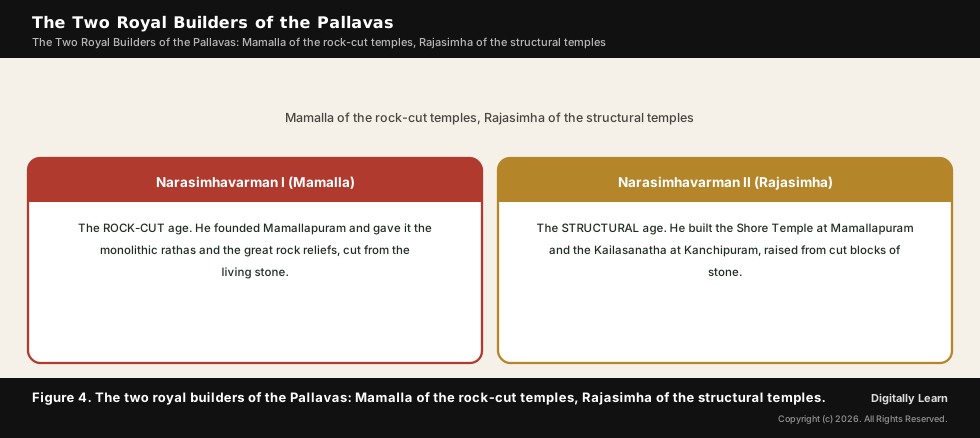
Narasimhavarman II, called Rajasimha, who ruled at the turn of the eighth century, was the great builder of structural temples. To him belong the famous Shore Temple at Mamallapuram and the Kailasanatha temple at Kanchipuram, both raised from cut stone in the Dravidian style; his successor Nandivarman II built the Vaikunta Perumal temple in the capital.
The distinction is worth holding: the rock-cut monuments of Mamallapuram, the rathas and the great reliefs, belong to Mamalla, while the structural temples belong to Rajasimha. In the end the Pallava power waned, and about 897 the rising Chola king Aditya I overthrew the last Pallava, Aparajita, and took the Tamil country for his own.
UPSC Relevance and Exam Focus
Where the Pallavas Fit in the UPSC-CSE Syllabus
This topic belongs to General Studies Paper I: ancient and early-medieval Indian history and art and culture, and the Pallava kings are a regular ground for questions.
The questions most often test the great kings and their gifts: Mahendravarman I and his titles, Narasimhavarman I Mamalla and the sack of Vatapi, and the founding of Mamallapuram.
Several linked points recur and are worth holding in working memory:
- Simhavishnu: The king who revived the Pallava power.
- Mahendravarman I: The Mattavilasa, the titles Vichitrachitta and Gunabhara.
- Narasimhavarman I (Mamalla): Sacked Vatapi in 642; founded Mamallapuram.
- Narasimhavarman II (Rajasimha): The structural Shore Temple and the Kailasanatha.
- Appar: The Nayanar who won Mahendravarman to Shaivism.
A 2025 question asked who took the titles Mattavilasa, Vichitrachitta and Gunabhara; the answer is Mahendravarman I, the versatile Pallava, not Simhavishnu or Narasimhavarman I.
A common trap credits the structural Shore Temple to Mamalla; in truth Mamalla built the rock-cut monuments, and the structural temples are the work of Rajasimha. Another confuses the Kanchipuram Kailasanatha, a Pallava temple, with the Kailasa at Ellora, which is the work of the Rashtrakutas.
Previous Year UPSC-CSE Questions
Previous Year UPSC-CSE Questions By the end you will be able to draft model answers for the following UPSC questions. Each question carries a collapsible framework showing how to approach it in the exam.
- UPSC Prelims 2025 GS-IWho among the following rulers in ancient India had assumed the titles 'Mattavilasa', 'Vichitrachitta' and 'Gunabhara'?
How to approach this Prelims question
Approach: Recall that the titles Mattavilasa (also the name of his play), Vichitrachitta and Gunabhara belong to Mahendravarman I, the versatile Pallava; the others named are different Pallava kings.
Trap to watch: Mattavilasa is both a title and the name of Mahendravarman's farce; do not assign it to Narasimhavarman I (the conqueror) or Simhavishnu (the reviver).
Key facts to recall:
- Mahendravarman I took the titles Vichitrachitta and Gunabhara.
- He wrote the Sanskrit farce Mattavilasa Prahasana.
- Simhavishnu revived the dynasty; Narasimhavarman I sacked Vatapi.
Answer signal: Mahendravarman I.
Sources and Further Reading
Editorial Disclaimer
This article is for UPSC preparation. The dates of the Pallava kings are approximate, and the account follows the standard scholarship on the early-medieval Tamil country.