


Overview
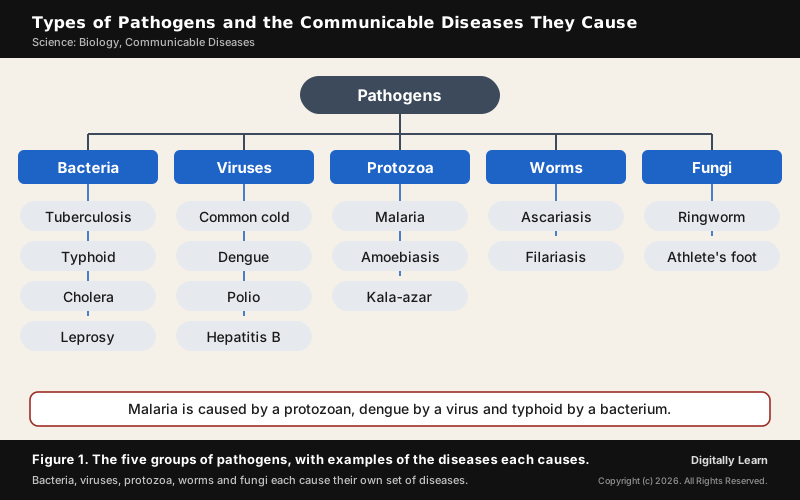
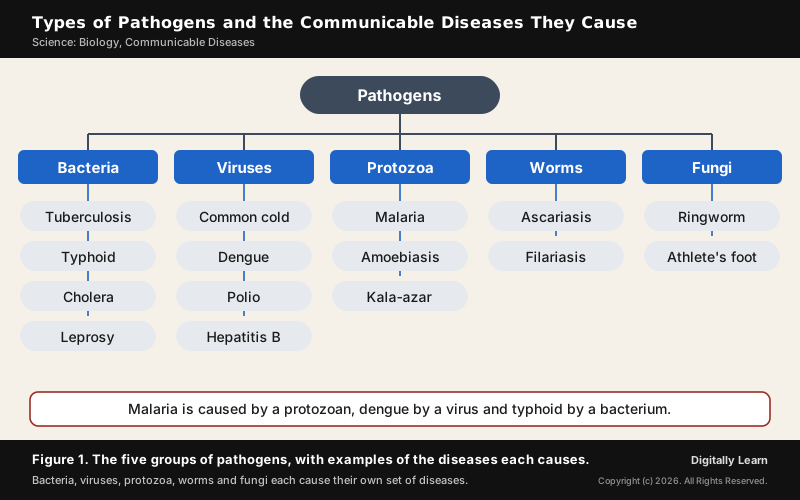
Communicable diseases, also called infectious diseases, are diseases easily passed from one person to another. They are caused by pathogens, disease-causing bacteria, viruses, protozoa, worms and fungi, and spread through air, food and water, blood, contact, animals or insect vectors such as mosquitoes.
Communicable Diseases: Pathogens and How They Spread
What Are Communicable or Infectious Diseases: Bacteria, Viruses, Protozoa, Worms and Fungi
A person has a disease when the working of one or more organs or systems is adversely affected, with signs and symptoms to show for it. Diseases fall into two broad groups, infectious and non-infectious, and the ones easily passed from one person to another are infectious diseases, also called communicable diseases. Diseases that do not spread this way, such as heart disease, cancer and diabetes, are covered in the non-communicable diseases article.
They are caused by pathogens, disease-causing organisms from among the bacteria, viruses, fungi, protozoans and helminths (worms). A pathogen enters the body, multiplies and interferes with normal activities, and it must be adapted to life inside its host: one that enters the gut, for example, has to survive the low pH of the stomach and the digestive enzymes.
Viruses are the odd group. They have genes but no cellular structure and no metabolism of their own, so they need a host cell to make new copies and cannot reproduce outside one. Their genome can be DNA or RNA: adenoviruses, one cause of the common cold, have double-stranded DNA, while retroviruses such as HIV carry single-stranded RNA.
List of Communicable Diseases: Examples by Pathogen and Mode of Spread
The table sets out the common communicable diseases one row at a time. Read each row across: the pathogen tells you what kind of organism is at work, and the route tells you how the disease is stopped.
| Disease | Pathogen | How it spreads | Prevention or treatment |
|---|---|---|---|
| Tuberculosis | Bacterium | Air, from coughs and sneezes | BCG vaccine, six months of drugs |
| Leprosy | Bacterium | Droplets, close and frequent contact | Multidrug therapy |
| Typhoid | Bacterium | Contaminated food and water | Clean water, antibiotics, vaccine |
| Cholera | Bacterium | Contaminated food and water | Oral rehydration, safe water |
| Common cold | Virus | Droplets, touched objects | Avoid close contact |
| Measles | Virus | Air | Vaccine |
| Hepatitis B | Virus | Blood, body fluids, mother to child | Vaccine |
| Rabies | Virus | Bites and scratches of dogs | Post-exposure prophylaxis |
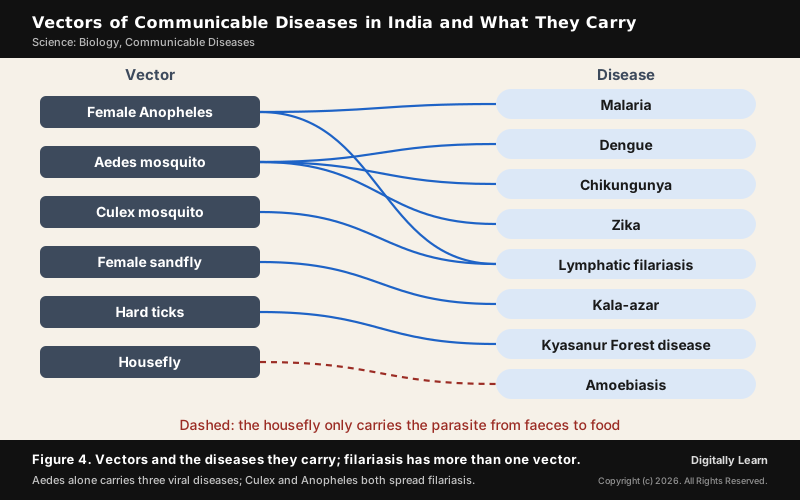
| Dengue | Virus | Aedes mosquito | Vector control |
| Malaria | Protozoan | Female Anopheles mosquito | Vector control |
| Kala-azar | Protozoan | Female sandfly | Vector control, treatment |
| Amoebiasis | Protozoan | Food and water, houseflies | Hygiene, clean water |
| Lymphatic filariasis | Worm | Mosquitoes | Mass drug administration |
| Ringworm | Fungus | Soil, shared towels and combs | Keep skin dry, do not share |
Two patterns stand out in the table. Diseases carried by food and water, such as typhoid, cholera and amoebiasis, fall when water is clean and hygiene is good, while diseases carried by insects, such as malaria, dengue and kala-azar, fall when the vector and its breeding places are controlled.
How Communicable Diseases Spread: Air, Water, Food, Contact, Blood and Vectors
Pathogens reach new hosts by different routes, and the control measures differ with the route. Airborne pathogens spread through droplets from coughs and sneezes; others ride in contaminated food and water, in blood and body fluids, on shared objects, or inside a vector, an organism such as a mosquito that carries the pathogen from one host to another.
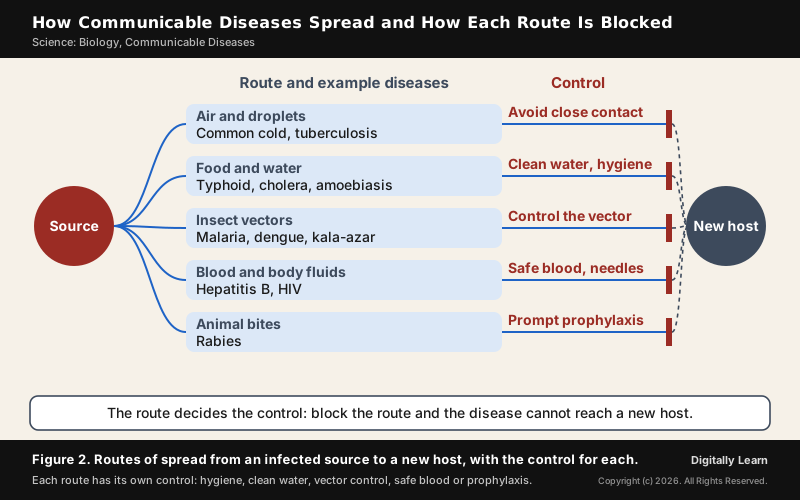
- Personal hygiene: Keeping the body clean and consuming clean drinking water, food, vegetables and fruits.
- Public hygiene: Proper disposal of waste and excreta, periodic cleaning and disinfection of water reservoirs, pools and tanks, and standard hygiene in public catering; this matters most for typhoid, amoebiasis and ascariasis, which spread through food and water.
- Airborne diseases: For pneumonia and the common cold, close contact with infected persons and their belongings should also be avoided.
- Vector-borne diseases: For malaria and filariasis, the most important step is to control the vectors and their breeding places.
Medicine has added two more tools: vaccines, explained in the immunity and vaccines article, which eradicated smallpox and have largely controlled polio, diphtheria, pneumonia and tetanus, and antibiotics and other drugs to treat infections.
Diseases Caused by Bacteria: Tuberculosis, Typhoid, Cholera, Pneumonia and Leprosy
Types of Tuberculosis: Latent, Active, Pulmonary and Drug-Resistant TB
The bacterial disease tuberculosis (TB) most often affects the lungs and spreads through the air when people with TB cough, sneeze or spit. It is the world's leading cause of death from a single infectious agent: in 2024, 10.7 million people fell ill with TB and 1.23 million died. It is preventable and curable, and the BCG vaccine given to babies protects children from its serious forms.
Most people infected with the TB bacterium never fall ill. In latent TB the infection shows no symptoms and the person cannot spread it; about a quarter of the world's people, some 2 billion, carry it. A small share of latent infections turn into active TB, more often when the immune system is weak, with a chronic cough that brings up blood-stained mucus, fever, night sweats and weight loss. TB usually strikes the lungs, as pulmonary TB, but it can also develop in other organs, as extrapulmonary TB.
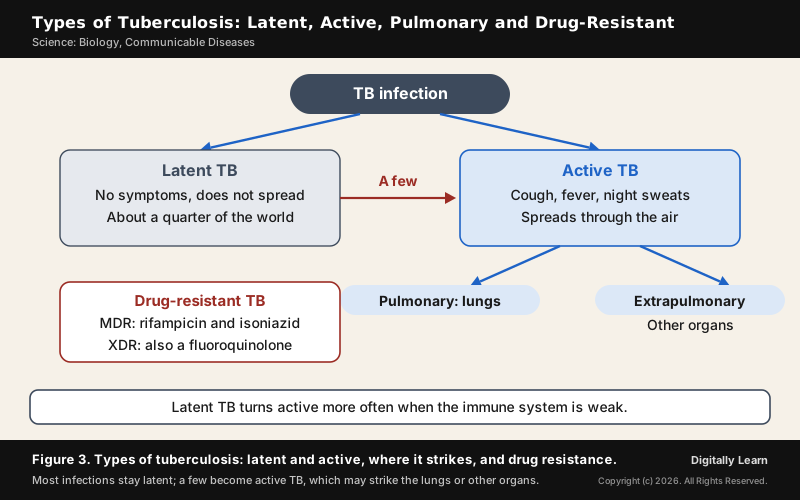
Ordinary TB is cured by six months of first-line drugs. Multidrug-resistant TB (MDR-TB) resists the two most effective of them, rifampicin and isoniazid, and extensively drug-resistant TB (XDR-TB) also resists at least one fluoroquinolone, such as levofloxacin or moxifloxacin. Resistant TB needs second-line drugs that are less effective, more toxic and more expensive, taken for up to two years.
India carries the largest share: about 25 per cent of new TB cases worldwide in 2024. In 2020 the Revised National TB Control Programme was renamed the National TB Elimination Programme (NTEP), with the aim of eliminating TB by 2025, five years ahead of the global target of 2030, under a National Strategic Plan built on four pillars: Detect, Treat, Prevent and Build. TB incidence in India fell from 237 to 195 per lakh population between 2015 and 2023; the National TB Elimination Programme article follows the programme in detail.
The government's emphasis is now on finding people with TB who are missing from the health system. In October 2026 the Union Health Ministry launched JOSH (Joint Squad for Health) teams under the TB Mukt Bharat Abhiyaan: National Cadet Corps and MY Bharat volunteers go from house to house in 55 districts of 11 States and Union Territories, looking for people with symptoms and helping them get tested and finish treatment.
Leprosy: Causes, Types, Treatment and India's Elimination Status
Leprosy, or Hansen disease, is caused by Mycobacterium leprae. It affects the skin and the peripheral nerves, spreads through droplets during close and frequent contact with untreated cases, and is curable with multidrug therapy (MDT). India's National Leprosy Control Programme of 1955 became the National Leprosy Eradication Programme in 1983, and the country eliminated leprosy as a public health problem, fewer than 1 case per 10,000 people, at the national level in December 2005.
- Two types: Paucibacillary leprosy, with five or fewer pale, numb skin patches, and multibacillary leprosy, with more; they differ in the number of bacteria present.
- Treatment: Multidrug therapy with dapsone, rifampicin and clofazimine, for six months in paucibacillary and twelve months in multibacillary leprosy.
- Slow onset: The average incubation period is five years, and symptoms may appear within the first year or as late as 20 years after infection.
India still reports many new cases. In 2025-26 it found 91,783 new leprosy cases, 41.2 per cent more than the 65,000 projected, although the national prevalence stood at 0.56 cases per 10,000 people at the end of March 2026. The burden is uneven: Chhattisgarh had the highest prevalence, 1.66 per 10,000, and 114 districts were still above the elimination level of one case per 10,000. The National Strategic Plan and Roadmap for Leprosy 2023-2027 now aims at cutting transmission.
Typhoid, Cholera, Pneumonia and Meningitis: Water-Borne and Airborne Bacterial Diseases
Typhoid is caused by the bacterium Salmonella typhi, which enters the small intestine through contaminated food and water and spreads to other organs through the blood. It brings a sustained high fever of 39 to 40 degrees Celsius, weakness, stomach pain, constipation, headache and loss of appetite, and is confirmed by the Widal test. A cook named Mary Mallon, nicknamed Typhoid Mary, carried and spread it for years through the food she prepared.
- Cholera: An acute diarrhoeal infection from food or water contaminated with Vibrio cholerae; it can kill within hours if untreated, most cases are treated with oral rehydration solution, and safe water, sanitation and hygiene prevent it.
- Pneumonia: Caused by bacteria such as Streptococcus pneumoniae and Haemophilus influenzae; it fills the alveoli of the lungs with fluid and spreads through droplets or shared glasses and utensils. In severe cases the lips and fingernails turn grey to bluish.
- Meningitis: Inflammation of the tissues around the brain and spinal cord; meningococcus and other bacteria spread from person to person through respiratory droplets, and common symptoms include fever, neck stiffness, headache, nausea and vomiting.
Dysentery, plague and diphtheria are other bacterial diseases of humans. Typhoid can be treated with antibiotics, but increasing antibiotic resistance is making treatment harder, and typhoid conjugate vaccines are now being introduced into childhood immunisation in endemic countries.
Diseases Caused by Viruses: Common Cold, Influenza, Hepatitis, Polio, Rabies and Nipah
Common Cold, Influenza and Measles: Airborne Viral Diseases
The common cold, one of the most infectious human ailments, is caused by rhinoviruses, which infect the nose and respiratory passage but not the lungs. It spreads through droplets from coughs and sneezes or through contaminated objects such as pens, cups, doorknobs and keyboards, and its symptoms usually last 3 to 7 days.
- Influenza: An acute respiratory infection with around a billion cases a year, including 3 to 5 million severe ones. Its viruses come in four types, A to D, and vaccination is the best way to prevent it. The influenza A subtype H1N1 caused the 2009 swine flu pandemic.
- Measles: A highly contagious airborne viral disease, most common in children; measles vaccination averted nearly 59 million deaths between 2000 and 2024.
Airborne viruses reach the respiratory system first, and their control depends on avoiding close contact and on vaccination where a vaccine exists.
Hepatitis A, B, C, D and E, Polio, Rabies and Nipah: How They Spread
Hepatitis means inflammation of the liver, and viral hepatitis is caused by five different viruses, named A to E. They split into two groups by the way they spread: A and E travel through contaminated food and water, while B, C and D pass through infected blood and body fluids.
| Virus | How it spreads | Course and prevention |
|---|---|---|
| Hepatitis A | Contaminated food and water | Self-limiting, never chronic; vaccine, clean water |
| Hepatitis B | Blood, body fluids, mother to child at birth | Can become chronic; safe vaccine |
| Hepatitis C | Infected blood, for example shared needles | Can become chronic; no vaccine, medicines cure over 95 per cent |
| Hepatitis D | Blood; infects only people who already have hepatitis B | Prevented by preventing hepatitis B |
| Hepatitis E | Contaminated food and water | Self-limiting, never chronic; clean water |
Hepatitis B is a viral infection of the liver. It spreads from mother to child at birth, through blood and body fluids, unsafe injections, needlestick injuries, tattooing and piercing. About 240 million people were living with chronic hepatitis B in 2024, and it caused about 1.1 million deaths, mostly from cirrhosis and liver cancer; a safe and effective vaccine prevents it. Hepatitis C is also bloodborne and affects about 47 million people, but it has no vaccine, though medicines cure more than 95 per cent of cases.
- Polio: Mainly affects children under five; one in 200 infections leads to irreversible paralysis. Wild poliovirus cases have fallen by over 99 per cent since 1988.
- Rabies: A viral disease spread mainly by dog bites and scratches, which cause 99 per cent of human cases; once symptoms appear it is fatal in 100 per cent of cases, but prompt post-exposure prophylaxis prevents death. A recent study by ICMR’s National Institute of Epidemiology estimated 5,726 rabies deaths a year in India, which aims to end dog-mediated human rabies by 2030.
- Nipah: A zoonotic virus whose natural hosts are fruit bats; first identified in 1998, it has been reported in Bangladesh, India, Malaysia, the Philippines and Singapore, and kills an estimated 40 to 75 per cent of those infected.
Protozoan, Worm and Fungal Diseases
Malaria Life Cycle: Plasmodium, Anopheles and the Human Host
Malaria is caused by Plasmodium, a tiny protozoan. Different species, P. vivax, P. malariae and P. falciparum, cause different types of malaria, and malignant malaria caused by P. falciparum is the most serious and can be fatal.
The parasite moves between a person and a mosquito, as the life cycle at the top of this page shows, in three stages:
- Entry: Plasmodium enters the body as sporozoites through the bite of an infected female Anopheles mosquito.
- Liver and blood: The parasites multiply in the liver cells and then attack red blood cells, which rupture and release a toxin, haemozoin, causing chill and high fever every three to four days.
- Back to the mosquito: A female Anopheles biting an infected person takes up the parasites, which develop into sporozoites stored in its salivary glands, ready for the next bite.
The parasite therefore needs two hosts, a human and a mosquito, and the female Anopheles is also the vector. Malaria does not spread from person to person. In 2024 the world had an estimated 282 million cases and 610,000 deaths, 95 per cent of them in the WHO African Region.
At independence in 1947, malaria caused an estimated 7.5 crore cases a year. Between 2015 and 2023 cases fell from 11,69,261 to 2,27,564 and deaths from 384 to 83, a drop of about 80 per cent, and in 2024 India left WHO's High Burden to High Impact group. Under the National Framework for Malaria Elimination 2016-2030, India aims for zero indigenous cases by 2027 and elimination by 2030. In 2025 malaria killed 55 people in India.
Amoebiasis, Ascariasis, Filariasis and Ringworm
Several common diseases come from protozoa other than Plasmodium, from worms and from fungi. Amoebiasis, or amoebic dysentery, is caused by Entamoeba histolytica in the large intestine, with constipation, abdominal pain and cramps, and stools with mucus and blood clots.
- Amoebiasis spread: Houseflies act as mechanical carriers from the faeces of an infected person to food, and water and food contaminated by faeces are the main source.
- Ascariasis: Caused by Ascaris, the common roundworm, an intestinal parasite; symptoms include internal bleeding, muscular pain, fever, anaemia and blockage of the intestine, and its eggs spread through soil, water and vegetables contaminated with faeces.
- Filariasis (elephantiasis): Caused by the filarial worms Wuchereria bancrofti and W. malayi, which live for years in the lymphatic vessels, usually of the legs, causing chronic inflammation and gross deformities; female mosquitoes transmit them.
- Ringworm: A fungal disease caused by Microsporum, Trichophyton and Epidermophyton, with dry, scaly, itchy lesions on the skin, nails and scalp; heat and moisture help the fungi grow, and it spreads from soil or shared towels, clothes and combs.
Athlete's foot, a common skin infection of the feet that usually starts between the toes, is also caused by a fungus, from the same genera as ringworm.
Vector-Borne Diseases in India
Dengue, Chikungunya and Zika: Aedes-Borne Viral Diseases and the Dengue Vaccine
Three viral diseases are carried by the same Aedes mosquitoes, which bite mostly during the day. Dengue puts about half the world's population at risk, with an estimated 100 to 400 million infections a year, mostly in urban and semi-urban areas. In India reported cases have risen about 11-fold in two decades, all four dengue virus serotypes circulate together in many regions, and dengue killed 131 people in 2025.
- Dengue symptoms: High fever, severe headache, pain behind the eyes, muscle and joint pain, nausea, vomiting and rash; severe dengue can bring bleeding gums or nose and blood in vomit. India has kept the dengue case fatality rate below 1 per cent since 2008, at 0.13 per cent in 2024.
- Chikungunya: A virus that causes fever and severe, often prolonged joint pain; it was recorded in India in the 1970s, and its symptoms resemble dengue and Zika, which makes it easy to misdiagnose.
- Zika: Mostly mild, but infection in pregnancy can cause microcephaly in babies; sexual transmission has been confirmed, and WHO declared Zika-related microcephaly a Public Health Emergency of International Concern in February 2016.
The first dengue vaccine approved in India, Qdenga, made by the Japanese company Takeda, received marketing authorisation from the Central Drugs Standard Control Organisation in July 2026 for people aged 4 to 60. It is expected in the private market in the first half of 2027; bringing it into the public immunisation programme remains a longer-term aim.
A newer control method uses Wolbachia, a bacterium that shortens the lifespan of Aedes aegypti. Older mosquitoes are the ones most likely to carry disease, so shorter-lived mosquitoes pass on fewer viruses.
Kala-Azar and Lymphatic Filariasis: Elimination Targets
The disease called kala-azar, or visceral leishmaniasis, is caused by protozoan Leishmania parasites spread by the bite of infected female sandflies. It brings irregular fever, weight loss, enlargement of the spleen and liver, and anaemia, and is fatal in over 95 per cent of untreated cases; most cases occur in Brazil, east Africa and India. India recorded 27 deaths from kala-azar in 2025.
India set elimination as fewer than one case per 10,000 people in each block, and by 2023 all 633 endemic blocks in 54 districts had reached it, well ahead of the 2030 global target; the status is still maintained.
The worm disease lymphatic filariasis is caused mainly by Wuchereria bancrofti, responsible for 90 per cent of cases, and spread by Culex mosquitoes in towns, Anopheles in rural areas and Aedes on Pacific islands. It is eliminated by mass drug administration (MDA) of safe medicines repeated every year. Of India's 348 endemic districts, 143 had stopped MDA and cleared the transmission survey, and MDA coverage rose from 75 per cent in 2014 to 85 per cent in 2025.
Vector Control: National Vector Borne Diseases Control Programme and Mosquito Control
Under the National Vector Borne Diseases Control Programme, three diseases, malaria, filaria and kala-azar, are targeted for elimination rather than eradication. Eradication means permanently reducing worldwide infection to zero; vector-borne diseases cannot be eradicated because their vectors depend on temperature, humidity and rainfall.
| Disease | Target | Status in India |
|---|---|---|
| Malaria | Zero indigenous cases | Target 2027; full elimination by 2030 |
| Kala-azar | Under 1 case per 10,000 in each block | Reached in all 633 endemic blocks in 2023 |
| Lymphatic filariasis | Microfilaria rate under 1 per cent | 143 of 348 districts have stopped mass drug administration |
- Stop breeding: Avoid stagnant water around homes and clean household coolers regularly.
- Block bites: Use mosquito nets, and fit doors and windows with wire mesh.
- Biological control: Release fishes such as Gambusia, which feed on mosquito larvae, into ponds.
- Chemical control: Spray insecticides in ditches, drainage areas and swamps.
These steps have become more important with widespread outbreaks of the Aedes-borne diseases, dengue and chikungunya, in many parts of India. The case fatality rate of Japanese encephalitis, another mosquito-borne viral disease, fell from 17.6 per cent in 2014 to 7.1 per cent in 2024.
Disease Control and Surveillance in India
Eradication Milestones: Smallpox, Polio and Guinea Worm
The only human disease ever eradicated is smallpox: its last natural case was diagnosed in October 1977 and WHO certified global eradication in 1980, the result of vaccines and immunisation.
- Polio-free India: India’s last case was reported on 13 January 2011 in Howrah, West Bengal, and on 27 March 2014 the WHO South-East Asia Region, India included, was certified polio-free.
- Guinea worm disease: A parasitic disease spread by drinking stagnant water containing infected water fleas; India began its eradication programme in 1983 and was certified free of transmission in 2000. Worldwide only 13 human cases were reported in 2024.
Elimination is a lesser goal than eradication. Leprosy, for example, can only be eliminated as a public health problem, because Mycobacterium leprae has sources outside humans, and tuberculosis cannot be eradicated because transmission is ongoing.
Zoonotic Diseases and the One Health Approach
A zoonosis is any disease or infection naturally transmissible from vertebrate animals to humans, and there are over 200 known types. Zoonoses make up a large share of new and existing human diseases; some, such as HIV, began as zoonoses and later became human-only strains.
India has its own example in Kyasanur Forest disease, a tick-borne viral fever first reported in 1957 in the Kyasanur forest range of Karnataka, where it killed many monkeys, hence its local name, monkey fever. ICMR is now developing an indigenous two-dose inactivated vaccine for it. Outbreaks abroad, such as the hantavirus outbreak of 2026, show why preparedness matters.
Zoonoses are tackled through an approach called One Health, in which many disciplines work together for the health of people, animals and the environment. India's National One Health Mission aims to build integrated disease surveillance and to develop medical countermeasures within 100 days of a future pandemic, and in August 2024 it ran a virus war exercise, Vishanu Yuddh Abhyas, in Ajmer to test readiness.
Integrated Disease Surveillance and the International Health Regulations
India tracks outbreaks through the Integrated Disease Surveillance Programme (IDSP), begun with World Bank support in November 2004. Since November 2019 its digital arm, the Integrated Health Information Platform (IHIP), has carried paperless, case-based reporting of more than 50 epidemic-prone diseases, with each case geotagged on heat maps for early detection and quick response.
Across borders, the International Health Regulations are legally binding rules for preventing, controlling and responding to the international spread of disease. First adopted in 1969 and revised in 2005, they came into force in June 2007 for 196 countries and let WHO declare a Public Health Emergency of International Concern; the first full use was for the 2009 swine flu pandemic, and the regulations were amended again in 2024 after COVID-19.
Previous Year UPSC-CSE Questions
Previous Year UPSC-CSE Questions By the end you will be able to draft model answers for the following UPSC questions. Each question carries a collapsible framework showing how to approach it in the exam.
- UPSC Prelims 2023 Prelims-GS'Wolbachia method' is sometimes talked about with reference to which one of the following?
How to approach this Prelims question
Approach: Recall what Wolbachia is: a bacterium that shortens the lifespan of the Aedes aegypti mosquito. Older mosquitoes are the ones most likely to carry disease, so shorter-lived mosquitoes pass on fewer infections. The method therefore belongs to mosquito control; three of the options are waste and biomass technologies.
Trap to watch: The other options are all waste or biomass technologies with no link to Wolbachia.
Key facts to recall:
- (a) Controlling viral diseases spread by mosquitoes: right. Wolbachia cuts the spread of dengue, chikungunya and Zika by Aedes aegypti.
- (b) Converting crop residues into packing material: wrong. A waste technology with no link to Wolbachia.
- (c) Producing biodegradable plastics: wrong. A materials technology, unrelated to a mosquito bacterium.
- (d) Producing biochar from biomass: wrong. A thermo-chemical process, unrelated to mosquitoes.
Answer signal: Wolbachia is a mosquito-control method, so option (a) is the answer.
- UPSC Prelims 2021 Prelims-GSConsider the following statements:
- Adenoviruses have single-stranded DNA genomes whereas retroviruses have double-stranded DNA genomes.
- Common cold is sometime caused by an adenovirus whereas AIDS is caused by a retrovirus.
Which of the statements given above is/are correct?
How to approach this Prelims question
Approach: Check the genome of each virus family first, then the diseases. Adenoviruses carry double-stranded DNA and retroviruses such as HIV carry single-stranded RNA, so statement 1 swaps and mislabels them. Adenoviruses are one cause of the common cold and the retrovirus HIV causes AIDS, so statement 2 holds.
Trap to watch: Statement 1 swaps the genomes: adenoviruses are double-stranded DNA and retroviruses are RNA viruses.
Key facts to recall:
- (a) 1 only: wrong. Statement 1 is false: adenoviruses have double-stranded DNA, and retroviruses have RNA, not DNA.
- (b) 2 only: right. The common cold can be caused by an adenovirus and AIDS by a retrovirus, HIV.
- (c) Both 1 and 2: wrong. It includes the false statement 1.
- (d) Neither 1 nor 2: wrong. Statement 2 is correct.
Answer signal: Only statement 2 is correct, so option (b) is the answer.
- UPSC Prelims 2019 Prelims-GSWhich one of the following statements is not correct?
How to approach this Prelims question
Approach: The question asks for the statement that is NOT correct, so test each one and pick the false one. Hepatitis B spreads through blood and body fluids, as HIV does; about 240 million people live with chronic hepatitis B and 47 million with hepatitis C, against 41.0 million with HIV; hepatitis C often stays without symptoms for decades. The vaccine statement reverses the facts.
Trap to watch: The vaccine fact is reversed: hepatitis B has a vaccine and hepatitis C does not.
Key facts to recall:
- (a) Hepatitis B is transmitted much like HIV: correct, so not the answer. Both spread through blood, body fluids, shared needles and from mother to child.
- (b) Hepatitis B, unlike C, has no vaccine: not correct, so this is the answer. Hepatitis B has a safe and effective vaccine; hepatitis C has none.
- (c) Hepatitis B and C infect several times more people than HIV: correct. About 287 million live with hepatitis B or C, roughly seven times the 41.0 million living with HIV.
- (d) Some infected people show no symptoms for years: correct. Chronic hepatitis C often stays silent until decades after infection.
Answer signal: The vaccine statement is the wrong one, so option (b) is the answer.
- UPSC Prelims 2017 Prelims-GSConsider the following statements:
- In tropical regions, Zika virus disease is transmitted by the same mosquito that transmits dengue.
- Sexual transmission of Zika virus disease is possible.
Which of the statements given above is/are correct?
How to approach this Prelims question
Approach: Check the vector, then the other routes. Aedes mosquitoes carry dengue, chikungunya and Zika, so statement 1 holds. Zika is an exception among mosquito-borne diseases: sexual transmission has been confirmed, so statement 2 holds too.
Trap to watch: Mosquito-borne diseases usually have no other route, but Zika is an exception.
Key facts to recall:
- (a) 1 only: wrong. It leaves out sexual transmission, which is confirmed.
- (b) 2 only: wrong. It leaves out the shared vector: Aedes carries both Zika and dengue.
- (c) Both 1 and 2: right. Same mosquito as dengue, and sexual transmission is possible.
- (d) Neither 1 nor 2: wrong. Both statements are true.
Answer signal: Both statements are correct, so option (c) is the answer.
- UPSC Prelims 2015 Prelims-GSH1N1 virus is sometimes mentioned in the news with reference to which one of the following diseases?
How to approach this Prelims question
Approach: Read the H and N naming as an influenza A subtype, then recall which outbreak H1N1 caused: the 2009 swine flu pandemic. Rule out the options caused by other viruses or other flu subtypes.
Trap to watch: Bird flu is also an influenza, which makes it tempting, but H1N1 is the swine flu strain.
Key facts to recall:
- (a) AIDS: wrong. It is caused by HIV, a retrovirus, not an influenza virus.
- (b) Bird flu: wrong. Bird flu is also an influenza A virus, but its best-known strain is H5N1, not H1N1.
- (c) Dengue: wrong. It is caused by the dengue virus and spread by Aedes mosquitoes.
- (d) Swine flu: right. The influenza A subtype H1N1 caused the 2009 swine flu pandemic.
Answer signal: H1N1 is the swine flu virus, so option (d) is the answer.
- UPSC Prelims 2014 Prelims-GSConsider the following diseases:
- Diphtheria
- Chickenpox
- Smallpox
Which of the above diseases has/have been eradicated in India?
How to approach this Prelims question
Approach: Recall that smallpox is the only human disease ever eradicated: its last natural case was in October 1977 and WHO certified eradication in 1980. Any option that adds another disease must be wrong.
Trap to watch: Diphtheria is in the vaccine schedule, but controlled is not eradicated.
Key facts to recall:
- (a) 1 and 2 only: wrong. Diphtheria is controlled by vaccines but not eradicated, and chickenpox has not been eradicated either.
- (b) 3 only: right. Smallpox is the only disease eradicated, in India and worldwide.
- (c) 1, 2 and 3: wrong. It adds diphtheria and chickenpox.
- (d) None: wrong. Smallpox has been eradicated.
Answer signal: Only smallpox has been eradicated, so option (b) is the answer.
- UPSC Prelims 2013 Prelims-GSWhich of the following diseases can be transmitted from one person to another through tattooing?
- Chikungunya
- Hepatitis B
- HIV-AIDS
Select the correct answer using the codes given below.
How to approach this Prelims question
Approach: Tattooing passes blood from one person to another, so ask which of the three diseases spread through blood. Hepatitis B spreads through blood, body fluids, tattooing and piercing; HIV through blood and shared needles. Chikungunya passes between people only through the bite of an Aedes mosquito.
Trap to watch: Chikungunya is in the blood too, but it passes from person to person only through a mosquito bite.
Key facts to recall:
- (a) 1 only: wrong. Chikungunya is the one disease of the three that does not spread through tattooing.
- (b) 2 and 3 only: right. Hepatitis B and HIV both spread through blood.
- (c) 1 and 3 only: wrong. It includes chikungunya and leaves out hepatitis B.
- (d) 1, 2 and 3: wrong. It includes chikungunya.
Answer signal: Hepatitis B and HIV, so option (b) is the answer.
- UPSC Prelims 2013 Prelims-GSWhich of the following statements is/are correct?
- Viruses lack enzymes necessary for the generation of energy.
- Viruses can be cultured in any synthetic medium.
- Viruses are transmitted from one organism to another by biological vectors only.
Select the correct answer using the codes given below.
How to approach this Prelims question
Approach: Test each statement against what a virus is. Viruses have no metabolism of their own and use the host cell's machinery, so statement 1 holds. They cannot reproduce outside a host cell, so they cannot be grown in any synthetic medium: statement 2 fails. Many viruses spread through air, blood or contact without a vector, so 'by biological vectors only' fails.
Trap to watch: Statement 3 uses 'only': the common cold and HIV spread without any vector.
Key facts to recall:
- (a) 1 only: right. Viruses lack the enzymes to generate their own energy.
- (b) 2 and 3 only: wrong. Both are false: viruses need living host cells, and the common cold and HIV spread without vectors.
- (c) 1 and 3 only: wrong. Statement 3 is false because of the word 'only'.
- (d) 1, 2 and 3: wrong. Statements 2 and 3 are false.
Answer signal: Only statement 1 is correct, so option (a) is the answer.
- UPSC Prelims 2008 Prelims-GSThe release of which one of the following into ponds and wells helps in controlling the mosquitoes?
How to approach this Prelims question
Approach: Mosquitoes breed in still water, so the control method releases a fish that eats their larvae into ponds and wells. Gambusia, the mosquitofish, is that fish.
Trap to watch: Dogfish is a fish too, but a marine shark, not a larva-eater of ponds.
Key facts to recall:
- (a) Crab: wrong. Crabs are not the larva-eating fish used in mosquito control.
- (b) Dogfish: wrong. It is a fish, but not the larvivorous fish released into ponds and wells.
- (c) Gambusia fish: right. It feeds on mosquito larvae and is released into ponds as biological control.
- (d) Snail: wrong. Snails are not used to control mosquitoes.
Answer signal: Gambusia feeds on mosquito larvae, so option (c) is the answer.
- UPSC Prelims 2006 Prelims-GSConsider the following statements:
- Meningococcal Meningitis is transmitted from person to person by mosquito bites.
- Vomiting and neck pain are two of the symptoms of Meningococcal meningitis.
Which of the statements given above is/are correct?
How to approach this Prelims question
Approach: Check the route of spread, then the symptoms. Meningococcal meningitis spreads from person to person through respiratory droplets, not mosquito bites, so statement 1 fails. Its common symptoms include fever, neck stiffness, headache, nausea and vomiting, so statement 2 holds.
Trap to watch: Mosquito bites are the trap: meningitis spreads through droplets.
Key facts to recall:
- (a) 1 only: wrong. Statement 1 is false: the bacteria spread through respiratory droplets.
- (b) 2 only: right. Vomiting and neck stiffness are common symptoms.
- (c) Both 1 and 2: wrong. It includes the false statement 1.
- (d) Neither 1 nor 2: wrong. Statement 2 is correct.
Answer signal: Only statement 2 is correct, so option (b) is the answer.
- UPSC Prelims 2005 Prelims-GSConsider the following statements:
- Dengue is a protozoan disease transmitted by mosquitoes.
- Retro-orbital pain is not a symptom of Dengue.
- Skin rash and bleeding from nose and gums are some of the symptoms of Dengue.
Which one of the following statements is/are correct?
How to approach this Prelims question
Approach: Check the pathogen, then each symptom. Dengue is caused by a virus spread by Aedes mosquitoes, not a protozoan, so statement 1 fails. Retro-orbital pain means pain behind the eyes, a typical dengue symptom, so statement 2, which denies it, fails. Rash, and bleeding from the gums or nose in severe dengue, make statement 3 true.
Trap to watch: Retro-orbital pain means pain behind the eyes, which is a typical dengue symptom, so statement 2 is false.
Key facts to recall:
- (a) 1 and 2: wrong. Both statements are false.
- (b) 3 only: right. Rash and bleeding from gums or nose are dengue symptoms.
- (c) 2 only: wrong. Pain behind the eyes is a dengue symptom, so statement 2 is false.
- (d) 1 and 3: wrong. Dengue is viral, so statement 1 is false.
Answer signal: Only statement 3 is correct, so option (b) is the answer.
- UPSC Prelims 2001 Prelims-GS“Athlete’s Foot” is a disease caused by
How to approach this Prelims question
Approach: Athlete's foot is a skin infection of the feet that usually starts between the toes. It is caused by fungi of the same genera as ringworm, which heat and moisture help to grow.
Trap to watch: It spreads in damp places like a bacterial infection might, but the cause is a fungus.
Key facts to recall:
- (a) Bacteria: wrong. It spreads in damp places as some bacterial infections do, but its cause is a fungus.
- (b) Fungus: right. The same fungal genera cause ringworm.
- (c) Protozoan: wrong. Protozoa cause diseases such as malaria and amoebiasis.
- (d) Nematode: wrong. Nematodes, roundworms such as Ascaris, cause intestinal worm infections.
Answer signal: Athlete's foot is fungal, so option (b) is the answer.
- UPSC Prelims 1998 Prelims-GSMatch List I (Disease) with List II (Organism), where List II reads A. Fungi, B. Bacteria, C. Virus, D. Protozoan:
- I. Malaria
- II. Poliomyelitis
- III. Tuberculosis
- IV. Ringworm
Select the correct answer using the codes given below the lists:
How to approach this Prelims question
Approach: Fix one pair you are sure of and eliminate. Malaria is protozoan (I-D), which removes options (c) and (d). Tuberculosis is bacterial (III-B), which removes option (b). Polio is viral (II-C) and ringworm is fungal (IV-A), which confirms option (a).
Trap to watch: Ringworm sounds like a worm, but it is a fungal disease.
Key facts to recall:
- (a) I-D, II-C, III-B, IV-A: right. Malaria protozoan, polio virus, TB bacterium, ringworm fungus.
- (b) I-D, II-C, III-A, IV-B: wrong. It makes TB fungal and ringworm bacterial.
- (c) I-C, II-D, III-A, IV-B: wrong. It makes malaria viral and polio protozoan.
- (d) I-C, II-D, III-B, IV-A: wrong. It swaps malaria and polio.
Answer signal: I-D, II-C, III-B, IV-A, so option (a) is the answer.
Sources and Further Reading
- NCERT: Biology, Class 12, Chapter 7, Human Health and Disease
- World Health Organization: Malaria, fact sheet
- World Health Organization: Dengue and severe dengue, fact sheet
- World Health Organization: Chikungunya, fact sheet
- World Health Organization: Zika virus, fact sheet
- World Health Organization: Tuberculosis, fact sheet
- World Health Organization: Leprosy, fact sheet
- World Health Organization: Typhoid, fact sheet
- World Health Organization: Cholera, fact sheet
- World Health Organization: Meningitis, fact sheet
- World Health Organization: Influenza (seasonal), fact sheet
- World Health Organization: Measles, fact sheet
- World Health Organization: Hepatitis B, fact sheet
- World Health Organization: Hepatitis C, fact sheet
- World Health Organization: HIV and AIDS, fact sheet
- World Health Organization: Poliomyelitis, fact sheet
- World Health Organization: Rabies, fact sheet
- World Health Organization: Nipah virus, fact sheet
- World Health Organization: Zoonoses, fact sheet
- World Health Organization: Leishmaniasis, fact sheet
- World Health Organization: Lymphatic filariasis, fact sheet
- World Health Organization: Dracunculiasis (guinea-worm disease), fact sheet
- Press Information Bureau: India's progress in malaria elimination, 25 December 2024
- Press Information Bureau: World Malaria Day 2025
- Press Information Bureau: disease eradication programmes, 23 July 2021
- Press Information Bureau: achievements in eliminating and controlling infectious diseases, 22 July 2025
- Press Information Bureau: Celebrating the Power of Vaccines, 17 March 2026
- Directorate General of Health Services: National Leprosy Eradication Programme
- Directorate General of Health Services: National Tuberculosis Elimination Programme
- Indian Council of Medical Research: ICMR Bulletin, first quarter 2026
- Wikipedia: Virus
- Wikipedia: Adenoviridae
- Wikipedia: Retrovirus
- Wikipedia: Influenza A virus subtype H1N1
- Wikipedia: Athlete's foot
- Wikipedia: Smallpox
- Wikipedia: Dracunculiasis
- Wikipedia: Wolbachia
- Wikipedia: Kyasanur Forest disease
- Wikipedia: One Health
- Wikipedia: Integrated Disease Surveillance Programme
- Wikipedia: International Health Regulations (2005)
- Wikipedia: Tuberculosis
- Wikipedia: Leprosy
- Wikipedia: Hepatitis
- The Hindu, Delhi edition, 19 September 2026: Dr. Reddy's to market Takeda's dengue shot in India
- The Hindu, Delhi edition, 5 October 2026: deaths from malaria, dengue, kala-azar and rabies
- The Hindu, Delhi edition, 7 October 2026, Editorial: leprosy
- The Hindu, Delhi edition, 8 October 2026: leprosy programme falls short of projections
- The Hindu, Delhi edition, 9 October 2026: Govt. launches JOSH teams to accelerate TB elimination
Editorial Disclaimer
This article is for UPSC preparation and explains how communicable diseases spread and are controlled. It is not medical advice; see a doctor for any illness.


