


Overview
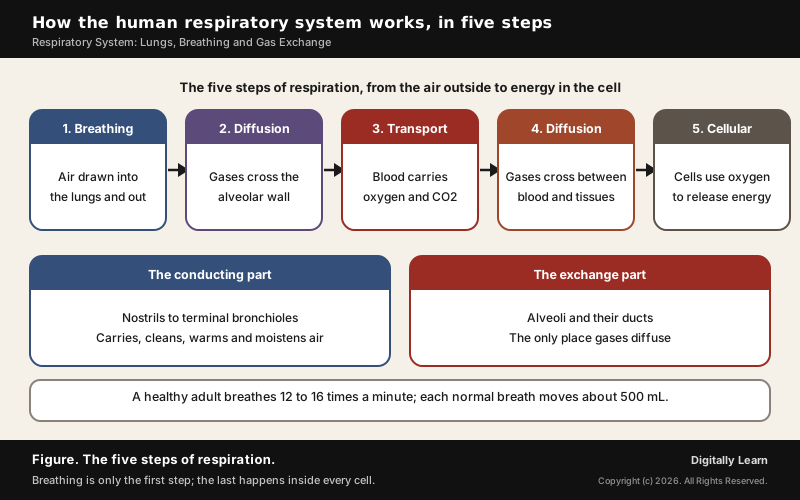
The respiratory system functions to take in oxygen from the air and remove carbon dioxide from the body. In humans air passes from the nostrils down the trachea and bronchi to the alveoli of the lungs, where the two gases are exchanged with the blood; breathing itself is driven by the diaphragm and the muscles between the ribs.
Respiratory System Functions and the Organs from Nose to Alveoli
Respiratory Organs in Animals: Skin, Gills, Tracheae and Lungs
Respiratory organs differ across the animal kingdom, but every one of them does the same job. Cells need oxygen to break down glucose, amino acids and fatty acids for energy, and the carbon dioxide released in those reactions is harmful if it builds up. Exchanging oxygen from the air for carbon dioxide from the cells is breathing, commonly called respiration. How an animal does it depends on where it lives and how complex its body is: simpler animals use their body surface, while others use special structures with a rich blood supply, such as gills and lungs.
- Simple diffusion over the body surface: Sponges, coelenterates and flatworms.
- Moist skin or cuticle: Earthworms; frogs also breathe through their moist skin, which is called cutaneous respiration.
- Tracheal tubes: Insects carry air inside the body through a network of tubes, the tracheal system.
- Gills: Fishes and most aquatic arthropods and molluscs use gills, which is branchial respiration.
- Lungs: Amphibians, reptiles, birds and mammals breathe through lungs, which is pulmonary respiration.
Nostrils, Larynx, Trachea, Bronchi and Alveoli
The human respiratory system is a branching passage that ends in tiny air sacs. Air enters through a pair of external nostrils into the nasal chamber, where fine hairs and mucus filter it. From there it passes the pharynx, a common passage for food and air, and enters the larynx, a cartilage box that produces sound and is called the sound box. During swallowing a thin flap, the epiglottis, covers the opening so that food does not enter the larynx.
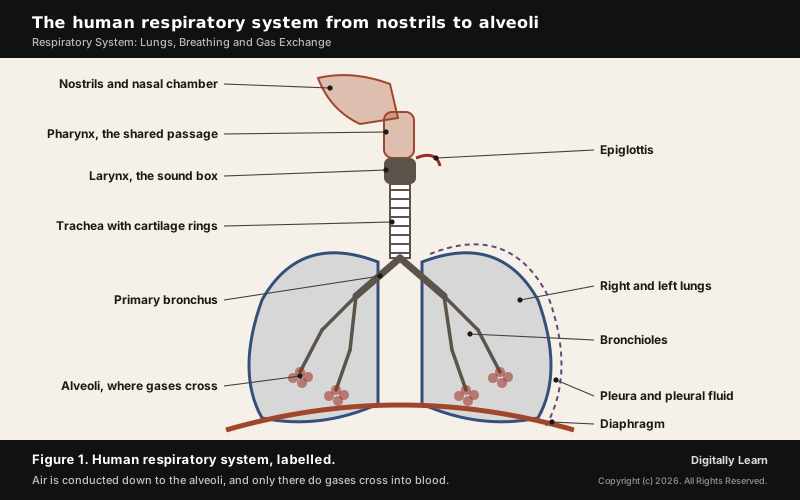
- Trachea: A straight tube in the chest that divides into the right and left primary bronchi at the level of the fifth thoracic vertebra.
- Bronchi and bronchioles: Each bronchus divides again and again into secondary and tertiary bronchi and bronchioles; the trachea, bronchi and first bronchioles are held open by incomplete rings of cartilage so the passage does not collapse.
- Alveoli: Each terminal bronchiole ends in thin-walled, bag-like air sacs with a rich blood supply. If the alveolar surface were spread out it would cover about 80 square metres.
- Lungs and pleura: The bronchi, bronchioles and alveoli make up the two lungs, each covered by a double-layered pleura with pleural fluid between the layers to reduce friction.
The passage from the nostrils to the terminal bronchioles is the conducting part: it carries air to the alveoli, clears it of foreign particles, moistens it and brings it to body temperature. The alveoli and their ducts are the exchange part, the only place where oxygen and carbon dioxide actually diffuse between air and blood. Fine hairs called cilia line the upper tract and sweep out germs, dust and other particles; smoking destroys them, which lets harmful particles reach the lungs.
Mechanism of Breathing: Inspiration and Expiration
Diaphragm and Intercostal Muscles: How the Chest Moves Air
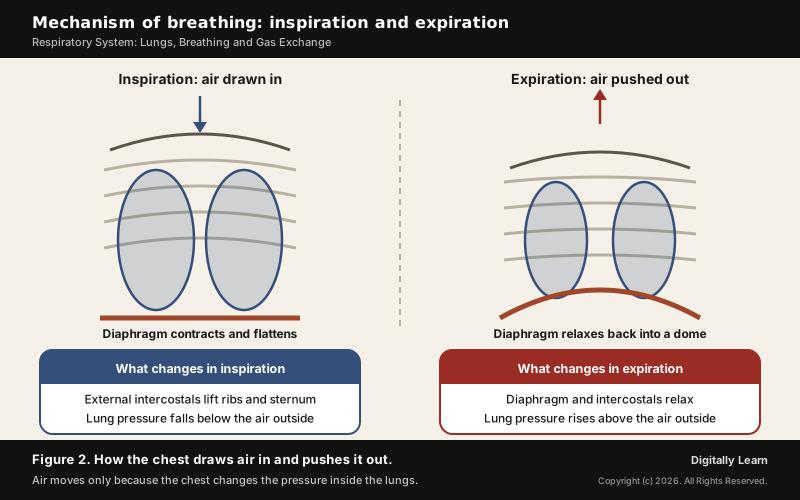
The mechanism of breathing works by changing pressure, because the lungs cannot move air by themselves. They sit in the thoracic chamber, an airtight box formed by the vertebral column, the sternum, the ribs and the dome-shaped diaphragm below. Any change in the volume of this chamber changes the volume of the lungs, and so the pressure of the air inside them.
- Inspiration: The diaphragm contracts and flattens, enlarging the chest from front to back, and the external intercostal muscles lift the ribs and sternum, enlarging it from back to front. The lungs expand, the pressure inside falls below atmospheric pressure, and air flows in.
- Expiration: The diaphragm and intercostal muscles relax, the chest returns to its normal size, the pressure inside the lungs rises slightly above atmospheric pressure, and air is pushed out.
- Forced breathing: Extra muscles in the abdomen can make both inspiration and expiration stronger.
A healthy adult breathes 12 to 16 times a minute. The volume of air moved in these breathing movements is measured with a spirometer, which helps doctors assess how well the lungs are working.
Respiratory Volumes and Capacities: Tidal Volume to Vital Capacity
Lung volumes describe how much air moves in a normal breath and how much more can be moved with effort; added together they give the lung capacity. A normal breath moves about 500 millilitres, so a healthy person breathes in or out roughly 6000 to 8000 millilitres of air a minute.
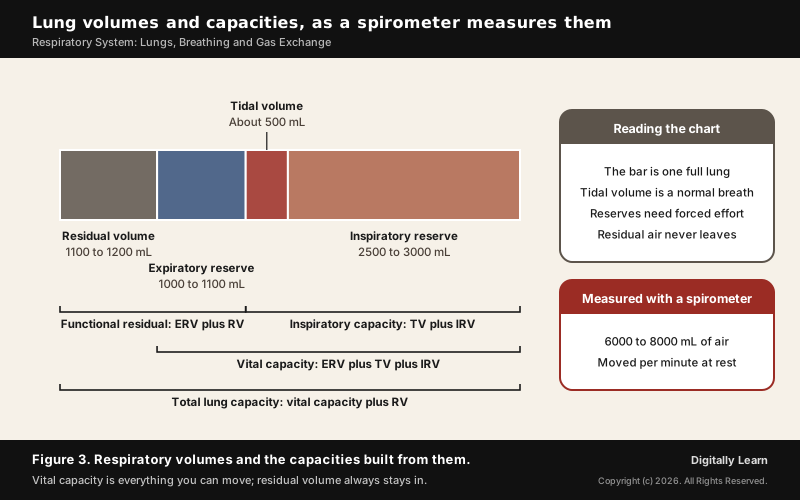
- Tidal volume (TV): Air breathed in or out in a normal breath, about 500 mL.
- Inspiratory reserve volume (IRV): Extra air that can be breathed in by force, 2500 to 3000 mL.
- Expiratory reserve volume (ERV): Extra air that can be breathed out by force, 1000 to 1100 mL.
- Residual volume (RV): Air that stays in the lungs even after a forced breath out, 1100 to 1200 mL.
Adding these volumes gives the lung capacities used in diagnosis. Vital capacity is the most air a person can breathe out after the deepest breath in (ERV plus TV plus IRV). Total lung capacity is vital capacity plus residual volume. Inspiratory capacity is TV plus IRV, expiratory capacity is TV plus ERV, and functional residual capacity, the air left after a normal breath out, is ERV plus RV.
Exchange and Transport of Gases
Gas Exchange in the Alveoli: Partial Pressures of Oxygen and Carbon Dioxide
Gas exchange happens by simple diffusion at two places: between the alveoli and the blood, and between the blood and the tissues. Each gas moves from where its partial pressure, the pressure contributed by that one gas in a mixture, is higher to where it is lower.
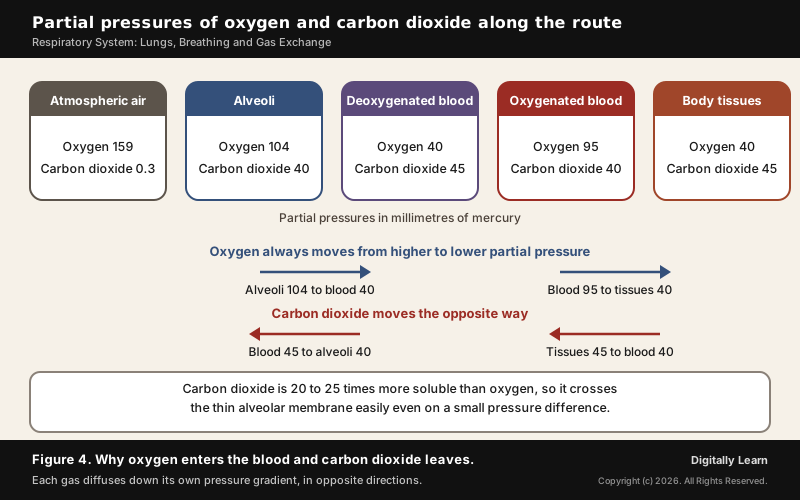
Oxygen has a partial pressure of 104 mm Hg in the alveoli but only 40 in the blood arriving from the body, so it diffuses into the blood; the oxygenated blood, at 95, then gives it up to tissues at 40. Carbon dioxide runs the other way, from tissues at 45 to blood and from blood at 45 to alveoli at 40. Because carbon dioxide is 20 to 25 times more soluble than oxygen, it crosses easily even on this small difference.
The diffusion membrane has three thin layers: the flat epithelium of the alveoli, the endothelium of the alveolar capillaries, and the basement substance between them. Its total thickness is much less than a millimetre, so everything in the body favours oxygen moving from alveoli to tissues and carbon dioxide moving back.
Transport of Oxygen by Haemoglobin and the Oxygen Dissociation Curve
About 97 per cent of oxygen travels bound to haemoglobin in the red blood cells; only 3 per cent is dissolved in plasma. Without haemoglobin, diffusion alone would be hopeless: a molecule of oxygen moving only by diffusion would take an estimated three years to reach the toes from the lungs. Oxygen binds haemoglobin reversibly to form oxyhaemoglobin, and each haemoglobin molecule can carry at most four oxygen molecules. Red cells and haemoglobin themselves are described in the circulatory system.
The oxygen dissociation curve plots how saturated haemoglobin is against the partial pressure of oxygen, and it is S-shaped, or sigmoid. The first oxygen molecule binds with difficulty, but its binding changes the shape of the haemoglobin molecule so that the second, third and fourth bind more easily; near full saturation little more can bind and the curve levels off.
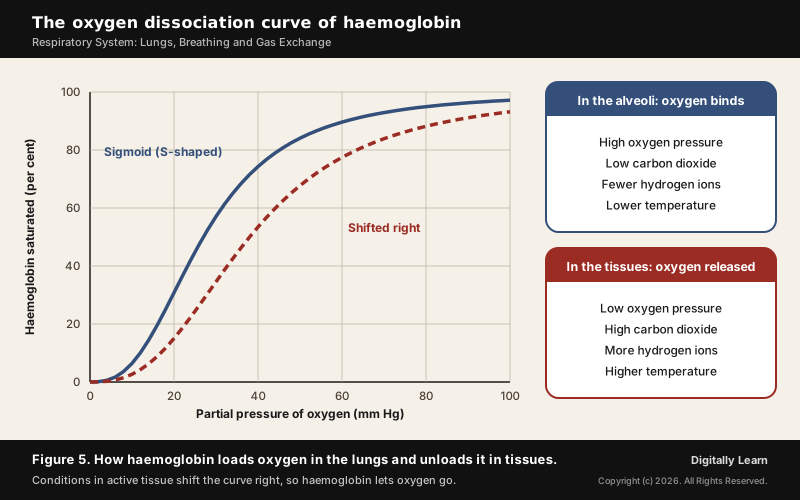
The same molecule loads oxygen in one place and unloads it in another because conditions differ. In the alveoli oxygen pressure is high, carbon dioxide and hydrogen ions are low and the temperature is lower, so oxyhaemoglobin forms. In the tissues oxygen pressure is low, carbon dioxide and hydrogen ions are high and the temperature is higher, so oxygen is released.
In active tissues the curve shifts to the right, so haemoglobin lets go of more oxygen where it is needed; the effect of acidity on this binding is called the Bohr effect. Under normal conditions every 100 millilitres of oxygenated blood delivers about 5 millilitres of oxygen to the tissues.
Transport of Carbon Dioxide as Bicarbonate
Carbon dioxide travels in three forms. About 70 per cent is carried as bicarbonate, 20 to 25 per cent is bound to haemoglobin as carbamino-haemoglobin, and about 7 per cent is dissolved in plasma. The binding to haemoglobin depends on the partial pressures: where carbon dioxide is high and oxygen low, as in the tissues, more binds; in the alveoli it is released.
Red cells hold a very high concentration of the enzyme carbonic anhydrase, which speeds the reaction between carbon dioxide and water in both directions.
- At the tissues: Carbon dioxide from the cells combines with water to form carbonic acid, which splits into bicarbonate and hydrogen ions.
- In the blood: The carbon dioxide is carried to the lungs trapped as bicarbonate.
- At the alveoli: The reaction runs backwards, carbon dioxide and water are re-formed, and the carbon dioxide is breathed out.
Every 100 millilitres of deoxygenated blood delivers about 4 millilitres of carbon dioxide to the alveoli.
Carbon Monoxide Poisoning: Why Carboxyhaemoglobin Starves Tissues of Oxygen
Carbon monoxide is dangerous because haemoglobin binds it far more tightly than oxygen: the affinity is about 240 times stronger. Carbon monoxide that is breathed in forms carboxyhaemoglobin, which cuts the blood's capacity to carry oxygen to the tissues. It also makes the remaining binding sites hold on to their oxygen instead of releasing it, so the tissues are starved twice over.
Carbon monoxide comes from incomplete burning: sources include cigarette smoke, house fires, faulty furnaces and heaters, wood-burning stoves, vehicle exhaust and generators. Poisoning often begins with flu-like symptoms such as headache, dizziness, weakness, vomiting and confusion, and large exposures can cause loss of consciousness.
Regulation of Breathing and Cellular Respiration
Respiratory Rhythm Centre in the Medulla and Pons
Breathing is regulated by the nervous system, which keeps the rhythm and adjusts it to the body's needs. A respiratory rhythm centre in the medulla region of the brain is mainly responsible, and a pneumotaxic centre in the pons can moderate it by shortening each inspiration and so changing the rate of breathing.
- Chemosensitive area: Beside the rhythm centre sits an area highly sensitive to carbon dioxide and hydrogen ions; when these rise, it signals the rhythm centre to adjust breathing so that they are removed.
- Receptors on the aortic arch and carotid artery: These also sense changes in carbon dioxide and hydrogen ions and send signals to the rhythm centre.
- Oxygen: Its role in regulating the respiratory rhythm is quite insignificant.
Aerobic and Anaerobic Respiration: From Breathing to ATP
Breathing supplies oxygen for cellular respiration, the breakdown of food inside cells to release energy. In every pathway the first step is the same: glucose, a six-carbon molecule, is broken in the cytoplasm into a three-carbon molecule called pyruvate. What happens to pyruvate next depends on oxygen.
| Pathway | Where and when | Products |
|---|---|---|
| Aerobic respiration | Mitochondria, with oxygen | Carbon dioxide, water and far more energy |
| Fermentation (anaerobic) | Yeast, without oxygen | Ethanol and carbon dioxide |
| Lactic acid pathway | Muscle cells short of oxygen | Lactic acid, which causes cramps |
The energy released is used at once to make ATP, the energy currency of most cellular processes, from ADP and inorganic phosphate. When ATP's terminal phosphate bond is broken with water, it releases 30.5 kJ per mole, which drives muscle contraction, protein synthesis and the conduction of nerve impulses. The mitochondria where aerobic respiration happens are described in cell structure and function.
Respiratory Disorders and Air Pollution in India
Asthma, Emphysema and Chronic Obstructive Pulmonary Disease
Asthma is difficulty in breathing, with wheezing, caused by inflammation of the bronchi and bronchioles. It is the most common chronic disease among children and affected an estimated 363 million people in 2023, causing 442,000 deaths.
Emphysema is a chronic disorder in which the walls of the alveoli are damaged, so the surface for gas exchange shrinks; cigarette smoking is one of its major causes. Emphysema and chronic bronchitis make up chronic obstructive pulmonary disease (COPD), the third leading cause of death in the world, which caused 3.4 million deaths in 2023, about 6 per cent of all deaths.
- Tobacco: Active smoking and second-hand smoke; smoking accounts for over 70 per cent of COPD cases in high-income countries but 30 to 40 per cent in low- and middle-income countries.
- Household air pollution: Wood, animal dung, crop residue or coal burned for cooking and heating fills homes with smoke, a major risk in low- and middle-income countries.
- Diagnosis: COPD is confirmed with spirometry, the breathing test described above, which is often not available in low- and middle-income countries.
Occupational Lung Diseases: Silicosis, Asbestosis and Pneumoconiosis
In industries that involve grinding or stone-breaking, so much dust is produced that the body's defences cannot cope. Long exposure inflames the lungs and leads to fibrosis, a build-up of fibrous tissue that seriously damages them, which is why workers in such industries should wear protective masks.
- Pneumoconiosis: The general name for lung disease caused by inhaled dust that scars the lungs; it is one of the most common occupational diseases in the world.
- Coal workers’ pneumoconiosis (black lung): Caused by breathing coal dust for a long time, which inflames and scars the lungs.
- Silicosis: Caused by crystalline silica, found in rocks such as granite, sandstone and slate and in sand; crystalline silica is classified as carcinogenic to humans.
- Asbestosis: Caused by asbestos fibres.
India long listed these conditions in law. The Factories Act, 1948 named silicosis, asbestosis, byssinosis, coal miners' pneumoconiosis and carbon monoxide poisoning among the notifiable diseases in its Third Schedule, which had to be reported to the authorities. Since 21 November 2025 the Occupational Safety, Health and Working Conditions Code, 2020 has been in force; it amalgamated the Factories Act with twelve other laws.
Air Pollution and Lung Health: PM₂.₅ and the WHO Air Quality Guidelines
Particulate matter is of particular concern for the lungs. Particles of 10 microns or less (PM₁₀) and of 2.5 microns or less (PM₂.₅) can both penetrate deep into the lungs, but PM₂.₅ can even enter the bloodstream, affecting the heart and other organs as well as the lungs. Exposure to air pollution is estimated to cause 7 million premature deaths a year; in children it can mean reduced lung growth, respiratory infections and worse asthma.
The WHO Global Air Quality Guidelines, updated in 2021, lowered almost every limit set in 2005. Ground-level ozone is a separate hazard: it forms when gases react in the presence of sunlight, and it can bring on shortness of breath, wheezing and coughing and make asthma and COPD worse.
| Pollutant | Annual mean | 24-hour mean |
|---|---|---|
| PM₂.₅ | 5 micrograms per cubic metre | 15 micrograms per cubic metre |
| PM₁₀ | 15 micrograms per cubic metre | 45 micrograms per cubic metre |
- National Air Quality Index: India reports air quality in six categories, from Good to Severe, based on eight pollutants: PM₁₀, PM₂.₅, nitrogen dioxide, sulphur dioxide, carbon monoxide, ozone, ammonia and lead.
- National Clean Air Programme: Launched in January 2019 for 131 cities in 24 States and Union Territories, it aims at reductions of up to 40 per cent in particulate levels, with yearly targets for each city.
Previous Year UPSC-CSE Questions
Previous Year UPSC-CSE Questions By the end you will be able to draft model answers for the following UPSC questions. Each question carries a collapsible framework showing how to approach it in the exam.
- UPSC Prelims 2022 Prelims-GSIn the context of WHO Air Quality Guidelines, consider the following statements:
- The 24-hour mean of PM2.5 should not exceed 15 μg/m³ and annual mean of PM2.5 should not exceed 5 μg/m³.
- In a year, the highest levels of ozone pollution occur during the periods of inclement weather.
- PM10 can penetrate the lung barrier and enter the bloodstream.
- Excessive ozone in the air can trigger asthma.
Which of the statements given above are correct?
How to approach this Prelims question
Approach: Check each statement against one fact: the two PM2.5 numbers, when ozone forms, which particle size enters the blood, and ozone's effect on asthma.
Trap to watch: Statement 3 swaps PM10 for PM2.5: both reach deep into the lungs, but only PM2.5 enters the bloodstream.
Key facts to recall:
- (a) 1, 3 and 4: wrong. Statement 3 is false: PM2.5, not PM10, can pass from the lungs into the bloodstream.
- (b) 1 and 4 only: right. WHO's 2021 limits for PM2.5 are 15 (24-hour) and 5 (annual) micrograms per cubic metre, and ozone can make asthma worse.
- (c) 2, 3 and 4: wrong. Statement 2 is false because ozone forms when gases react in sunlight, so it peaks in bright weather, and statement 3 is false.
- (d) 1 and 2 only: wrong. It includes the false statement 2 and leaves out the true statement 4.
Answer signal: Statements 1 and 4 are correct, so option (b) is the answer.
- UPSC Prelims 2010 Prelims-GSExcessive release of the pollutant carbon monoxide (CO) into the air may produce a condition in which oxygen supply in the human body decreases. What causes this condition ?
How to approach this Prelims question
Approach: Ask what carbon monoxide does to haemoglobin's ability to carry oxygen.
Trap to watch: Option (c) sounds dramatic, but haemoglobin is not destroyed; it is occupied by carbon monoxide.
Key facts to recall:
- (a) CO converted into CO2 in the body: wrong. The harm comes from CO binding haemoglobin, not from any conversion.
- (b) CO has much higher affinity for haemoglobin than oxygen: right. The affinity is about 240 times that for oxygen; CO forms carboxyhaemoglobin and less haemoglobin is free to carry oxygen.
- (c) CO destroys the structure of haemoglobin: wrong. Haemoglobin is not destroyed; it is occupied by CO.
- (d) CO damages the respiratory centre: wrong. The oxygen shortage comes from the blood, where CO takes oxygen's place on haemoglobin.
Answer signal: Much higher affinity for haemoglobin, so option (b) is the answer.
- UPSC Prelims 2007 Prelims-GSHow do most insects respire?
How to approach this Prelims question
Approach: Match each group of animals to its breathing organ.
Trap to watch: Gills belong to fishes and aquatic arthropods; insects on land use tubes.
Key facts to recall:
- (a) Through skin: wrong. Earthworms, and frogs in part, breathe through moist skin; insects do not.
- (b) Through gills: wrong. Gills belong to fishes and most aquatic arthropods and molluscs.
- (c) By lungs: wrong. Amphibians, reptiles, birds and mammals breathe through lungs.
- (d) By tracheal system: right. Insects breathe through a network of air tubes, the tracheae.
Answer signal: The tracheal system, so option (d) is the answer.
- UPSC Prelims 2005 Prelims-GSPneumoconiosis afflicts the workers who work mainly in
How to approach this Prelims question
Approach: Ask which industry fills the air with dust that is breathed for years.
Trap to watch: Tanneries and distilleries involve chemicals and fumes rather than mineral dust.
Key facts to recall:
- (a) Tanneries: wrong. Their work involves chemicals and fumes rather than the mineral dust that causes pneumoconiosis.
- (b) Coal mining industry: right. Coal workers' pneumoconiosis, or black lung, comes from breathing coal dust for years.
- (c) Distilleries: wrong. They involve fermentation and fumes, not mineral dust.
- (d) Glass industry: wrong. The pneumoconiosis the question points to is the coal miners' disease, named among the notifiable diseases in the Factories Act, 1948.
Answer signal: The coal mining industry, so option (b) is the answer.
- UPSC Prelims 1998 Prelims-GSThe complete conversion of glucose in the presence of oxygen into carbon dioxide and water with release of energy is called
How to approach this Prelims question
Approach: Look for the pathway that uses oxygen and goes all the way to carbon dioxide and water.
Trap to watch: Glycolysis is only the first step, the split of glucose into pyruvate; it does not reach carbon dioxide and water.
Key facts to recall:
- (a) Aerobic respiration: right. With oxygen, glucose is broken down all the way to carbon dioxide and water in the mitochondria, releasing energy.
- (b) Anaerobic respiration: wrong. Without oxygen the breakdown stops short: yeast makes ethanol and muscle makes lactic acid.
- (c) Glycolysis: wrong. It is only the first step, the split of glucose into pyruvate in the cytoplasm.
- (d) Hydrolysis: wrong. It is a different reaction, not the pathway that turns glucose into carbon dioxide and water.
Answer signal: Aerobic respiration, so option (a) is the answer.
- UPSC Prelims 1997 Prelims-GSOxygen transportation in a human body takes place through
- I. Blood
- II. Lungs
- III. Tissue
The correct sequence of transportation is
How to approach this Prelims question
Approach: Trace one oxygen molecule from the air to a cell.
Trap to watch: Starting with blood reverses the first step; oxygen must enter the lungs before the blood can carry it.
Key facts to recall:
- (a) Blood, lungs, tissue: wrong. Oxygen must enter the lungs before the blood can carry it.
- (b) Tissue, blood, lungs: wrong. This is the path of carbon dioxide leaving the body, the reverse of oxygen's.
- (c) Lungs, blood, tissue: right. Oxygen diffuses from the alveoli into the blood, travels bound to haemoglobin and is released to the tissues.
- (d) Blood, tissue, lungs: wrong. It starts in the blood and ends in the lungs, the wrong way round.
Answer signal: Lungs, blood, tissue, so option (c) is the answer.
Sources and Further Reading
- NCERT: Biology, Class 11, Chapter 14, Breathing and Exchange of Gases
- NCERT: Science, Class 10, Chapter 5, Life Processes
- World Health Organization: Chronic obstructive pulmonary disease (COPD), fact sheet
- World Health Organization: Asthma, fact sheet
- World Health Organization: Ambient (outdoor) air quality and health, fact sheet
- World Health Organization: new Global Air Quality Guidelines, 22 September 2021
- Press Information Bureau: National Clean Air Programme, 23 March 2023
- Press Information Bureau: the four Labour Codes in force, November 2025
- Press Information Bureau: update on NP-NCD, 23 March 2026
- Central Pollution Control Board: About the National Air Quality Index
- India Code: The Factories Act, 1948
- Wikipedia: Chronic obstructive pulmonary disease
- Wikipedia: Carbon monoxide poisoning
- Wikipedia: Oxygen-haemoglobin dissociation curve
- Wikipedia: Pneumoconiosis
- Wikipedia: Silicosis
- Wikipedia: Air quality guideline
- Wikipedia: Ozone
- Wikipedia: Occupational Safety, Health and Working Conditions Code, 2020
Editorial Disclaimer
This article is for UPSC preparation and explains how the human respiratory system works. It is not medical advice for any individual.


