


Overview
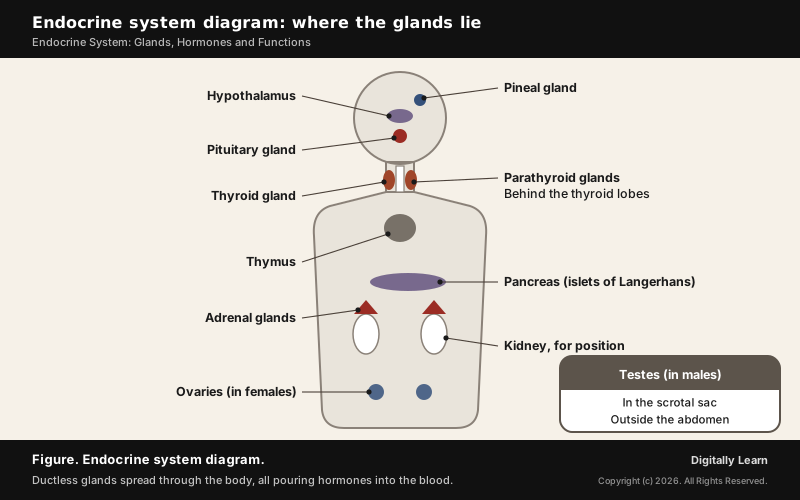
The endocrine system is the body's chemical control system: the ductless endocrine glands and hormone-making tissues release hormones into the blood, which carries them to target organs. It works alongside the nervous system, more slowly but reaching every cell.
Endocrine Glands and Hormones: What Makes a Chemical Messenger
Hormones Definition: Non-Nutrient Chemical Messengers
The body has two systems of coordination. The nervous system, covered in the nervous system article, is fast and point-to-point but short-lived, and nerve fibres do not reach every cell. Cell work also has to be regulated continuously, and that is the job of hormones, the messengers of the endocrine system.
The classical definition calls a hormone a chemical made by an endocrine gland, released into the blood and carried to a distant target organ. The current definition is wider: hormones are non-nutrient chemicals that act as messengers between cells and are produced in trace amounts. The wider definition also covers hormones made by tissues that are not glands at all. Invertebrates have very simple endocrine systems with few hormones, while in vertebrates a large number of chemicals act as hormones.
A chemical signal suits jobs that nerves cannot do. When a squirrel faces danger, a hormone called adrenaline is secreted straight into the blood and reaches the whole body: the heart beats faster to send more oxygen to the muscles, blood is diverted from the gut and skin to the skeletal muscles, and breathing speeds up, so the animal is ready to fight or run.
Difference Between Endocrine and Exocrine Glands
Endocrine glands have no ducts, which is why they are called ductless glands. They pour their secretions, the hormones, directly into the blood. Exocrine glands release their secretions through a duct onto an epithelial surface; sweat, salivary, mammary and lacrimal glands are examples.
| Feature | Endocrine glands | Exocrine glands |
|---|---|---|
| Ducts | None: ductless | Present |
| Examples | Pituitary, thyroid, adrenal | Sweat, salivary, lacrimal |
| Where it goes | Into the blood, to distant targets | Through a duct, onto a surface |
The pancreas is a composite gland that works both ways. Its exocrine part makes digestive juice, described in the human digestive system article, while its islets of Langerhans make insulin and glucagon.
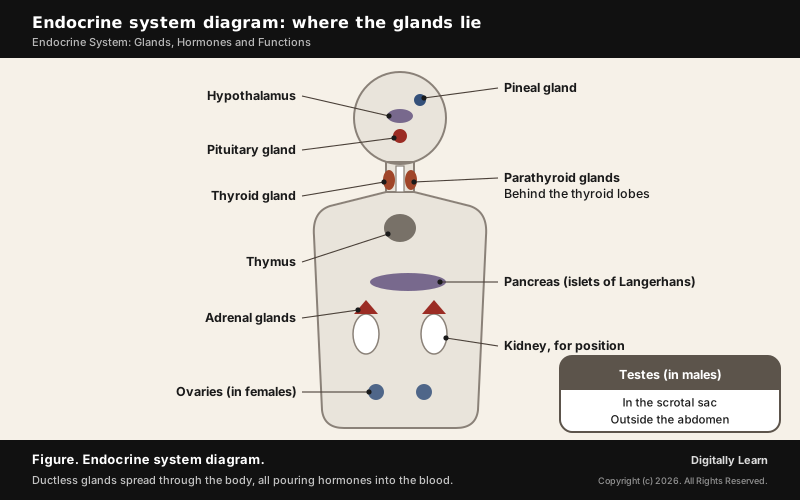
The organised endocrine glands of the human body are the pituitary, pineal, thyroid, adrenal, pancreas, parathyroid, thymus and the gonads (testes in males and ovaries in females). The hypothalamus of the brain also makes hormones, and so do organs such as the gut, liver, kidney and heart.
Hypothalamus and Pituitary Gland: The Control Centre
Hypothalamic Releasing and Inhibiting Hormones
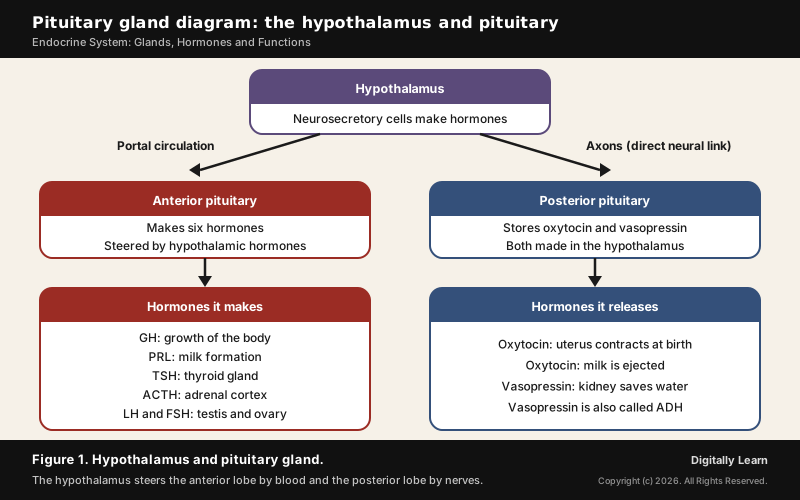
The hypothalamus is the basal part of the forebrain and regulates a wide range of body functions. Groups of neurosecretory cells in it, called nuclei, make hormones that control the pituitary gland.
- Releasing hormones: Stimulate the pituitary; gonadotrophin releasing hormone (GnRH), for example, makes the pituitary release gonadotrophins.
- Inhibiting hormones: Hold the pituitary back; somatostatin from the hypothalamus, for example, stops the release of growth hormone.
These hormones leave the hypothalamic neurons through their axons and reach the anterior pituitary through a portal circulation. The posterior pituitary is under the direct neural control of the hypothalamus. Its hormone-making cells are themselves neurons, so in the hypothalamus nervous and hormonal control meet.
Pituitary Gland Diagram and Hormones: Growth Hormone, TSH, Oxytocin and Vasopressin
The pituitary gland is located in a bony cavity called the sella turcica and is attached to the hypothalamus by a stalk. It has an adenohypophysis, made of the pars distalis and pars intermedia, and a neurohypophysis, the posterior pituitary. The pars distalis, commonly called the anterior pituitary, produces six hormones: GH, PRL, TSH, ACTH, LH and FSH. The gland is small, about 1 cm across and 0.5 to 1 gram in weight, roughly the size of a kidney bean.
| Hormone | Source and function |
|---|---|
| Growth hormone (GH) | Anterior pituitary: growth of the body |
| Prolactin (PRL) | Anterior pituitary: growth of mammary glands and milk formation |
| TSH | Anterior pituitary: makes the thyroid secrete its hormones |
| ACTH | Anterior pituitary: makes the adrenal cortex secrete glucocorticoids |
| LH and FSH | Anterior pituitary: act on the testes and ovaries, so they are called gonadotrophins |
| MSH | Pars intermedia: pigmentation of the skin |
| Oxytocin | Made in the hypothalamus, stored in the posterior lobe: contraction of the uterus at birth and milk ejection |
| Vasopressin (ADH) | Made in the hypothalamus, stored in the posterior lobe: water reabsorption in the kidney |
The effects of growth hormone show what happens when the balance slips. Too much in childhood causes gigantism; too little causes pituitary dwarfism. Too much in adults, especially in middle age, causes acromegaly, a disfigurement of the face that is hard to diagnose early and can be fatal if unchecked. In females, LH triggers ovulation and keeps the corpus luteum going, while FSH makes the ovarian follicles grow.
Thyroid, Parathyroid, Pineal and Thymus Glands
Thyroid Gland: Thyroxine, Iodine, Goitre and Cretinism
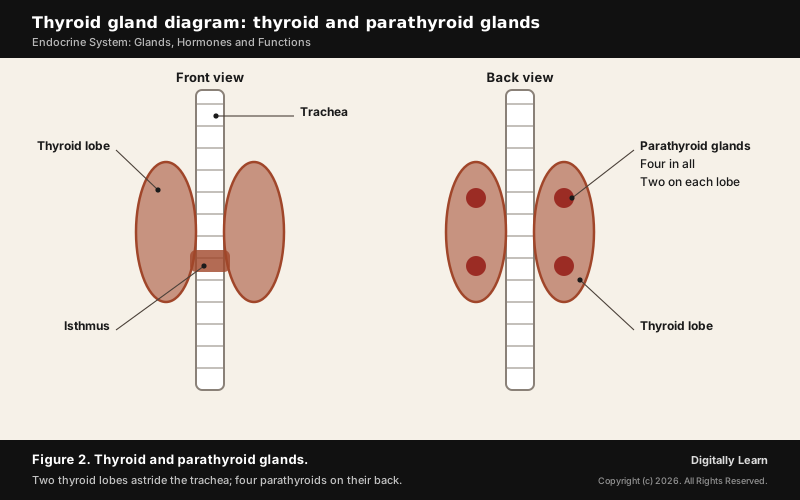
The thyroid gland has two lobes, one on either side of the trachea, joined by a thin flap called the isthmus. Its follicle cells make two hormones, thyroxine (tetraiodothyronine, T4) and triiodothyronine (T3), and iodine is essential for making them.
- Functions: Thyroid hormones regulate the basal metabolic rate, control the metabolism of carbohydrates, proteins and fats, support red blood cell formation and influence water and electrolyte balance.
- Thyrocalcitonin: A protein hormone of the thyroid that lowers blood calcium.
- Hypothyroidism: Iodine deficiency causes hypothyroidism and enlargement of the thyroid, called goitre. During pregnancy it causes cretinism in the baby: stunted growth, mental retardation, abnormal skin and deaf-mutism. In adult women it can make the menstrual cycle irregular.
- Hyperthyroidism: Cancer or nodules of the thyroid can raise hormone output. Exophthalmic goitre, or Graves’ disease, is one form, with a swollen thyroid, bulging eyes, a higher metabolic rate and weight loss.
Parathyroid Gland and Calcium Balance
Four parathyroid glands sit on the back of the thyroid, one pair in each lobe. They secrete parathyroid hormone (PTH), a peptide hormone whose release is set by the level of calcium ions in the blood.
- On bone: PTH stimulates bone resorption, dissolving mineral into the blood.
- On the kidney: It increases reabsorption of calcium by the renal tubules.
- On the gut: It increases calcium absorption from digested food.
PTH is therefore a hypercalcaemic hormone: it raises blood calcium, while thyrocalcitonin lowers it, and together they keep calcium in balance. PTH also regulates blood phosphate, and it is opposed by calcitonin.
Pineal Gland and Thymus Gland: Melatonin and Thymosins
The pineal gland lies on the dorsal side of the forebrain and secretes melatonin. Melatonin regulates the body's 24-hour (diurnal) rhythm, such as the sleep-wake cycle and body temperature, and also influences metabolism, pigmentation, the menstrual cycle and the body's defences.
The thymus gland is a lobed organ between the lungs, behind the sternum. It secretes peptide hormones called thymosins, which drive the differentiation of T-lymphocytes for cell-mediated immunity and promote antibody production for humoral immunity. The thymus shrinks in old age, thymosin output falls, and the immune response of older people weakens.
Adrenal Glands and Gonads
Adrenal Gland: Adrenaline, Cortisol and Aldosterone
There is one adrenal gland above each kidney. Each has a central adrenal medulla and an outer adrenal cortex, and the two parts make different hormones.
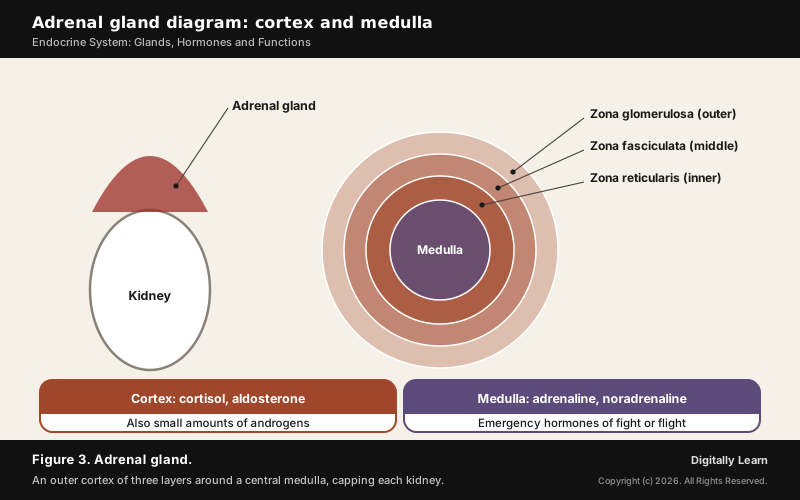
The medulla secretes adrenaline (epinephrine) and noradrenaline (norepinephrine), together called catecholamines. They are released rapidly under any stress or emergency, so they are called emergency hormones, the hormones of fight or flight. They raise alertness, dilate the pupils, make the hairs stand up, cause sweating, speed the heartbeat and breathing, and break down glycogen to raise blood glucose.
- Glucocorticoids: Cortisol is the main one. It stimulates the making of new glucose, breaks down fats and proteins, supports the heart, blood vessels and kidney, stimulates red blood cell production, and suppresses inflammation and the immune response.
- Mineralocorticoids: Aldosterone is the main one. It makes the renal tubules reabsorb sodium and water and excrete potassium and phosphate, which keeps body fluid volume and blood pressure steady.
- Androgens: Small amounts help the growth of body and facial hair at puberty.
Underproduction by the adrenal cortex disturbs carbohydrate metabolism and causes acute weakness and fatigue, a condition called Addison's disease. How aldosterone and ADH act inside the nephron is shown in the excretory system article.
Testis and Ovary: Testosterone, Oestrogen and Progesterone
The gonads are both sex organs and endocrine glands. In the testis, Leydig cells between the seminiferous tubules make androgens, mainly testosterone.
- Testicular androgens: Control the development and working of the male accessory sex organs, muscle growth, facial and body hair, a low-pitched voice and sperm formation, and have anabolic effects on protein and carbohydrate metabolism.
- Oestrogen: Made mainly by the growing ovarian follicles; it drives the female secondary sex organs and characters, such as a high-pitched voice, and mammary gland development.
- Progesterone: Made mainly by the corpus luteum, the structure the ruptured follicle becomes after ovulation; it supports pregnancy and stimulates milk secretion.
The ovary, the primary female sex organ, lies in the abdomen and produces one ovum during each menstrual cycle. The changes seen around 10 to 12 years of age, at puberty, come from the secretion of testosterone in boys and oestrogen in girls.
Pancreas, Insulin and Diabetes
Islets of Langerhans: Insulin and Glucagon
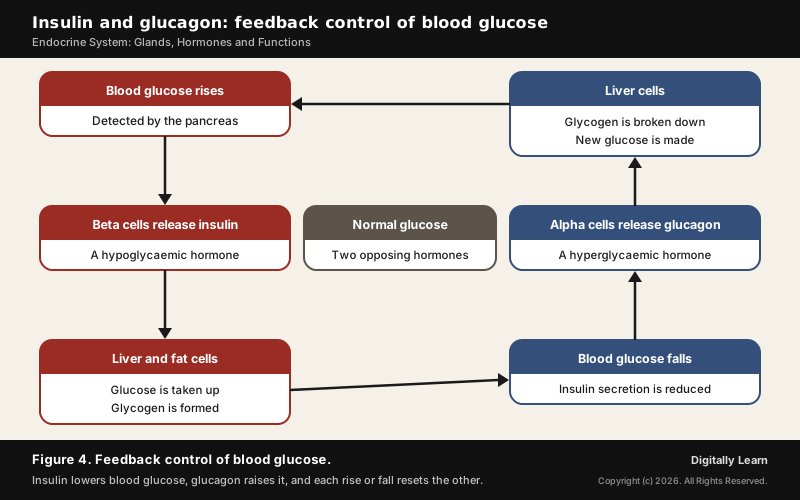
The endocrine part of the pancreas is made of the islets of Langerhans: about 1 to 2 million of them, only 1 to 2 per cent of the pancreatic tissue. Their alpha cells secrete glucagon and their beta cells secrete insulin.
- Insulin: A peptide hormone acting mainly on liver and fat cells. It speeds the uptake and use of glucose and its conversion to glycogen, so blood glucose falls: insulin is a hypoglycaemic hormone.
- Glucagon: A peptide hormone acting mainly on liver cells. It breaks glycogen down and makes new glucose, so blood glucose rises: glucagon is a hyperglycaemic hormone. The pancreas releases it when blood glucose is too low.
Human insulin is a protein of 51 amino acids. Frederick Banting and Charles Best, in John Macleod's laboratory at the University of Toronto, first isolated it from a dog pancreas in 1921, and in 1951 Frederick Sanger worked out its sequence, making insulin the first protein to be fully sequenced. It cannot be taken by mouth, because like other proteins it is broken into fragments in the gut and loses its activity.
Insulin was the first peptide hormone discovered, and later the first protein to be chemically synthesised and to be produced by recombinant DNA technology. Dorothy Hodgkin worked out its crystal structure in 1969, and insulin is on the WHO Model List of Essential Medicines.
Diabetes Mellitus and Diabetes Insipidus: Two Different Disorders
Prolonged high blood glucose leads to diabetes mellitus, caused by too little insulin or by the body failing to respond to it. Glucose is lost in the urine and harmful compounds called ketone bodies form, and patients are treated with insulin.
- Type 1: The body makes too little insulin, so insulin must be given every day; neither its cause nor a way to prevent it is known.
- Type 2: The body cannot use insulin properly. It accounts for more than 95 per cent of people with diabetes and is often preventable through a healthy diet, physical activity, normal body weight and avoiding tobacco.
- Gestational diabetes: Raised blood glucose that occurs during pregnancy; it raises the risk of complications at delivery and of type 2 diabetes later for the mother and possibly the child.
The warning signs are feeling very thirsty, urinating more often than usual, blurred vision, tiredness and unintended weight loss. Over time diabetes damages blood vessels in the heart, eyes, kidneys and nerves, and it causes blindness, kidney failure, heart attacks, stroke and lower limb amputation.
Worldwide, the number of people with diabetes rose from 200 million in 1990 to 830 million in 2022, and the share of adults living with it doubled from 7 per cent to 14 per cent over the same years. In 2021 diabetes directly caused 1.6 million deaths. In India, the ICMR-INDIAB study, one of the first national studies to measure diabetes state by state, put the number at 10.1 crore in its report published in 2023.
A different disorder with a misleadingly similar name is diabetes insipidus. When the making or release of vasopressin (ADH) is impaired, the kidney cannot conserve water, so the person passes large amounts of dilute urine, becomes dehydrated and feels thirsty.
How Hormones Act and How Their Levels Are Controlled
Hormones of the Heart, Kidney and Gut: ANF, Erythropoietin and Gastrin
Some tissues that are not endocrine glands still secrete hormones. The atrial wall of the heart secretes atrial natriuretic factor (ANF): when blood pressure rises, ANF dilates the blood vessels and brings it down. The juxtaglomerular cells of the kidney make erythropoietin, which stimulates red blood cell formation.
- Gastrin: Makes the gastric glands secrete hydrochloric acid and pepsinogen.
- Secretin: Makes the exocrine pancreas secrete water and bicarbonate ions.
- Cholecystokinin (CCK): Makes the pancreas release enzymes and the gall bladder release bile.
- Gastric inhibitory peptide (GIP): Slows gastric secretion and movement.
Other non-endocrine tissues secrete growth factors, which are needed for the normal growth of tissues and for their repair and regeneration.
Mechanism of Hormone Action: Receptors and Second Messengers
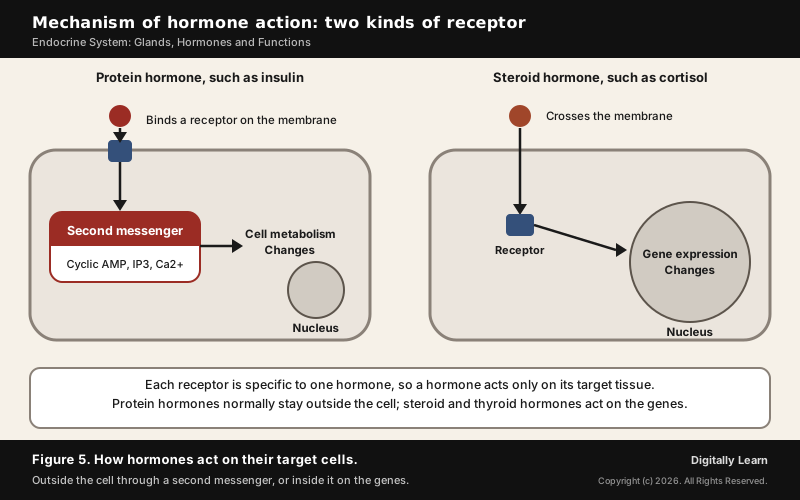
A hormone acts only on cells that carry a specific protein called a hormone receptor, and each receptor fits one hormone only. Binding forms a hormone-receptor complex, which sets off chemical changes in the target tissue.
| Group | Examples and where the receptor is |
|---|---|
| Peptide and protein hormones | Insulin, glucagon, pituitary and hypothalamic hormones; receptor on the cell membrane |
| Steroids | Cortisol, testosterone, oestradiol, progesterone; receptor inside the cell |
| Iodothyronines | Thyroid hormones; receptor inside the cell |
| Amino-acid derivatives | Adrenaline (epinephrine) |
Hormones that bind receptors on the cell membrane usually stay outside and work through second messengers such as cyclic AMP, IP3 and calcium ions. Steroid and thyroid hormones bind receptors inside the cell, mostly in the nucleus, and change gene expression.
Feedback Control of Hormone Secretion
Hormones must be secreted in precise amounts, and a feedback mechanism sets both the timing and the amount. When blood sugar rises, cells of the pancreas detect it and make more insulin; as blood sugar falls, insulin secretion is reduced.
Feedback runs through other glands too. The parathyroids respond directly to the calcium level in the blood, and when growth hormone runs low, the hypothalamus releases a growth hormone releasing factor that makes the pituitary release more.
| Gland | Main hormones and functions |
|---|---|
| Hypothalamus | Releasing and inhibiting hormones: control the pituitary |
| Pituitary | GH, PRL, TSH, ACTH, LH, FSH, oxytocin, ADH: growth, control of other glands, birth, water |
| Pineal | Melatonin: 24-hour rhythm and the sleep-wake cycle |
| Thyroid | Thyroxine (T4), T3: metabolic rate; thyrocalcitonin: lowers blood calcium |
| Parathyroid | Parathyroid hormone: raises blood calcium |
| Thymus | Thymosins: T-lymphocytes and immunity |
| Adrenal | Adrenaline: emergency; cortisol: glucose; aldosterone: salt and water |
| Pancreas | Insulin lowers blood glucose; glucagon raises it |
| Testis | Testosterone: male sex organs and characters |
| Ovary | Oestrogen: female characters; progesterone: pregnancy |
Endocrine Disruptors and Iodine Deficiency in India
Endocrine-Disrupting Chemicals: Sources and Health Effects
Endocrine disruptors are chemicals that can interfere with the endocrine system. Found in many household and industrial products, they can interfere with the making, release, transport, binding, action or removal of natural hormones.
- Common disruptors: They include pesticides, chemicals of the plastics industry and industrial by-products. Those commonly found in people include DDT, polychlorinated biphenyls (PCBs), bisphenol A and phthalates, and parabens and phenols are also considered potent disruptors.
- Exposure: Diet is thought to account for up to 90 per cent of a person’s PCB and DDT body burden, and some of these chemicals are persistent organic pollutants that travel long distances across borders.
- Health effects: They are linked to metabolic problems such as diabetes and obesity, and to problems of growth, the nervous system and learning.
The WHO and UNEP report State of the Science of Endocrine Disrupting Chemicals (2012) starts from the fact that endocrine systems are very similar across vertebrate species. It warns that effects seen in wildlife and laboratory animals may also occur in humans exposed at a vulnerable time. Of special concern is early development, where the effects are often irreversible and may appear only later in life.
Iodine Deficiency Disorders and the National Control Programme
Because the thyroid needs iodine to make thyroxine, a lack of iodine in the diet causes a family of iodine deficiency disorders: goitre, mental and physical retardation, deaf-mutism, cretinism, stillbirths and abortions. Worldwide, iodine deficiency affects about two billion people and is the leading preventable cause of intellectual and developmental disabilities. Adding a little iodine to common salt, which makes iodised salt, is a cheap remedy.
India's National Goitre Control Programme was renamed the National Iodine Deficiency Disorders Control Programme (NIDDCP) in August 1992 to address this wider range of disorders. It aims to bring IDD prevalence below 5 per cent and to ensure that every household uses adequately iodised salt, with at least 15 parts per million of iodine.
- Iodated salt: Supplied in place of common salt, with quality checked at production through the Salt Commissioner and at distribution and household level through the State Health Directorates.
- Surveys: District surveys measure the problem and are repeated every five years, with laboratory checks of salt and urinary iodine.
- Iodised salt coverage: Household use of adequately iodised salt reached 94.3 per cent in 2020-21, according to the National Family Health Survey.
India and all its states ban the sale of non-iodised salt for human consumption, though enforcement has been imperfect.
The programme is run by the Nutrition and IDD Cell of the Directorate General of Health Services, which also marks Global IDD Prevention Day on 21 October each year.
Previous Year UPSC-CSE Questions
Previous Year UPSC-CSE Questions By the end you will be able to draft model answers for the following UPSC questions. Each question carries a collapsible framework showing how to approach it in the exam.
- UPSC Prelims 2007 Prelims-GSIn the human body which one of the following hormones regulates blood calcium and phosphate?
How to approach this Prelims question
Approach: Link calcium to the parathyroid first, then rule out the other three by their jobs.
Trap to watch: Thyroxin comes from the thyroid, which does make a calcium hormone, but that one is thyrocalcitonin, and it only lowers calcium.
Key facts to recall:
- (a) Glucagon: wrong. It comes from the alpha cells of the pancreas and raises blood glucose.
- (b) Growth hormone: wrong. It comes from the anterior pituitary and drives growth.
- (c) Parathyroid hormone: right. It raises blood calcium and also regulates blood phosphate.
- (d) Thyroxin: wrong. The thyroid's calcium hormone is thyrocalcitonin, not thyroxin, and it only lowers calcium.
Answer signal: Parathyroid hormone, so option (c) is the answer.
- UPSC Prelims 2005 Prelims-GSConsider the following Assertion (A) and Reason (R):
- Assertion (A): The person with diabetes insipidus feels thirsty.
- Reason (R): A person with diabetes insipidus suffers from excess secretion of vasopressin.
How to approach this Prelims question
Approach: Test A and R separately against the cause of the disease, then check the link.
Trap to watch: The word excess is the trap: the disease comes from too little vasopressin, not too much.
Key facts to recall:
- (a) Both true, R explains A: wrong. R is false: the disease comes from too little vasopressin, not too much.
- (b) Both true, R does not explain A: wrong. R is still false.
- (c) A true, R false: right. Too little vasopressin means the kidney cannot reabsorb water, urine is dilute, and the person feels thirsty.
- (d) A false, R true: wrong. Thirst is a real symptom, so A is true, and R is false.
Answer signal: A is true and R is false, so option (c) is the answer.
- UPSC Prelims 2004 Prelims-GSThe hormone insulin is a
How to approach this Prelims question
Approach: Recall the four chemical groups of hormones and where insulin falls.
Trap to watch: Sterol is tempting because many hormones are steroids, but those are cortisol and the sex hormones.
Key facts to recall:
- (a) Glycolipid: wrong. Insulin is a protein of 51 amino acids, not a compound of sugar and lipid.
- (b) Fatty acid: wrong. It is built of amino acids, not fatty acids.
- (c) Peptide: right. Insulin was the first peptide hormone discovered.
- (d) Sterol: wrong. Steroid hormones include cortisol and testosterone; insulin is not one of them.
Answer signal: A peptide, so option (c) is the answer.
- UPSC Prelims 2000 Prelims-GSMatch List I (Endocrine glands) with List II (Hormones secreted), where List II reads A) Insulin, B) Progesterone, C) Growth hormones, D) Cortisone:
- I. Gonads
- II. Pituitary
- III. Pancreas
- IV. Adrenal
Select the correct answer using the codes given below the Lists:
How to approach this Prelims question
Approach: Fix the surest pair first: the pancreas makes insulin (III-A), which removes options (a) and (b). The pituitary makes growth hormone (II-C), which removes option (d). The gonads then take progesterone (I-B) and the adrenal cortex takes cortisone (IV-D).
Trap to watch: Cortisone is the one unfamiliar name; once the gonads, pituitary and pancreas are paired, it can only go with the adrenal.
Key facts to recall:
- (a) I-C, II-B, III-D, IV-A: wrong. It gives growth hormone to the gonads and insulin to the adrenal.
- (b) I-B, II-C, III-D, IV-A: wrong. It gives cortisone to the pancreas and insulin to the adrenal.
- (c) I-B, II-C, III-A, IV-D: right. Gonads progesterone, pituitary growth hormone, pancreas insulin, adrenal cortisone.
- (d) I-C, II-B, III-A, IV-D: wrong. It swaps the gonads and the pituitary.
Answer signal: I-B, II-C, III-A, IV-D, so option (c) is the answer.
- UPSC Prelims 1999 Prelims-GSMatch the hormones in List I with items in List II, where List II reads A) Anger, fear, danger, B) Attracting partners through sense of smell, C) Females, D) Glucose:
- I. Adrenaline
- II. Estrogen
- III. Insulin
- IV. Pheromones
Select the correct answer using the codes given below the Lists:
How to approach this Prelims question
Approach: Pair adrenaline with danger (I-A) and insulin with glucose (III-D); only option (c) has both. Then check: oestrogen drives female characters (II-C), and pheromones work between individuals, such as sex pheromones that attract partners through smell (IV-B).
Trap to watch: Pheromones act between individuals, not inside one body, so they belong with attracting partners.
Key facts to recall:
- (a) I-C, II-A, III-D, IV-B: wrong. It pairs adrenaline with females and oestrogen with fear.
- (b) I-A, II-C, III-B, IV-D: wrong. It pairs insulin with attracting partners and pheromones with glucose.
- (c) I-A, II-C, III-D, IV-B: right. Adrenaline danger, oestrogen females, insulin glucose, pheromones attracting partners.
- (d) I-C, II-A, III-B, IV-D: wrong. Every pair is misplaced.
Answer signal: I-A, II-C, III-D, IV-B, so option (c) is the answer.
- UPSC Prelims 1997 Prelims-GSThe pituitary gland by virtue of its tropic hormones controls the secretory activity of other endocrine glands. Which one of the following endocrine glands can function independent of the pituitary gland?
How to approach this Prelims question
Approach: Name the pituitary hormone for each option; the gland without one is the answer.
Trap to watch: The adrenals are tempting because the medulla responds to stress, but ACTH still controls the adrenal cortex.
Key facts to recall:
- (a) Thyroid: wrong. TSH from the anterior pituitary makes the thyroid secrete its hormones.
- (b) Gonads: wrong. LH and FSH from the anterior pituitary act on the testes and ovaries.
- (c) Adrenals: wrong. ACTH from the anterior pituitary makes the adrenal cortex secrete glucocorticoids.
- (d) Parathyroid: right. Its hormone is released according to the level of calcium in the blood, with no pituitary hormone involved.
Answer signal: The parathyroid, so option (d) is the answer.
- UPSC Prelims 1997 Prelims-GSCorpus luteum is a mass of cells found in
How to approach this Prelims question
Approach: Link the corpus luteum to ovulation, and ovulation to the ovary.
Trap to watch: Do not confuse the corpus luteum with the corpora quadrigemina of the midbrain.
Key facts to recall:
- (a) Brain: wrong. The corpus luteum forms from the ruptured follicle after ovulation, and ovulation happens in the ovary.
- (b) Ovary: right. The ruptured follicle becomes the corpus luteum, which secretes mainly progesterone.
- (c) Pancreas: wrong. It holds the islets of Langerhans, which make insulin and glucagon, not a corpus luteum.
- (d) Spleen: wrong. It is a lymphoid organ, unrelated to ovulation.
Answer signal: The ovary, so option (b) is the answer.
- UPSC Prelims 1996 Prelims-GSWhich of the following are associated with diabetes mellitus, a common disease in adults?
- I. Higher sugar level in blood
- II. Lower sugar level in blood
- III. Lower insulin level in blood
- IV. Higher insulin level in blood
Select the correct answer using the codes given below:
How to approach this Prelims question
Approach: Decide the direction of blood sugar and of insulin, then pick the code.
Trap to watch: Statements I and II, and III and IV, are opposites: only one of each pair can be right.
Key facts to recall:
- (a) I and IV: wrong. Blood sugar is high, but insulin is usually too low, not too high.
- (b) I and II: wrong. Higher and lower sugar are opposites; only higher sugar fits diabetes mellitus.
- (c) II and III: wrong. Diabetes mellitus means high blood glucose, not low.
- (d) I and III: right. High blood glucose, usually caused by too little insulin.
Answer signal: I and III, so option (d) is the answer.
- UPSC Prelims 1995 Prelims-GSWhich one of the following hormones contains iodine?
How to approach this Prelims question
Approach: Recall which gland needs iodine, then its hormone.
Trap to watch: Adrenaline and insulin carry no iodine; the clue is in the name tetraiodothyronine.
Key facts to recall:
- (a) Thyroxine: right. It is tetraiodothyronine (T4), and iodine is essential for making it.
- (b) Testosterone: wrong. It is the male sex hormone from the testes; iodine is needed for the thyroid hormones, not for it.
- (c) Insulin: wrong. It is a peptide of 51 amino acids from the beta cells of the pancreas.
- (d) Adrenaline: wrong. It is an emergency hormone of the adrenal medulla, not an iodine-containing hormone.
Answer signal: Thyroxine, so option (a) is the answer.
Sources and Further Reading
- NCERT: Biology, Class 11, Chapter 19, Chemical Coordination and Integration
- NCERT: Science, Class 10, Chapter 6, Control and Coordination
- NCERT: Psychology, Class 11, Chapter 3, The Bases of Human Behaviour
- World Health Organization: Diabetes, fact sheet
- World Health Organization and UNEP: State of the Science of Endocrine Disrupting Chemicals 2012
- Directorate General of Health Services: National Iodine Deficiency Disorders Control Programme
- Directorate General of Health Services: Nutrition and IDD Cell
- Press Information Bureau: prevalence of diabetes (ICMR-INDIAB), 1 August 2023
- Indian Council of Medical Research: ICMR-INDIAB study, Phase I report
- Wikipedia: Endocrine disruptor
- Wikipedia: Insulin
- Wikipedia: Glucagon
- Wikipedia: Parathyroid hormone
- Wikipedia: Diabetes insipidus
- Wikipedia: Pheromone
- Wikipedia: Exocrine gland
- Wikipedia: Pituitary gland
Editorial Disclaimer
This article is for UPSC preparation and explains how the human endocrine system works. It is not medical advice for any individual.


